Key takeaways:
Pomegranate contains antioxidants and other nutrients that may be good for blood pressure and heart health.
Some research links pomegranate juice to improved brain health, libido, and exercise performance. But these studies are small and often not done on humans. So, it’s hard to draw conclusions.
Pomegranate juice is high in natural sugars and low in fiber, so it’s best to drink it in moderation.
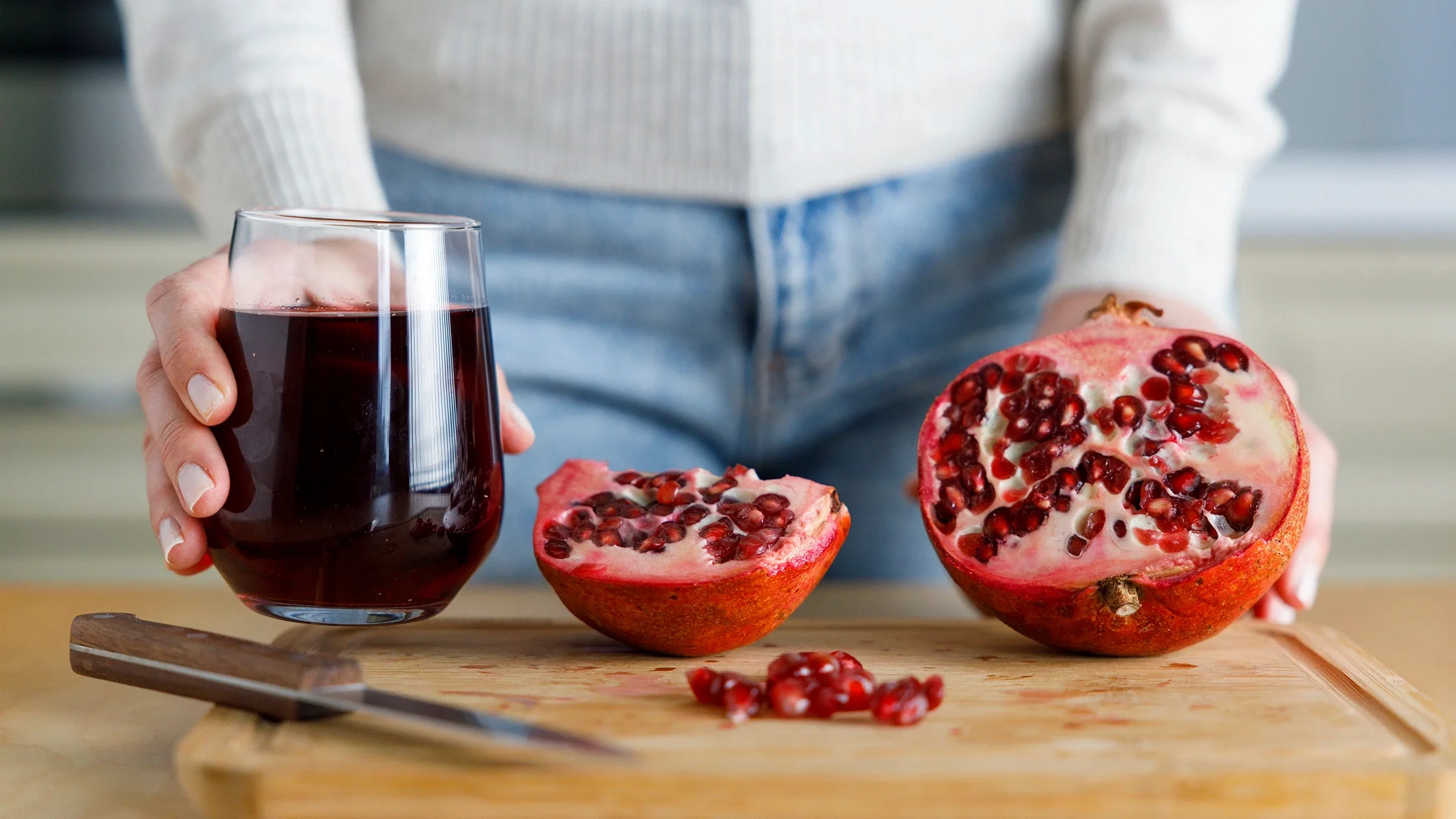
Tart and sweet pomegranate juice gets its vibrant red color from antioxidant plant compounds. These powerful antioxidants have made pomegranate juice a focus in nutrition research. Scientists have studied its many potential health benefits, from blood pressure to libido.
But before you start guzzling gallons of pomegranate juice, remember that it isn’t a magical cure-all. Let’s take a look at what research says about the possible benefits of pomegranate juice.
1. Blood pressure
Several meta-analyses suggest that drinking about 1 cup of pomegranate juice each day may help lower blood pressure. This blood pressure benefit is likely because pomegranate has potassium and antioxidants. These nutrients help your body make more nitric oxide. Nitric oxide helps your blood vessels relax, which makes blood flow more easily.
Potassium also supports blood pressure by helping your body get rid of extra sodium.
It’s important to note that the data on pomegranate juice and blood pressure is mixed. Still, many researchers agree that pomegranate juice can help decrease blood pressure.
2. Heart health
Pomegranate juice may support your heart in a couple of ways.
One way is by lowering blood pressure. As mentioned above, its antioxidants and potassium may help keep blood pressure in a healthy range. And this is crucial for your heart.
The other way pomegranate juice may support your heart is by reducing inflammation. The antioxidants in pomegranate juice help prevent oxidative stress. Oxidative stress happens when too many free radicals build up and harm your cells. This damage can lead to inflammation, which can damage blood vessel walls and cause plaque to build up in your arteries. By protecting blood vessels from damage, antioxidants in pomegranate juice may lower your risk of heart disease over time.
Note that some of the studies on pomegranate and heart health use pomegranate extract or the whole fruit. These have the same antioxidants that pomegranate juice has. But they may be present in different concentrations. This could affect how much benefit they provide.
3. Anti-cancer properties
One of the antioxidants in pomegranates, called punicalagin, may have anti-inflammatory and antitumor effects. Some research suggests that punicalagin helps inhibit the growth of cancer cells. But these studies were done in labs or on animals. Human studies are limited.
Prostate cancer is the most studied specific type of cancer linked to pomegranate. The results are mixed. In one study, eating pomegranate seemed to reduce prostate cancer risk. In another study, participants with prostate cancer who drank pomegranate juice had a slower rise in their prostate-specific androgen (PSA) levels. But in a third study, pomegranate extract didn’t have an impact on prostate cancer tissue.
4. Brain health
One of the antioxidants in pomegranate juice, called ellagitannins, may support brain health. Gut bacteria turn ellagitannins into compounds called urolithins. These compounds may combat age-related cognitive decline and Alzheimer’s disease. But most of this evidence is from lab studies using pomegranate extract, not human studies using pomegranate juice.
5. Libido
Pomegranates have long been a symbol of fertility and abundance in many cultures and religions. Their many seeds are often said to symbolize reproduction. But does science support a link between pomegranates and fertility, sexual health, or reproduction?
On the one hand, the antioxidants in pomegranates may improve blood flow and mood. This could indirectly support libido.
But research in this area isn’t clear. In a study on rats, pomegranate juice extract boosted libido and sexual behavior as much as sildenafil (Viagra). A small study in humans found that drinking pomegranate juice led to some improvement in erectile dysfunction (ED), but the results weren’t statistically significant.
So, we still don’t know whether pomegranates help with libido, or how much they might help. For now, pomegranates remain a symbol of fertility — but without clear scientific certainty.
6. Exercise performance
As mentioned above, the antioxidants and potassium in pomegranate help your body make more nitric oxide. And nitric oxide does more than improve blood pressure. It may also reduce exercise fatigue.
A small study of cyclists found that taking pomegranate extract for 2 weeks helped increase stamina during exercise. Both pomegranate extract and pomegranate juice are rich in antioxidants that boost nitric oxide. But some studies don’t show any benefit. More research is needed to know for sure.
Pomegranate juice nutrition
Here are some of the standout nutrients in 1 cup of pomegranate juice:
Calories: 134
Carbohydrates: 33 g (32 g sugar)
Fat: 0 g
Protein: 0 g
Fiber: 0 g
Sodium: 22 mg
Potassium: 533 mg (23% of the daily value, or DV)
Folate: 60 mcg (50% DV)
Vitamin K: 26 mcg (22% DV)
You may notice that 32 g of sugar sounds like a lot. And it is. But these are natural sugars from fruit. Natural sugar is different from added sugar, which is put into foods and drinks during manufacturing. Added sugar is linked to many health conditions including obesity, diabetes, and heart disease. Natural sugars are better for you than added sugars since they come with many nutrients.
Still, it’s usually better to eat whole fruit instead of drinking juice. That’s because whole fruits provide fiber, while juice has none (or very little). Fiber helps you feel full and supports digestion. So eating pomegranate is more nutritious and more filling than drinking pomegranate juice.
How to choose the best pomegranate juice
Look for pomegranate juice labeled “100% juice.” The only ingredient should be pomegranate juice, except for any added vitamins or minerals. These juices are free of:
Added sugars
Artificial colors
Artificial flavors
Avoid pomegranate juice labeled “cocktails” or “juice blend.” These products often have added sugars.
When possible, choose whole-pressed or cold-pressed juice. These methods crush and press the fruit to squeeze out the juice without using heat. This helps preserve the antioxidants, which can be destroyed by heat processing.
Who should not drink pomegranate juice?
Pomegranate juice can be nutritious, but some people may need to limit or avoid it. This includes people who:
Have kidney disease: Pomegranate juice contains potassium. People with chronic kidney disease often need to limit potassium. The National Kidney Foundation considers pomegranate juice as a “high-potassium drink.”
Take certain medications: Pomegranate juice can affect how your body breaks down some medications. Examples include blood thinners, erectile dysfunction medications, and heart medications. People who take blood pressure medications may also need to limit their intake of pomegranate juice, since it can lower blood pressure.
Have diabetes: Pomegranate juice is high in natural sugar. So it’s a good idea to pay attention to juice portions and timing so it doesn’t negatively impact blood sugar levels.
Frequently asked questions
No, there isn’t any evidence that pomegranate juice reduces belly fat. No food can target belly fat. The best way to reduce belly fat is to eat a balanced diet and have an active lifestyle. But the antioxidants in pomegranate juice can support a healthy metabolism, which indirectly helps with weight maintenance.
There are a couple ways pomegranate juice may help you poop. First, it’s mostly liquid, which can help soften stool. (Plain water can also do this, and without the sugar).
Second, pomegranate juice contains a small amount of sorbitol. This is a sugar alcohol that helps draw water into the intestines to soften stool. But prune juice has much more sorbitol. So prune juice is a better choice if you want a natural laxative.
There’s no strong evidence that pomegranate juice increases testosterone levels. One small study found that pomegranate juice increased salivary testosterone. But there’s not enough research on this topic to know for sure.
No, there isn’t any evidence that pomegranate juice reduces belly fat. No food can target belly fat. The best way to reduce belly fat is to eat a balanced diet and have an active lifestyle. But the antioxidants in pomegranate juice can support a healthy metabolism, which indirectly helps with weight maintenance.
There are a couple ways pomegranate juice may help you poop. First, it’s mostly liquid, which can help soften stool. (Plain water can also do this, and without the sugar).
Second, pomegranate juice contains a small amount of sorbitol. This is a sugar alcohol that helps draw water into the intestines to soften stool. But prune juice has much more sorbitol. So prune juice is a better choice if you want a natural laxative.
There’s no strong evidence that pomegranate juice increases testosterone levels. One small study found that pomegranate juice increased salivary testosterone. But there’s not enough research on this topic to know for sure.
The bottom line
Pomegranate juice is rich in antioxidants that may support blood pressure, heart health, libido, and more. But much of the evidence comes from lab studies or animal research. We also don’t know if pomegranate juice offers the exact same benefits as pomegranate extract. What’s certain is that pomegranate juice is high in natural sugar. So if you like pomegranate juice, enjoy it in moderation. Eating whole pomegranates may be the better choice.

Why trust our experts?




References
Al-Dujaili, E. A. S., et al. (2022). Antioxidant properties and beneficial cardiovascular effects of a natural extract of pomegranate in healthy volunteers: A randomized preliminary single-blind controlled study. Antioxidants.
Al-Dujaili, E, et al. (2012). Pomegranate juice intake enhances salivary testosterone levels and improves mood and well being in healthy men and women. Endocrine Abstracts.
Almoraie, N. M., etal. (2024). The potential effects of dietary antioxidants in obesity: A comprehensive review of the literature. Healthcare.
Askari, F., et al. (2014). Fruit and vegetable intake in relation to prostate cancer in Iranian men: a case-control study. Asian Pacific Journal of Cancer Prevention: APJCP.
Bahari, H., et al. (2023). The effects of pomegranate consumption on inflammatory and oxidative stress biomarkers in adults: A systematic review and meta-analysis. Inflammopharmacology.
Crum, E. M., et al. (2017). The effect of acute pomegranate extract supplementation on oxygen uptake in highly-trained cyclists during high-intensity exercise in a high altitude environment. Journal of the International Society of Sports Nutrition.
El Hosry, L., et al. (2023). Phytochemical composition, biological activities and antioxidant potential of pomegranate fruit, juice and molasses: A review. Food Bioscience.
Forest, C. P., et al. (2007). Efficacy and safety of pomegranate juice on improvement of erectile dysfunction in male patients with mild to moderate erectile dysfunction: a randomized, placebo-controlled, double-blind, crossover study. International Journal of Impotence Research.
Garcia-Villalba, R., et al. (2023). Ellagitannins, urolithins, and neuroprotection: Human evidence and the possible link to the gut microbiota. Molecular Aspects of Medicine.
Ghaemi, F., et al. (2023). Impact of pomegranate juice on blood pressure: A systematic review and meta-analysis. Phytotherapy Research.
Gupta, L., et al. (2023). Inflammation in cardiovascular disease: A comprehensive review of biomarkers and therapeutic targets. Cureus.
Katana, L. K., et al. (2019). Effectiveness of pomegranate (Punica granatum L.) fruit extract on the sexual function in rats. Journal of Microbial & Biochemical Technology.
Koyama, T., et al. (2022). Prune juice containing sorbitol, pectin, and polyphenol ameliorates subjective complaints and hard feces while normalizing stool in chronic constipation: A randomized placebo-controlled trial. The American Journal of Gastroenterology.
Langley P. (2000). Why a pomegranate? BMJ.
Lin, P. H., et al. (2015). Nutrition, dietary interventions and prostate cancer: The latest evidence. BMC Medicine.
Mansoor, K., et al. (2023). Impact of pomegranate juice on the pharmacokinetics of CYP3A4- and CYP2C9-mediated drugs metabolism: A preclinical and clinical review. Molecules.
MyFoodData. (n.d.). Pomegranate juice, bottled.
National Kidney Foundations. (2023). Potassium in your CKD diet.
PDQ Integrative, Alternative, and Complementary Therapies Editorial Board. (2024). Prostate cancer, nutrition, and dietary supplements (PDQ®): Health professional version.
Rasmus, P., et al. (2023). Antioxidant and anti-inflammatory effects of carotenoids in mood disorders: An overview. Antioxidants.
Stockton, A., et al. (2017). Effect of pomegranate extract on blood pressure and anthropometry in adults: a double-blind placebo-controlled randomised clinical trial. Journal of Nutritional Science.
Tang, J., et al. (2017). Punicalagin suppresses the proliferation and invasion of cervical cancer cells through inhibition of the β-catenin pathway. Molecular Medicine Reports.
Torregrosa-García, A., et al. (2019). Pomegranate extract improves maximal performance of trained cyclists after an exhausting endurance trial: A randomised controlled trial. Nutrients.
Venusova, E., et al. (2021). Physiological and immune functions of punicalagin. Nutrients.
Vlachojannis, C., et al. (2015). Efficacy and safety of pomegranate medicinal products for cancer. Evidence-Based Complementary and Alternative Medicine.
Wang, D., et al. (2018). Vasculoprotective effects of pomegranate (Punica granatum L.). Frontiers in Pharmacology.
Yuan, T,, et al. (2015). Pomegranate’s neuroprotective effects against Alzheimer’s disease are mediated by urolithins, its ellagitannin-gut microbial derived metabolites. ACS Chemical Neuroscience.