Used for Eczema, Itching, Plaque Psoriasis, Skin Allergy
Used for Eczema, Itching, Plaque Psoriasis, Skin Allergy
Halobetasol propionate is a super potent topical steroid that people can use to treat inflammatory skin conditions, including plaque psoriasis. It's applied directly to the affected skin once or twice per day. Halobetasol comes in many different forms, including generic creams, generic ointments, and brand-name lotions (Bryhali, Ultravate). In addition, there's a halobetasol foam called Lexette that's also available as a generic. Side effects aren't common but typically include skin irritation and burning.
Halobetasol is a topical corticosteroid (also known as a steroid). It lessens inflammation, or swelling, redness, and itchiness, in your skin. Halobetasol also helps slow the speed that new skin cells are made. This helps treat flare-ups of inflammatory skin conditions and helps psoriasis plaques become less thick.
The following side effects may get better over time as your body gets used to the medication. Let your healthcare provider know immediately if you continue to experience these symptoms or if they worsen over time.
The following Halobetasol side effects have also been reported
Along with its needed effects, a medicine may cause some unwanted effects. Although not all of these side effects may occur, if they do occur they may need medical attention.
Check with your doctor immediately if any of the following side effects occur:
Less common
Blisters under the skin
burning, crawling, itching, numbness, prickling, "pins and needles", or tingling feelings
raised, dark red, wart-like spots on the skin, especially when used on the face
stinging
thinning of the skin with easy bruising, especially when used on the face or where the skin folds together (eg, between the fingers)
unusually warm skin
Incidence not known
Blistering, burning, crusting, dryness, or flaking of the skin
redness and scaling around the mouth
scaling, severe redness, soreness, or swelling of the skin
Some side effects may occur that usually do not need medical attention. These side effects may go away during treatment as your body adjusts to the medicine. Also, your health care professional may be able to tell you about ways to prevent or reduce some of these side effects. Check with your health care professional if any of the following side effects continue or are bothersome or if you have any questions about them:
Make sure to follow the instructions for using your particular halobetasol product. These instructions can differ depending on the form or brand name of the medication. Contact your prescriber if you have any questions.
Wash your hands well before you apply halobetasol onto your skin. Then, be sure to rub halobetasol into your skin gently and completely. Also wash your hands after you use the medication, unless you're treating the skin on your hands.
Only apply halobetasol onto your skin. Don't put the medication on broken skin, near your eyes, mouth, face, scalp, armpits, or groin. Applying halobetasol to these sensitive areas can cause irritation and other side effects.
Halobetasol is a very potent steroid (it's very strong). Apply the least amount of medication possible over the affected area(s) for the shortest amount of time needed to improve your skin condition. This helps prevent side effects, such as skin thinning and irritation, which might be more likely to happen with stronger steroids.
Don't place bandages or dressings over the areas where you've applied halobetasol unless your prescriber instructed you to. Wrapping the treated area with tight bandages or dressings can cause more medication to get absorbed into your body than intended. This can raise your risk of side effects like burning and irritation.
Contact your prescriber if you don't notice any improvements to your skin condition after you've used halobetasol for a few weeks. It's recommended to avoid using the medication for longer than 2 weeks at a time, since it's a very strong steroid. One exception is Bryhali 0.01% lotion, which can be used for up to 8 weeks. Follow your prescriber's instructions on how long you can use halobetasol. Using the medication for too long raises your risk of side effects, like skin irritation or easy bruising.
Don't use other topical steroids while you're using halobetasol unless directed by your prescriber. Applying more than one topical steroid can raise your risk for side effects like skin redness and skin irritation.
Let your prescriber know if you want to stop using halobetasol after you've been using it regularly for a few weeks. It's recommended that you stop using the medication by following your prescriber's instructions to slowly lower how much and how often you use it over time. When you suddenly stop using halobetasol, you can have topical steroid withdrawal, which can appear as skin burning or swelling.
Store halobetasol at room temperature and in a dry place away from light. In particular, store the foam version of halobetasol away from heat, open flames, and people who are smoking; the can of foam is flammable and can catch on fire.
Risks and warnings for Halobetasol
Halobetasol can cause some serious health issues. This risk may be even higher for certain groups. If this worries you, talk to your doctor or pharmacist about other options.
Altered stress hormone levels
Risk factors: Applying halobetasol to large areas of the body | Applying halobetasol for a long time | Applying more than one topical steroid onto the skin | Covering the medicated area | Applying onto damaged skin | Liver problems | Young children
Using topical steroids like halobetasol can possibly change your stress hormone levels, which can lead to certain side effects. This is more likely to happen if you use halobetasol for a long time, apply the medication over larger areas of skin, covering the treated area with tight bandages, and using more than one steroid at the same time.
Although rare, using halobetasol can lead to symptoms of having too much stress hormones in the body, including Cushing's syndrome and high blood sugar levels. Using halobetasol can also cause your body to stop making its own stress hormones. When you stop this medication, it takes a while for the body to make its own stress hormones again. During this time, you might have symptoms of topical steroid withdrawal, like swollen, itchy, or burning skin.
To minimize your risk, apply halobetasol only as directed. Don't apply too much and don't use it for a longer period of time than prescribed. Also don't cover the medicated area with bandages unless instructed. Your prescriber might recommend using halobetasol less often or switching to a different medication if they're concerned that halobetasol is affecting your body's hormone production. Follow your prescriber's directions to slowly lessen your how much or how often you use halobetasol before you stop using it.
Skin reactions
Risk factors: Wrapping the treated area with a tight bandage | Long-term use of halobetasol
Halobetasol can cause skin irritation, such as dry and itchy skin, redness, red bumps, stinging or burning, and rash. It can also cause certain skin reactions, thinning of the skin, stretch marks, and spider veins. These reactions might be more likely to happen if you cover the treated area with a tight bandage or if you use halobetasol for a long time. Let your prescriber know if you notice side effects on your skin or any skin reactions that aren't getting better over time.
Need appropriate treatment for skin infections
Stop using halobetasol and let a healthcare professional know if you notice any redness warmth, tenderness, swelling, or pain on the skin where you applied the medication. Also tell a member of your care team if you have a fever or chills. These can be signs of a skin infection, which might require treatment with antibiotics.
Risk for cataracts and glaucoma
Risk factors: History of cataracts or glaucoma | Vision issues
Although rare, using topical steroids like halobetasol can raise the risk of developing vision problems, like cataracts and glaucoma. Make sure your prescriber knows if you have any issues with your vision or eyes before you start using this medication. Tell your healthcare team or eye specialist if you start noticing vision problems while you're using halobetasol.
Flammable (foam only)
The foam version of halobetasol is flammable, meaning it can easily catch on fire if it's near open flames (including when smoking). Store the container in a cool, dry place away from heat. Never throw the can into a fire, even if you think it's empty.
Halobetasol dosage
The average cost for 1 tube of 50g of 0.05% of Halobetasol is $32.29 with a free GoodRx coupon. This is 87.55% off the average retail price of $259.34.
Halobetasol may interact with certain medications or supplements. Always let your doctor and pharmacist know about any other medications or supplements (including prescribed and over-the-counter medications, vitamins, and dietary or herbal supplements) that you are currently taking. The list below does not include all possible drug interactions with Halobetasol. Please note that only the generic name of each medication is listed below.
Although certain medicines should not be used together at all, in other cases two different medicines may be used together even if an interaction might occur. In these cases, your doctor may want to change the dose, or other precautions may be necessary. Tell your healthcare professional if you are taking any other prescription or nonprescription (over-the-counter [OTC]) medicine.
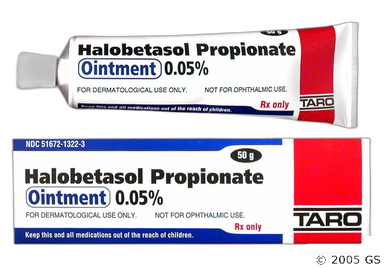
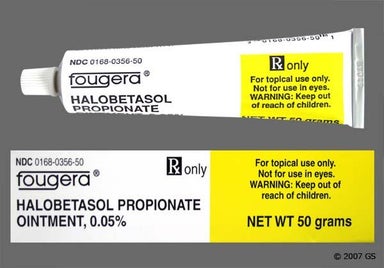
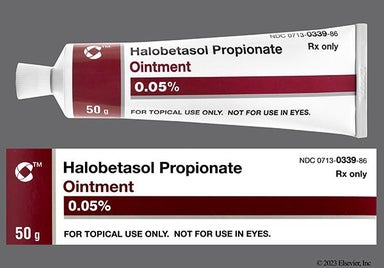
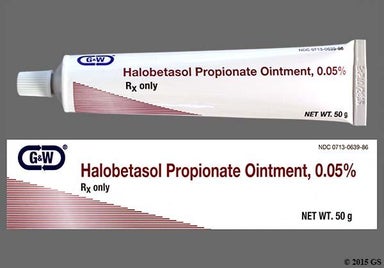
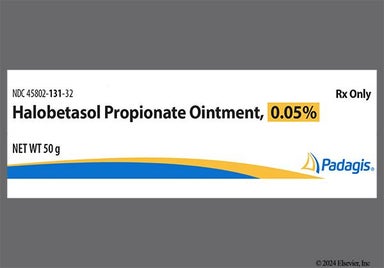
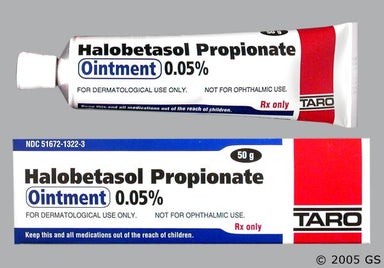
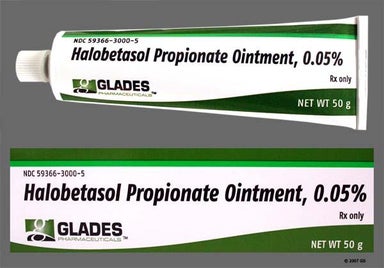
This medicine is Colorless Tube Of Ointment.Not applicable - Halobetasol Propionate 0.05% Topical OintmentThis medicine is Colorless Tube Of Ointment.Not applicable - Halobetasol Propionate 0.05% Topical OintmentThis medicine is Colorless Tube Of Ointment.Not applicable - Halobetasol Propionate 0.05% Topical OintmentThis medicine is Colorless Tube Of Ointment.Not applicable - Halobetasol Propionate 0.05% Topical OintmentThis medicine is Colorless Tube Of Ointment.Not applicable - Halobetasol Propionate 0.05% Topical OintmentThis medicine is Beige Tube Of Ointment.Beige Not applicable - Halobetasol Propionate 0.05% Topical Ointment
GoodRx Health has strict sourcing policies and relies on primary sources such as medical organizations, governmental agencies, academic institutions, and peer-reviewed scientific journals. Learn more about how we ensure our content is accurate, thorough, and unbiased by reading our editorial guidelines.
Prescription savings
Stop paying too much for your prescriptions. Compare prices, get pharmacy coupons, and save up to 80%.
Yes, Halobetasol is a topical steroid. It's used to lessen skin inflammation (skin redness, itching, and swelling) that's related to different types of skin conditions. More specifically, Halobetasol is considered a super potent topical steroid.
No, don't put Halobetasol onto your face, including near your eyes or mouth. Halobetasol is a super potent topical steroid. Applying very strong steroids like Halobetasol to the face can cause side effects like skin thinning, acne, and irritation. Ask your prescriber about other options if you need to treat any skin conditions on your face.
The Halobetasol cream and ointment are used to treat skin conditions that cause a lot of inflammation (e.g., swelling, redness, itching). For example, they can help treat eczema. People ages 12 years and older can use the cream and ointment forms of the medication.
The Halobetasol lotion and foam are used to treat plaque psoriasis, which is an autoimmune skin problem that causes itchy or painful rash. Halobetasol foam and lotion help lessen how thick psoriasis plaques are. They're approved for adults and certain children who meet specific age requirements (depending on the form or brand name of the medication).
In general, you should see some improvement in the areas of plaque psoriasis within 2 weeks of using Halobetasol as prescribed. Contact your prescriber if your symptoms don't improve after 2 weeks of using the medication.
Yes, it's possible for topical steroids like Halobetasol to cause skin thinning. The risk of this happen is higher if you use Halobetasol too often or if you use it regularly for a long time. Contact your prescriber if you notice symptoms of thin skin, such as changes in skin color, more lines or wrinkles, or easy bruising.