

10 Fingolimod (Gilenya) Side Effects and How to Manage Them
Read on to learn the side effects of fingolimod (Gilenya) for multiple sclerosis, including common, rare, and adverse side effects, and how to manage them.
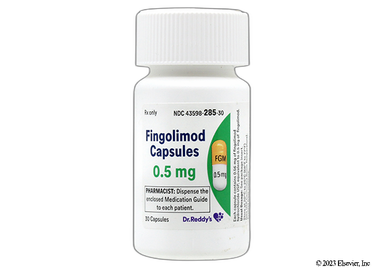
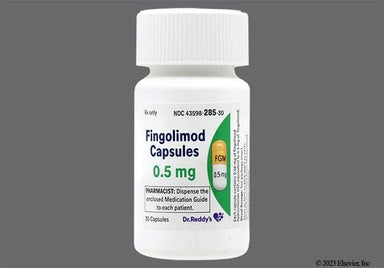
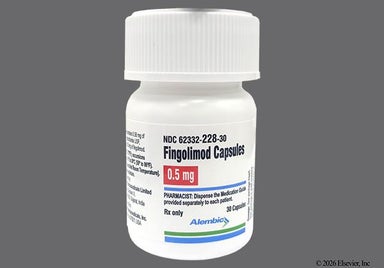
Fingolimod (Gilenya) is a disease-modifying treatment option for relapsing multiple sclerosis (MS). It works well to lower the number of MS relapses. Fingolimod (Gilenya) is taken by mouth, typically once daily, and can be used by adults and children age 10 years and older. But fingolimod (Gilenya) can cause potentially serious side effects, such as a higher risk for infections and heart problems, so it's not the best choice for everyone.

Fingolimod (Gilenya) is a disease-modifying treatment for multiple sclerosis (MS). More specifically, it's a sphingosine 1-phosphate receptor modulator. The exact way it works to treat MS is unknown. But it's thought that fingolimod (Gilenya) lowers the number of white blood cells in your body, thus lessening the damage these cells cause to your nerves.
| Common Brands | Gilenya, Tascenso ODT |
|---|---|
| Drug Class | Sphingosine 1-phosphate receptor modulator |
| Controlled Substance Classification | Not a controlled medication |
| Generic Status | Lower-cost generic available |
| Availability | Prescription only |

The following side effects may get better over time as your body gets used to the medication. Let your healthcare provider know immediately if you continue to experience these symptoms or if they worsen over time.
Contact your healthcare provider immediately if you experience any of the following.
Along with its needed effects, a medicine may cause some unwanted effects. Although not all of these side effects may occur, if they do occur they may need medical attention.
Check with your doctor immediately if any of the following side effects occur:
More common
Blurred vision
chills
cough-producing mucus
difficult or labored breathing
dizziness
general feeling of discomfort or illness
headache
joint pain
loss of appetite
muscle aches and pains
nervousness
pounding in the ears
seizures
shivering
slow or fast heartbeat
sweating
tightness in the chest
trouble sleeping
unusual tiredness or weakness
vomiting
Less common
Black, tarry stools
burning, crawling, itching, numbness, prickling, "pins and needles", or tingling feelings
chest pain or discomfort
headache, severe and throbbing
hoarseness
lightheadedness, dizziness, or fainting
lower back or side pain
painful or difficult urination
sores, ulcers, or white spots on the lips or in the mouth
swollen glands
unusual bleeding or bruising
Incidence not known
Agitation
back pain
change in size, shape, or color of existing mole
confusion
difficulty in moving
difficulty in speaking
double vision
drowsiness
epileptic seizure that will not stop
inability to move the arms, legs, or facial muscles
inability to speak
irritability
joint stiffness or swelling
loss of consciousness
mole that leaks fluid or bleeds
mood or mental changes
muscle pain, cramps, or stiffness
new mole
redness of the skin
seeing, hearing, or feeling things that are not there
slow speech
stiff neck
swelling of the eyelids, face, lips, hands, or feet
troubled swallowing
yellow skin and eyes
Some side effects may occur that usually do not need medical attention. These side effects may go away during treatment as your body adjusts to the medicine. Also, your health care professional may be able to tell you about ways to prevent or reduce some of these side effects. Check with your health care professional if any of the following side effects continue or are bothersome or if you have any questions about them:
Other side effects not listed may also occur in some patients. If you notice any other effects, check with your healthcare professional.
Call your doctor for medical advice about side effects. You may report side effects to the FDA at 1-800-FDA-1088.




Fingolimod (Gilenya) can cause some serious health issues. This risk may be even higher for certain groups. If this worries you, talk to your doctor or pharmacist about other options.
Fingolimod (Gilenya) can cause a temporary drop in heart rate within the first 24 hours of starting this medication, which can be dangerous. Let your provider know if you've any heart-related conditions or if you're taking medications that also affect heart rate. Your care team will monitor your heart for at least 6 hours after your first dose of fingolimod (Gilenya), depending on what other health conditions you have. Seek medical help if you have symptoms of low heart rate while taking fingolimod (Gilenya), such as fatigue, weakness, confusion, feeling faint, trouble breathing, and chest pain.
Fingolimod (Gilenya) can affect your body's ability to fight off infections, which can raise your risk of serious bacterial, viral, or fungal infections. Make sure you're up-to-date on all of your vaccinations before starting fingolimod (Gilenya). If you develop an infection while on treatment, your provider will likely ask you to stop taking fingolimod (Gilenya) so your body can fight the infection first. Let your provider know if you develop symptoms of an infection, such as fever, cough, difficulty breathing, diarrhea, or chills.
Fingolimod (Gilenya) can put you at risk of getting progressive multifocal leukoencephalopathy (PML). This is a brain infection caused by the John Cummingham virus (JCV). Though it's a common virus, people who get infected with JCV usually don't experience any symptoms. But in people who have a weakened immune system, JCV can cause PML, which can lead to death or severe disability. Seek medical attention right away and get tested for PML if you experience weakness on one side of the body, feel clumsy, or notice changes in personality, vision, or memory.
Fingolimod (Gilenya) raises your risk of an eye condition called macular edema. Your provider will examine your eyes before and during treatment. Make sure you let them know if you start to have blurry or worsening vision.
Though rare, fingolimod (Gilenya) can cause serious liver problems. This can happen as early as 10 days after you start treatment. Your provider will ask you to do blood work to check your liver health before you start and during fingolimod (Gilenya) treatment. If your liver labs are outside of the safe range, your provider might ask you to stop taking this medication. Typically, your liver labs should return to the normal range after you stop fingolimod (Gilenya). Get medical attention right away if you notice symptoms of liver damage, such as swelling of your stomach, yellowing of your skin or the whites of your eyes, dark urine, or pale stool.
Fingolimod (Gilenya) can cause breathing problems. This can happen as early as 1 month after you start the medication. If you have a history of lung problems and are prescribed a rescue inhaler, make sure to always keep it with you. Let your provider know if you have trouble breathing because you might need to stop fingolimod (Gilenya) and get more medical attention.
Based on animal studies, it's possible that fingolimod (Gilenya) can harm unborn babies when taken during pregnancy. Females of childbearing age should use birth control and avoid pregnancy during treatment and for at least 2 months after the last dose of fingolimod (Gilenya). Let your provider know right away if you become pregnant or think you might be pregnant while taking fingolimod (Gilenya).
Though not common, fingolimod (Gilenya) might raise your risk of getting certain types of cancers, including blood or skin cancer. You'll likely need certain labs and regular physical exams while you take fingolimod (Gilenya) to monitor your risk of cancer. Contact your provider if you experience symptoms such as swollen lymph nodes, tiredness, weight loss, loss of appetite, nosebleeds, or skin changes.
Although rare, there have been reports of a brain problem called posterior reversible encephalopathy syndrome (PRES) in people taking fingolimod (Gilenya). Contact your provider right away if you notice a sudden headache, seizures, loss of consciousness, or changes in vision.

 Bottle
| Dosage | Quantity | Price as low as | Price per unit |
|---|---|---|---|
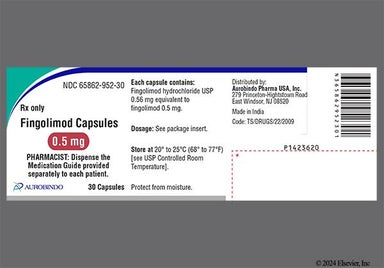
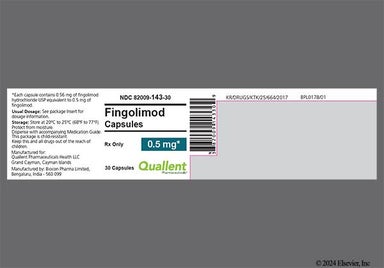
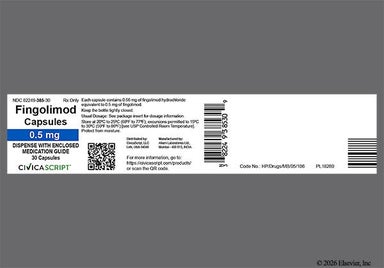
| 30 capsules of 0.5mg | 1 bottle | $55.43 | $55.43 |

Although certain medicines should not be used together at all, in other cases two different medicines may be used together even if an interaction might occur. In these cases, your doctor may want to change the dose, or other precautions may be necessary. When you are taking this medicine, it is especially important that your healthcare professional know if you are taking any of the medicines listed below. The following interactions have been selected on the basis of their potential significance and are not necessarily all-inclusive.
Using this medicine with any of the following medicines is not recommended. Your doctor may decide not to treat you with this medication or change some of the other medicines you take.
Using this medicine with any of the following medicines is usually not recommended, but may be required in some cases. If both medicines are prescribed together, your doctor may change the dose or how often you use one or both of the medicines.


Contraindications are specific health conditions or situations in which a person should not take a medication due to safety concerns. If you have any of the following conditions or if any of the following apply to you, let your healthcare provider know because Fingolimod (Gilenya) will not be safe for you to take.







Prescription savings
Stop paying too much for your prescriptions. Compare prices, get pharmacy coupons, and save up to 80%. Find expert answers to your health questions so you can make the best decisions for yourself and your family.
Health conditions
Medications & treatment
Access & affordability
Medication discounts


A 2-year clinical trial showed that people who took Gilenya experienced 54% fewer MS relapses than people who took placebo. Other studies showed that Gilenya was better at lowering the number of MS relapses compared to Avonex (interferon beta-1a) and Copaxone (glatiramer), which are existing MS medications. If you've any questions about how well Gilenya works and whether it's a possible option for you, talk with your provider.
Yes. Because Gilenya can cause some serious side effects, your provider will order tests to check your health before you start this medication and also regularly throughout treatment. Some things you can expect before starting Gilenya include a complete review or your medications and vaccination history, tests to check your eyes, liver, and heart health as well as your blood cell count levels. For females who are able to get pregnant, your provider might ask you to complete a pregnancy test. Ask your provider if you have any questions about these tests or what they're used to check for.
You can still receive most types of vaccines, including the flu shot, while taking Gilenya. However, you shouldn't receive live vaccines, such as the measles, mumps, rubella (MMR) vaccine, while taking Gilenya or for at least 2 months stopping treatment because it's not known if they're safe or work well. Let your provider or pharmacist know that you're taking Gilenya before you receive any vaccines.
No. While there haven't been human studies looking at how Gilenya affects pregnancy, animal studies showed Gilenya caused harm to unborn babies. It's recommended to use birth control and avoid pregnancy during treatment and for at least 2 months after the last dose of Gilenya. If you do become pregnant during treatment or within 2 months after stopping Gilenya, let your provider know and they can talk with you about next steps.
It's now known how safe it is for babies who are breastfeeding from mothers taking Gilenya because it hasn't been studied. But, it's known that Gilenya gets into animal breast milk. This means it's likely to get into human breast milk, too. Because it's not clear how safe it is, your provider might recommend for you to avoid taking Gilenya while nursing. Talk to your provider before breastfeeding to make sure Gilenya is as safe for your baby as possible.
