


What’s in Your Medicine? A Guide to Ingredients
What are active and inactive ingredients? Where do these ingredients come from? Learn what’s in medications and how they’re made.
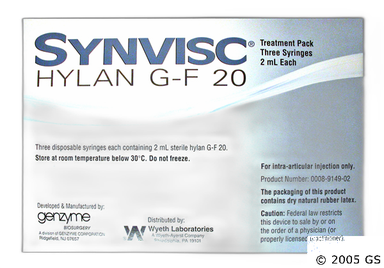
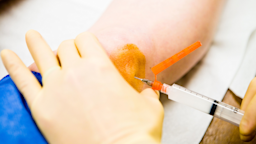
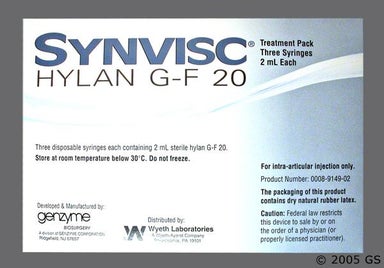
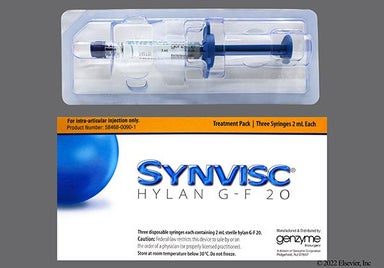
Synvisc (hylan G-F 20) is a viscosupplement used to treat knee pain due to osteoarthritis (OA) in adults. It's an option for people who still have pain despite having tried certain treatments, like exercise and acetaminophen (Tylenol). Synvisc (hylan G-F 20) is a type of knee joint gel that's injected directly into the knee by a healthcare professional (HCP) to lubricate the joint. Synvisc is given as 3 weekly injections, whereas Synvisc-One is given as a single injection. Side effects include injection site reactions, such as redness, pain, and swelling around the knee.

Synvisc (hylan G-F 20) is a viscosupplement. It's similar to hyaluronic acid, a substance that's naturally found in the connective tissues in your body. When Synvisc (hylan G-F 20) is injected into the knee, it helps lubricate the knee joint so that you can move it smoothly. This can ease pain from osteoarthritis in the knee.
| Common Brands | Synvisc, Synvisc-One |
|---|---|
| Drug Class | Viscoelastic |
| Controlled Substance Classification | Not a controlled medication |
| Generic Status | No lower-cost generic available |
| Availability | Prescription only |

The following side effects may get better over time as your body gets used to the medication. Let your healthcare provider know immediately if you continue to experience these symptoms or if they worsen over time.
Contact your healthcare provider immediately if you experience any of the following.
Along with its needed effects, a medicine may cause some unwanted effects. Although not all of these side effects may occur, if they do occur they may need medical attention.
Check with your doctor or nurse immediately if any of the following side effects occur:
More common
Difficulty with moving
fluid build up around the knee
muscle pain or stiffness
pain and stiffness in the joints
Less common
Bleeding after defecation
bluish color
changes in skin color
fainting
fast, pounding, or irregular heartbeat or pulse
pain or aching in the lower legs
swelling of the ankles, feet, or legs
tenderness
uncomfortable swelling around the anus
warmth or swelling of the joints
Rare
Redness in the joints
Incidence not known
Black, tarry stools
bleeding gums
bloating or swelling of the face, arms, hands, lower legs, or feet
blood in the urine or stools
burning, crawling, itching, numbness, prickling, "pins and needles", or tingling feelings
chills
feeling of warmth
general feeling of discomfort or illness
muscle cramps
pinpoint red spots on the skin
rapid weight gain
redness of the face, neck, arms, and occasionally, upper chest
tingling of the hands or feet
trouble breathing
unusual bleeding or bruising
unusual tiredness or weakness
unusual weight gain or loss
Some side effects may occur that usually do not need medical attention. These side effects may go away during treatment as your body adjusts to the medicine. Also, your health care professional may be able to tell you about ways to prevent or reduce some of these side effects. Check with your health care professional if any of the following side effects continue or are bothersome or if you have any questions about them:
Rare
Pain at the injection site
Incidence not known
Dizziness
headache
raised red swellings on the skin, lips, tongue, or in the throat
Other side effects not listed may also occur in some patients. If you notice any other effects, check with your healthcare professional.
Call your doctor for medical advice about side effects. You may report side effects to the FDA at 1-800-FDA-1088.




Synvisc (hylan G-F 20) can cause some serious health issues. This risk may be even higher for certain groups. If this worries you, talk to your doctor or pharmacist about other options.
Synvisc (hylan G-F 20) can cause life-threatening allergic reactions (e.g., anaphylaxis). If you have a history of an allergic reaction to hyaluronate products, bird products, feathers, or egg products, you're at a higher risk of having a reaction to Synvisc (hylan G-F 20). Make sure to tell your prescriber all of your allergies. If you experience rash, trouble breathing, or swelling in your lips, tongue, or throat, get medical help right away.
Some people have reported serious skin damage after getting Synvisc (hylan G-F 20). Contact your prescriber if you notice changes in skin color or open sores.


Although certain medicines should not be used together at all, in other cases two different medicines may be used together even if an interaction might occur. In these cases, your doctor may want to change the dose, or other precautions may be necessary. Tell your healthcare professional if you are taking any other prescription or nonprescription (over-the-counter [OTC]) medicine.

Contraindications are specific health conditions or situations in which a person should not take a medication due to safety concerns. If you have any of the following conditions or if any of the following apply to you, let your healthcare provider know because Synvisc (hylan G-F 20) will not be safe for you to take.

This medication is used for many different conditions. Generally, it's used for autoimmune problems, conditions related to swelling, or cancer. Some examples include:


Prescription savings
Stop paying too much for your prescriptions. Compare prices, get pharmacy coupons, and save up to 80%. Find expert answers to your health questions so you can make the best decisions for yourself and your family.
Health conditions
Medications & treatment
Access & affordability
Medication discounts

If you received Synvisc, you might have some improvement in your pain symptoms as soon as a week after your injection. But people typically feel a more noticeable difference about 2 to 3 months after the start of treatment. If you received Synvisc One, you might start to feel pain relief a month after your injection. Not everyone responds to treatment the same way. Talk with your healthcare team if you have more questions about what to expect with Synvisc.
How long your pain relief lasts might differ depending on your condition and how your body responds to Synvisc. Clinical studies show that people who received Synvisc and Synvisc One can experience pain relief up to 6 months after treatment. Some long-term studies showed that the benefits of Synvisc might last up to a year or longer. Each person responds differently to the treatment, so results can vary among individuals.
In studies, up to 56% of people with OA who got three Synvisc injections were free or nearly free of pain when they put weight on their knee 10-24 weeks after the last shot. This was compared to less than 13% of people who got a shot of saline (no medication).
Yes. Some knee injections that contain hyaluronic acid, like Synvisc, are made using rooster combs. These are the red comb-like structure on top of a rooster's head. They contain the same gel-like substance that's in our knee joints.
Durolane (sodium hyaluronate) and Synvisc are both knee injections that are used to relieve knee pain in adults with osteoarthritis who don't get enough relief from other treatments. Both Durolane and Synvisc-One are injected into the knee once, while Synvisc is given as three weekly injections. Another difference between Synvisc and Durolane is that Durolane is made from bacteria, while Synvisc is made from chicken combs.
Both Synvisc and Synvisc-One contain hylan polymers as the active ingredient. The main difference between them is that Synvisc has a lower dose and is given as one injection a week for three weeks. Synvisc-One has a higher dose, and it's given as one injection. Follow up with your healthcare professional to see which formulation is best for you.
Weight gain wasn't a side effect reported by people taking Synvisc during clinical studies. If you have concerns about your weight, contact your primary care provider.
No, Synvisc isn't a steroid. It contains sodium hyaluronate, which is a gel-like substance that helps lubricate the joints and helps absorb shock from movements. There are other knee injections used to treat osteoarthritis that do contain a steroid.
