



Injections for Knee Pain: Know Your Options
If you suffer from knee pain, either from osteoarthritis or another condition, certain injections may help. Learn about gel injections for knee pain at GoodRx.
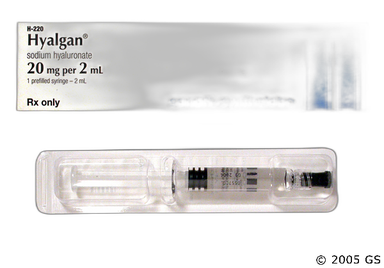
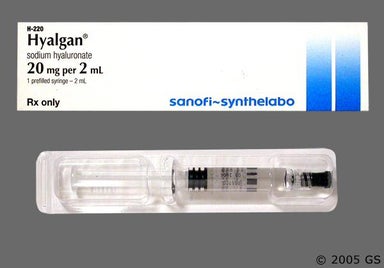
Hyalgan (sodium hyaluronate) is a viscosupplement, a gel-like lubricant that's injected into the knee joint to ease pain from osteoarthritis (OA). It's prescribed for adults who haven't responded well to certain treatment options, like exercise and acetaminophen (Tylenol). Hyalgan (sodium hyaluronate) is injected into the knee joint by a healthcare professional once a week for 3 or 5 weeks. This medication can cause temporary injection site pain and joint swelling as side effects.

Hyalgan (sodium hyaluronate) is a viscosupplement. It's similar to hyaluronic acid, a substance that's naturally found in the connective tissues in your body. When Hyalgan (sodium hyaluronate) is injected into the knee, it helps lubricate the knee joint so that you can move it smoothly. This can ease pain from osteoarthritis in the knee.
| Common Brands | Hyalgan |
|---|---|
| Drug Class | Viscoelastic |
| Controlled Substance Classification | Not a controlled medication |
| Generic Status | No lower-cost generic available |
| Availability | Prescription only |

The following side effects may get better over time as your body gets used to the medication. Let your healthcare provider know immediately if you continue to experience these symptoms or if they worsen over time.
Contact your healthcare provider immediately if you experience any of the following.
Along with its needed effects, a medicine may cause some unwanted effects. Although not all of these side effects may occur, if they do occur they may need medical attention.
Check with your doctor immediately if any of the following side effects occur:
Some side effects may occur that usually do not need medical attention. These side effects may go away during treatment as your body adjusts to the medicine. Also, your health care professional may be able to tell you about ways to prevent or reduce some of these side effects. Check with your health care professional if any of the following side effects continue or are bothersome or if you have any questions about them:
Other side effects not listed may also occur in some patients. If you notice any other effects, check with your healthcare professional.
Call your doctor for medical advice about side effects. You may report side effects to the FDA at 1-800-FDA-1088.




Hyalgan (sodium hyaluronate) can cause some serious health issues. This risk may be even higher for certain groups. If this worries you, talk to your doctor or pharmacist about other options.
Hyalgan (sodium hyaluronate) can cause life-threatening allergic reactions (e.g., anaphylaxis). If you have a history of an allergic reaction to hyaluronate products, bird products, feathers, or egg products, you're at a higher risk of having a reaction to Hyalgan (sodium hyaluronate). Make sure to tell your prescriber all of your allergies. If you experience rash, trouble breathing, or swelling in your lips, tongue, or throat, get medical help right away.


Although certain medicines should not be used together at all, in other cases two different medicines may be used together even if an interaction might occur. In these cases, your doctor may want to change the dose, or other precautions may be necessary. Tell your healthcare professional if you are taking any other prescription or nonprescription (over-the-counter [OTC]) medicine.


Contraindications are specific health conditions or situations in which a person should not take a medication due to safety concerns. If you have any of the following conditions or if any of the following apply to you, let your healthcare provider know because Hyalgan (sodium hyaluronate) will not be safe for you to take.

This medication is used for many different conditions. Generally, it's used for autoimmune problems, conditions related to swelling, or cancer. Some examples include:


Prescription savings
Stop paying too much for your prescriptions. Compare prices, get pharmacy coupons, and save up to 80%. Find expert answers to your health questions so you can make the best decisions for yourself and your family.
Health conditions
Medications & treatment
Access & affordability
Medication discounts

Synvisc (hylan G-F 20) and Hyalgan are both viscosupplements that are injected into the knee joint to treat pain due to OA. There are some differences in the chemical consistency of Synvisc and Hyalgan; a small study suggests some people might experience longer pain relief with Synvisc, but more research is needed in this area. Another difference is that one cycle of Hyalgan is made up of 3 to 5 weekly injections, whereas one cycle of Synvisc is made up of 3 weekly injections (and a single injection for Synvisc One). Follow up with your healthcare professional to learn about other differences between these knee injections.
Study shows that a cycle of Hyalgan (5 weekly injections) can provide pain relief for about 6 months. Keep in mind that everyone will respond differently to the treatment.
Hyalgan is generally safe when used as directed by a healthcare professional. However, you shouldn't receive Hyalgan if you're allergic to hyaluronate. It's also not recommended for you to get this knee injection if you have a current infection or other skin problem near the injection site.
Yes, Hyalgan is made from rooster combs, the red comb-like structure on top of a rooster's head. Some knee injections that contain sodium hyaluronate, including Hyalgan, are made using rooster combs because it contains the same gel-like substance that's in our knee joints.
No, Hyalgan isn't a steroid. It contains sodium hyaluronate, which is a gel-like substance that helps lubricate the joints and helps absorb shock from movements. There are other knee injections used to treat osteoarthritis that do contain a steroid.
Weight gain wasn't a side effect reported by people taking Hyalgan during clinical studies. If you have concerns about your weight, contact your primary care provider.
Each cycle of Hyalgan is made up of five weekly injections and should provide pain relief for up to 6 months. Talk with your healthcare professional about how often you should get repeat treatments with Hyalgan. This will depend on things like your individual response to treatment and your insurance coverage.
