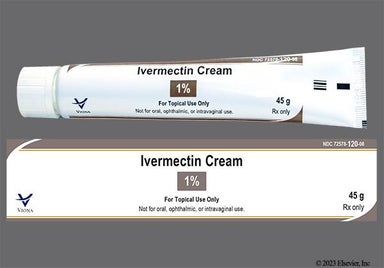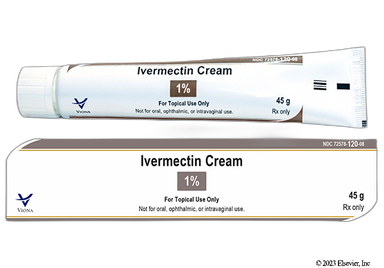
ivermectin
Ivermectin cream (Soolantra) works well for treating rosacea in adults. You apply the topical cream onto the affected areas of the face once a day. Ivermectin cream (Soolantra) is an antiparasitic medication, but it's not clear how it works to help with rosacea. Side effects aren't common but can include skin burning and irritation at the application site.


What is Ivermectin cream (Soolantra)?
What is Ivermectin cream (Soolantra) used for?
How Ivermectin cream (Soolantra) works
Ivermectin cream (Soolantra) is an antiparasitic medication. It's not clear how the medication works to treat rosacea symptoms like red bumps on the face.
Research suggests that people with rosacea have more small mites living in the skin pores that cause skin inflammation than people without rosacea. They believe that ivermectin can kill these mites and lower the amount of inflammation in the skin.
Drug facts

Side effects of Ivermectin cream (Soolantra)
The following side effects may get better over time as your body gets used to the medication. Let your healthcare provider know immediately if you continue to experience these symptoms or if they worsen over time.
Common Side Effects
See Risks and Warnings.
Less Common Side Effects
- Burning sensation on the skin
- Skin irritation
The following Ivermectin cream (Soolantra) side effects have also been reported
Along with its needed effects, a medicine may cause some unwanted effects. Although not all of these side effects may occur, if they do occur they may need medical attention.
Check with your doctor as soon as possible if any of the following side effects occur:
Less common—for the treatment of river blindness (onchocerciasis) only
Eye or eyelid irritation, pain, redness, or swelling
Some side effects may occur that usually do not need medical attention. These side effects may go away during treatment as your body adjusts to the medicine. Also, your health care professional may be able to tell you about ways to prevent or reduce some of these side effects. Check with your health care professional if any of the following side effects continue or are bothersome or if you have any questions about them:
More common—for the treatment of river blindness (onchocerciasis) only
joint or muscle pain
painful and tender glands in neck, armpits, or groin
rapid heartbeat
Less common—for the treatment of river blindness (onchocerciasis) only
Headache
swelling of the face, hands, arms, feet, or legs
Rare—for the treatment of river blindness (onchocerciasis) only
Lightheadedness when getting up from a lying or sitting position
Rare—for the treatment of strongyloidiasis only
Loss of appetite
shaking or trembling
sleepiness
Other side effects not listed may also occur in some patients. If you notice any other effects, check with your healthcare professional.
Call your doctor for medical advice about side effects. You may report side effects to the FDA at 1-800-FDA-1088.

Get your GoodRx coupon

Pros and cons of Ivermectin cream (Soolantra)
Pros
- A recommended treatment option for rosacea
- Only need to use once a day
- Rarely causes side effects
Cons
- Can take a few months to see the full effects
- Not clear whether the medication is safe for children or for people who are pregnant

Pharmacist tips for Ivermectin cream (Soolantra)

- Gently wash your face before you apply ivermectin cream (Soolantra).
- You should only need a pea-sized amount of ivermectin cream (Soolantra) to treat each area of your face that's affected by the rosacea (forehead, each cheek, nose, and chin). Be careful to avoid your eyes, nostrils, and mouth while you're applying the medication. Be sure to spread the cream into a thin layer over the affected areas smoothly and evenly.
- Apply ivermectin cream (Soolantra) onto your face only. Don't apply the cream to other areas of your body (e.g., in your mouth, eyes, or vagina).
- Wash your hands well with soap and water after you use ivermectin cream (Soolantra). Forgetting to wash your hands after you use the medication can cause irritation to the skin on your hands. It might also make it more likely for you to accidentally get the medication into your eyes. Be sure to rinse any areas of irritation with plenty of water.
- You can use cosmetics, such as makeup, and sunscreen with ivermectin cream (Soolantra). Apply ivermectin cream (Soolantra) first and wait until the medication has completely dried on the skin before you apply other products on the skin.

Common questions about Soolantra
Soolantra isn't approved to help with wrinkles; it's meant to treat rosacea. Ask your dermatologist or healthcare professional about treatment options for fine lines and wrinkles.
There's no set amount of time to use Soolantra to treat your rosacea, so follow your prescriber's instructions. As long as Soolantra is working for you, it's generally safe to keep using it long term (up to a year). Talk to your dermatologist or healthcare professional about other ways to manage your rosacea if you don't notice any improvement after you use Soolantra once every day for several months.
No, Soolantra isn't a steroid. It's an antiparasitic medication. Similar to steroids, it helps lower the amount of skin redness and inflammation. But Soolantra works differently and is for skin that's affected by rosacea only.
It's possible that your prescriber will instruct you to use Soolantra along with another rosacea treatment like azelaic acid (Finacea). Everyone's skin is different, so work with your dermatologist or healthcare professional to determine the best way to use both medications. If you have very sensitive skin, your prescriber might recommend using them on different or alternating days.
No, you should use Soolantra once a day at about the same time each day for the most consistent results. Some people choose to make Soolantra a part of their daily skin care routine (either in the morning or at night).
No. Soolantra is only available with a prescription from your dermatologist or other healthcare professional (HCP).
Soolantra is FDA approved to treat rosacea, especially if there are pimples along with redness and inflammation. This medication can help red, inflamed pimples go away if they're caused by rosacea. Speak with your dermatologist or healthcare professional so they can examine your skin. They can discuss with you about the best treatment options for your skin condition, whether for rosacea or acne.
Talk to your healthcare team if you're pregnant. They can discuss the risks and benefits of using Soolantra. Experts don't know whether it's safe to use Soolantra during pregnancy. Your healthcare team can also discuss with you about how to best treat your rosacea.

How to save using GoodRx



Risks and warnings for Ivermectin cream (Soolantra)
Ivermectin cream (Soolantra) can cause some serious health issues. This risk may be even higher for certain groups. If this worries you, talk to your doctor or pharmacist about other options.
Rash
Rarely, some people can get red, dry, and itchy skin after they apply ivermectin cream (Soolantra) onto the skin. This could be a sign of an allergic reaction. Talk to your dermatologist or healthcare professional if you notice an unusual reaction on your skin, especially if you also have a high fever or if the rash starts to blister.

Ivermectin cream (Soolantra) dosage
 Tube of cream
| Dosage | Quantity | Price as low as | Price per unit |
|---|---|---|---|
| 45g of 1% | 1 tube | $101.23 | $101.23 |
Typical dosage for Ivermectin cream (Soolantra)
Apply a thin layer of ivermectin cream (Soolantra) to the affected areas of the face once a day. Be sure to avoid putting the medication near the eyes and lips.

Interactions between Ivermectin cream (Soolantra) and other drugs
Although certain medicines should not be used together at all, in other cases two different medicines may be used together even if an interaction might occur. In these cases, your doctor may want to change the dose, or other precautions may be necessary. When you are taking this medicine, it is especially important that your healthcare professional know if you are taking any of the medicines listed below. The following interactions have been selected on the basis of their potential significance and are not necessarily all-inclusive.
Using this medicine with any of the following medicines may cause an increased risk of certain side effects, but using both drugs may be the best treatment for you. If both medicines are prescribed together, your doctor may change the dose or how often you use one or both of the medicines.

How much does Ivermectin cream (Soolantra) cost?

What are alternatives to Ivermectin cream (Soolantra)?

News about Ivermectin cream (Soolantra)


Ivermectin cream (Soolantra) images