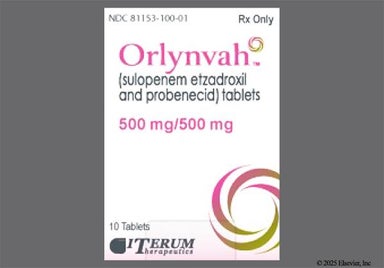
Orlynvah
Orlynvah (sulopenem etzadroxil / probenecid) is an antibiotic. It's used to treat uncomplicated urinary tract infections (UTIs) caused by certain bacteria. It's only approved for adult women who have limited or no other oral antibiotic options. Orlynvah comes as a tablet that you take by mouth, usually twice a day for 5 days. Side effects can include diarrhea, nausea, and vaginal yeast infection.


What is Orlynvah?
What is Orlynvah used for?
- Uncomplicated urinary tract infection (UTI) caused by certain bacteria in adult women who have limited or no other oral antibiotic options
How Orlynvah works
Orlynvah is a combination medication. It contains an antibiotic and another medication that helps the antibiotic stay in your body longer.
-
Sulopenem etzadroxil is a carbapenem antibiotic. It works by blocking bacteria from building the protective outer wall they need to live. This helps kill the bacteria causing your UTI.
-
Probenecid is a "helper medication" for the antibiotic. It slows how quickly your kidneys clear sulopenem. This helps keep sulopenem in your body longer so the antibiotic has more time to fight the infection.
Drug facts
| Common Brands | Orlynvah |
|---|---|
| Drug Class | Carbapenem antibiotic |
| Controlled Substance Classification | Not a controlled medication |
| Generic Status | No lower-cost generic available |
| Availability | Prescription only |

Side effects of Orlynvah
The following side effects may get better over time as your body gets used to the medication. Let your healthcare provider know immediately if you continue to experience these symptoms or if they worsen over time.
Common Side Effects
- Diarrhea (10%)
- Nausea (4%)
Less Common Side Effects
- Vaginal yeast infection
- Headache
- Dizziness
- Weakness
- Vomiting
- Stomach pain
- Constipation
- Bloating
- Changes in taste
Orlynvah serious side effects
Contact your healthcare provider immediately if you experience any of the following.
- Allergic reaction: rash; itching; hives; swelling of the face, lips, tongue, or throat; trouble breathing; dizziness
- Severe diarrhea from Clostridioides difficile infection: frequent watery diarrhea, bloody diarrhea, stomach cramps, fever
- Kidney stones: side pain, back pain, blood in the urine, painful urination
- Gout flare: sudden joint pain, swelling, redness, warmth, often in the big toe
- Severe skin reaction: widespread rash, blistering, peeling skin, fever, mouth sores
The following Orlynvah side effects have also been reported
Side effects that you should report to your care team as soon as possible:
- Allergic reactions or angioedema—skin rash, itching or hives, swelling of the face, eyes, lips, tongue, arms, or legs, trouble swallowing or breathing
- Gout flare—severe pain, redness, warmth, or swelling in joints, such as the big toe
- Kidney stones—blood in the urine, pain or trouble passing urine, pain in the lower back or sides
- Severe diarrhea, fever
- Unusual vaginal discharge, itching, or odor
Side effects that usually do not require medical attention (report these to your care team if they continue or are bothersome):

Get your GoodRx coupon

Pros and cons of Orlynvah
Pros
- Short 5-day treatment
- Taken by mouth
- An option for some adult women who have few or no other oral antibiotics they can take
Cons
- Only approved for certain UTIs in adult women
- Must take with food
- Can cause diarrhea, nausea, and vaginal yeast infection

Pharmacist tips for Orlynvah

- Take Orlynvah twice a day at evenly spaced times each day. For example, an easy way to remember is taking it in the morning and then again in the evening. Setting reminders on your phone can help you remember your doses.
- Take Orlynvah with food. Food helps your body absorb the antibiotic better. This can help the medication work as expected.
- Take Orlynvah for the full 5 days, even if you start feeling better. Stopping the antibiotic early can cause the infection to come back. It can also raise the risk that the bacteria can become harder to treat.
- If you miss a dose of Orlynvah, take it as soon as you remember. If it's almost time for your next dose, skip the missed dose and take your next dose at the regular time. Don't take two doses at the same time to make up for a missed dose since it can raise your risk of side effects.
- Tell your prescriber right away if you have severe watery or bloody diarrhea. Mild diarrhea is common with antibiotics like Orlynvah. But severe diarrhea can be a sign of a serious gut infection. This can happen during treatment or even weeks after you finish Orlynvah.
- Drink plenty of fluids while taking Orlynvah. This can help prevent dehydration if you have diarrhea from the medication. Staying hydrated can also help lower your risk of uric acid kidney stones. Ask your prescriber how much fluid you should drink during treatment.
- Talk to your prescriber before taking nonsteroidal anti-inflammatory drugs (NSAIDs). These include naproxen (Aleve), ketorolac (Toradol), ketoprofen, and others. Some NSAIDs shouldn't be taken with Orlynvah. Taking them together can raise your risk of NSAID side effects. Your prescriber can tell you which NSAID you can take if you need one.
- Tell your prescriber about the medications you take. Orlynvah can raise the risk of side effects from some medications. This includes methotrexate (Trexall), lorazepam (Ativan), and sulfonylurea diabetes medications like glipizide. Your prescriber can make sure your medications are safe to take together. They might ask you to watch for side effects more closely or they can help make treatment changes if needed.

Risks and warnings for Orlynvah
Orlynvah can cause some serious health issues. This risk may be even higher for certain groups. If this worries you, talk to your doctor or pharmacist about other options.
Serious allergic reactions
- Risk factors: Allergy to penicillins, cephalosporins, carbapenems, or other beta-lactam antibiotics | Allergy to probenecid or another part of Orlynvah
Orlynvah can cause allergic reactions. In rare cases, they can be serious or life-threatening.
Before starting Orlynvah, tell your prescriber about your medication allergies. This is especially important if you've had an allergic reaction to penicillins, cephalosporins, carbapenems, or other similar antibiotics. You might be more likely to have an allergic reaction to Orlynvah.
Tell your care team right away if you have a rash, itching, or hives while taking Orlynvah. And get emergency medical help if you have swelling of your lips, tongue, or throat, trouble breathing, or feel like you might faint. These can be signs of a serious allergic reaction.
Severe diarrhea from a bacterial gut infection
Like other antibiotics, Orlynvah can upset the normal balance of bacteria in your gut. It can allow certain bacteria called Clostridioides difficile to grow too much in the gut. This can cause a serious gut infection and lead to diarrhea that can range from mild to severe. In rare cases, this can be life-threatening.
This problem can happen while you're taking Orlynvah or even weeks after you finish treatment. Tell a healthcare professional if you have diarrhea that doesn't get better. And get medical help right away if you have severe diarrhea, bloody stools, severe stomach pain, or fever. These can be signs of C. diff-related diarrhea.
Risk of uric acid kidney stones
- Risk factors: History of gout | Known uric acid kidney stones
Orlynvah can raise the risk of a certain type of kidney stone made of uric acid. This risk matters most if you have gout or if you've had uric acid stones before. In fact, you shouldn't take Orlynvah if you already have any uric acid kidney stones.
Tell your prescriber right away if you have sharp pain in your side or back, pain when you urinate, blood in your urine, or strong, sudden urges to urinate. These can be signs of a kidney stone. Get urgent help if the pain is severe or if you can't urinate.
Gout flare in people with gout
Orlynvah can make gout worse. Before starting this medication, tell your prescriber if you've had gout before. They might want to make sure your gout is under control before you begin treatment.
Tell your primary care provider right away if you have sudden joint pain, redness, swelling, warmth, or trouble moving a joint. These can be signs of a gout flare, especially in your big toe, foot, ankle, or knee. Your primary care provider can decide if you need any treatment changes.
Kidney damage in people at risk for tumor lysis syndrome
Orlynvah contains probenecid. In people at risk of tumor lysis syndrome (TLS), probenecid can raise the risk of high uric acid levels. Too much uric acid can damage the kidneys.
Before starting Orlynvah, let your prescriber know if you've been told you're at risk for TLS. Your care team might monitor you more closely during treatment. Tell them right away if you urinate less than usual, have blood in your urine, pain in your side, nausea, or swelling. These can be signs of kidney problems.
Risk of bacteria becoming harder to treat
Orlynvah should only be used to treat UTIs caused by bacteria that it can fight against. Taking Orlynvah when it's not needed won't help you get better. In fact, it can make bacteria harder to treat in the future.
Your prescriber will help choose the right antibiotic for your UTI. If Orlynvah is right for you, be sure to take it exactly as prescribed and finish the full course. Tell your prescriber if your symptoms don't start to improve or if they come back after treatment.

Orlynvah dosage
 Tablet
| Dosage | Quantity | Price as low as | Price per unit |
|---|---|---|---|
| 500mg/500mg of | 10 tablets | $2,862.25 | $286.23 |
Typical dosage for Orlynvah
The typical dose is 1 tablet by mouth twice a day for 5 days.
Each Orlynvah tablet contains 500 mg of sulopenem etzadroxil and 500 mg of probenecid.

How much does Orlynvah cost?
$2,862.25

Orlynvah contraindications
Contraindications are specific health conditions or situations in which a person should not take a medication due to safety concerns. If you have any of the following conditions or if any of the following apply to you, let your healthcare provider know because Orlynvah will not be safe for you to take.
- Allergy to beta-lactam antibiotics (e.g., penicillins, cephalosporins, carbapenems)
- Allergy to probenecid
- Known uric acid kidney stones
- Take ketorolac

What are alternatives to Orlynvah?

Orlynvah images