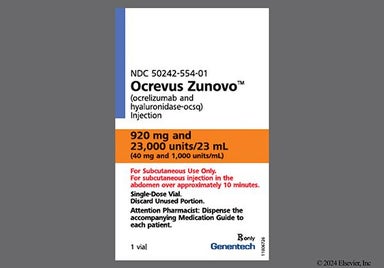
Ocrevus Zunovo
Ocrevus Zunovo (ocrelizumab / hyaluronidase) is an injection that's given under the skin (subcutaneous). It's used to treat multiple sclerosis (MS) in adults. Ocrevus Zunovo is a monoclonal antibody. It also contains an enzyme called hyaluronidase that makes it easier for the medication to absorb through the skin. The injection is given every 6 months by a healthcare professional at a medical center or clinic. Side effects include injection-site reactions like pain, itching, and redness. You might also have a headache and feel nauseous.


What is Ocrevus Zunovo?
What is Ocrevus Zunovo used for?
- All types of multiple sclerosis (MS)
How Ocrevus Zunovo works
Ocrevus Zunovo has two active ingredients in it.
- Ocrelizumab is a monoclonal antibody. It's thought to attach to a protein called CD20 found on immune cells in the body. These immune cells then get destroyed so they can't attack the protective covering on your nerve cells. This might help relieve symptoms of MS.
- Hyaluronidase is an enzyme. It breaks down a substance in the layers of your skin called hyaluronan. This helps your body absorb ocrelizumab through the skin better. It makes under-the-skin injections of Ocrevus Zunovo possible.
Drug facts
| Common Brands | Ocrevus Zunovo |
|---|---|
| Drug Class | Monoclonal antibody |
| Controlled Substance Classification | Not a controlled medication |
| Generic Status | No lower-cost generic available |
| Availability | Prescription only |

Side effects of Ocrevus Zunovo
The following side effects may get better over time as your body gets used to the medication. Let your healthcare provider know immediately if you continue to experience these symptoms or if they worsen over time.
Common Side Effects
- Reaction at the injection site (e.g., redness, pain, swelling, itching; 50%)
- Other reaction related to the injection (e.g., flushing, nausea, headache; 12%)
Less Common Side Effects
Ocrevus Zunovo serious side effects
Contact your healthcare provider immediately if you experience any of the following.
- Reaction related to the injection: hives, rash, itching, flushing, dizziness, fever, nausea, pain in the mouth or throat, a fast heart rate, neck swelling, trouble breathing
- Serious infection: fever, chills, weakness, sweating, trouble breathing, cough, pain while urinating, need to urinate more often
- Inflammation of the colon: severe stomach pain, cramping, diarrhea, bloody stools
The following Ocrevus Zunovo side effects have also been reported
Side effects that you should report to your care team as soon as possible:
- Allergic reactions—skin rash, itching, hives, swelling of the face, lips, tongue, or throat
- Breast tissue changes, new lumps, redness, pain, or discharge from the nipple
- Dizziness, loss of balance or coordination, confusion or trouble speaking
- Infection—fever, chills, cough, sore throat, wounds that don't heal, pain or trouble when passing urine, general feeling of discomfort or being unwell
- Injection reactions—chest pain, shortness of breath or trouble breathing, feeling faint or lightheaded
- Liver injury—right upper belly pain, loss of appetite, nausea, light-colored stool, dark yellow or brown urine, yellowing skin or eyes, unusual weakness or fatigue
- Sudden or severe stomach pain, bloody diarrhea, fever, nausea, vomiting
Side effects that usually do not require medical attention (report these to your care team if they continue or are bothersome):
- Back pain
- Diarrhea
- Swelling of the ankles, hands, or feet
- Worsening mood, feelings of depression

Pros and cons of Ocrevus Zunovo
Pros
- Given twice a year (after a couple starter doses)
- Injection itself takes about 10 minutes
- Helps with all types of MS
Cons
- Must be given by a healthcare professional at a medical office
- Raises your risk of infections
- Doesn't cure MS

Pharmacist tips for Ocrevus Zunovo

- Mark your appointments to get your Ocrevus Zunovo injections on your calendar. Since injections are just every 6 months, writing the dates down can help you remember to get them on time.
- If you miss an Ocrevus Zunovo injection, call your care team to reschedule it as soon as possible. Then, your next injection will be 6 months later. Each injection must be at least 5 months apart.
- Be sure to schedule enough time for your Ocrevus Zunovo appointment. The injection itself should take about 10 minutes. But you'll also need to stay at the center for at least another hour after the first injection. Then, you'll need to stay for at least 15 minutes after the rest of your injections. This is so your care team can check for delayed reactions to the injection.
- If you feel itchy, dizzy, or nauseous during or after your Ocrevus Zunovo injection, tell the nurse right away. Also let them know if you get a rash, have pain in your mouth or throat, or have trouble breathing. These can be signs of an injection reaction. Your nurse can give you medications to help relieve these reactions.
- Get medical help right away if these injection reactions happen after you get home from your appointment. Reactions can happen up to a day after your Ocrevus Zunovo injection.
- After your Ocrevus Zunovo injection, the area might get red, itchy, swollen, or sore. These reactions happen within hours after the injection. They're usually mild and go away in a few days. If you need relief, you can hold an ice pack wrapped in a towel over the area for about 10 minutes. Talk to your care team if you need more help, if these reactions get worse, or if they don't go away.
- Call your care team if you think you have an infection while taking Ocrevus Zunovo. Look for signs like a fever, chills, a cough that doesn't go away, or pain when you urinate. Your care team can see if you have an infection and help you get it treated. They might tell you to wait until you're better before your next injection.
- Before getting any vaccines, let the healthcare professional know you're taking Ocrevus Zunovo. They can help make sure the vaccine is safe for you to get. You shouldn't get any live vaccines while taking this medication. It's not known if it can make you more likely to get sick from a live vaccine.
- If you can become pregnant, use reliable birth control while you're taking Ocrevus Zunovo. Keep using birth control for 6 months after your last injection. Animal studies show that this medication might harm an unborn baby. If you get pregnant during treatment, tell your prescriber right away.

Risks and warnings for Ocrevus Zunovo
Ocrevus Zunovo can cause some serious health issues. This risk may be even higher for certain groups. If this worries you, talk to your doctor or pharmacist about other options.
Injection reactions
Some people can have a reaction after they get their Ocrevus Zunovo injection. Local reactions include pain, redness, swelling, and itchiness at the injection site. But you could also have reactions like headache, flushing, and nausea.
Other reactions might be possible. They can include fever, itchiness, hives, pain in the mouth or throat, a fast heart rate, and other signs of anaphylaxis. Reactions like neck swelling and trouble breathing can be very serious. These reactions have happened when ocrelizumab is given as an infusion into the vein. But it's important to be aware that they might happen with Ocrevus Zunovo (the version that's injected under the skin).
Your care team might give you a few medications at least 30 minutes before your Ocrevus Zunovo injection. They might give you a steroid and an antihistamine. They also might give you acetaminophen (Tylenol). This helps lower the risk and severity of injection reactions.
The nurse will watch for reactions while you're getting Ocrevus Zunovo injected. But let them know if you have any reactions at any time during your injection. They can give you medications to help.
Your care team will also watch you for at least another hour after your first injection. Then, they'll watch for at least 15 minutes after your next injections. This helps them look for and attend to any delayed reactions. Reactions can happen up to a day after the injection. So, get medical help right away if you have an injection reaction when you're back at home.
Risk of serious infections
- Risk factors: Active, chronic (long-term), or recurrent infection | Other conditions that raise your risk of infection | Taking medications that weaken your immune system
Ocrevus Zunovo can weaken your immune system and make it harder to fight off germs. This can raise your risk of getting infections from bacteria, viruses, or fungi. Some infections include upper respiratory infections and urinary tract infections. Sometimes, infections can be very serious. For example, it's rare but possible to get a serious brain infection called progressive multifocal leukoencephalopathy (PML).
Before starting Ocrevus Zunovo, tell your prescriber about your medical history. If you're sick, don't start treatment until you get better. Your prescriber will also check for hepatitis B. This infection can come back during treatment and cause serious problems. Your prescriber will make sure this medication is safe for you.
Also let your prescriber know about all the medications you take. It's important to check if you take other medications that can weaken your immune system. This can raise your risk of infections even higher.
Call your care team if you think you have an infection. Watch for a fever, chills, a cough, trouble breathing, weakness, or a rash. Also take note if it hurts when you urinate or if you feel the need to urinate more often. If you're sick, you might need to stop treatment until you're better.
Get medical help right away if you feel weak on one side, have vision changes, feel clumsy, or have trouble thinking or remembering. These could be signs of a serious brain infection that needs medical care.
Lower antibody levels
It's possible for Ocrevus Zunovo to lower the levels of certain immunoglobulins (antibodies) in your body. This might put you at risk of serious infections.
Your prescriber will check your antibody levels with blood tests while you're taking Ocrevus Zunovo. They'll keep checking even after you stop until your levels are back to normal. If your antibody levels are too low, your care team can help decide what to do next. For example, immunoglobulin infusions might help bring your levels up.
Serious inflammation of the colon
Although rare, some people who received ocrelizumab as an infusion into the vein had colitis. This is when the colon gets inflamed or swollen. It's happened from a few weeks to years of starting the medication. Some cases have been serious and needed other medications to help treat it. Sometimes, people needed to go to the hospital or get surgery for this problem.
Your prescriber will monitor you for this gut problem while you're taking Ocrevus Zunovo. Tell your care team right away if you have stomach pain, cramping, diarrhea, or bloody stools. They can see if there's something serious going on.
Possible higher risk of cancer
It's rare, but there might be a possible higher risk of cancer with Ocrevus Zunovo. In studies, cases of cancer, including breast cancer, happened more often in people who received ocrelizumab as an infusion into the vein. This was in comparison to those who took either a different MS medication or placebo.
Talk to your prescriber about the risk of cancer with Ocrevus Zunovo. They can talk to you about getting screened for cancer, including any tests or exams you might need. They can also tell you the signs of cancer to watch for during treatment. Call your care team if you notice anything unusual.

Ocrevus Zunovo dosage
Typical dosage for Ocrevus Zunovo
The typical dose is 920 mg/23,000 units (ocrelizumab / hyaluronidase) injected under the skin of the stomach every 6 months.

Ocrevus Zunovo contraindications
Contraindications are specific health conditions or situations in which a person should not take a medication due to safety concerns. If you have any of the following conditions or if any of the following apply to you, let your healthcare provider know because Ocrevus Zunovo will not be safe for you to take.
- Active hepatitis B infection
- Life-threatening infusion reaction to Ocrevus (ocrelizumab)
- Allergic reaction to Ocrevus (ocrelizumab) or hyaluronidase

What are alternatives to Ocrevus Zunovo?

Ocrevus Zunovo images