Nortriptyline (Pamelor) is a tricyclic antidepressant (TCA). It's approved to treat depression in adults. This medication is also often prescribed off-label to treat certain types of nerve pain. Nortriptyline (Pamelor) is available as a capsule and liquid that are taken by mouth. Side effects include dry mouth, dizziness, and possible weight gain. This medication is available under the brand name Pamelor and as a generic.
The following side effects may get better over time as your body gets used to the medication. Let your healthcare provider know immediately if you continue to experience these symptoms or if they worsen over time.
Heart rhythm changes—fast or irregular heartbeat, dizziness, feeling faint or lightheaded, chest pain, trouble breathing
Irritability, confusion, fast or irregular heartbeat, muscle stiffness, twitching muscles, sweating, high fever, seizure, chills, vomiting, diarrhea, which may be signs of serotonin syndrome
Seizures
Sudden eye pain or change in vision such as blurry vision, seeing halos around lights, vision loss
Thoughts of suicide or self-harm, worsening mood, feelings of depression
Trouble passing urine
Side effects that usually do not require medical attention (report to your care team if they continue or are bothersome):
Can cause withdrawal symptoms if you suddenly stop taking it after long-term use
Not recommended for children
Pharmacist tips for Nortriptyline (Pamelor)
Take nortriptyline (Pamelor) at any time of day with or without food. It might be helpful to take the medication with food if it upsets your stomach.
For the nortriptyline (Pamelor) liquid: Store the liquid at room temperature in the bottle that the pharmacy gave you. Use an oral syringe or medication dosing cup to measure out your nortriptyline (Pamelor) dose. Don't use household spoons because they aren't accurate and using them might cause you to take the wrong dose.
Keep in mind that nortriptyline (Pamelor) can take 1 to 2 months to work to improve your symptoms of depression. And you might feel side effects of the medication first. Work with your prescriber to find the dose that's best for you.
Never change your dose or stop taking nortriptyline (Pamelor) without talking to your prescriber first. Changing the dose can cause bothersome side effects or withdrawal symptoms like nausea, headache, and sleep problems. Follow your prescriber's instructions to lower your dose slowly over a period of time to stop the medication completely.
Nortriptyline (Pamelor) can cause side effects, such as dizziness and blurry vision, especially when you first start this medication or when your dose changes. Don't drive or do anything that requires concentration until you know how the medication affects you.
Avoid alcohol while you're taking nortriptyline (Pamelor). Alcohol can make side effects like dizziness and drowsiness more intense and lead to a blackout.
Dry mouth can happen with nortriptyline (Pamelor). Ways to help with dry mouth include drinking water, chewing sugar-free gum, and sucking on ice or sugar-free hard candies. Also, make sure to have good oral care by brushing your teeth and flossing every day.
Tell your healthcare team about all the medications you're taking. Don't start any new medications without talking to your prescriber first. It's important for your care team to make sure your medications are safe for you to take together. Your risk for side effects is higher if you take nortriptyline (Pamelor) with medications like sedatives, opioids, antihistamines, and monoamine oxidase inhibitors (MAOIs).
Let your prescriber know if you're pregnant or thinking of becoming pregnant. They can talk with you about the benefits and risks of taking nortriptyline (Pamelor) during pregnancy, as well as other treatment options. This is important because untreated mental health conditions during pregnancy can be harmful for you and your baby.
Let your prescriber know if you're breastfeeding. Since nortriptyline (Pamelor) can get into breast milk at low levels, your prescriber can discuss the risks and benefits of continuing the medication.
Risks and warnings for Nortriptyline (Pamelor)
Nortriptyline (Pamelor) can cause some serious health issues. This risk may be even higher for certain groups. If this worries you, talk to your doctor or pharmacist about other options.
Worsening depression and risk for suicidal thoughts and unusual behavior
Risk factors: Age 24 years and younger | History of depression or other mental health conditions | Heavy alcohol use
Taking nortriptyline (Pamelor) can make your depression worse. It can also raise your risk of having thoughts of suicide or thought of harming yourself. The risk is especially high for people 24 years and younger, when you first start this medication, and when your dose changes. Get medical help right away if you or anyone around you notices that you have signs of worsening depression or any unusual behavior (e.g., anxiety, panic attacks, feeling angry or irritated, restlessness) while you're taking nortriptyline (Pamelor). Call 911 if you have suicidal thoughts or behaviors.
Not for use alone in bipolar disorder
Depression can be the first sign of bipolar disorder. Because of this, your prescriber will check whether you have or are at risk for bipolar disorder before you start nortriptyline (Pamelor). This medication isn't approved to treat bipolar depression.
Taking antidepressant like nortriptyline (Pamelor) by themselves can sometimes cause a bipolar manic episode to happen for those with or at risk for bipolar disorder. Talk to your prescriber right away if you or your loved ones notice symptoms of a manic episode, such as racing thoughts, restlessness, getting easily distracted, or unusual talkativeness.
Dizziness and drowsiness
Risk factors: Age 65 years or older | Low blood pressure | Taking medications that lower blood pressure or make you tired | History of medical conditions that can lower blood pressure
Nortriptyline (Pamelor) can make you feel tired. It can also lower your blood pressure, which can make you feel dizzy or lose your balance. It's possible for these side effects to put you at risk for accidental falls and injuries.
When you stand from a sitting or lying position, make sure to get up slowly and hold onto something so you don't lose your balance and fall. Contact your prescriber if you still feel dizzy or tired after a couple weeks of starting the medication. Also call your prescriber if you experience a fall while you're taking nortriptyline (Pamelor). They might recommend that you switch to a different medication.
Risk of heart problems, heart attack, or stroke
Risk factors: History of heart problems or problems with blood circulation | Hyperthyroidism (high thyroid hormone levels | Taking thyroid medications
Talk to your prescriber before you start nortriptyline (Pamelor) if you have any heart problems or if you've had a stroke before. It's possible for nortriptyline (Pamelor) to affect your heart rhythm and cause a fast or irregular heartbeat (arrhythmia). In addition, some people who took nortriptyline (Pamelor) have had a heart attack or stroke during treatment.
Let your prescriber know if you feel that your heart is beating unusually while you're taking nortriptyline (Pamelor). Get medical help right away if you have symptoms of a heart attack (e.g., chest pain, cold sweats, left arm pain, difficulty breathing) or a stroke (e.g., sudden numbness, weakness, confusion, or difficulty talking).
Glaucoma
Risk factors: History of angle-closure glaucoma
Nortriptyline (Pamelor) can cause or worsen angle-closure glaucoma in some people. Tell your prescriber about your full medical history before you start this medication to make sure it's safe for you to take. Contact your optometrist or ophthalmologist right away if you have sudden symptoms of angle-closure glaucoma like severe headache, eye pain, nausea, and seeing halos around lights.
Nortriptyline (Pamelor) dosage
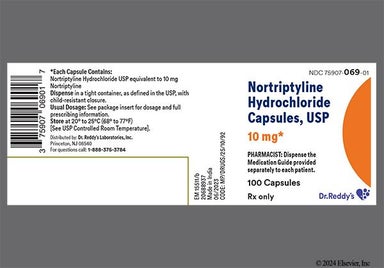
The average cost for 30 capsules of 10mg of Nortriptyline (Pamelor) is $4.00 with a free GoodRx coupon. This is 0.00% off the average retail price of $4.00.
Adults 18 to 64 years old: The typical starting dose is 25 mg by mouth three or four times per day. Or, the total daily dose can be given once per day. The maximum recommended dose is 150 mg per day.
Adolescents and adults 65 years and older: The typical dose is 30 mg to 50 mg by mouth per day, either given all at once or split into smaller doses throughout the day.
Contraindications are specific health conditions or situations in which a person should not take a medication due to safety concerns. If you have any of the following conditions or if any of the following apply to you, let your healthcare provider know because Nortriptyline (Pamelor) will not be safe for you to take.
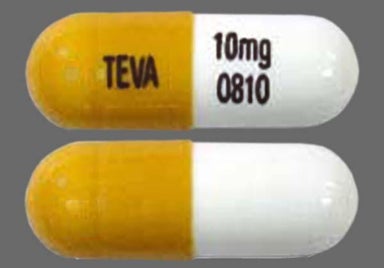
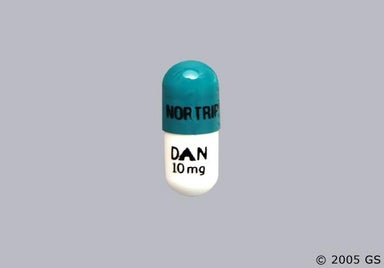
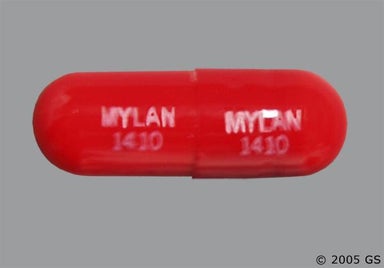
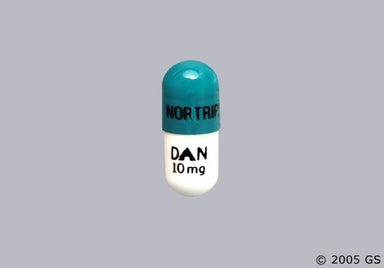
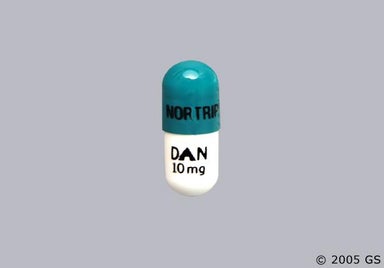
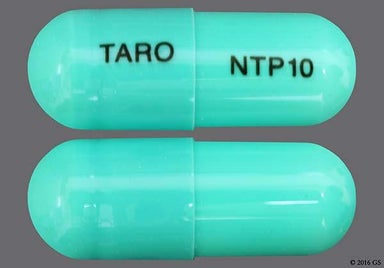
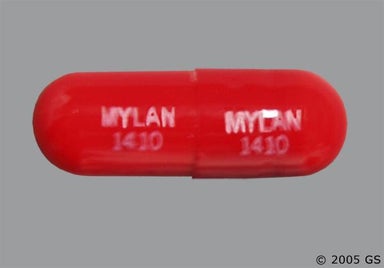
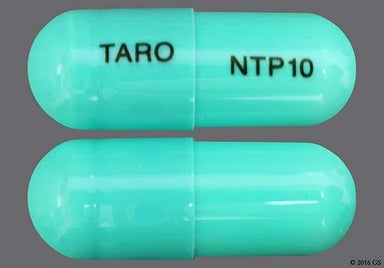
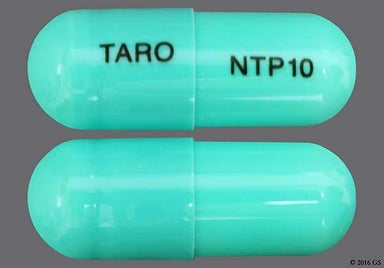
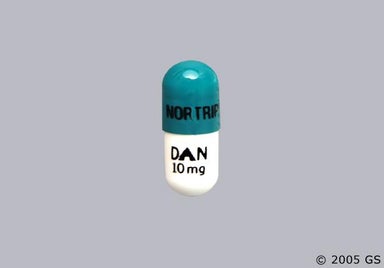
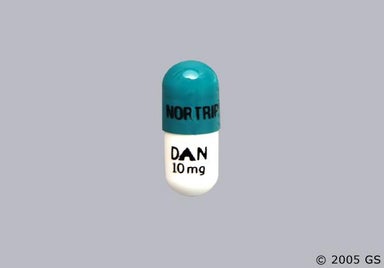
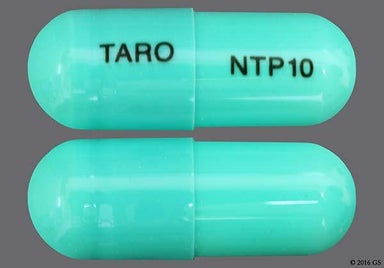
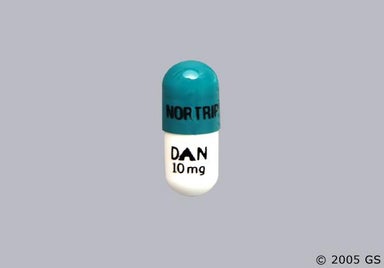
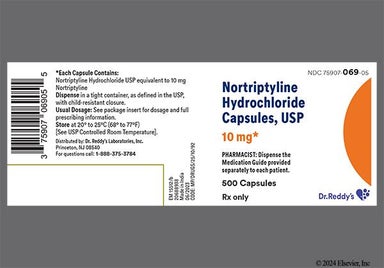
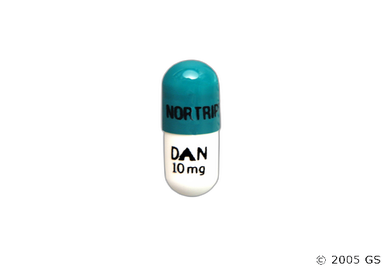
This medicine is Orange, White Capsule Imprinted With "10Mg 93 810", "Teva 10Mg 0810", "93 810 93 810".Orange, White Capsule TEVA 10mg 0810 - Nortriptyline Hydrochloride 10mg CapsuleThis medicine is Green, White Capsule Imprinted With "Nortriptyline Dan 10 Mg".Green, White Capsule NORTRIPTYLINE DAN 10 mg - Nortriptyline Hydrochloride 10mg CapsuleThis medicine is Red Capsule Imprinted With "Mylan 1410 Mylan 1410".Red Capsule MYLAN 1410 MYLAN 1410 - Nortriptyline Hydrochloride 10mg CapsuleThis medicine is Green, White Capsule Imprinted With "Nortriptyline Dan 10 Mg".Green, White Capsule NORTRIPTYLINE DAN 10 mg - Nortriptyline Hydrochloride 10mg CapsuleThis medicine is Green, White Capsule Imprinted With "Nortriptyline Dan 10 Mg".Green, White Capsule NORTRIPTYLINE DAN 10 mg - Nortriptyline Hydrochloride 10mg CapsuleThis medicine is Green Capsule Imprinted With "Taro Ntp10".Green Capsule TARO NTP10 - Nortriptyline Hydrochloride 10mg CapsuleThis medicine is Red Capsule Imprinted With "Mylan 1410 Mylan 1410".Red Capsule MYLAN 1410 MYLAN 1410 - Nortriptyline Hydrochloride 10mg CapsuleThis medicine is Green Capsule Imprinted With "Taro Ntp10".Green Capsule TARO NTP10 - Nortriptyline Hydrochloride 10mg CapsuleThis medicine is Green Capsule Imprinted With "Taro Ntp10".Green Capsule TARO NTP10 - Nortriptyline Hydrochloride 10mg CapsuleThis medicine is Green, White Capsule Imprinted With "Nortriptyline Dan 10 Mg".Green, White Capsule NORTRIPTYLINE DAN 10 mg - Nortriptyline Hydrochloride 10mg CapsuleThis medicine is Green, White Capsule Imprinted With "Nortriptyline Dan 10 Mg".Green, White Capsule NORTRIPTYLINE DAN 10 mg - Nortriptyline Hydrochloride 10mg CapsuleThis medicine is Green Capsule Imprinted With "Taro Ntp10".Green Capsule TARO NTP10 - Nortriptyline Hydrochloride 10mg CapsuleThis medicine is Green, White Capsule Imprinted With "Nortriptyline Dan 10 Mg".Green, White Capsule NORTRIPTYLINE DAN 10 MG - Nortriptyline Hydrochloride 10mg CapsuleThis medicine is Green, White Capsule Imprinted With "Nortriptyline M 10 Mg".Green, White Capsule NORTRIPTYLINE m 10 mg - Nortriptyline Hydrochloride 10mg CapsuleThis medicine is Green, White Capsule Imprinted With "Nortriptyline M 10 Mg".Green, White Capsule NORTRIPTYLINE m 10 mg - Nortriptyline Hydrochloride 10mg Capsule
GoodRx Health has strict sourcing policies and relies on primary sources such as medical organizations, governmental agencies, academic institutions, and peer-reviewed scientific journals. Learn more about how we ensure our content is accurate, thorough, and unbiased by reading our editorial guidelines.
Prescription savings
Stop paying too much for your prescriptions. Compare prices, get pharmacy coupons, and save up to 80%.
Plans start at $9.99/mo. (when paid yearly). Terms apply.
Common questions about Nortriptyline
No, Nortriptyline isn't an SSRI, or a selective serotonin reuptake inhibitor. Instead, Nortriptyline is a TCA, or also known as a tricyclic antidepressant. SSRIs and TCAs are two different classes of antidepressants. Although both types of antidepressant medications are approved to treat depression, SSRIs are typically preferred over TCAs because SSRIs tend to have less side effects.
It's not completely clear whether Nortriptyline works for nerve pain because there are mixed results from studies. Treatment guidelines list Nortriptyline as an option for nerve pain. But a large review of studies suggested that there isn't enough strong evidence to know for sure whether Nortriptyline works well to treat nerve pain. Note that Nortriptyline isn't FDA approved for treating nerve pain. But some healthcare professionals do consider the medication as an off-label option, depending on the person's situation. Speak with a healthcare professional about your options for nerve pain.
Nortriptyline isn't FDA approved for preventing or treating migraines.






 Taking nortriptyline (Pamelor) can make your depression worse. It can also raise your risk of having