





Yeast Infection vs. UTI: How to Tell the Difference
Urinary tract infections (UTIs) and yeast infections have some similarities, making it hard to tell them apart. Here are some ways you can tell the difference.
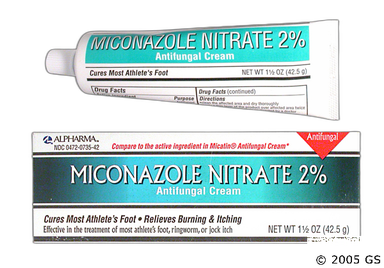
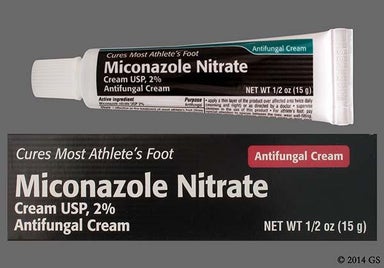
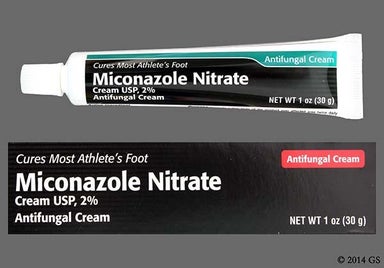
Miconazole (Monistat) is used to treat a vaginal yeast infection in adults and children 12 years and older. It's available over the counter as vaginal creams, inserts/suppositories, or combination kits. The entire treatment lasts 1, 3, or 7 days, depending on the product. Common side effects include mild vaginal burning, irritation, and itching.

Miconazole (Monistat) is an antifungal medication. It kills the fungus by damaging its protective outer layer.
| Common Brands | Monistat 1 Combination Pack, Monistat 3, Monistat 7 |
|---|---|
| Drug Class | Antifungal |
| Controlled Substance Classification | Not a controlled medication |
| Generic Status | Lower-cost generic available |
| Availability | Over-the-counter |

The following side effects may get better over time as your body gets used to the medication. Let your healthcare provider know immediately if you continue to experience these symptoms or if they worsen over time.
Along with its needed effects, a medicine may cause some unwanted effects. Although not all of these side effects may occur, if they do occur they may need medical attention.
Check with your doctor as soon as possible if any of the following side effects occur:
Blistering, burning, redness, skin rash, or other sign of skin irritation not present before use of this medicine
Other side effects not listed may also occur in some patients. If you notice any other effects, check with your healthcare professional.
Call your doctor for medical advice about side effects. You may report side effects to the FDA at 1-800-FDA-1088.



How to use miconazole (Monistat):

Miconazole (Monistat) can cause some serious health issues. This risk may be even higher for certain groups. If this worries you, talk to your doctor or pharmacist about other options.
Miconazole (Monistat) can weaken condoms and diaphragms, making them more likely to break. This can raise your risk of pregnancy and sexually transmitted infections (STIs). It's important to avoid having sex until your infection is fully cleared. Sex can worsen your symptoms, and it's possible to pass the infection to your partner.
If your symptoms (like itching, irritation, or thick discharge) don’t improve after 3 days of using miconazole (Monistat), tell a healthcare professional. Also contact your care team if your infection isn’t gone after 7 days. You might need a different treatment. Don’t use Miconazole (Monistat) for more than 7 days in a row unless your prescriber tells you to.


Although certain medicines should not be used together at all, in other cases two different medicines may be used together even if an interaction might occur. In these cases, your doctor may want to change the dose, or other precautions may be necessary. When you are taking this medicine, it is especially important that your healthcare professional know if you are taking any of the medicines listed below. The following interactions have been selected on the basis of their potential significance and are not necessarily all-inclusive.
Using this medicine with any of the following medicines is usually not recommended, but may be required in some cases. If both medicines are prescribed together, your doctor may change the dose or how often you use one or both of the medicines.
Using this medicine with any of the following medicines may cause an increased risk of certain side effects, but using both drugs may be the best treatment for you. If both medicines are prescribed together, your doctor may change the dose or how often you use one or both of the medicines.













Prescription savings
Stop paying too much for your prescriptions. Compare prices, get pharmacy coupons, and save up to 80%. Find expert answers to your health questions so you can make the best decisions for yourself and your family.
Health conditions
Medications & treatment
Access & affordability
Medication discounts

It can be. If you're pregnant, ask your OB/GYN provider or pharmacist if Miconazole is safe for you. The CDC guidelines recommend using only the 7-day treatment to help with vaginal yeast infections during pregnancy.
Miconazole can cause mild vaginal burning, itching, or irritation when you use it. Talk to your OB/GYN provider if it becomes bothersome.
Yes, Miconazole is available over the counter in both brand-name and generic versions. It doesn't require a prescription from a healthcare professional. You can typically find it on the shelves of your local pharmacy.
Clotrimazole vaginal cream and Miconazole are both antifungal treatments used to treat vaginal yeast infections. They work in similar ways by stopping the fungus that causes itching and irritation. The main difference is how long you use them. Clotrimazole vaginal cream is typically used for 3 or 7 days, while Miconazole offers more variety with 1-day, 3-day, and 7-day options. Talk to a healthcare professional to learn more about how they compare.
No, Miconazole doesn't treat bacterial vaginosis (BV). A yeast infection is caused by a fungus, but BV is caused by too much bacteria. Since Miconazole is an antifungal, it won’t work for BV. Using the wrong treatment can make your symptoms worse or delay proper care. If you notice a fishy smell or thin/gray discharge, it could be BV, so contact your OB/GYN.
Most people start to feel relief within the first 24 hours after using Miconazole. But it can take a little longer for some people. Symptoms usually improve within 3 days and go away within 7 days. If you don’t feel better after 3 days or still have symptoms after a week, contact your OB/GYN provider.
Yes, you can use Miconazole during your period, and you shouldn’t stop treatment if your period starts. It’s important to finish the full course so the infection clears. But don't use tampons while using this medication since they can make it work less well. Instead, stick to pads or pantyliners until you’ve finished all your doses. If your symptoms don’t improve after treatment, contact your OB/GYN provider.
No, Miconazole is only for use in the vagina. Don’t use it on your face. If you think you have a fungal infection on your face, talk to a dermatologist about the right treatment.
