



Diflucan vs. Monistat: 6 Ways These Yeast Infection Medications Compare
Monistat and Diflucan are antifungal meds that treat yeast infections. Monistat is sold over the counter, while Diflucan requires a prescription. Learn more here.
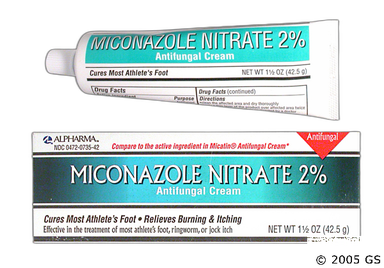
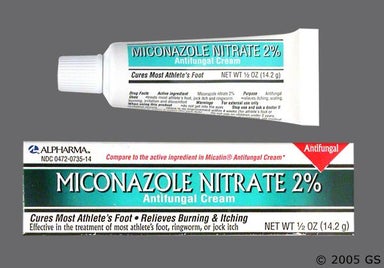
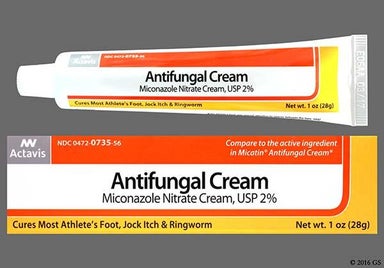
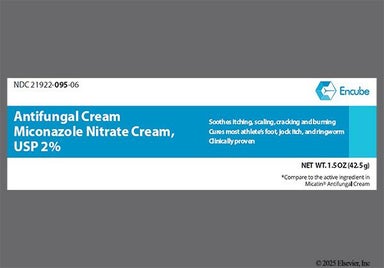
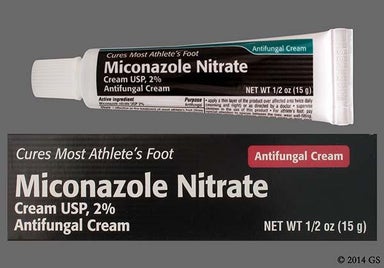
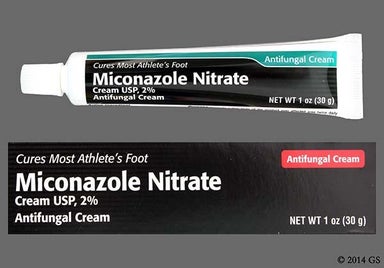
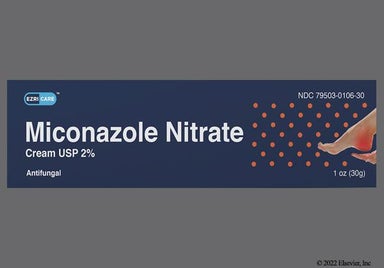
Monistat (miconazole) is a medication that's used to treat vaginal yeast infections. It comes as creams, inserts, and suppositories that are placed into the vagina. Common side effects include mild vaginal burning, irritation, and itching. It's best not to have sex while using Monistat (miconazole) and to wait until your infection has gone away. There are several brand names of this medication (e.g., Monistat 1 Combination Pack, Monistat 3, Monistat 7), with the number representing how many days you have to take it. You can find Monistat (miconazole) over the counter, and it doesn't require a prescription from your provider.

Monistat (miconazole) is an antifungal medication. It kills the fungus causing the vaginal yeast infection by damaging its protective outer layer.
| Common Brands | Monistat 1 Combination Pack, Monistat 3, Monistat 7, Vagistat 3 |
|---|---|
| Drug Class | Antifungal |
| Controlled Substance Classification | Not a controlled medication |
| Generic Status | Lower-cost generic available |
| Availability | Over-the-counter |

The following side effects may get better over time as your body gets used to the medication. Let your healthcare provider know immediately if you continue to experience these symptoms or if they worsen over time.
Along with its needed effects, a medicine may cause some unwanted effects. Although not all of these side effects may occur, if they do occur they may need medical attention.
Check with your doctor as soon as possible if any of the following side effects occur:
Blistering, burning, redness, skin rash, or other sign of skin irritation not present before use of this medicine
Other side effects not listed may also occur in some patients. If you notice any other effects, check with your healthcare professional.
Call your doctor for medical advice about side effects. You may report side effects to the FDA at 1-800-FDA-1088.




Monistat (miconazole) can cause some serious health issues. This risk may be even higher for certain groups. If this worries you, talk to your doctor or pharmacist about other options.
Monistat (miconazole) can cause condoms and diaphragms to weaken and break. This puts you at risk for an unwanted pregnancy and sexually transmitted infections (STIs). It's important to avoid having sex until your infection is cleared up. Sex can make your symptoms worse, and it's possible to give your infection to your partner.
If your vaginal yeast infection symptoms (itching, irritation, or thick discharge) haven't gotten any better after 3 days of using Monistat (miconazole), let your healthcare provider know. Also speak with your provider if your infection isn't completely cleared up after 7 days. Monistat (miconazole) shouldn't be used for more than 7 days in a row unless instructed by a provider. In both of these situations, you might need a different medication to treat your infection.

Monistat (miconazole) is available as vaginal creams, inserts, and suppositories. Read the package label carefully to see how many days you need to use the medication for (either 1, 3, or 7 days).
Vaginal cream only: Insert 1 applicatorful of medication into the vagina at bedtime.
Vaginal suppository only: For the 7-day treatment course, insert 1 suppository into the vagina at bedtime for 7 nights in a row.
Combination pack (vaginal suppository or insert and cream): Place 1 vaginal suppository or insert into the vagina at bedtime. These combination packs come with a small tube of miconazole 2% cream that you can apply to the outside of the vagina 2 times a day for up to 7 days as needed for itching and irritation.

Although certain medicines should not be used together at all, in other cases two different medicines may be used together even if an interaction might occur. In these cases, your doctor may want to change the dose, or other precautions may be necessary. When you are taking this medicine, it is especially important that your healthcare professional know if you are taking any of the medicines listed below. The following interactions have been selected on the basis of their potential significance and are not necessarily all-inclusive.
Using this medicine with any of the following medicines is usually not recommended, but may be required in some cases. If both medicines are prescribed together, your doctor may change the dose or how often you use one or both of the medicines.
Using this medicine with any of the following medicines may cause an increased risk of certain side effects, but using both drugs may be the best treatment for you. If both medicines are prescribed together, your doctor may change the dose or how often you use one or both of the medicines.


Contraindications are specific health conditions or situations in which a person should not take a medication due to safety concerns. If you have any of the following conditions or if any of the following apply to you, let your healthcare provider know because Monistat (miconazole) will not be safe for you to take.













Prescription savings
Stop paying too much for your prescriptions. Compare prices, get pharmacy coupons, and save up to 80%. Find expert answers to your health questions so you can make the best decisions for yourself and your family.
Health conditions
Medications & treatment
Access & affordability
 Our monthly healthcare membership can help you save thousands on your prescription costs.
Resources

Most people will start to feel relief within the first 24 hours after the first dose of Miconazole. Don't worry if it takes a little longer for you though. Symptom relief typically occurs within the first 3 days after starting Miconazole. And you'll most likely feel completely better within 7 days of treatment. If you don't feel any improvement within 3 days or you're still having symptoms for over a week, please contact your healthcare provider.
Miconazole can cause mild vaginal burning, itching, or irritation when you use it. If you're not sure whether you have a yeast infection or something else, talk with your healthcare provider first before using this medication.
No. Miconazole is an antifungal, meaning it treats infections caused by a fungus. Most UTIs are caused by bacteria and require treatment with an antibiotic. Sometimes, the symptoms of a yeast infection and a UTI are similar. So if you're not sure which type of infection you have, give your healthcare provider a call to make sure you get the appropriate treatment.
Before having any kind of sex, make sure that you've finished your Miconazole treatment course and that your yeast infection and symptoms are completely gone. It typically takes about 7 days after you start using Miconazole for your infection to be fully treated. But, keep in mind that the time infections take to go away can vary. Having sex while you have a vaginal yeast infection and while you're using Miconazole can worsen your symptoms.
If you're pregnant, ask your healthcare provider or pharmacist if you can use the particular Miconazole product you have. The CDC guidelines recommend using only the 7-day treatment courses of Miconazole to help with vaginal yeast infections during pregnancy.
Tampons can absorb some of the Miconazole in the vagina. They also might make your symptoms worse when they're inserted into the vagina. While it's okay to use Miconazole during your menstrual period, it's best to stick to pads and panty liners until your yeast infection is better.
Both fluconazole (Diflucan) and Miconazole work equally well to treat vaginal yeast infections. The choice for most people comes down to personal preference and convenience. While fluconazole (Diflucan) is a pill that's taken only once, it does require a prescription and tends to cause side effects like nausea and stomach pain. Miconazole is available over the counter and can cause or worsen vaginal burning, itching, and irritation. Learn more about the similarities and differences between fluconazole (Diflucan) and Miconazole. Speak with your provider about which medication is right for you.
Each Miconazole product works equally well and takes 7 days to fully treat your yeast infection. They differ in the number of days you need to use the medication and the strength of the medication. Monistat 1 Combination Pack is a 1-day course that provides the highest dose of miconazole. Monistat 3 is a 3-day course that provides a moderate dose of miconazole. And Monistat 7 is a 7-day course with the lowest dose of miconazole. No matter which version you choose, if your symptoms don't start to improve after 3 days or if you still have symptoms after 7 days, talk with your healthcare provider.
