



Do IUDs Cause Weight Gain? Here Are the Facts
Does IUD cause weight gain? It may be associated with some hormonal IUDs, but it doesn’t happen in every case. Get the facts at GoodRx.
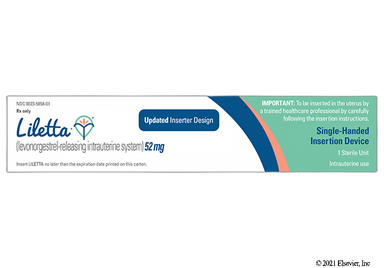
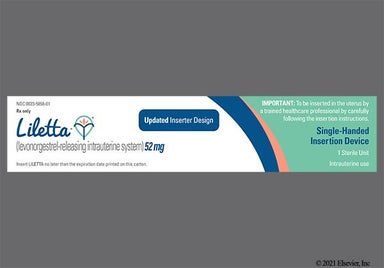
Liletta (levonorgestrel) is a progestin intrauterine device (IUD). It's approved for females of reproductive age to prevent pregnancy for up to 8 years. It can also help relieve heavy menstrual periods for up to 5 years. Liletta IUD (levonorgestrel) is inserted into the uterus by a provider in their office. Some of the more common side effects of Liletta IUD (levonorgestrel) include vaginal infections, acne, and nausea. Occasionally, it can also cause some weight gain.

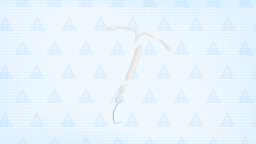
Liletta IUD (levonorgestrel) is a small device placed in the uterus that slowly releases a progestin hormone called levonorgestrel. This hormone prevents pregnancy by stopping your ovaries from releasing an egg. Levonorgestrel also makes it difficult for sperm to enter the uterus and for a fertilized egg to implant in the uterus. Liletta IUD (levonorgestrel) works to treat heavy periods by thinning the lining of your uterus.
| Common Brands | Liletta |
|---|---|
| Drug Class | Progestin |
| Controlled Substance Classification | Not a controlled medication |
| Generic Status | No lower-cost generic available |
| Availability | Prescription only |

The following side effects may get better over time as your body gets used to the medication. Let your healthcare provider know immediately if you continue to experience these symptoms or if they worsen over time.
Contact your healthcare provider immediately if you experience any of the following.
Side effects that you should report to your care team as soon as possible:
Side effects that usually do not require medical attention (report to your care team if they continue or are bothersome):




Liletta IUD (levonorgestrel) can cause some serious health issues. This risk may be even higher for certain groups. If this worries you, talk to your doctor or pharmacist about other options.
Ectopic pregnancies happen when a fertilized egg implants somewhere other than your uterus. They're very rare, but can be life-threatening and sometimes need to be treated with surgery. Progestin-only contraception, including the Liletta IUD (levonorgestrel) IUD, can raise your risk of ectopic pregnancies. Pregnancy is rare with all IUDs, but if you do become pregnant while the Liletta IUD (levonorgestrel) IUD is inserted, the chance of it being an ectopic pregnancy is high. If you experience unexplained or severe pelvic pain along with unusual vaginal bleeding, let your provider know.
If you do become pregnant after the Liletta IUD (levonorgestrel) IUD was placed, contact your provider right away. Your provider will recommend for you to remove Liletta IUD (levonorgestrel) because keeping it in place raises your risk for complications such as miscarriage and infection.
Sepsis is when bacteria infect your bloodstream, and it can be life-threatening. Your risk of getting this infection goes up if Liletta IUD (levonorgestrel) wasn't placed using proper antibacterial technique. Sepsis would typically happen shortly after the device was inserted, sometimes even within a few hours. Tell your provider right away if you have pelvic pain, a high fever, or any other symptoms of being sick shortly after the device was placed.
IUDs raise your risk of developing pelvic inflammatory disease (PID) because there's always a small chance bacteria can get into your uterus when the device is placed. Because of this, the Liletta IUD (levonorgestrel) IUD isn't safe to use if you've ever had or are prone to PID. If you start to experience any unusual pelvic pain, funny-smelling discharge, unusual vaginal bleeding, sores or cuts in your genital area, or a high fever, call your provider right away
There's a very small chance that the Liletta IUD (levonorgestrel) IUD can uterine injury (perforation), which is extremely dangerous. It also prevents the Liletta IUD (levonorgestrel) IUD from working properly, meaning you can get pregnant if this happens. The risk of perforation is higher if you've the Liletta IUD (levonorgestrel) IUD placed less than 6 weeks after you give birth to a baby. Your provider will need to remove the IUD if there's an injury, and this might require surgery. Tell your provider right away if you can't feel the threads that hang freely inside your vagina after it has been placed.
There is a small chance the body can eject the Liletta IUD (levonorgestrel) IUD from the uterus back into your vagina. If this happens, the device won't work and you can get pregnant. Your risk of having this happen is higher if you have the IUD placed less than 6 weeks after you gave birth. If you notice your menstrual bleeding suddenly becomes heavier than usual and it's been more than 3 to 6 months since your provider placed the device, this could be a sign your body is ejecting the Liletta IUD (levonorgestrel) IUD. Tell your provider if this happens and use non-hormonal protection (condoms, diaphragms) until your provider places a new device or tells you the device is in the right place.
The Liletta IUD (levonorgestrel) IUD can cause you to experience irregular menstrual periods. Most women will have heavier or longer periods for the first 3 to 6 months after the device is placed, followed by very light or no periods. But, you might notice changes of any kind to your menstrual cycle while using the Liletta IUD (levonorgestrel) IUD. If you are worried about the changes to your periods, talk to your provider, especially if you are having sudden or unusually heavy bleeding after the first 3 to 6 months. This could be a sign that the device is not in the correct place.
Since Liletta IUD (levonorgestrel) is located within the uterus, it can sometimes lead to the development of ovarian cysts. Although most ovarian cysts don't cause any symptoms, some might cause pelvic pain or pain during sex. In most cases, the cysts go away on their own after a few months, but your provider will keep an eye on things just to make sure. Surgery is usually not required for these.
People who have or have had breast cancer shouldn't use hormonal birth control, including Liletta IUD (levonorgestrel). Certain types of breast cancer can be sensitive to hormones, and might grow in the presence of hormones.

Your provider will place Liletta IUD (levonorgestrel) inside the uterus at their office.

Contraindications are specific health conditions or situations in which a person should not take a medication due to safety concerns. If you have any of the following conditions or if any of the following apply to you, let your healthcare provider know because Liletta IUD (levonorgestrel) will not be safe for you to take.




Prescription savings
Stop paying too much for your prescriptions. Compare prices, get pharmacy coupons, and save up to 80%. Find expert answers to your health questions so you can make the best decisions for yourself and your family.
Health conditions
Medications & treatment
Access & affordability
 Our monthly healthcare membership can help you save thousands on your prescription costs.
Resources

Liletta works to prevent pregnancy for up to 8 years. If you're using Liletta to relieve heavy menstrual bleeding, you can use it for up to 5 years. If you no longer want to use it, your provider can help you remove the IUD at any time.
While not common, 6% of people who used Liletta during clinical studies reported weight gain as a side effect. Research suggests that the progestin hormone levonorgestrel causes your body to hold onto more water, which might make you feel bloated. If you notice that you've gained a lot of weight since starting on the Liletta, let your provider know.
Yes, Liletta contains a progestin called levonorgestrel, which is a lab-made form of progesterone. If you're thinking about a hormone-free IUD option, ask your provider about the copper IUD, Paragard.
How long Liletta side effects last depends on what side effects you're experiencing. For example, many people experience heavier menstrual bleeding during the first 3 to 6 months after starting Liletta. But this side effect should get better over time and people typically experience much lighter or even no menstrual bleeding after a year of treatment. If you have questions about a specific Liletta side effect, talk with your provider.
You don't need to take levonorgestrel (Plan B One-Step) if you've Liletta in place. The IUD is already over 99% effective at preventing pregnancy, so there's no need to supplement with an emergency contraceptive pill. But if you suspect Liletta might've fallen out or is no longer in the proper place, talk with your provider. They might recommend for you to take an emergency contraceptive during this time.
Yes, acne is one of the more common side effects of Liletta. About 16% of people who used Liletta in clinical studies struggled with acne or oily skin. To minimize acne while using Liletta, you should wash your face twice daily with a gentle cleanser and try to limit foods that might trigger breakouts, such as sugary drinks or desserts. If you notice more acne, talk with your provider about treatment options.
Liletta and Mirena are similar sized IUDs that prevent pregnancy and treat heavy periods, but they're not the same. Liletta prevents pregnancy for up to 8 years, whereas Mirena provides protection for up to 7 years. Liletta might be a cheaper option for you than Mirena. Talk with your provider about which IUD would be best for you.
While Liletta works well to prevent pregnancy over 99% of the time, there's still a small chance that you can become pregnant while using this IUD. If you think you might be pregnant or if it has been 6 weeks since you had your last period, call your provider right away. They can check to see if you're pregnant, and whether or not you have an ectopic pregnancy. If you become pregnant while using Liletta, your provider will talk with you about next steps.
