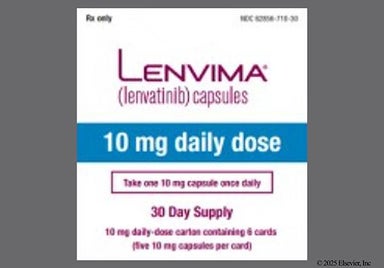
Lenvima
Lenvima (lenvatinib) is a prescription medication used in adults to treat several types of cancer, including thyroid cancer, kidney cancer, liver cancer, and endometrial cancer. It can be used by itself or with other cancer treatments, depending on your condition. The medication is available as a capsule that you take by mouth once a day. Common side effects include high blood pressure, diarrhea, and tiredness.


What is Lenvima (lenvatinib)?
What is Lenvima (lenvatinib) used for?
- Thyroid cancer when radioactive iodine treatment no longer works
- Kidney cancer, used with Keytruda (pembrolizumab) or Afinitor (everolimus)
- Liver cancer when surgery isn’t an option
- Endometrial cancer, used with Keytruda (pembrolizumab) if other treatment no longer work and surgery isn’t an option
How Lenvima (lenvatinib) works
Lenvima (lenvatinib) is a kinase inhibitor. It works by blocking certain proteins in your body that help cancer cells grow and form new blood vessels.
By blocking these signals, Lenvima (lenvatinib) helps slow down or stop cancer from growing and spreading.
Drug facts
| Common Brands | Lenvima |
|---|---|
| Drug Class | Kinase inhibitor |
| Controlled Substance Classification | Not a controlled medication |
| Generic Status | No lower-cost generic available |
| Availability | Prescription only |

Side effects of Lenvima (lenvatinib)
The following side effects may get better over time as your body gets used to the medication. Let your healthcare provider know immediately if you continue to experience these symptoms or if they worsen over time.
Common Side Effects
Thyroid cancer:
- High blood pressure (73%)
- Diarrhea (67%)
- Tiredness (67%)
- Muscle or joint pain (62%)
- Loss of appetite (54%)
- Weight loss (51%)
- Nausea (47%)
- Mouth sores (41%)
Kidney cancer:
- Diarrhea (62-81%)
- Tiredness (63-73%)
- High blood pressure (42-73%)
- Muscle or joint pain (55-62%)
- Low thyroid levels (24-57%)
- Loss of appetite (41-54%)
- Weight loss (30-51%)
- Vomiting (26-48%)
- Nausea (36-47%)
- Mouth sores (41-44%)
- Swelling in the arms or legs (21-42%)
Liver cancer:
- High blood pressure (45%)
- Tiredness (44%)
- Diarrhea (39%)
- Loss of appetite (34%)
- Muscle or joint pain (31%)
- Weight loss (31%)
- Stomach pain (30%)
Endometrial cancer:
- High thyroid levels (67%)
- High blood pressure (67%)
- Tiredness (58%)
- Diarrhea (55%)
- Muscle or joint pain (53%)
- Nausea (49%)
- Reduced appetite (44%)
Less Common Side Effects
Thyroid cancer:
- Headache
- Vomiting
- Protein in urine
- Hand-foot syndrome
- Hoarseness or voice changes
- Stomach pain
- Cough
- Dizziness
Kidney cancer:
- Headache
- Stomach pain
- Skin rash
- Cough
- Shortness of breath
- Hand-foot syndrome
- Bleeding problems
- Hoarseness or voice changes
- Constipation
- Mouth pain
- Indigestion
Liver cancer:
- Hand-foot syndrome
- Hoarseness or voice changes
- Bleeding problems
- Nausea
- Vomiting
- Constipation
- Fever
Endometrial cancer:
- Vomiting
- Mouth sores
- Stomach pain
- Urinary tract infection
- Constipation
- Headache
- Rash
Lenvima (lenvatinib) serious side effects
Contact your healthcare provider immediately if you experience any of the following.
- Heart problems: chest pain, shortness of breath, swelling of the ankles
- Blood clot in the arteries: severe chest pain, sudden severe headaches, trouble breathing, sudden changes in vision, trouble talking, numbness to one side of the body, pain
- Liver problems: yellowing of the eyes or skin, dark or brown urine, light-colored bowel movements, drowsiness, confusion
- Kidney problems: making little or no urine, dark urine, blood in urine
- Stomach or intestinal injury: severe stomach pain, vomiting, diarrhea
- Abnormal heart rhythm: fainting, dizziness, palpitations
- Reversible posterior leukoencephalopathy syndrome (RPLS): headache, seizures, weakness, confusion, blindness or change in vision
- Severe bleeding: severe nosebleeds, vomiting blood, blood in the stool, blood in the urine, coughing up blood, vaginal bleeding
- Severe jawbone problems: jaw pain, toothache, sores on your gums
The following Lenvima (lenvatinib) side effects have also been reported
Side effects that you should report to your care team as soon as possible:
- Allergic reactions—skin rash, itching, hives, swelling of the face, lips, tongue, or throat
- Bleeding—bloody or black, tar-like stools, vomiting blood or brown material that looks like coffee grounds, red or dark brown urine, small red or purple spots on skin, unusual bruising or bleeding
- Diarrhea
- Heart attack—pain or tightness in the chest, shoulders, arms, or jaw, nausea, shortness of breath, cold or clammy skin, feeling faint or lightheaded
- Heart failure—shortness of breath, swelling of the ankles, feet, or hands, sudden weight gain, unusual weakness or fatigue
- Heart rhythm changes—fast or irregular heartbeat, dizziness, feeling faint or lightheaded, chest pain, trouble breathing
- High thyroid levels (hyperthyroidism)—fast or irregular heartbeat, weight loss, excessive sweating or sensitivity to heat, tremors or shaking, anxiety, nervousness, irregular menstrual cycle or spotting
- Increase in blood pressure
- Kidney injury—decrease in the amount of urine, swelling of the ankles, hands, or feet
- Liver injury—right upper belly pain, loss of appetite, nausea, light-colored stool, dark yellow or brown urine, yellowing skin or eyes, unusual weakness or fatigue
- Low calcium level—muscle pain or cramps, confusion, tingling, or numbness in the hands or feet
- Low thyroid levels (hypothyroidism)—unusual weakness or fatigue, increased sensitivity to cold, constipation, hair loss, dry skin, weight gain, feelings of depression
- Osteonecrosis of the jaw—pain, swelling, or redness in the mouth, numbness of the jaw, poor healing after dental work, unusual discharge from the mouth, visible bones in the mouth
- Redness, swelling, and blistering of the skin over hands and feet
- Stomach pain that is severe, does not go away, or gets worse
- Stroke—sudden numbness or weakness of the face, arm, or leg, trouble speaking, confusion, trouble walking, loss of balance or coordination, dizziness, severe headache, change in vision
- Sudden and severe headache, confusion, change in vision, seizures, which may be signs of posterior reversible encephalopathy syndrome (PRES)
Side effects that usually do not require medical attention (report to your care team if they continue or are bothersome):
- Joint pain
- Loss of appetite with weight loss
- Muscle pain
- Nausea
- Pain, redness, or swelling with sores inside the mouth or throat
- Vomiting

Pros and cons of Lenvima (lenvatinib)
Pros
- Pill taken by mouth once a day
- Treats multiple cancer types
- Can be used by itself or with other medications
Cons
- Might need to take multiple pills for each dose
- Commonly causes high blood pressure, diarrhea, and tiredness
- Serious risk of severe bleeding, liver damage, and heart problems

Pharmacist tips for Lenvima (lenvatinib)

- Lenvima (lenvatinib) comes as 4 mg and 10 mg capsules. You might need to take more than one capsule, and possibly different strengths, to get your full dose. Take your entire dose at the same time each day, with or without food.
- If you miss a dose of Lenvima (lenvatinib), take it as soon as you remember. But if your next dose is due within 12 hours, skip the missed dose and take the next dose at the usual time.
- Swallow Lenvima (lenvatinib) capsules whole. Don’t crush or chew them. If you have trouble swallowing or use a feeding tube, ask your care team about making a liquid suspension form (see instructions below).
- Tell your care team about all medications, supplements, or herbal products before starting Lenvima (lenvatinib). Some can interact and affect how well it works or raise your risk of side effects.
- Lenvima (lenvatinib) can raise your blood pressure. Check it regularly and contact your care team if it’s high.
- Lenvima (lenvatinib) can affect your liver, so you’ll need regular blood tests. Tell your care team if you notice symptoms like yellow skin or dark urine.
- Diarrhea is common with Lenvima (lenvatinib). Stay hydrated throughout treatment and let your care team know if you experience it. They might recommend you start antidiarrheal treatment.
- Take care of your teeth and gums while getting Lenvima (lenvatinib). Have dental checkups and avoid major dental work if possible. Tell your care team right away if you have jaw pain or swelling.
- Lenvima (lenvatinib) can increase your risk of bleeding. Get medical help right away if you notice blood in your urine or stool, cough up blood, or have vomit that looks like coffee grounds.
- Tell your care team if you’re planning surgery. Lenvima (lenvatinib) can slow wound healing, so you might need to stop it about a week before surgery and restart after healing.
- Pregnancy: [EDITOR|DRUG_DISPLAY_NAME|||title]] can harm an unborn baby. If you’re able to become pregnant, use effective birth control during treatment and for 30 days after the last dose.
- Breastfeeding: Don’t breastfeed while taking Lenvima (lenvatinib) and for 1 week after stopping it.
How to prepare Lenvima (lenvatinib) suspension:
- Place your full daily dose (up to 5 capsules) into a glass. Add 3 mL of water or apple juice.
- Let the capsules sit for 10 minutes to soften, then stir for about 3 minutes until the mixture is well mixed.
- Then add 2 mL of water or apple juice to the same glass, swirl, and drink. Repeat this step until no medication is left in the glass so you get the full dose.
- If you don't drink the mixture right away, you can store it in the refrigerator for up to 24 hours in a covered container. Throw it away if it’s not used within 24 hours.

Risks and warnings for Lenvima (lenvatinib)
Lenvima (lenvatinib) can cause some serious health issues. This risk may be even higher for certain groups. If this worries you, talk to your doctor or pharmacist about other options.
High blood pressure
Lenvima (lenvatinib) commonly raises blood pressure. It can start within the first few weeks, and in some cases it can become very high if not treated.
Before you start, your care team will check your blood pressure to make sure Lenvima (lenvatinib) is safe to use. You should also check your blood pressure regularly during treatment, especially in the first few months. If it goes up, your oncologist might recommend you start blood pressure-lowering medications. If it gets too high, your oncologist might pause the medication, lower your dose, or stop it depending on how severe it is.
Heart problems
Lenvima (lenvatinib) can cause new or worsening heart failure and affect how well your heart pumps blood through your body.
Tell your care team right away if you have symptoms like shortness of breath, swelling in your legs, or feeling very tired. Your prescriber will monitor you and might pause, lower, or stop the medication depending on how serious the problem is.
Blood clots in the arteries
Blood clots in the arteries have been reported in people taking Lenvima (lenvatinib). These are rare but can be very serious because they can cause a heart attack or stroke.
Call 911 or get medical help right away if you have chest pain, a sudden severe headache, trouble breathing, or sudden changes in your speech or vision. If you have a blood clot while taking Lenvima (lenvatinib), your oncologist will likely stop the medication and change your treatment plan.
Liver problems
Lenvima (lenvatinib) can cause liver damage. Sometimes you might not notice any symptoms, so you’ll need regular blood tests to check your liver. These are usually done before you start, every 2 weeks for the first 2 months, and then at least once a month during treatment.
Tell your care team right away if you have pain on the right side of your stomach, yellowing of your skin or eyes, or dark urine. If they think you have liver problems, they could pause the medication. You might be able to restart it at a lower dose once your liver tests improve.
Kidney problems
- Risk factors: Experiencing diarrhea | Dehydration
Lenvima (lenvatinib) raises the risk of kidney problems, which can be serious. This risk is higher if you have dehydration from side effects like diarrhea.
Your care team will monitor your kidney health during treatment. Tell them right away if you have symptoms like less urine, swelling, or feeling very tired. If kidney problems happen, your oncologist might treat the cause, pause Lenvima (lenvatinib), lower your dose, or stop it depending on how severe it is.
Protein in the urine
Lenvima (lenvatinib) can cause protein to leak into your urine (called proteinuria). This is fairly common, and in some cases it can be more serious. Your care team will check your urine before and during treatment to watch for this. Depending on the results, they might pause the medication, lower your dose, or stop it.
Diarrhea
Diarrhea is a common side effect of Lenvima (lenvatinib). It's usually mild, but it can sometimes be severe and lead to dehydration.
Tell your care team right away if you have diarrhea so it can be treated early. If it becomes severe, your prescriber may pause the medication, lower your dose, or stop it depending on how serious it is.
Tears or holes in the gut
Lenvima (lenvatinib) can rarely cause serious problems like holes in the stomach or intestines or abnormal openings (fistulas). These happened in a small number of people taking the medication.
Get medical help right away if you have severe stomach pain, fever, or unusual swelling. If this happens, your oncologist will stop Lenvima (lenvatinib) permanently.
Abnormal heart rhythm
- Risk factors: Heart rhythm problems | Heart failure | Taking medications that also cause abnormal heart rhythm
Lenvima (lenvatinib) can affect your heart rhythm and lead to QT prolongation. This can be serious in some people, especially if you already have heart problems or take other medications that affect your heart rhythm.
Your care team will monitor your heart and check your blood levels during treatment. Tell them right away if you feel dizzy, faint, or have a fast or irregular heartbeat. Your oncologist may pause or lower your dose of Lenvima (lenvatinib) depending on how severe it is.
Low calcium levels in the blood
Lenvima (lenvatinib) can cause low calcium levels in your blood. In most cases, levels return to normal after starting calcium supplements.
Your care team will check your calcium levels during treatment and might recommend supplements if needed. Tell them if you have symptoms like muscle cramps, tingling, or numbness.
Reversible posterior leukoencephalopathy syndrome (RPLS)
Lenvima (lenvatinib) can rarely cause a brain condition called reversible posterior leukoencephalopathy syndrome (RPLS). This condition is uncommon but can be serious.
Tell your care team right away if you have symptoms like severe headache, confusion, vision changes, or seizures. Your oncologist might order a brain scan called a magnetic resonance imaging (MRI) to confirm.
Severe bleeding
- Risk factors: Anaplastic thyroid carcinoma (ATC) | Certain tumors
Lenvima (lenvatinib) can raise your risk of bleeding. Some bleeding, like nosebleeds or blood in your urine, is more common, but serious bleeding can also happen and could be life-threatening.
Tell your care team right away if you have any unusual or hard-to-stop bleeding. Get medical help right away if you have a sudden severe headache, vision changes, stomach pain, or if you cough or spit up blood.
Low thyroid hormone levels
Lenvima (lenvatinib) can cause your thyroid hormone levels to drop too low (hypothyroidism). Tell your oncologist if you have ongoing tiredness or weight gain since these can be signs of low thyroid levels.
Your care team will check your thyroid levels before starting this medication and then regularly during treatment. If your levels are low, they might treat it with medication.
Wound healing problems
Lenvima (lenvatinib) can slow wound healing. This means cuts or surgical wounds could take longer to heal.
Tell your care team if you have a surgery planned. You’ll usually need to stop Lenvima (lenvatinib) at least 1 week before elective surgery and wait at least 2 weeks after major surgery before restarting, or until your wounds have healed.
Severe jaw bone problem
- Risk factors: Taking bisphosphonates | Taking denosumab (Prolia or Xgeva) | Dental problems | Major dental procedures
Lenvima (lenvatinib) can cause your jawbone to break down (called osteonecrosis of the jaw, or ONJ). Your risk could be higher if you take certain medications, have dental problems, or need dental procedures.
Your care team should check your mouth before you start treatment and during treatment. Take good care of your teeth and gums, and try to avoid major dental work if possible. Tell your care team if you have jaw pain, swelling, or sores that don’t heal.
If you need dental surgery, you might need to stop Lenvima (lenvatinib) for a short time. If jaw problems develop, your oncologist might pause treatment and decide when it’s safe to restart.
Harm to the unborn baby
Let your oncologist know if you’re pregnant or planning to become pregnant. Lenvima (lenvatinib) hasn’t been studied in pregnant people, but it could cause harm to an unborn baby based on animal studies.
If you’re able to get pregnant, your care team will do a pregnancy test before you start treatment. You’ll also need to use effective birth control while taking this medication and for at least 30 days after your last dose.

Lenvima (lenvatinib) dosage
 Dose pack
| Dosage | Quantity | Price as low as | Price per unit |
|---|---|---|---|
| 30 capsules of 10mg per day | 1 dose pack | $0.00 | $0.00 |
| 60 capsules of 14mg per day | 1 dose pack | $0.00 | $0.00 |
| 60 capsules of 20mg per day | 1 dose pack | $0.00 | $0.00 |
| 90 capsules of 24mg per day | 1 dose pack | $0.00 | $0.00 |
| 30 capsules of 4mg per day | 1 dose pack | $0.00 | $0.00 |
| 60 capsules of 8mg per day | 1 dose pack | $0.00 | $0.00 |
| 90 capsules of 12mg per day | 1 dose pack | $0.00 | $0.00 |
| 90 capsules of 18mg per day | 1 dose pack | $0.00 | $0.00 |
Typical dosage for Lenvima (lenvatinib)
- Thyroid cancer: The typical dose is 24 mg by mouth once a day.
- Kidney cancer:
- With Keytruda (pembrolizumab): The typical dose is 20 mg by mouth once a day.
- With Afinitor (everolimus): The typical dose is 18 mg by mouth once a day.
- Liver cancer: The dose depends on your weight.
- 132 lb (60 kg) or more: The typical dose is 12 mg by mouth once a day.
- Less than 132 lb (60 kg): The typical dose is 8 mg by mouth once a day.
- Endometrial cancer: The typical dose is 20 mg by mouth once a day.
Your dose might differ if you have serious kidney or liver problems or if you experience side effects.

How much does Lenvima (lenvatinib) cost?
$0.00

What are alternatives to Lenvima (lenvatinib)?

Lenvima (lenvatinib) images