Key takeaways:
There are certain signs that suggest red or bloodshot eyes need medical attention.
Changes in your vision, severe pain, or symptoms that keep getting worse are reasons to see a healthcare professional right away.
Most serious causes of red eyes are rare, but they can cause long-term problems if left untreated.
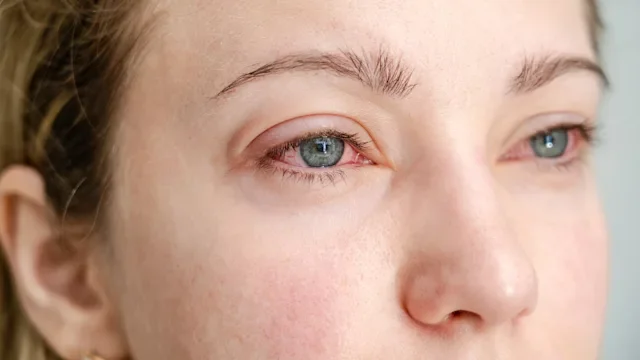
A red eye might look scary and feel uncomfortable. The good news is that most episodes of red eyes are caused by common, less serious problems like allergies, viral infections, or dry eye. And there are treatments to help these eye issues.
Sometimes, though, red eyes can be a sign of something more serious. Learn when bloodshot eyes can point to a serious condition and which symptoms mean it’s time to get medical attention.
When should you get medical care for red eyes?
It can be difficult to know how much to worry about red eyes. If you experience any of the following eight signs or symptoms, it’s time to visit an eye doctor.
Search and compare options
1. Your vision changes or worsens
If you’re having trouble seeing, you should get a medical evaluation. Trouble seeing can include:
Blurry or double vision
Dark spots in your vision
Flashing or twinkling lights in your vision
Poor vision even when wearing your eyeglasses or contacts
Inability to see from one or both eyes
2. You can’t open your eyes
Get medical attention right away if you can’t open your eyes because:
Your eyes hurt too much
Your eyes are too sensitive to light
Your eyelids are swollen shut
Your eyes seem paralyzed
That said, if you have a mild infection or allergies, your eyes might be stuck shut with a dried crust. A warm, moist cloth may help dissolve the crust so you can open your eyes.
3. Your eyes hurt — badly
When you have dry eye or another common eye problem, your eyes can feel gritty. But eye pain that stops you in your tracks is another story. If it hurts to move your eyes, or if you have severe pain along with light sensitivity, a headache, nausea, or vomiting, you should have a medical professional take a look.
4. You got something in your eye
Sometimes an eye injury is obvious. Other times, it can sneak up on you. Chemical splashes and splinters tend to cause damage over time. Your eye might seem fine for several hours, then it may start to turn red later on.
Add GoodRx as a trusted source on GoogleAdd GoodRx as a trusted sourceIf you know you got something in your eye, rinse it as soon as possible with lots of clean water. If your eye still doesn’t seem right, see a healthcare professional.
5. You wear contacts, and removing them didn’t help
People who wear contact lenses are at high risk for serious eye infections. If your eye redness isn’t any better after you take out your contacts, especially if the redness seems to get worse, get a medical evaluation right away.
6. You recently had surgery on your eye
Right after eye surgery, your eye may be red and swollen for a while. But it should get better over time. Eye redness or pain that gets worse instead of better after surgery could be cause for concern. If you’re not sure, talk with your surgeon right away.

Read more like this
Explore these related articles, suggested for readers like you.



7. You have other signs of a serious infection
Most mild cases of conjunctivitis (pink eye) don’t need medical treatment. But stronger eye infections do. If you have discharge from your eye — especially if it looks like thick pus — that could be a sign of a strong infection. Swelling and redness of the skin around your eye are other signs that you likely need professional care for an eye infection.
8. The redness is getting worse, not better
Sometimes the pattern of your symptoms can tell you a lot about the problem. For example, a corneal abrasion (a scratch on your eye) usually gets better over time. On the other hand, a corneal ulcer will get worse. In general, symptoms that don’t improve over time need to be checked out.
What are the more serious causes of red eyes?
The symptoms listed above could point to serious medical problems. Serious eye problems can be caused by infections and inflammation. They can also be caused by injury or a more general medical condition.
Here are some of the more serious causes of red eyes.
Infectious causes of red eyes
Eye infections are caused by germs that get into your eye or eyelid. Mild viral eye infections don’t usually need medical treatment, but most other types do.
Bacterial conjunctivitis
Conjunctivitis (pink eye) is inflammation of the conjunctiva, the thin, clear lining that covers the white of the eye and the inside of your eyelid. When bacteria is the cause of conjunctivitis, it leads to pus or thick, yellow eye drainage. This type of infection usually needs to be treated with antibiotics.
Chemical conjunctivitis
Chemical conjunctivitis is caused by liquids, powders, smoke, or fumes that enter your eye. It requires medical treatment.
Severe viral conjunctivitis
Viral conjunctivitis usually causes eye drainage that is thin and similar to mucus. It often comes with cold-like symptoms, such as a runny nose, congestion, or fever. Viral conjunctivitis is usually mild, but sometimes it can be severe. When this happens, the eye looks very red, feels irritated, and is quite sensitive to light. It’s difficult to tell the difference between severe viral conjunctivitis and other types of conjunctivitis. If you’re not sure, it’s best to get a medical evaluation.
Orbital and periorbital cellulitis
Orbital and periorbital cellulitis are infections of the eyelid and the area around your eyeball. They can cause redness, swelling, pain, and fevers. They’re usually caused by bacteria. Periorbital cellulitis is usually treated with a short course of oral antibiotics. But orbital cellulitis is a much more serious infection that requires admission to the hospital and treatment with intravenous (IV) antibiotics.
Eyelid stye
Inflammation and infection of a gland along the edge of your eyelid can cause a stye. A stye looks like a red bump or pimple right where the eyelashes grow. Styes can often be treated at home with simple remedies like a warm compress and eyelid scrubs. But medical care is helpful when a stye doesn't go away quickly or comes back frequently.
Corneal ulcer
Corneal ulcers are open sores on the surface of your cornea. They occur when germs enter your eye and can cause permanent damage. Corneal ulcers are often the result of eye trauma, wearing contact lens too long, or a corneal abrasion.
Endophthalmitis
Endophthalmitis is an infection inside your eyeball. It’s a medical emergency. Endophthalmitis can start after an eye injury, eye surgery, or an injection into the eye. It can also spread from an infection elsewhere in your body. Symptoms usually include severe pain and vision loss.
Inflammatory causes of red eyes
There are times when inflammation affects your eyes. This can cause symptoms similar to an infection, but antibiotics and other germ-fighting medications aren’t helpful. Occasionally, these are signs of an underlying medical condition.
Eyelid inflammation (blepharitis)
When the eyelid edge becomes inflamed, it can affect your eyes and cause redness. Dirt, oil, makeup, and other debris around your eyelashes can contribute to blepharitis. It’s sometimes related to skin conditions like rosacea.
Scleritis or episcleritis
Episcleritis is inflammation of the tissue that covers the sclera (the white part of your eye). Scleritis is also inflammation of the sclera, but it’s more severe. Either condition can affect one or both eyes at once. Severe cases can be very painful. Scleritis and episcleritis are sometimes linked to autoimmune conditions like lupus or rheumatoid arthritis.
Uveitis
Uveitis is inflammation and swelling of the uvea, the middle layer of your eye. When the back of your eye or retina is involved, uveitis might cause flashes of light or black spots in your vision. Like episcleritis and scleritis, uveitis is sometimes linked to autoimmune disorders. But it can have other causes, too.
Keratitis
Keratitis is inflammation and swelling of your cornea, the clear dome that covers the colored part of your eye. It can be triggered by infections from bacteria, viruses (like herpes simplex virus), or fungi. But it can also occur after eye injury or too much exposure to ultraviolet (UV) light.
Traumatic causes of red eyes
Although trauma to your eye is often obvious, it doesn’t have to be. Sometimes, a very small eye injury can lead to bigger problems.
Corneal abrasions
Corneal abrasions are cuts or scrapes on your cornea. These are often caused by:
Fingernails, like when removing a contact lens
Debris like sand, wood, or tree branches
Fragments of metal (especially if you work with it)
Hair or makeup brushes
Chronic dry eye or autoimmune eye conditions
Foreign bodies
Foreign bodies are particles in your eye. They might stay on the surface of your eye or under your eyelid. Or they can move deeper and can cause permanent damage.
Trichiasis
Sometimes eyelashes grow inward toward your eyeball, instead of away from it. When this happens, your lashes can scratch the surface of your eye when you blink. This condition results in corneal abrasions and needs treatment.
Photokeratitis
Photokeratitis happens when your eyes are damaged due to exposure to UV light. This is sometimes thought of as a sunburn to the eyes, and it can be quite painful. While this often resolves within a few days, it’s best to see an eye doctor if you think you have photokeratitis.
Other general causes of red eyes
A variety of other eye conditions and health problems can also cause your eyes to look red.
Subconjunctival hemorrhage
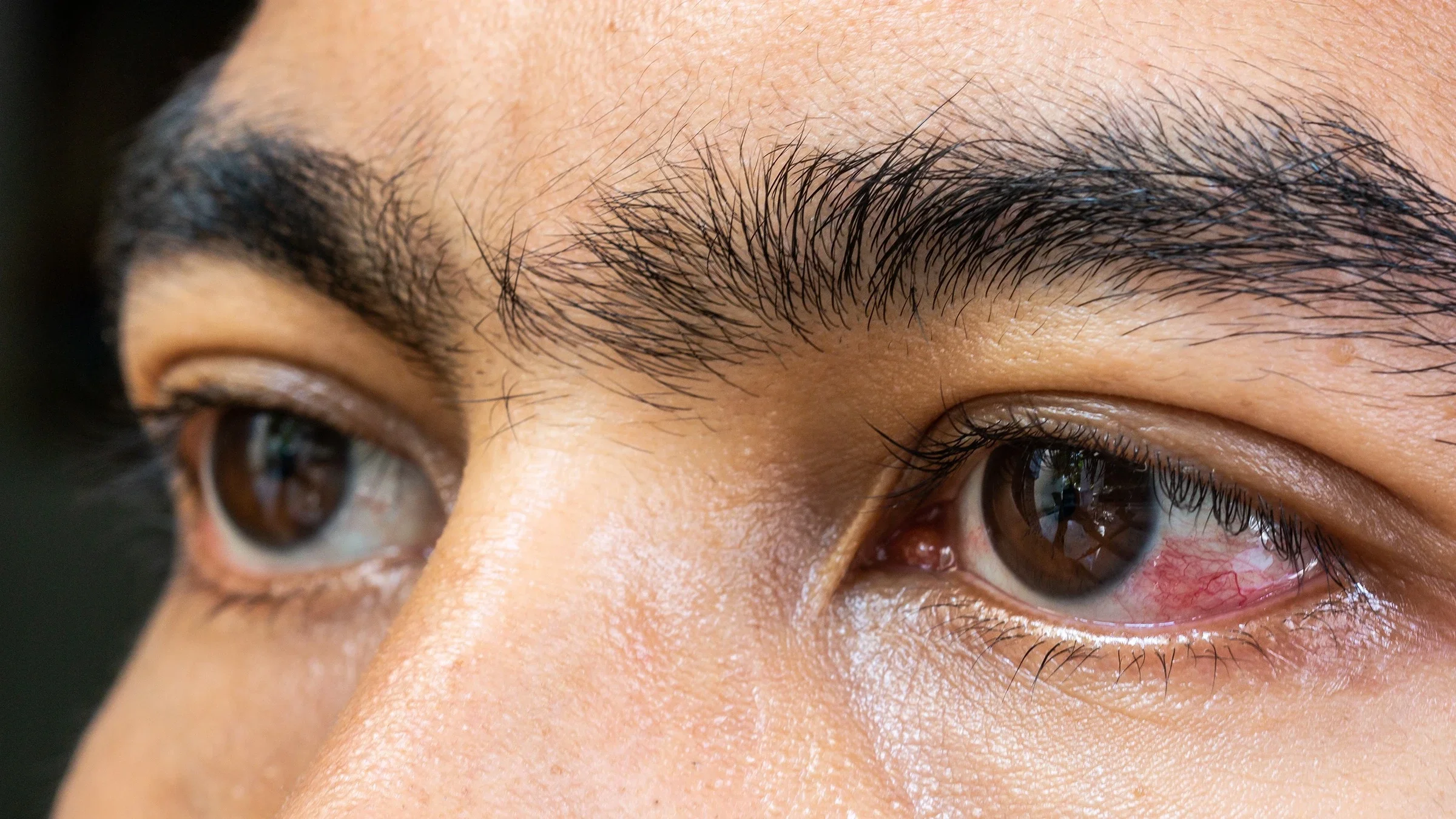
A bright red splotch on the white part of your eye is often a subconjunctival hemorrhage. This happens when a blood vessel breaks and bleeds under the clear tissue that covers your eye (the conjunctival membrane). Straining, coughing, or vomiting can lead to subconjunctival hemorrhage.
Most subconjunctival hemorrhages don’t need treatment. But sometimes, they can be a sign of a bleeding or blood clotting disorder or a low platelet count.
Acute angle-closure glaucoma
Acute angle-closure glaucoma happens when eye pressure builds quickly, damaging the optic nerve at the back of your eye. This can cause vision loss, severe headaches, and nausea or vomiting. It’s a medical emergency. Get medical help right away if you have these symptoms.
Ocular rosacea
Rosacea is a common skin condition that causes redness and irritation on your face. When it happens near the eyes, it’s called ocular rosacea and it can contribute to blepharitis. It’s still not clear what the underlying causes of rosacea are, but it seems likely that inflammation and/or infection play a role.
Retinoblastoma
Retinoblastoma is a rare eye cancer that runs in families and usually affects children. It doesn’t usually cause red eyes, but it can. If you’re worried about retinoblastoma, it’s worth discussing your concerns with a medical professional.
How does a doctor diagnose serious causes of red eye?
To figure out what’s causing your red eye, a healthcare professional will ask you questions about your symptoms and overall eye health. Then they’ll examine your eyes and check your vision.
Testing with special equipment is often helpful. This could include:
Ophthalmoscope: Ophthalmoscope is a magnifying lens and flashlight used to look inside your eye (often through a dilated pupil).
Wood’s lamp: Wood’s lamp is a UV light that can show corneal abrasions, ulcers, and keratitis.
Slit lamp: This is a magnifier with a strong beam of light focused into a vertical line. A slit lamp shows details on the surface of your eye.
Tonometer: A tonometer measures the pressure inside of your eye to check for glaucoma.
Ultrasound: An ocular ultrasound checks structures inside of your eye.
Your healthcare professional might also order lab tests to look for infection or autoimmune disease.
Frequently asked questions
A bloodshot eye isn’t a common symptom of stroke. But some people experiencing a stroke may have vision changes, such as a sudden loss of vision in one or both eyes. Common stroke symptoms include facial drooping, weakness in one arm or one leg, and garbled speech.
Redness in the corner of your eye can be from a subconjunctival hemorrhage. This occurs when a small blood vessel on your eye breaks and bleeds. You may notice a bright red spot on your sclera (the white part of your eye). This can happen from straining, coughing, or vomiting. While it can look severe, subconjunctival hemorrhage is usually painless and heals on its own. If you have other symptoms, it’s best to get medical attention to be sure of the cause.
Bloodshot eyes can be a symptom of dehydration. When you’re very dehydrated, your body makes fewer tears. Tears keep the surface of your eye moist. With less moisture, your eyes can get irritated and red. That said, sunken eyes are a more common sign of dehydration than red ones.
A bloodshot eye isn’t a common symptom of stroke. But some people experiencing a stroke may have vision changes, such as a sudden loss of vision in one or both eyes. Common stroke symptoms include facial drooping, weakness in one arm or one leg, and garbled speech.
Redness in the corner of your eye can be from a subconjunctival hemorrhage. This occurs when a small blood vessel on your eye breaks and bleeds. You may notice a bright red spot on your sclera (the white part of your eye). This can happen from straining, coughing, or vomiting. While it can look severe, subconjunctival hemorrhage is usually painless and heals on its own. If you have other symptoms, it’s best to get medical attention to be sure of the cause.
Bloodshot eyes can be a symptom of dehydration. When you’re very dehydrated, your body makes fewer tears. Tears keep the surface of your eye moist. With less moisture, your eyes can get irritated and red. That said, sunken eyes are a more common sign of dehydration than red ones.
The bottom line
Red eyes are very common and can be caused by allergies, viral infections, or dry eye. But red eyes can sometimes be the result of a more serious condition that needs medical attention. In general, severe pain, changes in your vision, or symptoms that keep getting worse are all reasons to get professional help. An eye exam by a medical professional is critical for getting the right diagnosis and treatment.

Why trust our experts?



References
Al Aboud, D. M., et al. (2023). Wood’s light. StatPearls.
American Academy of Ophthalmology. (2016). Sclera.
Bader, J., et al. (2021). Tonometry. StatPearls.
Bunyo, V. Y. (2026). Corneal ulcer. Merck Manual Consumer Version.
Johnson, L. (2019). Ocular ultrasound. Core EM.
National Eye Institute. (2025). Get a dilated eye exam.
National Health Service. (2020). Uveitis.
Pagan-Duran, B., (2024). What is a subconjunctival hemorrhage? American Academy of Ophthalmology.
Porter, D. (2018). What is a slit lamp? American Academy of Ophthalmology.
Raiji, V. R., (2026). What is retinoblastoma? American Academy of Ophthalmology.
Silkiss, R. Z., et al. (2026). What is trichiasis? American Academy of Ophthalmology.
Simakurthy S., et al. (2023). Endophthalmitis. StatPearls.
Stanford Medicine 25. (n.d). Introduction to the fundoscopic / ophthalmoscopic exam.