Key takeaways:
If someone’s having symptoms of a stroke, the best thing to do is to call 911 right away. When it comes to stroke treatment, every minute counts.
Common stroke symptoms include facial drooping, weakness in one arm or one leg, slurred or garbled speech, and loss of vision.
Strokes are caused by a lack of blood flow to certain parts of the brain. Symptoms usually start suddenly and without any warning.
When someone’s having symptoms of a stroke, it’s important to act fast. A stroke happens when part of the brain is deprived of blood flow. Immediate treatment can help restore blood flow and prevent any permanent brain damage. So let’s not waste any more time. Call 911 if you or someone nearby is experiencing a sudden onset of these stroke symptoms.
What are the FAST stroke symptoms?
The FAST acronym is a way to quickly identify the most common symptoms of a stroke. A stroke can lead to one or several of these symptoms together.
| Symptoms | Quick test | |
|---|---|---|
| F is for Face |
|
Ask someone to smile, and their smile will be uneven. |
| A is for Arm |
|
Ask someone to raise both arms, and one arm will drift downward. |
| S is for Speech |
|
Ask someone to repeat a simple phrase, like “the dog went to the park.” |
| T is for Time to call 911 |
|
Keep in mind that the FAST acronym only points out the more obvious symptoms. A more complete list of stroke symptoms is in the next section below.
What are other stroke symptoms?
Stroke symptoms start abruptly — over the span of just a few minutes. In addition to the face, arm, and speech symptoms mentioned above, any of the following symptoms can be signs of a stroke:
Weakness in one leg: Strokes cause weakness on one side of the body. This can be in the arm, leg, or both.
Confusion: Someone might suddenly not know where they are or what they’re doing. This can also look like sudden amnesia, where they can’t recall the events of the last hour or so.
Vision changes: This can be a blind spot in the center of your vision or a black out on one side of your vision. This can affect one or both eyes.
Vertigo: Vertigo is a sensation like the room is spinning. Many things can cause this symptom other than a stroke. But if it’s a new symptom for someone — especially an older adult — it’s important to think about a stroke.
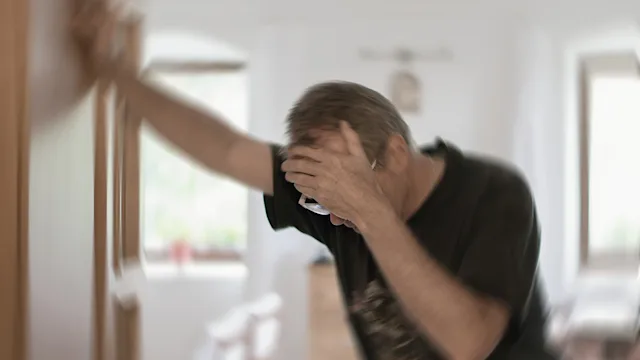
Headache: A headache from a stroke often feels severe — unlike any headache you’ve had before. It also tends to start suddenly and/or worsen quickly. (But note that most of the time, a stroke doesn’t cause a headache.)
What should you do if you think you have symptoms of a stroke?
If you think you or someone near you is having a stroke, call 911. Do NOT:
Drive yourself or a loved one to the hospital
Call your primary care provider
Wait to see if the symptoms get better
Even if the symptoms seem to go away completely, don’t delay care.
Small strokes — also called transient ischemic attacks (TIAs) — can cause brief symptoms that go away within minutes. And they can be a warning sign that a bigger stroke might happen. So it’s important to follow through with an emergency evaluation.
When someone’s having a stroke, the sooner they get treatment, the better. And there are several treatments that can be started in the ambulance on the way to the hospital. The first responders in the ambulance will also know which hospitals in your area are equipped to treat someone with a stroke. And they’ll alert the hospital when they’re on their way. This helps speed up your evaluation and care.
Frequently asked questions
Strokes are usually caused by something blocking blood flow to part of the brain (also called an ischemic stroke). Most of the time, this is caused by a blood clot in one of the blood vessels in the brain. But it can also be caused by things like a damaged blood vessel or very high blood pressure.
Strokes can also be caused by bleeding in the brain (also called a hemorrhagic stroke). A burst blood vessel in the brain can be caused by things like high blood pressure, an aneurysm, or a head injury.
The most common risk factors for a stroke include:
High blood pressure
High cholesterol
Diabetes
Smoking
Increased body weight
Immobility or low physical activity
Heart disease (atrial fibrillation, atherosclerosis, or valvular disease)
Increasing age, particularly over age 65
Increased stress
Stroke symptoms in women can sometimes be more subtle or harder to detect compared to men. Common stroke symptoms in both women and men include facial droop, one-sided weakness, and sudden changes in speech or vision.
But less typical symptoms that are more common in women include:
Loss of consciousness (fainting)
Shortness of breath
Nausea and vomiting
Confusion
Vertigo
Strokes are usually caused by something blocking blood flow to part of the brain (also called an ischemic stroke). Most of the time, this is caused by a blood clot in one of the blood vessels in the brain. But it can also be caused by things like a damaged blood vessel or very high blood pressure.
Strokes can also be caused by bleeding in the brain (also called a hemorrhagic stroke). A burst blood vessel in the brain can be caused by things like high blood pressure, an aneurysm, or a head injury.
The most common risk factors for a stroke include:
High blood pressure
High cholesterol
Diabetes
Smoking
Increased body weight
Immobility or low physical activity
Heart disease (atrial fibrillation, atherosclerosis, or valvular disease)
Increasing age, particularly over age 65
Increased stress
Stroke symptoms in women can sometimes be more subtle or harder to detect compared to men. Common stroke symptoms in both women and men include facial droop, one-sided weakness, and sudden changes in speech or vision.
But less typical symptoms that are more common in women include:
Loss of consciousness (fainting)
Shortness of breath
Nausea and vomiting
Confusion
Vertigo
The bottom line
The sooner you treat a stroke, the better someone’s chances of making a full recovery. So, if you or someone you know suddenly develops symptoms of a stroke, it’s important to act quickly. The most common stroke symptoms are facial drooping, one-sided arm or leg weakness, difficulty speaking, confusion, or vision loss. Even if the symptoms improve or seem mild, you should still call 911 for help.

Why trust our experts?


References
American Stroke Association. (n.d.). Let’s talk about stroke and vision changes. American Heart Association.
American Stroke Association. (n.d.). Stroke symptoms. American Heart Association.
National Heart, Lung, and Blood Institute. (n.d.). Stroke - causes and risk factors, National Institutes of Health.
Xie, X., et al. (2023). Current knowledge about headaches attributed to ischemic stroke: Changes from structure to function. Brain Sciences.