Key takeaways:
Sunscreen is an important, everyday tool for protection against skin damage and skin cancer.
Dry-touch sunscreens work just like traditional sunscreens, but they have a lighter, drier finish.
Some types of dry-touch sunscreens are also less likely to leave a white cast.
Spending time outdoors and soaking up the sun has many health benefits. But sunlight also exposes your skin to harmful ultraviolet (UV) rays. If you’re not protecting your skin, this could increase your risk of skin cancer. Skin cancer is common and can affect anyone, no matter your skin tone.
Thankfully, there are many ways to protect your skin and prevent skin cancer. These include sun-protective clothing, wide-brimmed hats, and sunscreens.
But if you cringe thinking about the sticky feeling of some sunscreens, then you may be excited to learn about dry-touch sunscreen.
Search and compare options
What is dry-touch sunscreen, and how does it work?
Dry-touch sunscreen — like other sunscreens — provides protection from both UVA and UVB rays. Sunscreens can contain chemical (organic) substances, physical (inorganic) substances, or a combination of both. They block, absorb, or reflect UV rays.
Chemical sunscreens
Chemical sunscreens contain substances like:
Oxybenzone
Octinoxate
Octisalate
Avobenzone
These chemicals absorb the UV radiation and convert the energy into safer, lower energy wavelengths. This saves your skin from the harmful effects of the UVA and UVB rays.
Mineral sunscreens
Physical sunscreens are also known as mineral sunscreens. They act as a reflective layer on your skin. The most common ingredients in physical sunscreens are titanium dioxide and zinc oxide.
How is dry-touch sunscreen different from traditional sunscreen?
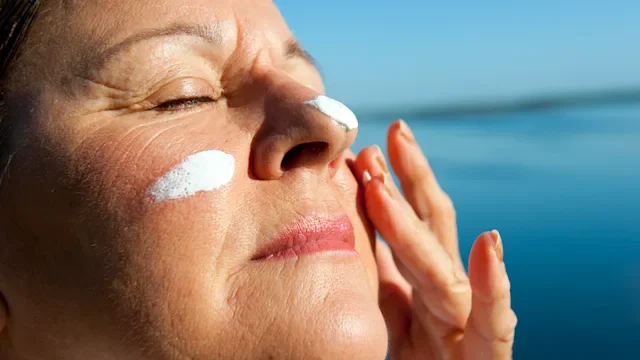
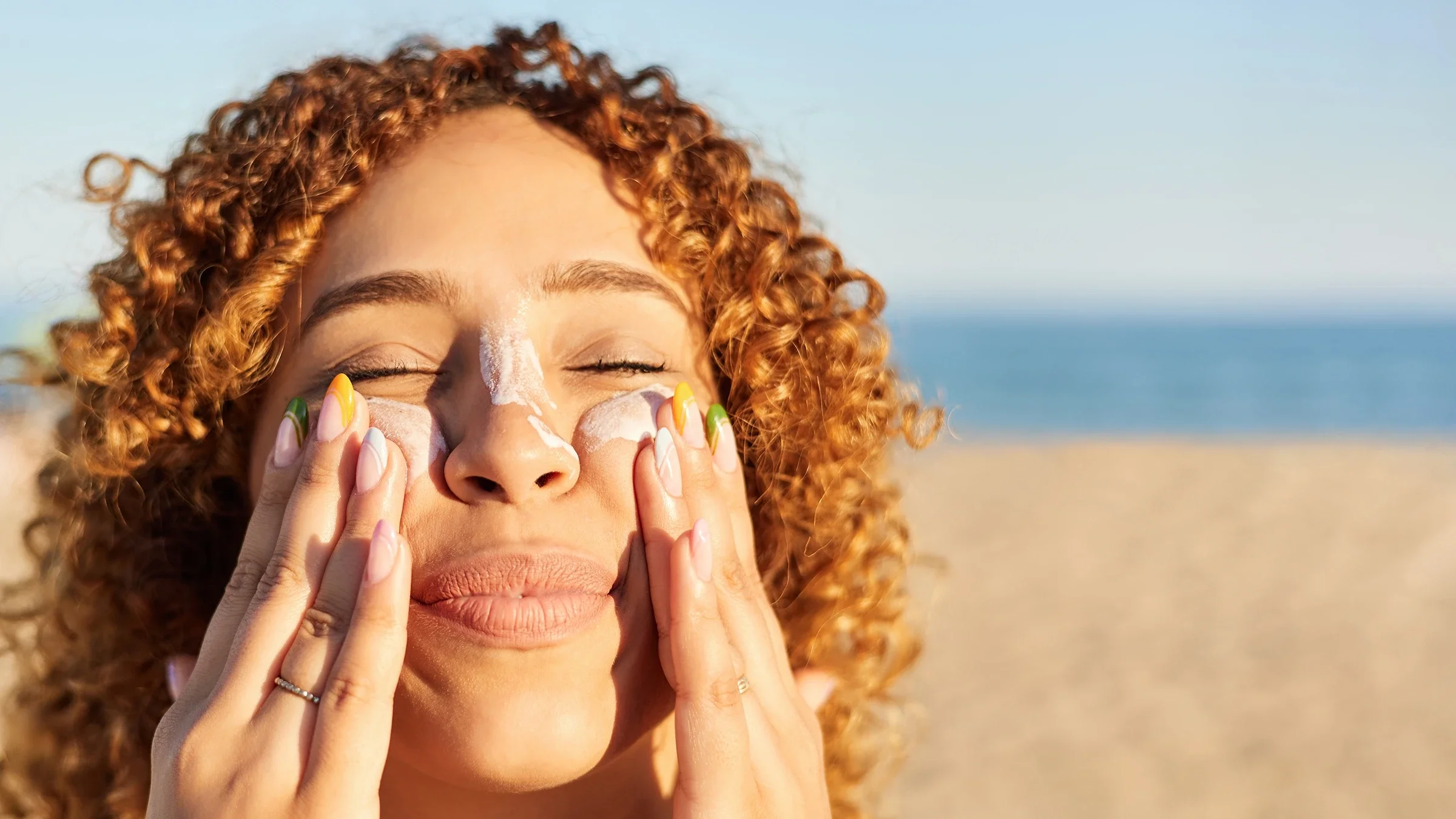
Dry-touch sunscreen works like other sunscreens to prevent UV rays from affecting the skin, but it feels different. It’s easy to use and leaves the skin feeling dry to the touch, rather than sticky or tacky. It doesn’t feel greasy or leave a white, pasty residue on your skin.
Are dry-touch sunscreens non-comedogenic?
Yes, dry-touch sunscreen is non-comedogenic, meaning that it won’t clog your pores. So it can be a good choice for many skin types.
What are the benefits of dry-touch sunscreen?
There are many reasons to reach for dry-touch sunscreen.
“Dry-touch sunscreen can be a great go-to sunscreen, especially during hot and humid summer months,” said Maria Robinson, MD, a board-certified dermatologist. “The lightweight and non-greasy formula absorbs quickly into the skin without leaving a sticky or oily residue.”

Read more like this
Explore these related articles, suggested for readers like you.

“Depending on the type, dry-touch sunscreens are also less likely to leave behind a white cast, making them a good option for all skin tones,” she added.
If you’re looking for a sunscreen that has a smoother finish, while still protecting you from harmful UV radiation, dry-touch sunscreen may be for you.
Who should use dry-touch sunscreen?
Dry-touch sunscreen seems to be safe for everyone, including children, said Brian Clista, MD, a general pediatrician.
“But like any sunscreen, you should reapply dry sunscreen every 2 hours and after you’ve been swimming or sweating,” Clista said.
How to choose the best dry-touch sunscreen for you
When choosing a sunscreen, it comes down to personal preference. But if you have oily, sensitive, or acne-prone skin, you may benefit from dry-touch sunscreen over a physical sunscreen. The dry-touch sunscreens are usually formulated so that they don’t clog pores. But experts recommend reading the ingredient label just to be sure.
Whatever you choose, Clista points out some things that you should look for in all sunscreens:
Broad-spectrum protection against UVA and UVB rays
SPF of at least 30
Water resistant
Doesn’t contain para-aminobenzoic acid (PABA), which can cause skin reactions
Sunscreen safety tips
Getting in the habit of a daily sunscreen routine is one of the best things you can do for your skin. To name just a few benefits, using sunscreen prevents sunburn, lowers your risk for cancer, and protects your skin against premature aging.
Whether you’re planning to spend a full day at the beach or just going on a walk outside, here are some sunscreen safety tips:
Use sunscreen every day. Use a broad-spectrum sunscreen with an SPF of at least 30. Reapply it to exposed skin every 2 hours, or more often if you go in the water or sweat a lot.
Check your sunscreen’s ingredients. There are two chemical sunscreen ingredients — PABA and trolamine salicylate — that the FDA doesn’t consider to be safe. Luckily, they aren’t used in marketed sunscreens any longer. Other sunscreen chemicals — oxybenzone and octinoxate — have been linked to the damage of coral reefs and other sea life. To protect the environment, some places have banned the use of sunscreens with these chemicals.
Know your skin. Consider using a mineral sunscreen if you have sensitive, acne-prone skin, or eczema. It’ll be less likely to cause irritation.
Protect your scalp and lips. Apply sunscreen to any exposed skin, including your lips, scalp, tops of your ears, and feet. Your hair can help prevent rays from burning your scalp, but it doesn’t offer total protection. A hat and sunscreen can help you avoid a painful scalp sunburn. And lip balm with SPF of 30 or higher can protect your lips.
Sunscreen is just one sun-protection tool. Clothing is another great way to protect your skin from the sun. Long sleeves, pants, and a wide-brimmed hat provide solid coverage. And UV-protective sunglasses can prevent sun damage to your eyes.
Sunscreen isn’t perfect. Even if you consistently use sunscreen, it’s important to watch for changes in your skin. If you’re worried about a mole or spot on your skin, visit a dermatologist or your primary care provider.
Review your medication list. Certain medications, including some antibiotics, can make you more sensitive to sunlight. You may need to apply sunscreen more frequently or cover up your skin with protective clothing.
Frequently asked questions
No, sunscreen doesn’t necessarily dry out your skin. In fact, some sunscreens contain hydrating ingredients, like hyaluronic acid, that actually moisturize your skin and protect your skin barrier. If you already have dry skin or your skin feels dry after using sunscreen, try a moisturizing sunscreen cream. Sunscreen creams can be especially helpful to apply to sensitive areas like your face.
Make sure your skin is dry before you put on sunscreen. And then let the sunscreen dry and absorb in your skin for about 15 minutes before going into the sun (or into the water).
You should avoid certain ingredients in chemical sunscreens, like oxybenzone. These ingredients may get absorbed into your bloodstream and act as endocrine (hormone) disruptors. The American Academy of Pediatrics recommends that children avoid oxybenzone sunscreen, if possible.
No, sunscreen doesn’t necessarily dry out your skin. In fact, some sunscreens contain hydrating ingredients, like hyaluronic acid, that actually moisturize your skin and protect your skin barrier. If you already have dry skin or your skin feels dry after using sunscreen, try a moisturizing sunscreen cream. Sunscreen creams can be especially helpful to apply to sensitive areas like your face.
Make sure your skin is dry before you put on sunscreen. And then let the sunscreen dry and absorb in your skin for about 15 minutes before going into the sun (or into the water).
You should avoid certain ingredients in chemical sunscreens, like oxybenzone. These ingredients may get absorbed into your bloodstream and act as endocrine (hormone) disruptors. The American Academy of Pediatrics recommends that children avoid oxybenzone sunscreen, if possible.
The bottom line
Sun protection can reduce your risk of skin cancer and skin aging. Many people want to protect their skin, but they don’t enjoy feeling greasy or sticky after applying sunscreen. Dry-touch sunscreen may be a great option that provides important UVA and UVB protection, while leaving your skin feeling dry and smooth.

Why trust our experts?



References
American Academy of Dermatology Association. (n.d.). What to look for: ABCDEs of melanoma.
American Academy of Dermatology Association. (2025). How to apply sunscreen.
American Academy of Dermatology Association. (2025). Sunscreen FAQs.
Druml, L., et al. (2023). sunscreen label marketing towards pediatric populations: Guidance for navigating sunscreen choice. Cureus.
Environmental Working Group. (n.d.). The trouble with ingredients in sunscreen.
Menzie, C. A., et al. (2022). Environmental impact of currently marketed sunscreens and potential human impacts of changes in sunscreen usage. National Academies of Sciences, Engineering, and Medicine.
National Park Service. (2024). I didn't know that!: Reef-friendly sun protection.
Sander, M., et al. (2020). The efficacy and safety of sunscreen use for the prevention of skin cancer. Canadian Medical Association Journal.
U.S. Food and Drug Administration. (2022). Questions and answers: FDA posts deemed final order and proposed order for over-the-counter sunscreen.