Key takeaways:
Icotyde (icotrokinra) is an oral medication that blocks a protein called interleukin-23. It’s FDA approved to treat moderate-to-severe plaque psoriasis in adults and kids ages 12 and older.
Icotyde’s side effects are typically mild and include headache, nausea, and cough. Fatigue and fungal infections are also possible.
Reach out to your healthcare team about any Icotyde side effects that worsen or don’t go away.
Save on related medications
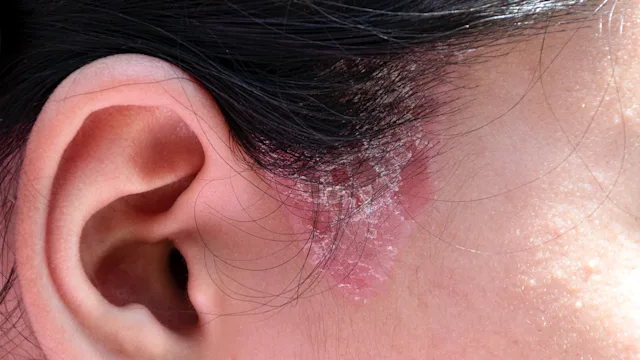
Scaly, itchy, and painful patches on the body are hallmark symptoms of plaque psoriasis. If you have these symptoms, they likely affect your daily life in some capacity. Thankfully, with continuous advances in treatment, a variety of medications can help improve your skin symptoms.
Icotyde (icotrokinra) is one unique option. It was FDA approved in March 2026 for moderate-to-severe plaque psoriasis in adults and kids ages 12 and older who weigh at least 40 kg (88 lbs).
Icotyde is the first oral peptide medication that selectively binds to the interleukin-23 (IL-23) receptor and blocks IL-23 — a protein that causes inflammation. By blocking IL-23, Icotyde lowers skin inflammation involved in plaque psoriasis.
Before starting a new medication, you’ll likely have questions about its safety. Your healthcare team can help you navigate what side effects to expect if you’re considering Icotyde as part of your treatment plan.
Icotyde side effects at a glance
Icotyde is typically well-tolerated. Its reported side effects don’t happen at a much higher rate than with a placebo (pill with no medication). Nevertheless, there are certain side effects you should be aware of.
Possible Icotyde side effects include:
Headache
Nausea
Cough
Fungal infection
Fatigue
Stomach irritation
Here, we’ll cover more about five Icotyde side effects you should know about and how to manage them.
1. Headache
Headache is a common side effect of many medications, including Icotyde. But if you experience headaches frequently, Icotyde may not be the true or only cause. Psoriasis itself can raise the risk of experiencing headaches, too.
If you experience headaches while taking Icotyde, some simple-but-effective tips to manage them include:
Staying hydrated by drinking water or other clear fluids
Getting enough sleep
Reducing stress (when possible)
Avoiding alcohol
Exercising
Applying a cold compress to your head
You can also try over-the-counter (OTC) pain relievers, such as acetaminophen (Tylenol) or ibuprofen (Advil, Motrin), after getting an OK from a healthcare professional.
If your headache gets worse or doesn’t go away, reach out to your healthcare team to get checked out. This could be a possible symptom of something more serious.
2. Nausea
Nausea is another relatively common Icotyde side effect. It was a top stomach-related side effect reported in Icotyde’s clinical studies.
If you do experience nausea, it’ll likely be mild. Nevertheless, knowing how to deal with nausea can help ease your symptoms.
If you’re feeling nauseous, it’s best to avoid fried, spicy, and high-fiber foods until you’re feeling better. Instead, stick with foods that are part of the bland, stomach-friendly BRAT diet for about 1 to 2 days. BRAT stands for the following foods:
Bananas
Rice
Applesauce
Toast
Eating smaller meals more frequently and drinking water are other tips. OTC nausea medications — such as bismuth subsalicylate (Pepto-Bismol) — are also an option if you’re still feeling queasy.
Good to know: Sometimes taking your medication with food can help ease your stomach. But that’s not the case with Icotyde. Taking Icotyde with food can actually make it less effective. Food can lower the amount of Icotyde absorbed in your body. That’s why you should take Icotyde first thing in the morning on an empty stomach with plain water. Wait at least 30 minutes after taking Icotyde before eating anything.
3. Cough
Cough can be a symptom of an upper respiratory tract infection (URTI), which has been reported in people taking Icotyde. The common cold is one example of a URTI.
Managing a cough with home remedies is a good start. Drinking water, using a humidifier, or consuming a teaspoon of honey are a few strategies. If these don’t do the trick, you can try an OTC cough medication. Cough suppressants, such as dextromethorphan (Delsym), can help manage a dry cough.
Guaifenesin (Mucinex) is an example of an expectorant. It breaks up mucus if you’re experiencing a wet cough.
There are certain red flags that your cough could be a sign of a serious infection. If it lasts for more than 3 weeks, or you cough up blood or have a persistent fever, reach out to your prescriber for follow-up.
Good to know: The FDA no longer requires testing for latent tuberculosis (nonactive TB) before and during treatment with IL-23 blockers such as Icotyde. Active TB isn’t likely to happen during treatment with Icotyde. In fact, there weren’t any cases reported in clinical studies. But to be safe, your healthcare team may still decide to test you for TB if you have a lingering cough.
4. Fatigue
Many factors can contribute to feeling tired, including taking medications such as Icotyde. But fatigue was reported in only a small percentage of people taking Icotyde in studies. Autoimmune conditions, such as psoriasis, can also make you tired.
To help boost your energy, do your best to make sure you’re getting enough sleep. Avoiding vigorous exercise and caffeine close to bedtime can help with this.
Keep a current list of your OTC and prescription medications handy. Your prescriber and pharmacist can check for any medications that could be making you tired. OTC antihistamines, such as diphenhydramine (Benadryl), are common culprits.
5. Fungal infections
Icotyde can potentially weaken your immune system, so fungal infections are possible. Athlete’s foot, tinea versicolor (skin pigment changes), and oral thrush (mouth fungal infection) are a few types.
You can try an OTC antifungal cream for athlete’s foot and tinea versicolor. Clotrimazole (Lotrimin AF) is a go-to option for both. For oral thrush, prescription medications — such as nystatin liquid suspension — are typically used for treatment. A healthcare professional can look at your symptoms and help you decide if taking an antifungal would be worthwhile.
Frequently asked questions
No, Icotyde isn’t known to cause weight gain. But other psoriasis medications can potentially cause mild weight gain. Tumor necrosis factor (TNF) blockers, such as Humira (adalimumab) and Enbrel (etanercept) are a couple of examples. Methotrexate (Trexall) is another psoriasis medication that could make you gain weight.
The main difference between these options comes down to injection-related side effects. Because Icotyde is taken by mouth, these issues aren’t relevant for it.
Skyrizi (risankizumab) and Tremfya (guselkumab) are injectable IL-23 inhibitors used to treat psoriasis. With these medications, you may experience redness, swelling, or pain where the injection is given.
Icotyde hasn’t been directly compared with Skyrizi or Tremfya. But in general, injectable IL-23 inhibitors are also more likely to cause URTIs.
No, Icotyde isn’t known to cause weight gain. But other psoriasis medications can potentially cause mild weight gain. Tumor necrosis factor (TNF) blockers, such as Humira (adalimumab) and Enbrel (etanercept) are a couple of examples. Methotrexate (Trexall) is another psoriasis medication that could make you gain weight.
The main difference between these options comes down to injection-related side effects. Because Icotyde is taken by mouth, these issues aren’t relevant for it.
Skyrizi (risankizumab) and Tremfya (guselkumab) are injectable IL-23 inhibitors used to treat psoriasis. With these medications, you may experience redness, swelling, or pain where the injection is given.
Icotyde hasn’t been directly compared with Skyrizi or Tremfya. But in general, injectable IL-23 inhibitors are also more likely to cause URTIs.
The bottom line
Icotyde (icotrokinra) is an oral interleukin-23 blocker. It’s FDA approved to treat adults and kids ages 12 and older with moderate-to-severe plaque psoriasis. Icotyde’s side effects are typically mild. Headache, nausea, and cough were among the most common side effects reported in studies. Fatigue and fungal infections are also common side effects. Reach out to your healthcare team about any Icotyde side effects that worsen or don’t go away.

Why trust our experts?




References
Altayf, A., et al. (2026). Efficacy and safety of oral icotrokinra in moderate-to-severe plaque psoriasis: A systematic review, meta-analysis, and trial sequential analysis. International Journal of Dermatology.
American Academy of Dermatology Association. (n.d.). Psoriasis: Signs and symptoms.
Ferreira, C., et al. (2026). Icotrokinra: An oral interleukin-23 receptor antagonist peptide for the treatment of psoriasis. American Journal of Clinical Dermatology.
Habib, E., et al. (2025). Oral icotrokinra for plaque psoriasis in adults and adolescents. Annals of Medicine & Surgery.
Janssen Biotech. (2026). Icotyde- icotrokinra tablet, film coated [package insert].
Johnson & Johnson. (2026). FDA approval of Icotyde (icotrokinra) ushers in new era for first-line systemic treatment of plaque psoriasis with a targeted oral peptide.
Krajewska-Wlodarczyk, M., et al. (2020). Prevalence and severity of fatigue in psoriasis and psoriatic arthritis. Advances in Dermatology and Allergology.
MedlinePlus. (2026). Icotrokinra.
National Human Genome Research Institute. (2026). Peptide.
National Psoriasis Foundation. (2026). National Psoriasis Foundation Medical Board position leads to reduced barriers to care for new oral treatment.
Patsalos, O., et al. (2020). Impact of TNF-α inhibitors on body weight and BMI: A systematic review and meta-analysis. Frontiers in Pharmacology.