Used for Altitude Sickness, Edema, Epilepsy, Glaucoma
Used for Altitude Sickness, Edema, Epilepsy, Glaucoma
Acetazolamide is used to treat altitude sickness (mountain sickness). It can also help with glaucoma, edema (swelling), and epilepsy (a seizure condition). Acetazolamide can have side effects such as tiredness, stomach upset, and sometimes numbness and tingling of the face, arms, or legs. This medication comes as a generic immediate-release (IR) tablet and extended-release (ER) capsule; the brand-name Diamox is no longer available.
For altitude sickness, it allows your body to use oxygen better at high altitudes.
To help with edema in the body, acetazolamide removes extra water and electrolytes from your body and pass them into your urine. In addition, the medication lowers the amount of fluid in your eyes to treat glaucoma.
Though unclear, acetazolamide appears to calm your nervous system to help with seizures.
When does Acetazolamide start working?Time passed since treatment started:
HOURS
DAYS
Full effect
WEEKS
MONTHS
Drug facts
Common Brands
Diamox(brand no longer available)
Drug Class
Carbonic anhydrase inhibitor
Controlled Substance Classification
Not a controlled medication
Generic Status
Lower-cost generic available
Availability
Prescription only
Side effects of Acetazolamide
The following side effects may get better over time as your body gets used to the medication. Let your healthcare provider know immediately if you continue to experience these symptoms or if they worsen over time.
The following Acetazolamide side effects have also been reported
Along with its needed effects, a medicine may cause some unwanted effects. Although not all of these side effects may occur, if they do occur they may need medical attention.
Check with your doctor immediately if any of the following side effects occur:
Rare
Shortness of breath or trouble in breathing
Check with your doctor as soon as possible if any of the following side effects occur:
Also, check with your doctor if you have any changes in your vision (especially problems with seeing faraway objects) when you first begin taking this medicine.
Some side effects may occur that usually do not need medical attention. These side effects may go away during treatment as your body adjusts to the medicine. Also, your health care professional may be able to tell you about ways to prevent or reduce some of these side effects. Check with your health care professional if any of the following side effects continue or are bothersome or if you have any questions about them:
Not recommended for people with serious kidney or liver problems
Not known if it's safe or works well in children (those of all ages for immediate-release and those younger than 12 for extended-release)
Pharmacist tips for Acetazolamide
For altitude sickness: It's preferred that you start acetazolamide 1 to 2 days before you ascend (climb up in altitude), such as before climbing a mountain or visiting a high-altitude location like Colorado. Continue to take the medication while at high altitudes for 2 days or longer if needed, and go up slowly to avoid getting sick.
Acetazolamide can cause drowsiness, tiredness, and changes in vision. Make sure you know how the medication affects you before you drive or do anything that requires concentration.
Acetazolamide might cause you to urinate more often. Your healthcare provider might recommend that you take the medication in the morning to avoid getting up at night.
Make sure to get any blood work done that your healthcare provider orders. Acetazolamide can cause changes to your electrolyte levels and, rarely, to your blood cell counts. For this reason, your provider might check your electrolyte levels and blood cell counts periodically while you're taking acetazolamide.
Don't take acetazolamide with aspirin unless your healthcare provider told you that it's okay to do so. Taking these two medications together can lead to side effects, such as loss of appetite, low energy, rapid breathing, or more seriously coma.
Let your healthcare provider and pharmacist know about all the medications you take or plan to take, including over-the-counter products and supplements. Acetazolamide can interact with other medications, such as antacids containing sodium bicarbonate; methotrexate; dorzolamide (Trusopt); and certain seizure medications like phenytoin (Dilantin) and primidone (Mysoline). These interactions can cause your medications to not work as well or raise your risk of certain side effects. Your providers can make sure acetazolamide is safe to take with your other medications.
Risks and warnings for Acetazolamide
Acetazolamide can cause some serious health issues. This risk may be even higher for certain groups. If this worries you, talk to your doctor or pharmacist about other options.
Changes in acid-base balance and electrolyte levels
Risk factors: Kidney problems | Breathing problems | Diabetes | Age 65 years or older
Acetazolamide can cause electrolyte imbalances in your blood, including low sodium and potassium levels. It can also sometimes cause too much acid to build up in the body (metabolic acidosis). You might be at higher risk of these imbalances if you have kidney or breathing problems. Let your provider know if you experience nausea, muscle cramps, tiredness, weakness, rapid breathing, or confusion, as these can be signs of acid-base or electrolyte imbalances.
Changes in blood sugar levels
Acetazolamide can cause changes to your blood sugar levels. If you have diabetes, continue to check your blood sugar levels while you're taking acetazolamide. Let your provider know if your blood sugar levels are higher than usual. Also make sure you know how to recognize and treat low blood sugar, should it happen. Let your healthcare provider know if you experience symptoms of low blood sugar, such as shakiness, anxiety, or rapid heartbeat.
Interaction with aspirin
Risk factors: Taking acetazolamide with aspirin
Don't take high-dose aspirin with acetazolamide. These two medications interact with each other, possibly causing loss of appetite, breathing problems, tiredness, or even coma or death. Ask your healthcare provider before taking either acetazolamide or aspirin if you're already taking the other to make sure it's safe to do so.
Allergic reaction
Risk factors: Allergy to sulfa medications | Sensitive to FD&C Yellow No. 6 dye
It's possible to have an allergic reaction to acetazolamide. These reactions can be life-threatening and can include skin rashes, fever, blood problems, and anaphylaxis (closing of the throat). Acetazolamide is a sulfonamide medication; you might be at risk for allergic reactions to the medication if you have a sulfonamide (sulfa) allergy. In addition, some acetazolamide extended-release capsules contain FD&C Yellow No. 6 coloring dye, which some people might be sensitive to. If you have signs of an allergic reaction, like hives, blistered or peeling skin, trouble breathing, or swelling of your tongue or throat, stop using acetazolamide and get medical help right away.
Harm to unborn baby
It isn't known whether acetazolamide can harm an unborn baby when it's taken during pregnancy. But in animal studies, acetazolamide caused birth defects. Because of this risk, this medication should only be used during pregnancy if the benefits are greater than the potential risks. If you're pregnant or planning to become pregnant, discuss with your healthcare provider to see whether acetazolamide is safe for you to take.
Acetazolamide dosage
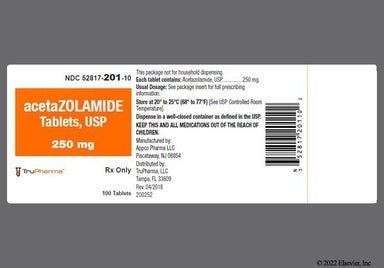
The average cost for 60 tablets of 250mg of Acetazolamide is $21.08 with a free GoodRx coupon. This is 56.59% off the average retail price of $48.56.
Interactions between Acetazolamide and other drugs
Acetazolamide may interact with certain medications or supplements. Always let your doctor and pharmacist know about any other medications or supplements (including prescribed and over-the-counter medications, vitamins, and dietary or herbal supplements) that you are currently taking. The list below does not include all possible drug interactions with Acetazolamide. Please note that only the generic name of each medication is listed below.
Although certain medicines should not be used together at all, in other cases two different medicines may be used together even if an interaction might occur. In these cases, your doctor may want to change the dose, or other precautions may be necessary. When you are taking any of these medicines, it is especially important that your healthcare professional know if you are taking any of the medicines listed below. The following interactions have been selected on the basis of their potential significance and are not necessarily all-inclusive.
Using medicines in this class with any of the following medicines is not recommended. Your doctor may decide not to treat you with a medication in this class or change some of the other medicines you take.
Using medicines in this class with any of the following medicines is usually not recommended, but may be required in some cases. If both medicines are prescribed together, your doctor may change the dose or how often you use one or both of the medicines.
Contraindications are specific health conditions or situations in which a person should not take a medication due to safety concerns. If you have any of the following conditions or if any of the following apply to you, let your healthcare provider know because Acetazolamide will not be safe for you to take.
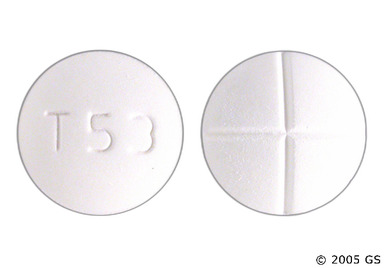
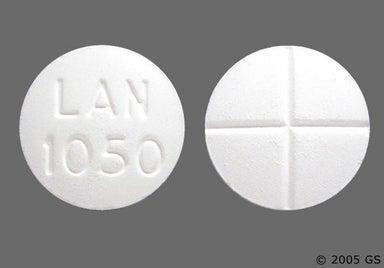
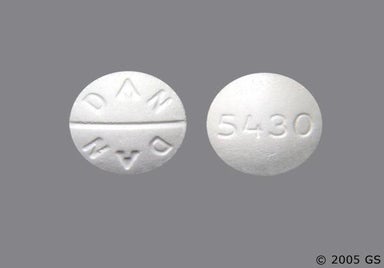
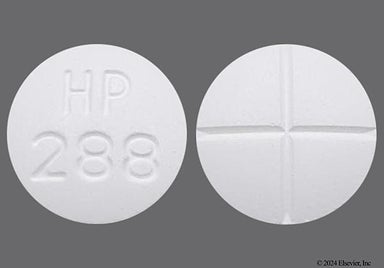
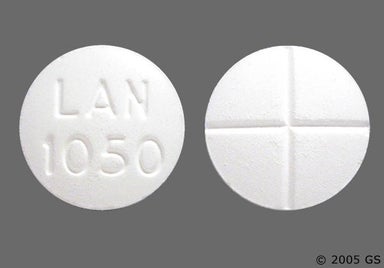
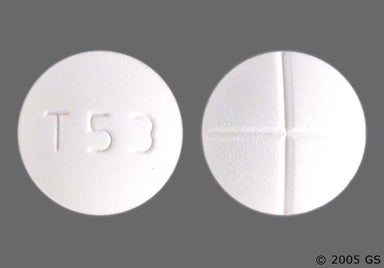
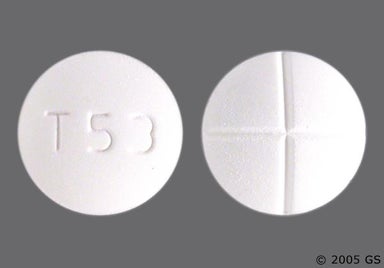
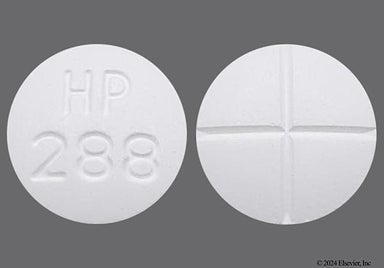
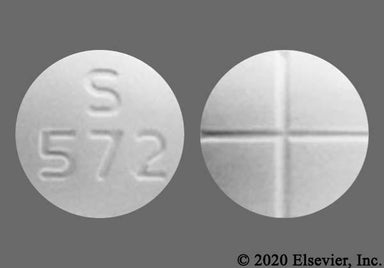
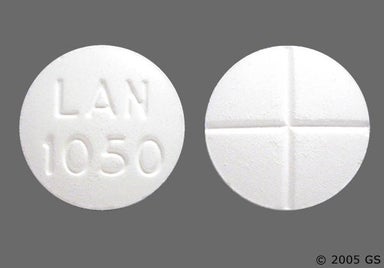
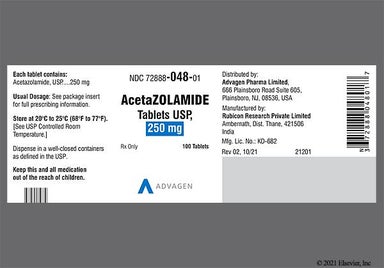
This medicine is White, Round, Multi-Segmented Tablet Imprinted With "Lan 1050".White Round LAN 1050 - Acetazolamide 250mg TabletThis medicine is White, Round, Scored Tablet Imprinted With "Dan Dan", "5430".White Round DAN DAN - Acetazolamide 250mg TabletThis medicine is White, Round, Multi-Segmented Tablet Imprinted With "Hp 288".White Round HP 288 - Acetazolamide 250mg TabletThis medicine is White, Round, Multi-Segmented Tablet Imprinted With "Lan 1050".White Round LAN 1050 - Acetazolamide 250mg TabletThis medicine is White, Round, Scored Tablet Imprinted With "T 53".White Round T 53 - Acetazolamide 250mg TabletThis medicine is White, Round, Multi-Segmented Tablet Imprinted With "Ac 158".White Round AC 158 - Acetazolamide 250mg TabletThis medicine is White, Round, Scored Tablet Imprinted With "T 53".White Round T 53 - Acetazolamide 250mg TabletThis medicine is White, Round, Multi-Segmented Tablet Imprinted With "Ace", "250".White Round ACE - Acetazolamide 250mg TabletThis medicine is White, Round, Multi-Segmented Tablet Imprinted With "Hp 288".White Round HP 288 - Acetazolamide 250mg TabletThis medicine is White, Round, Multi-Segmented Tablet Imprinted With "Ls721".White Round LS721 - Acetazolamide 250mg TabletThis medicine is White, Round, Multi-Segmented Tablet Imprinted With "S 572".White Round S 572 - Acetazolamide 250mg TabletThis medicine is White, Round, Multi-Segmented Tablet Imprinted With "Lan 1050".White Round LAN 1050 - Acetazolamide 250mg TabletThis medicine is White, Round, Multi-Segmented Tablet Imprinted With "Logo 043".White Round LOGO 043 - Acetazolamide 250mg Tablet
GoodRx Health has strict sourcing policies and relies on primary sources such as medical organizations, governmental agencies, academic institutions, and peer-reviewed scientific journals. Learn more about how we ensure our content is accurate, thorough, and unbiased by reading our editorial guidelines.
Prescription savings
Stop paying too much for your prescriptions. Compare prices, get pharmacy coupons, and save up to 80%.
Plans start at $9.99/mo. (when paid yearly). Terms apply.
Common questions about Acetazolamide
Though very rare, blood problems might happen if you have a severe allergic reaction to Acetazolamide. These blood problems can include having low red blood cells (anemia) and can be serious. But it's not exactly known how reactions to Acetazolamide cause blood problems. Let your healthcare provider know right away if you experience any symptoms of anemia, such as tiredness, dizziness, and weakness, while you're taking Acetazolamide.
While Acetazolamide isn't classified as a diuretic medication, it does have some diuretic-like effects. Acetazolamide can work on the kidneys to help move extra water and electrolytes from the body into the urine. This is especially helpful for people with fluid buildup in the body (edema), such as in heart failure.
No, you won't be able to find Acetazolamide over the counter to purchase. Acetazolamide is only available at the pharmacy with a prescription from your healthcare provider.
The manufacturer doesn't give recommendations whether you can drink alcohol with Acetazolamide or not. But in general, alcohol and Acetazolamide both can make you feel drowsy or dizzy. So drinking alcohol while you're taking Acetazolamide might worsen these side effects and raise your risk for accidental injuries.
While Acetazolamide isn't used to treat heart failure, it's approved for use to help relieve a symptom of heart failure — edema (swelling due to fluid buildup in the body). Acetazolamide helps move extra fluids and electrolytes from the body and into the urine. This might help relieve swelling in the body that people with heart failure commonly experience. Keep in mind that current heart failure guidelines don't mention Acetazolamide as an option to help with edema. So your healthcare provider might recommend other diuretics ("water pills") to lower heart-failure-related edema.
If you're pregnant or thinking of becoming pregnant, speak with your healthcare provider about whether you can take Acetazolamide. There haven't been enough studies about Acetazolamide use in pregnant women. But based on animal studies, the medication might cause harm to unborn babies. For this reason, Acetazolamide should only be used during pregnancy if the benefits are greater than the potential risks. Your provider can discuss the risks and benefits of taking Acetazolamide to see whether it's right for you or help find safer alternatives for you.