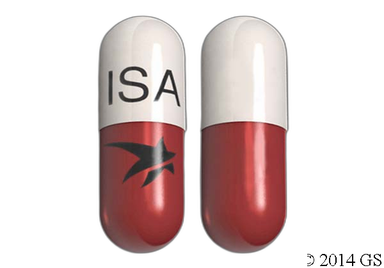
Cresemba
Cresemba (isavuconazonium) is an azole antifungal. It's used to treat invasive aspergillosis and mucormycosis fungal infections in adults and children. Cresemba (isavuconazonium) capsules can be take by people ages 6 years and older (weighing at least 16 kg). Cresemba (isavuconazonium) intravenous (IV) infusions can be given to people ages 1 year and older. Treatment typically starts off with a loading dose taken every 8 hours for 2 days, then a maintenance dose taken once per day. Some common side effects include nausea, vomiting, diarrhea, and stomach pain.


What is Cresemba (isavuconazonium)?
What is Cresemba (isavuconazonium) used for?
Serious fungal infections that have spread to the bloodstream:
How Cresemba (isavuconazonium) works
Cresemba (isavuconazonium) is an azole antifungal medication that works by stopping the fungus from being able to make a protective covering. This causes the fungus to not grow or survive.
Drug facts
| Common Brands | Cresemba |
|---|---|
| Drug Class | Antifungal |
| Controlled Substance Classification | Not a controlled medication |
| Generic Status | No lower-cost generic available |
| Availability | Prescription only |

Side effects of Cresemba (isavuconazonium)
The following side effects may get better over time as your body gets used to the medication. Let your healthcare provider know immediately if you continue to experience these symptoms or if they worsen over time.
Common Side Effects
Adults:
- Nausea (28%)
- Vomiting (25%)
- Diarrhea (24%)
- Low potassium levels (19%)
- Stomach pain (17%)
- Headache (17%)
- Elevated liver enzymes (17%)
- Trouble breathing (17%)
- Swelling of the limbs (15%)
- Constipation (14%)
- Fatigue (11%)
- Trouble sleeping (11%)
- Back pain (10%)
- Kidney failure (10%)
Children:
- Diarrhea (26%)
- Stomach pain (23%)
- Vomiting (21%)
- Elevated liver enzymes (18%)
- Rash (14%)
- Nausea (13%)
- Headaches (12%)
Less Common Side Effects
- Low appetite
- Anxiety
- Agitation, confusion
- Rash
- Itching
- Chest pain
- Injection site reaction
- Heartburn
Cresemba (isavuconazonium) serious side effects
Contact your healthcare provider immediately if you experience any of the following.
- Serious allergic and skin reactions: hives, rash, blisters, swelling of the lips or tongue, difficulty breathing, skin reddening, skin scaling, skin itching
- Liver damage: nausea, vomiting, feeling tired, stomach pain, yellowing of your skin or whites of your eye (jaundice), dark-colored urine, pale-colored stool
The following Cresemba (isavuconazonium) side effects have also been reported
Side effects that you should report to your care team as soon as possible:
- Allergic reactions—skin rash, itching, hives, swelling of the face, lips, tongue, or throat
- Heart rhythm changes—fast or irregular heartbeat, dizziness, feeling faint or lightheaded, chest pain, trouble breathing
- Infusion reactions—chest pain, shortness of breath or trouble breathing, feeling faint or lightheaded
- Liver injury—right upper belly pain, loss of appetite, nausea, light-colored stool, dark yellow or brown urine, yellowing skin or eyes, unusual weakness or fatigue
Side effects that usually do not require medical attention (report to your care team if they continue or are bothersome):
- Constipation
- Cough
- Diarrhea
- Headache
- Vomiting

Get your GoodRx coupon

Pros and cons of Cresemba (isavuconazonium)
Pros
- Works well to treat aspergillosis and mucormycosis
- Available as a capsule and an injection
- Only has to be taken once a day (after the first 2 days)
- IV infusion can be given to children as young as 1 years old
Cons
- Not safe while pregnant or breastfeeding
- Can interact with other medications
- Rare risk of serious liver problems
- Only available as brand-name medication

Pharmacist tips for Cresemba (isavuconazonium)

- You can take Cresemba (isavuconazonium) with or without food. But stomach-related side effects (e.g., nausea, vomiting, diarrhea, stomach pain, indigestion) are common, so taking it with food can help ease or prevent these side effects from happening.
- Swallow Cresemba (isavuconazonium) capsules whole. Don’t open, crush, dissolve, or chew the capsules. If you're having trouble swallowing the capsules, let your prescriber know. They might switch you to a different antifungal medication.
- If you have a nasogastric (NG) tube (a type of feeding tube), your prescriber can order the Cresemba (isavuconazonium) injection to be given through the feeding tube.
- Take Cresemba (isavuconazonium) exactly as prescribed. Make sure to finish your treatment course, even if you're feeling better. Stopping the medication earlier than prescribed can make your infection come back and become more difficult to treat.
- Rarely, the IV version of Cresemba (isavuconazonium) can cause infusion-related reactions, such as low blood pressure, trouble breathing, chills, dizziness, tingling, or numbness. Let your prescriber know if you're experiencing any of these.
- Cresemba (isavuconazonium) can interact with several medications, including atorvastatin (Lipitor) and digoxin (Lanoxin). Make sure to tell your care team about all of the medications you take before and during treatment with Cresemba (isavuconazonium).
- Contact your prescriber if you develop other symptoms of an illness or if your symptoms become worse. This could be a sign that you're infected with a virus or bacteria instead of a fungus. If so, you'll need to a different medication than Cresemba (isavuconazonium) because it's only used to treat certain fungal infections.

Risks and warnings for Cresemba (isavuconazonium)
Cresemba (isavuconazonium) can cause some serious health issues. This risk may be even higher for certain groups. If this worries you, talk to your doctor or pharmacist about other options.
Liver damage
- Risk factors: Liver problems | Alcohol use | Current liver problems | Certain blood cancers | Children | Taking other medications that cause liver problems
People who took Cresemba (isavuconazonium) have developed liver irritation. Most of the time, this isn't serious and they were able to continue treatment with Cresemba (isavuconazonium). But rarely, people have reported life-threatening liver problems. Because of this risk, your prescriber might order blood tests before you start and during treatment to check your liver health. Also, it's recommended to limit or avoid alcohol because it can also cause liver damage. Get medical attention right away if you notice yellowing of your skin or the whites of your eyes; stool changes; dark or brown urine; swelling of your stomach; stomach pain; or confusion. Your prescriber might ask you to stop taking Cresemba (isavuconazonium) in order to prevent further liver damage.
Severe allergic and skin reactions
People have reported infusion-related reactions while receiving Cresemba (isavuconazonium) through IV infusion. Let your healthcare team know if you experience symptoms such as trouble catching your breath, chills, and dizziness while receiving your dose; they'll need to stop the infusion.
Though rare, people have reported severe allergic reactions to Cresemba (isavuconazonium). Symptoms included facial swelling, hives, and anaphylaxis (e.g., closing of the throat). If you notice difficulty breathing; a choking sensation; dizziness; fast heartbeat; nausea; or swelling around your eyes, lips, or tongue after taking Cresemba (isavuconazonium), get medical attention right away.
Also rare, people have reported severe skin reactions, such as Stevens-Johnson syndrome (SJS), while receiving other azole antifungals. If you notice changes in your skin, such as rash, blisters, or skin reddening or peeling, and have a fever and swollen lymph nodes, seek medical help right away.
Harm during pregnancy
Cresemba (isavuconazonium) should be avoided during pregnancy due to the potential for severe development problems in babies. If you're able to get pregnant, it's recommended to use birth control while taking Cresemba (isavuconazonium) and for at least 28 days after the last dose. Let your prescriber know right away if you're pregnant or thinking of becoming pregnant.
Serious medication interactions
There are some medications that can have serious interactions with Cresemba (isavuconazonium). For example, you can't take Cresemba (isavuconazonium) with medications like rifampin (Rifadin) or phenytoin (Dilantin) because these medications can lower the level of Cresemba (isavuconazonium) and cause it to not work well to fight your infection. Also, you can't take Cresemba (isavuconazonium) with medications like ketoconazole because doing so raises the level of Cresemba (isavuconazonium) and puts you at higher risk for side effects. Before you start Cresemba (isavuconazonium), let your about all the medications you're taking so they can help you check for interactions.

Cresemba (isavuconazonium) dosage
 Dose pack
| Dosage | Quantity | Price as low as | Price per unit |
|---|---|---|---|
| 14 capsules of 186mg | 4 dose packs | $5,434.26 | $1,358.57 |
| 35 capsules of 74.5mg | 1 dose pack | $1,611.94 | $1,611.94 |
 Vial
Vial| Dosage | Quantity | Price as low as | Price per unit |
|---|---|---|---|
| 372mg | 30 vials | $11,705.05 | $390.17 |
Typical dosage for Cresemba (isavuconazonium)
Cresemba (isavuconazonium) is available as a capsule taken by mouth and as an infusion through the veins (IV). The capsule is can be taken by people ages 6 years and older (who weigh 16 kg or greater) and the IV infusion can be given to people ages 1 year and older.
- Adults: The typical starting dose is 372 mg infused IV or taken by mouth every 8 hours for 6 doses. After that, the typical maintenance dose is 372 mg IV or by mouth once per day.
- Children: Your child's healthcare provider will calculate the dose based on your child's age, weight, and if they're receiving the IV infusion or the capsule. The typical starting dose is infused IV or taken by mouth every 8 hours for 6 doses. After that, the maintenance dose is given IV or by mouth once per day.

How much does Cresemba (isavuconazonium) cost?
$1,611.94

Cresemba (isavuconazonium) contraindications
Contraindications are specific health conditions or situations in which a person should not take a medication due to safety concerns. If you have any of the following conditions or if any of the following apply to you, let your healthcare provider know because Cresemba (isavuconazonium) will not be safe for you to take.
- Taking ritonavir (Norvir) 400 mg every 12 hours
- Taking medications known as strong CYP3A4 inhibitors, like ketoconazole
- Taking rifampin (Rifadin), carbamazepine (Tegretol), long-acting barbiturates, St. John's Wort
- History of short QT syndrome

What are alternatives to Cresemba (isavuconazonium)?
Serious fungal infections that have spread to the bloodstream:



