Key takeaways:
There are currently no FDA-approved glucagon-like peptide-1 (GLP-1) patches available in the U.S.
A few companies are researching GLP-1 patches. But most remain in early stages of development and testing.
Many products marketed online as “GLP-1 patches” don’t contain prescription GLP-1 medications, such as semaglutide or tirzepatide. There’s also little evidence that they help with weight loss.
Don’t want a GLP-1 injection? Save on GLP-1 pills like Wegovy (semaglutide) and Foundayo (orforglipron) with a free GoodRx coupon, with prices starting at $149 per month. Subscribers to GoodRx for Weight Loss can also access FDA-approved GLP-1 medications.
Glucagon-like peptide-1 (GLP-1) medications, such as Wegovy (semaglutide) and Zepbound (tirzepatide), have transformed weight-loss treatment. But not everyone likes giving themselves injections or taking pills every day. That’s led some people to wonder whether a GLP-1 patch could offer a convenient alternative.
A quick online search reveals dozens of products claiming to be “GLP-1 patches” for weight loss. At the same time, pharmaceutical companies are working on new technologies that may someday make GLP-1 patches a reality.
So, do GLP-1 patches actually exist? And if they do, do they work? Here’s what you need to know.
What is a GLP-1 patch?
A GLP-1 patch is a patch designed to deliver a GLP-1 medication through the skin instead of by injection or by mouth. Current GLP-1 medications are either:
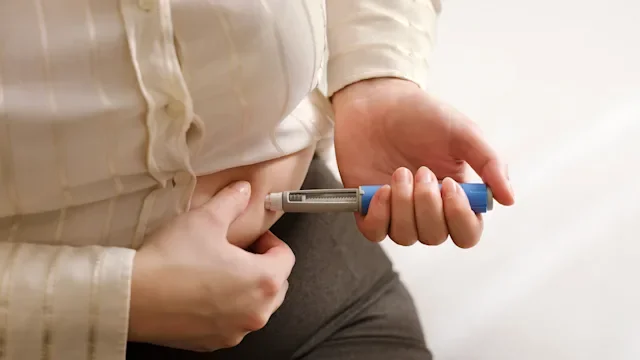
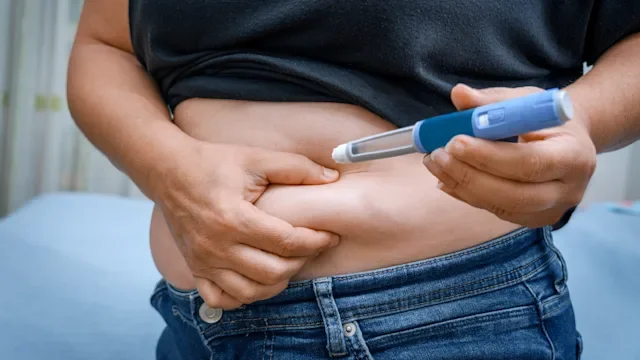
Injected under the skin, such as Wegovy and Zepbound
Taken by mouth, such as the Wegovy pill and Foundayo (orforglipron)
A patch would ideally provide a third option. Similar to a nicotine patch or hormone patch, it would slowly deliver medication into the body over time. Some people may be interested in GLP-1 patches because they may eliminate the need for injections or pills, be easier to use, or improve convenience.
However, creating a patch for GLP-1 medications is much more complicated than it might seem.
Why is it difficult to make a GLP-1 patch?
The biggest challenge is that GLP-1 medications are mostly large peptide molecules.
Your skin acts as a protective barrier and is very good at keeping large molecules out. Some small molecules, such as nicotine, can pass through the skin relatively easily. But peptide GLP-1 medications are much larger and more complex. This creates several obstacles:
The medication must penetrate the skin barrier.
Enough medication must be delivered to produce a significant effect.
The medication must remain stable inside the patch.
Because of these challenges, researchers have had to explore specialized delivery technologies rather than traditional adhesive patches.
Are there any FDA-approved GLP-1 patches?
No, there are currently no FDA-approved GLP-1 patches available in the U.S. All FDA-approved GLP-1 medications for weight loss are currently available as injections or oral tablets, including:
Wegovy and Wegovy HD injections
Wegovy pills
Zepbound injections
Saxenda (liraglutide) injections
Foundayo pills
If you see a product advertised as a GLP-1 patch, keep in mind that it isn’t an FDA-approved way to receive semaglutide, tirzepatide, or another prescription GLP-1 medication.
What about the GLP-1 patches sold online?
Many products marketed online as “GLP-1 patches” are not what most people think they are. In most cases, these patches don’t contain prescription GLP-1 medications. Instead, they often contain ingredients such as:
Vitamins, such as vitamin B12
Herbal extracts, such as berberine
Amino acids, such as glutamine
Minerals, such as chromium
Companies may market these products as supporting weight loss or “GLP-1 activity.” But there’s little evidence that these patches produce similar effects to FDA-approved GLP-1 medications. There are also several concerns with these products, including:
They haven’t undergone the same testing as FDA-approved medications.
Researchers don’t know how well they work, if at all.
Ingredient quality may vary.
Marketing claims may not be supported by available evidence.
If you’re interested in weight-loss treatment, it’s best to discuss proven options with your healthcare team.
Are any GLP-1 patches in development?
Yes, a few companies and research groups are actively working on GLP-1 patch technologies.
One promising approach involves microneedle patches. These patches contain tiny needles that are so small they may be painless or barely noticeable. The microneedles create microscopic openings in the skin, allowing the medication to enter the body. In fact, Novo Nordisk, the maker of Wegovy, previously explored developing a microneedle semaglutide patch.
Animal studies have shown encouraging results. Some patches have demonstrated the ability to deliver GLP-1 medications, such as semaglutide, and promote weight loss. However, most of these technologies are still in clinical development. More research is needed to determine:
How well they work compared to GLP-1 injections and pills
Long-term safety
Optimal dosages
Manufacturing feasibility
At this time, there’s no clear timeline for when a GLP-1 patch might become commercially available.
What alternatives exist if you don’t want GLP-1 injections?
If injections are your main concern, there are a few alternatives worth discussing with your healthcare team.
Wegovy pills
The Wegovy pill was the first FDA-approved GLP-1 pill for weight loss. It contains semaglutide, the same active ingredient found in Wegovy injections.
Unlike weekly injections, the Wegovy pill is taken once daily. You should take it first thing in the morning on an empty stomach with a small amount of water. Then, wait at least 30 minutes before eating, drinking, or taking other medications.
Foundayo
Foundayo is another oral GLP-1 medication. It doesn’t have the same food or water restrictions as the Wegovy pill, which some people may prefer. That said, Foundayo has several drug interactions to consider. So, it’s best to review your medication list with your healthcare team before starting treatment.
The bottom line
There are currently no FDA-approved glucagon-like peptide-1 (GLP-1) patches available in the U.S. Researchers are developing patch technologies that may someday provide another needle-free alternative, but they’re still being studied.
Many products sold online as “GLP-1 patches” don’t contain prescription GLP-1 medications. And they haven’t been proven to work well for weight loss, either. If you’re interested in GLP-1s but want to avoid injections, talk to your healthcare team about available options.

Why trust our experts?



References
Li, W., et al. (2025). Transdermal semaglutide administration in mice: Reduces body weight by suppressing appetite and enhancing metabolic rate. Biology.
Liu, M., et al. (2025). Progress in peptide and protein therapeutics: Challenges and strategies. Acta Pharmaceutica Sinica B.
Sagonowsky, E. (2015). Novo ends microneedle patch diabetes partnership with Zosano. Fierce Pharma.
Singh, P., et al. (20TK). Single-administration self-boosting microneedle patch for the treatment of obesity. Advanced Therapeutics.
White, C. M., et al. (2026). Transdermal “natural GLP-1” dietary supplements violate law and place patients at risk. Annals of Pharmacotherapy.
Woo, C. R., et al. (2025). Fabrication and preclinical evaluation of hyaluronic acid/aminoclay nanocomposite microneedles for noninvasive delivery of semaglutide in anti-obesity therapy. International Journal of Nanomedicine.