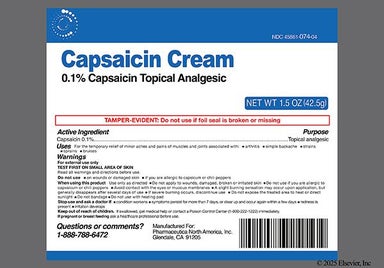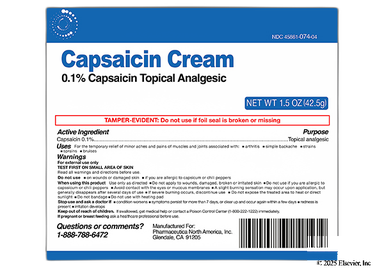


Capsaicin is a medication that can be applied to the skin (topical) to help relieve minor aches and pains. It's available over the counter (OTC) as a brand-name or lower-cost generic medication. It comes as a cream, liquid, and patch. Capsaicin is made from a chemical that comes from chili peppers, so it can cause a slight burning sensation when applied.
Relief of minor aches and pains in the muscles and joints caused by:
Capsaicin is a topical analgesic. It relieves pain when applied to the skin by acting as a counterirritant. This means that it activates (wakes up) pain sensors in the skin, which then causes them to be less sensitive to other pain signals.
The following side effects may get better over time as your body gets used to the medication. Let your healthcare provider know immediately if you continue to experience these symptoms or if they worsen over time.
Contact your healthcare provider immediately if you experience any of the following.
Along with its needed effects, a medicine may cause some unwanted effects. Although not all of these side effects may occur, if they do occur they may need medical attention.
Check with your doctor immediately if any of the following side effects occur:
More common - all forms
Burning, itching, dryness, pain, redness, swelling, or soreness at the application site
Less common - all forms
Body aches or pain
chills
difficulty with breathing
dry or productive cough
ear congestion
headache
loss of voice
stuffy or runny nose
tightness in the chest
unusual tiredness or weakness
Less common - patch only
Blurred vision
breakdown of the skin
dizziness
nervousness
pain in the arms or legs
pounding in the ears
slow or fast heartbeat
Incidence not known - patch only
Bloating or swelling of the face, arms, hands, lower legs, or feet
burning, crawling, itching, numbness, prickling, "pins and needles", or tingling feelings
increased sensitivity to pain or touch
scarring of the skin
stabbing pain
throat irritation
unusual weight gain or loss
Some side effects may occur that usually do not need medical attention. These side effects may go away during treatment as your body adjusts to the medicine. Also, your health care professional may be able to tell you about ways to prevent or reduce some of these side effects. Check with your health care professional if any of the following side effects continue or are bothersome or if you have any questions about them:
Incidence not known - patch only
Abnormal skin odor
change in or loss of taste
Other side effects not listed may also occur in some patients. If you notice any other effects, check with your healthcare professional.
Call your doctor for medical advice about side effects. You may report side effects to the FDA at 1-800-FDA-1088.
You should only apply capsaicin to healthy skin. Don't apply it to wounds or irritated or damaged skin. Don't get the medication in or around your eyes, nose, or mouth. Also, be careful not to apply it to your genital area. Applying the medication to these very sensitive areas can cause serious irritation or burning sensation.
If you're still having pain in the same area after 7 days of using capsaicin, you should talk to your provider. You should also contact your provider if your pain gets worse while using this medication. There might be something else causing your pain that your provider should check out.
Topical OTC capsaicin should only be used for aches and pains related to arthritis, backaches, strains, sprains, and bruises. It shouldn't be used to treat pain caused by damaged nerves. There is a prescription formulation of capsaicin known as Qutenza, which can be used for nerve pain due to diabetes or shingles. But this medication contains a much higher strength of capsaicin and has to be applied by a healthcare provider. If you think you have pain caused by damaged nerves, you should speak with your provider before using any medication.
Capsaicin is made from a chemical from hot chili peppers. When it comes in contact with your skin, it causes a slight burning sensation. For this reason, don't apply capsaicin to very sensitive areas or broken skin. Also, don't apply a tight bandage or heating pad on top of capsaicin. This can cause you to absorb more of the medication, which can put you at risk for more side effects like serious burns.
The slight burning sensation caused by capsaicin usually goes away after a few days of using the medication regularly. But if it continues or you start to experience signs of skin injury, such as swelling or blistering, let your provider know.
After you apply capsaicin to your skin, you should wash your hands with soap and water right away. This can help avoid or limit the burning sensation on your hands.
Yes, capsaicin is available over the counter (OTC) as a brand-name or lower-cost generic medication. It comes as a cream, liquid, and patch. If you're not sure about which product is best for you, ask your provider or pharmacist.
Capsaicin can cause some serious health issues. This risk may be even higher for certain groups. If this worries you, talk to your doctor or pharmacist about other options.
Although rare, capsaicin can cause serious skin burns. If this happens, it usually occurs within 24 hours of the first use. Sometimes, they can be so severe that the event requires hospitalization. Stop using this medication if you experience pain, blistering, or swelling at the site of application and get medical help right away.
Capsaicin is available in different dosage forms and strengths, which might have different instructions for use. Read the package label to make sure you're using the medication correctly. Ask your provider or pharmacist if you're unsure about how to use it. Some examples include:
Cream and liquid
Adults ages 18 years and older: Apply a thin layer to the affected area 3 to 4 times daily.
Children under 18 years old: Ask your child's provider.
Adults and children ages 12 years or older: Apply 1 patch to the affected area no more than 3 to 4 times daily. You can leave the patch on for up to 8 hours. Don't use for longer than a week.
Children under 12 years old: Ask your child's provider.
Although certain medicines should not be used together at all, in other cases two different medicines may be used together even if an interaction might occur. In these cases, your doctor may want to change the dose, or other precautions may be necessary. Tell your healthcare professional if you are taking any other prescription or nonprescription (over-the-counter [OTC]) medicine.
Relief of minor aches and pains in the muscles and joints caused by: