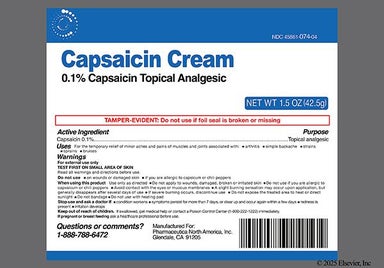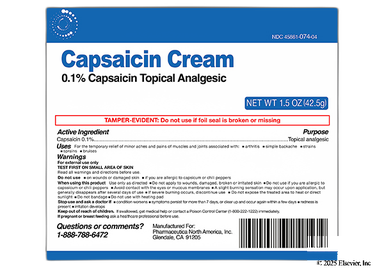


Capsaicin Coupon - Capsaicin 42.5g of 0.1% tube of cream

capsaicin

Generic Capsaicin
Used for Pain

Capsaicin is a medication that can be applied to the skin (topical) to help relieve minor aches and pains. It's available over the counter (OTC) as a brand-name or lower-cost generic medication. It comes as a cream, liquid, and patch. Capsaicin is made from a chemical that comes from chili peppers, so it can cause a slight burning sensation when applied.

Reviewed by:Last reviewed on May 11, 2023
basics-icon

What is Capsaicin?

What is Capsaicin used for?

Relief of minor aches and pains in the muscles and joints caused by:

  • Arthritis
  • Backache
  • Strains
  • Sprains
  • Bruises

How Capsaicin works

Capsaicin is a topical analgesic. It relieves pain when applied to the skin by acting as a counterirritant. This means that it activates (wakes up) pain sensors in the skin, which then causes them to be less sensitive to other pain signals.

Drug facts

Common BrandsCapzasin-HP, Salonpas-Hot
Drug ClassTopical analgesic
Controlled Substance ClassificationNot a controlled medication
Generic StatusLower-cost generic available
AvailabilityOver-the-counter
side-effects-icon

Side effects of Capsaicin

The following side effects may get better over time as your body gets used to the medication. Let your healthcare provider know immediately if you continue to experience these symptoms or if they worsen over time.

Common Side Effects

  • Burning sensation
  • Itching

Less Common Side Effects

  • Rash
  • Skin irritation
  • Skin redness

Capsaicin serious side effects

Contact your healthcare provider immediately if you experience any of the following.

  • Serious skin burns: pain, swelling, blistering of the skin

Source: DailyMed

The following Capsaicin side effects have also been reported

Along with its needed effects, a medicine may cause some unwanted effects. Although not all of these side effects may occur, if they do occur they may need medical attention.

Check with your doctor immediately if any of the following side effects occur:

More common - all forms

Burning, itching, dryness, pain, redness, swelling, or soreness at the application site

Less common - all forms

Body aches or pain

chills

cough

difficulty with breathing

dry or productive cough

ear congestion

fever

headache

loss of voice

sneezing

sore throat

stuffy or runny nose

tightness in the chest

unusual tiredness or weakness

Less common - patch only

Blurred vision

breakdown of the skin

dizziness

nervousness

pain in the arms or legs

pounding in the ears

slow or fast heartbeat

Incidence not known - patch only

Bloating or swelling of the face, arms, hands, lower legs, or feet

burning, crawling, itching, numbness, prickling, "pins and needles", or tingling feelings

eye irritation or pain

increased sensitivity to pain or touch

scarring of the skin

stabbing pain

throat irritation

unusual weight gain or loss

Some side effects may occur that usually do not need medical attention. These side effects may go away during treatment as your body adjusts to the medicine. Also, your health care professional may be able to tell you about ways to prevent or reduce some of these side effects. Check with your health care professional if any of the following side effects continue or are bothersome or if you have any questions about them:

Less common - patch only

Muscle aches

nausea

pain or tenderness around the eyes and cheekbones

vomiting

Incidence not known - patch only

Abnormal skin odor

change in or loss of taste

Other side effects not listed may also occur in some patients. If you notice any other effects, check with your healthcare professional.

Call your doctor for medical advice about side effects. You may report side effects to the FDA at 1-800-FDA-1088.

prices-container

Get your GoodRx coupon

Avg retail price
$497.98(Save 98.93%)
GoodRx discount
$5.32
See prices
pros-and-cons-icon

Pros and cons of Capsaicin

Pros

  • Available OTC as a lower-cost generic
  • Can be applied directly to the painful area
  • Comes as a patch, cream, and liquid
  • Patch can be worn for up to 8 hours
  • Generally well-tolerated with few side effects

Cons

  • Can't be used in people who are allergic to chili peppers
  • Can't be applied to irritated or damaged skin
  • Can cause irritation if it makes contact with the eyes, mouth, or nose
  • Can cause your skin to be more sensitive to sunlight
  • Patch won't stick well to damp skin
pharmacist-tips-icon

Pharmacist tips for Capsaicin

pharmacist
  • You can test capsaicin on your skin to see how you react to it before using it on a larger area. Apply a thin layer to a small area of skin and leave it on for 24 hours. A mild burning sensation is normal. You can continue to use the medication as directed by the packaging if your reaction is tolerable.
  • For the cream or gel, apply a thin layer and gently rub it in until it's fully absorbed.
  • For the liquid, place the applicator on your skin, press firmly, and hold to release liquid. Rub the liquid well into the painful area until it's completely absorbed.
  • For the patch, clean and fully dry the affected area. You can trim the patch to better fit the area you're treating. Be sure to trim the patch before removing its backing. Remove the backing from the patch and apply it directly to the painful area. Throw the patch away after a single use. Make sure to fold the sticky sides of your used patch together before throwing it away. This helps prevent accidental exposure of any remaining medication on the patch to children and pets.
  • Wash hands well with soap and water right after applying capsaicin to avoid spreading the medication to other areas of the body like the eyes or mouth. You can also wear gloves when applying to avoid getting the medication on your hands. If you're using this medication to treat your hands, wait 30 minutes before washing them. And be sure not to touch your face before you've washed your hands.
  • Warm or hot water, direct sunlight, heat from hair dryers or heat lamps, and intense exercise can put you more at risk for burning and itching after applying capsaicin. Don't apply this medication right before or after a hot shower or bath, intense exercise, or being exposed to direct sunlight or heat.
  • Capsaicin can make your skin more sensitive to sunlight. Try to avoid long periods of sun exposure. If you're going to be in the sun, wear sunscreen and protective clothing that covers the skin you've treated with capsaicin.
  • Capsaicin comes from a chemical that's found in chili peppers. Talk to your provider before using this medication if you're allergic to chili peppers.
faq-icon

Common questions about Capsaicin

You should only apply capsaicin to healthy skin. Don't apply it to wounds or irritated or damaged skin. Don't get the medication in or around your eyes, nose, or mouth. Also, be careful not to apply it to your genital area. Applying the medication to these very sensitive areas can cause serious irritation or burning sensation.

If you're still having pain in the same area after 7 days of using capsaicin, you should talk to your provider. You should also contact your provider if your pain gets worse while using this medication. There might be something else causing your pain that your provider should check out.

Topical OTC capsaicin should only be used for aches and pains related to arthritis, backaches, strains, sprains, and bruises. It shouldn't be used to treat pain caused by damaged nerves. There is a prescription formulation of capsaicin known as Qutenza, which can be used for nerve pain due to diabetes or shingles. But this medication contains a much higher strength of capsaicin and has to be applied by a healthcare provider. If you think you have pain caused by damaged nerves, you should speak with your provider before using any medication.

Capsaicin is made from a chemical from hot chili peppers. When it comes in contact with your skin, it causes a slight burning sensation. For this reason, don't apply capsaicin to very sensitive areas or broken skin. Also, don't apply a tight bandage or heating pad on top of capsaicin. This can cause you to absorb more of the medication, which can put you at risk for more side effects like serious burns.

The slight burning sensation caused by capsaicin usually goes away after a few days of using the medication regularly. But if it continues or you start to experience signs of skin injury, such as swelling or blistering, let your provider know.

After you apply capsaicin to your skin, you should wash your hands with soap and water right away. This can help avoid or limit the burning sensation on your hands.

Yes, capsaicin is available over the counter (OTC) as a brand-name or lower-cost generic medication. It comes as a cream, liquid, and patch. If you're not sure about which product is best for you, ask your provider or pharmacist.

educational-icon

How to save using GoodRx

Compare Prices
1. Compare PricesSpecify your dosage and quantity to find out exactly how much you can save.
Select your free coupon
2. Select your free couponYou can use the displayed coupon, or compare prices at other pharmacies near you.
Show coupon to your pharmacist
3. Show coupon to your pharmacistPresent your printed or electronic coupon when you pick up your prescription.
Get free couponLearn more
warnings-icon

Risks and warnings for Capsaicin

Capsaicin can cause some serious health issues. This risk may be even higher for certain groups. If this worries you, talk to your doctor or pharmacist about other options.

Risk of serious burns

  • Risk factors: Covering the application area | Applying heat to the application area

Although rare, capsaicin can cause serious skin burns. If this happens, it usually occurs within 24 hours of the first use. Sometimes, they can be so severe that the event requires hospitalization. Stop using this medication if you experience pain, blistering, or swelling at the site of application and get medical help right away.

dosage-icon

Capsaicin dosage

The average cost for 1 tube of 42.5g of 0.1% of Capsaicin is $7.30 with a free GoodRx coupon. This is 58.73% off the average retail price of $17.69.
cartonCarton
DosageQuantityPrice as low asPrice per unit
10 patches of 0.025%3 cartons$17.77$5.92
2 patches of 0.025%5 cartons$7.59$1.52
15 patches of 0.025%1 carton$10.13$10.13
tube of creamTube of cream
DosageQuantityPrice as low asPrice per unit
50g of 0.025%1 tube$5.32$5.32
42.5g of 0.1%1 tube$7.30$7.30

Typical dosage for Capsaicin

Capsaicin is available in different dosage forms and strengths, which might have different instructions for use. Read the package label to make sure you're using the medication correctly. Ask your provider or pharmacist if you're unsure about how to use it. Some examples include:

Cream and liquid

  • Adults ages 18 years and older: Apply a thin layer to the affected area 3 to 4 times daily.

  • Children under 18 years old: Ask your child's provider.

Patch

  • Adults and children ages 12 years or older: Apply 1 patch to the affected area no more than 3 to 4 times daily. You can leave the patch on for up to 8 hours. Don't use for longer than a week.

  • Children under 12 years old: Ask your child's provider.

interactions-icon

Interactions between Capsaicin and other drugs

Capsaicin may interact with certain medications or supplements. Always let your doctor and pharmacist know about any other medications or supplements (including prescribed and over-the-counter medications, vitamins, and dietary or herbal supplements) that you are currently taking. The list below does not include all possible drug interactions with Capsaicin. Please note that only the generic name of each medication is listed below.

Although certain medicines should not be used together at all, in other cases two different medicines may be used together even if an interaction might occur. In these cases, your doctor may want to change the dose, or other precautions may be necessary. Tell your healthcare professional if you are taking any other prescription or nonprescription (over-the-counter [OTC]) medicine.

cost-icon

How much does Capsaicin cost?

To access savings, use a GoodRx coupon and pay just a fraction of the retail price.
alternatives-icon

What are alternatives to Capsaicin?

There are a number of medications that your doctor can prescribe in place of Capsaicin. Compare a few possible alternatives below.
Capsaicin
Used for:

Relief of minor aches and pains in the muscles and joints caused by:

  • Arthritis
  • Backache
  • Strains
  • Sprains
  • Bruises
$5.32Lowest GoodRx priceView prices
Used for:
$26.48Lowest GoodRx priceView prices

Get savings updates for Capsaicin

Receive price alerts, news, and other messages from GoodRx about Capsaicin and other healthcare topics and relevant savings offers.

By providing your email, you consent to receive marketing communications from GoodRx, which may include content and/or data related to men's health, women's health, reproductive care, or sexual health. You agree to the GoodRx Terms of Use and acknowledge the Privacy Policy. You can unsubscribe at any time.

References

Best studies we found

Alexso, Inc. (2020). Capsaicin patch [package insert]. DailyMed.

Barkin, R. L. (2013). The pharmacology of topical analgesics. Postgraduate Medicine.

Cardinal Health, 110 dba LEADER. (2023). CAPSAICIN HOT PATCHES- capsaicin patch [package insert]. DailyMed.

GoodRx Health has strict sourcing policies and relies on primary sources such as medical organizations, governmental agencies, academic institutions, and peer-reviewed scientific journals. Learn more about how we ensure our content is accurate, thorough, and unbiased by reading our editorial guidelines.

Was this page helpful?