


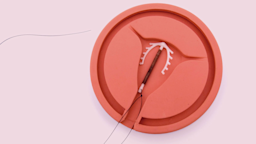
Do IUDs Cause Weight Gain? Here Are the Facts
Does IUD cause weight gain? It may be associated with some hormonal IUDs, but it doesn’t happen in every case. Get the facts at GoodRx.
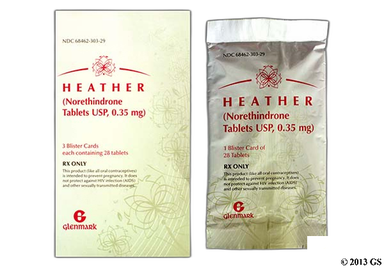
Norethindrone is progestin-only pill (POP), also known as the "mini-pill". It prevents pregnancy by blocking ovulation and making it hard for a fertilized egg to implant in the uterus. Norethindrone is an estrogen-free birth control for people ages 16 years and older. Norethindrone is taken by mouth daily at the same time each day. Some side effects of this medication include irregular bleeding, headaches, and nausea. There are many brand names of norethindrone, including Errin, Jencycla, and Heather.

Norethindrone is a progestin, which is a man-made form of progesterone (a natural female hormone). It prevents pregnancy by blocking sperm movement by thickening cervical mucus. It also prevents pregnancy by creating an unfavorable environment for the fertilized egg by changing the lining of the uterus. In some people, norethindrone also blocks ovulation.
| Common Brands | Micronor, Errin, Jencycla, Heather, Incassia |
|---|---|
| Drug Class | Progestin |
| Controlled Substance Classification | Not a controlled medication |
| Generic Status | Lower-cost generic available |
| Availability | Prescription only |

The following side effects may get better over time as your body gets used to the medication. Let your healthcare provider know immediately if you continue to experience these symptoms or if they worsen over time.
Contact your healthcare provider immediately if you experience any of the following.
Side effects that you should report to your care team as soon as possible:
Side effects that usually do not require medical attention (report to your care team if they continue or are bothersome):




Norethindrone can cause some serious health issues. This risk may be even higher for certain groups. If this worries you, talk to your doctor or pharmacist about other options.
Tell your provider or pharmacist about all the medications and supplements you're taking before starting norethindrone. They can check for interactions between your medications.
Certain medications can cause norethindrone to not work as well at preventing pregnancy and also raise the risk of breakthrough bleeding. Examples of these medications include certain seizure medications (i.e., phenytoin (Dilantin) and carbamazepine (Tegretol)), tuberculosis (TB) medications (i.e., rifampin), human immunodeficiency virus (HIV) medications, and St. John's wort. If you're taking medications that can cause norethindrone to not work as well, your provider will likely recommend that you use an additional non-hormonal birth control, such as condoms, during and after treatment.
Talk with your provider if you have more questions about norethindrone and medication interactions.
If you happen to get pregnant while taking norethindrone, there's a small chance that the pregnancy might be ectopic (outside of the womb). While rare, having an ectopic pregnancy can be serious. Get medical help right away if you notice symptoms of an ectopic pregnancy, such as cramping or pain in the lower belly area or shoulder.
In addition, taking norethindrone can raise the risk of ovarian cysts (small sacs of fluid in the ovary). Most of the time, the cysts don't cause much symptoms and tend to go away without any treatment. But rarely, they can cause serious problems, so contact your provider if you suddenly have nausea, vomiting, or serious pain in the stomach area.
Irregular vaginal bleeding is a common side effect of POPs, like norethindrone. Rarely, it can be a sign of a more serious condition, such as an infection or cancer. If you're concerned about irregular vaginal bleeding, talk with your healthcare provider. If you don't have any vaginal bleeding, check with your provider to test whether or not you're pregnant.
Some studies suggest that taking combination birth control pills might raise the risk of breast cancer or ovarian cancer. There's not enough information to know whether norethindrone or other POPs carry the same risk. If you're concerned about the possible risk of cancer, talk with your provider.

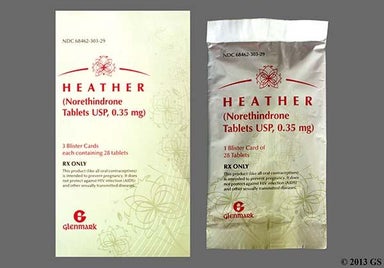
 Package
| Dosage | Quantity | Price as low as | Price per unit |
|---|---|---|---|
| 28 tablets of 0.35mg | 3 packages | $23.61 | $7.87 |


Contraindications are specific health conditions or situations in which a person should not take a medication due to safety concerns. If you have any of the following conditions or if any of the following apply to you, let your healthcare provider know because Norethindrone will not be safe for you to take.







Prescription savings
Stop paying too much for your prescriptions. Compare prices, get pharmacy coupons, and save up to 80%.Resources
About GoodRx
 Find expert answers to your health questions so you can make the best decisions for yourself and your family.
Health conditions
Medications & treatment
Access & affordability
Well-being
Medication discounts

Yes, taking Heather can cause you to stop having menstrual periods. Or, you might experience lighter bleeding during menstrual periods.
Taking Heather as prescribed by your provider might cause you to stop having menstrual periods. This is because Heather (as well as most other POPs) birth control packs only contain active Heather pills; there aren't any placebo pills. As a result, many people who take Heather as directed (one tablet by mouth daily) stop having periods, or have much lighter bleeding during their periods.
One of the most common side effects of taking Heather is changes to your menstrual bleeding patterns. This means that it might be hard to predict how soon you'll get your period after starting Heather. Some people might experience spotting or breakthrough bleeding (bleeding in between periods) after starting this medications. Other people might experience lighter periods or their periods stopping altogether. In some cases, people might even have heavier bleeding. Usually, irregular bleeding becomes less common after the first 3 to 6 months of starting Heather.
Stopping Heather can make it more likely for you to become pregnant. And if you have side effects from taking Heather, you might experience some of those side effects going away after you stop the medication. For examples, you might notice your menstrual bleeding returning or becoming heavier, or you might notice headaches or nausea going away. Let your provider know if you have any specific concerns about what might happen after stopping Heather.
Take Heather only as directed by your provider. The typical directions for Heather is to take one tablet by mouth daily at the same time each day. But if you miss a dose of Heather by 3 hours or more, take the missed dose as soon as you remember. Then, go back to your regular schedule the next day. But make sure to use a backup birth control (e.g., condom or spermicide) if you have sex in the next 48 hours. If you're unclear what to do after missing pills, continue taking Heather and use a backup method until you can speak with your pharmacist or provider.
Your provider might recommend Heather over estrogen-containing combination pills if you have certain health conditions or based on your preferences. For example, Heather might be a better choice for people who are at higher risk for blood clots because it has a lower risk of clots compared to estrogen-containing pills. Another example is that Heather might be a better choice for breastfeeding mothers because this medication is less likely to affect milk supply compared to combination pills. Talk with your provider if you have questions about what type of birth control pills might be best for you.
In order for Heather to be effective, you must take it at the same time everyday. Missing this medication by as little as 3 hours can raise your risk of becoming pregnant. If taken "perfectly", meaning taking it every day on time, Heather works well to prevent pregnancy about 99% of the time. But based on data from "typical use", meaning taking it late or missing doses here and there, Heather prevents pregnancy about 91% of the time.
Yes, you can still take Heather if you're on your period or if you have spotting (breakthrough vaginal bleeding) between your periods. This birth control is meant to be taken continuously. All the pills in the pack are active Heather pills; there aren't any placebo pills. Stopping Heather can make it more likely for you to become pregnant.
