Key takeaways:
Most people need to use medicated eye drops to prevent inflammation and infection after cataract surgery.
The most common cataract eye drops include steroid drops (like prednisolone), antibiotic eye drops, and NSAID drops (like Prolensa).
Talk to your ophthalmologist before using any additional eye drops, including over-the-counter options, like artificial tears.
GoodRx can help you navigate ways to reduce the cost of your eye drops, with exclusive savings available for brand-name Lotemax, Vigamox, and Prolensa.
Cataract surgery is one of the most common procedures in the world. Millions of people undergo cataract surgery each year in the U.S. For many, cataract surgery is life changing and can restore vision.
Eye drops are an important part of cataract treatment. You’ll need to use eye drops before and after cataract surgery to make sure your eyes heal safely. There’s no “perfect” eye-drop regimen, so the exact cataract eye drops people use before and after surgery vary. But the most common eye drops after cataract surgery are antibiotic eye drops, steroid eye drops, and nonsteroidal anti-inflammatory drug (NSAID) eye drops. Let’s take a look at how each one helps your eyes recover after cataract surgery.
Do you need to use eye drops after a cataract surgery?
Most people need medicated eye drops after cataract surgery. These eye drops lower the risk of vision-threatening complications.
Search and compare options
Cataract removal surgery is a very common and safe procedure. But it’s still surgery, so there can be complications. Using eye drops after cataract surgery can help prevent complications — like eye infections, eye inflammation, and macular edema — which can lead to long-term vision damage.
What are the best prescription eye drops to use after cataract surgery?
There are three main types of eye drops that are used after cataract surgery: steroid, NSAID, and antibiotic eye drops. How often and how long you’ll need to take these eye drops will depend on your medical history and your unique eye needs.
Combination eye drops are gaining traction, but they’re still less studied and often more expensive. In the future, combination eye drops may save people time and effort.
And some ophthalmologists will give medications through eye injections during cataract surgery. This may lower the number of eye drops you need after cataract surgery.
1. Steroid eye drops
Steroid eye drops help decrease inflammation in the eye after cataract surgery. This can make your recovery less painful.
Lowering inflammation also lowers your risk of developing macular edema. Macular edema, or macular swelling, causes blurry vision and limits your vision recovery after cataract surgery.

Everything you need to know about cataract surgery: Our cataract surgery guide covers the basics, including expected outcomes and recovery timelines.
Recovering from cataract surgery: Here are activities to avoid after cataract surgery (like washing your hair and bending over) — and what to do instead.
Eye drop costs can add up fast. Learn how you can save on prescription eye drops that are commonly prescribed after cataract surgery.
Prednisolone (Pred Forte) and loteprednol (Lotemax) are the most commonly prescribed steroid eye drops after cataract surgery.
You may need to use these eye drops 2 to 4 times a day. Expect to continue using them for 2 to 6 weeks after surgery. You’ll be able to cut back on how often you use them as time goes on.
2. Antibiotic eye drops
Antibiotic eye drops lower your risk of an eye infection after cataract surgery. Infections after cataract surgery are very rare, but very dangerous. That’s why everyone needs antibiotic eye drops after cataract surgery. Your eye surgeon may ask you to start these antibiotic eye drops a few days before your surgery.
Read more like this
Explore these related articles, suggested for readers like you.



Common antibiotic eye drops used after cataract surgery include:
Moxifloxacin (Vigamox)
Gatifloxacin (Zymaxid)
You’ll use antibiotic eye drops several times a day for 1 to 2 weeks after your surgery.
3. NSAID eye drops
NSAID eye drops also control inflammation, but they don’t contain steroids. Sometimes people receive these eye drops instead of steroid eye drops after surgery, depending on their underlying medical conditions.
NSAID eye drops have an added benefit of keeping the pupils dilated during cataract surgery. So, even if you don’t need to use these after surgery, you’ll get these eye drops right before and during your surgery.
The most commonly prescribed NSAID eye drops for cataract surgery include:
You’ll need to use them 2 to 4 times a day for about 1 month.
What are the best over-the-counter eye drops to use after cataract surgery?
Talk to your eye care team before trying any over-the-counter (OTC) eye drops to relieve symptoms like:
Redness
Itching
Pain
OTC eye drops aren’t the right choice to relieve these symptoms after cataract surgery. These symptoms can also be a sign of a complication, so it’s important to check in with your eye care team.
You may be able to use preservative-free artificial tears (like Refresh tears) after cataract surgery. But talk to your eye care team before using them. They may recommend using specific types of artificial tears that don’t contain preservatives. They may also ask you to use the drops differently than you’re used to.
If you have a history of dry eye, having cataract surgery can worsen your symptoms. Let your surgeon know if you have a history of dry eye before your surgery. That way, you can be sure to have the right drops on hand.
How to save on the cost of eye drops for cataract surgery
Prescription eye drops can be expensive. But there are ways to save. The table below summarizes common eye drops used for cataract surgery and the lowest cost using a free GoodRx coupon.
Also, anyone with a valid prescription, regardless of insurance status, can use GoodRx to purchase brand-name Lotemax gel or ointment at an exclusive cash price of about $80. Exclusive savings are also available for Prolensa and brand-name Vigamox.
Medication | Type | Side effects | Lowest GoodRx Price |
|---|---|---|---|
Moxifloxacin (Vigamox) | Antibiotic | Eye swelling, irritation, and redness; dry eye, blurry vision | As low as $10.89 |
Gatifloxacin (Zymaxid) | Antibiotic | Eye irritation and pain, change in taste | As low as $35.81 |
Ketorolac (Acular, Acuvail) | NSAID | Eye burning, redness, stinging, and pain; headache | As low as $10.99 |
Bromfenac (Prolensa, BromSite) | NSAID | Blurry vision, light sensitivity, eye pain | As low as $45.55 |
Nepafenac (Ilevro, Nevanac) | NSAID | Cloudy vision, worse vision, feeling like something is in your eye | As low as $149 |
Prednisolone (Pred Forte) | Steroid | Elevated eye pressure | As low as $17.70 |
Loteprednol (Lotemax) | Steroid | Eye pain, swelling, and redness | As low as $49.07 |
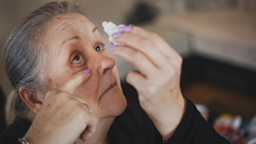
How do you apply eye drops after cataract surgery?
Using eye drops can be tricky. But, with practice, you can become a pro in no time. You can apply your drops in any order, but give yourself a 5-minute break between each type. This gives your eye enough time to absorb each medication.
Try these steps when putting in your eye drops:
Wash your hands before touching your eyes and medication bottles.
Open your eye-drop bottles.
Tilt your head back.
Using one or two fingers from your nondominant hand, gently pull your bottom eyelid down until you feel natural tension.
Using your dominant hand, hold the eye-drop bottle tip right above the “pocket” created by your lower eyelid. Don’t touch the bottle tip to your eye or eyelid.
Squeeze the bottle to administer 1 drop.
Close your eye and use a finger to gently press on the inner corner of your eye. This keeps the drop from immediately running down your tear duct and into your nose.
Repeat for each eye drop.
Recap all eye-drop bottles.
Wash your hands.
Frequently asked questions
Many over-the-counter (OTC) eye drops aren’t meant for daily use. Some drops, such as preservative-free artificial tears, can be used daily or multiple times per day. It’s best to talk with your eyecare team if your symptoms aren’t better after using OTC eye drops for a week. They can help you figure out what’s causing your symptoms and help you find the right treatment.
Many over-the-counter (OTC) eye drops aren’t meant for daily use. Some drops, such as preservative-free artificial tears, can be used daily or multiple times per day. It’s best to talk with your eyecare team if your symptoms aren’t better after using OTC eye drops for a week. They can help you figure out what’s causing your symptoms and help you find the right treatment.
The bottom line
You’ll need several types of eye drops after cataract surgery to avoid complications, like inflammation and infection. You may even need to start some of these drops 1 to 2 days before your surgery. Antibiotic, steroid, and NSAID eye drops are the most commonly used eye drops after cataract surgery. You may need to use these drops several times a day for up to 6 weeks.
With practice, applying eye drops becomes quick and easy. After cataract surgery, make sure to get the “all clear” from your eye surgeon before using any over-the-counter (OTC) eye drops, like artificial tears.

Why trust our experts?



References
Huang, A. Y., et al. (2025). Dropless cataract surgery: A review of the literature. International Ophthalmology Clinics.
Miller, K. M., et al. (2022). Cataract in the Adult Eye Preferred Practice Pattern. Ophthalmology.
Mukit, F. A., et al. (2022). A review of post-operative drops used in cataract surgery. American Academy of Ophthalmology.
National Eye Institute. (2021). How to put in eye drops.
National Eye Institute. (2022). Macular edema.
Solomon, K. D., et al. (2020). Comparing combination drop therapy to a standard drop regimen after routine cataract surgery. Clinical Ophthalmology.