

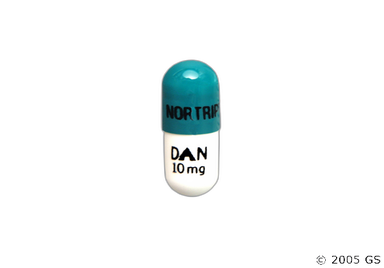
Nortriptyline Coupon - Nortriptyline 10mg capsule

nortriptyline

Generic Pamelor
Used for Depression

Nortriptyline (Pamelor) is a tricyclic antidepressant (TCA). It's approved to treat depression in adults. This medication is also often prescribed off-label to treat certain types of nerve pain. Nortriptyline (Pamelor) is available as a capsule and liquid that are taken by mouth. Side effects include dry mouth, dizziness, and possible weight gain. This medication is available under the brand name Pamelor and as a generic.

Reviewed by:Last reviewed on October 13, 2024
basics-icon

What is Nortriptyline (Pamelor)?

What is Nortriptyline (Pamelor) used for?

How Nortriptyline (Pamelor) works

Nortriptyline (Pamelor) is a tricyclic antidepressant (TCA). It's not completely known how the medication works. But it's thought to raise the levels of certain chemicals in the brain, including serotonin and norepinephrine. These are important chemicals that affect your mood.

When does Nortriptyline (Pamelor) start working?Time passed since treatment started:
HOURS
DAYS
WEEKS
Initial effect
MONTHS
Full effect

Drug facts

Common BrandsPamelor
Drug ClassTricyclic antidepressant
Controlled Substance ClassificationNot a controlled medication
Generic StatusLower-cost generic available
AvailabilityPrescription only
side-effects-icon

Side effects of Nortriptyline (Pamelor)

The following side effects may get better over time as your body gets used to the medication. Let your healthcare provider know immediately if you continue to experience these symptoms or if they worsen over time.

Common Side Effects

  • Blurred vision
  • Dry mouth
  • Nausea
  • Vomiting
  • Stomach upset
  • Loss of appetite
  • Numbness in the hands or feet
  • Rash
  • Itching
  • Changes in blood pressure

Less Common Side Effects

Nortriptyline (Pamelor) serious side effects

Contact your healthcare provider immediately if you experience any of the following.

  • Suicidal thoughts or behaviors
  • Heart attack: chest pain, cold sweats, left arm pain, difficulty breathing
  • Stroke: sudden numbness, weakness, confusion, or difficulty talking
  • Serious allergic reaction: difficulty breathing, tightness in the throat, hives, itching, fast heartbeat, dizziness, swelling in the face or tongue
When do Nortriptyline (Pamelor) possible side effects begin and end?
Time passed since treatment started:
H
D
W
M
Blurred vision
Dry mouth
Constipation
Dizziness
Drowsiness
If a line continues to the right, you'll likely keep experiencing this side effect once it starts.

Source: DailyMed

The following Nortriptyline (Pamelor) side effects have also been reported

Side effects that you should report to your care team as soon as possible:

  • Allergic reactions—skin rash, itching, hives, swelling of the face, lips, tongue, or throat
  • Heart rhythm changes—fast or irregular heartbeat, dizziness, feeling faint or lightheaded, chest pain, trouble breathing
  • Irritability, confusion, fast or irregular heartbeat, muscle stiffness, twitching muscles, sweating, high fever, seizure, chills, vomiting, diarrhea, which may be signs of serotonin syndrome
  • Seizures
  • Sudden eye pain or change in vision such as blurry vision, seeing halos around lights, vision loss
  • Thoughts of suicide or self-harm, worsening mood, feelings of depression
  • Trouble passing urine

Side effects that usually do not require medical attention (report to your care team if they continue or are bothersome):

prices-container

Get your GoodRx coupon

Avg retail price
$4.000
GoodRx discount
$4.00
See prices
pros-and-cons-icon

Pros and cons of Nortriptyline (Pamelor)

Pros

  • Available as a capsule and liquid
  • Taken by mouth once per day, or split into smaller doses throughout the day

Cons

pharmacist-tips-icon

Pharmacist tips for Nortriptyline (Pamelor)

pharmacist
  • Take nortriptyline (Pamelor) at any time of day with or without food. It might be helpful to take the medication with food if it upsets your stomach.
  • For the nortriptyline (Pamelor) liquid: Store the liquid at room temperature in the bottle that the pharmacy gave you. Use an oral syringe or medication dosing cup to measure out your nortriptyline (Pamelor) dose. Don't use household spoons because they aren't accurate and using them might cause you to take the wrong dose.
  • Keep in mind that nortriptyline (Pamelor) can take 1 to 2 months to work to improve your symptoms of depression. And you might feel side effects of the medication first. Work with your prescriber to find the dose that's best for you.
  • Never change your dose or stop taking nortriptyline (Pamelor) without talking to your prescriber first. Changing the dose can cause bothersome side effects or withdrawal symptoms like nausea, headache, and sleep problems. Follow your prescriber's instructions to lower your dose slowly over a period of time to stop the medication completely.
  • Nortriptyline (Pamelor) can cause side effects, such as dizziness and blurry vision, especially when you first start this medication or when your dose changes. Don't drive or do anything that requires concentration until you know how the medication affects you.
  • Avoid alcohol while you're taking nortriptyline (Pamelor). Alcohol can make side effects like dizziness and drowsiness more intense and lead to a blackout.
  • Dry mouth can happen with nortriptyline (Pamelor). Ways to help with dry mouth include drinking water, chewing sugar-free gum, and sucking on ice or sugar-free hard candies. Also, make sure to have good oral care by brushing your teeth and flossing every day.
  • Tell your healthcare team about all the medications you're taking. Don't start any new medications without talking to your prescriber first. It's important for your care team to make sure your medications are safe for you to take together. Your risk for side effects is higher if you take nortriptyline (Pamelor) with medications like sedatives, opioids, antihistamines, and monoamine oxidase inhibitors (MAOIs).
  • Let your prescriber know if you're pregnant or thinking of becoming pregnant. They can talk with you about the benefits and risks of taking nortriptyline (Pamelor) during pregnancy, as well as other treatment options. This is important because untreated mental health conditions during pregnancy can be harmful for you and your baby.
  • Let your prescriber know if you're breastfeeding. Since nortriptyline (Pamelor) can get into breast milk at low levels, your prescriber can discuss the risks and benefits of continuing the medication.
faq-icon

Common questions about Nortriptyline (Pamelor)

No, nortriptyline (Pamelor) isn't an SSRI, or a selective serotonin reuptake inhibitor. Instead, nortriptyline (Pamelor) is a TCA, or also known as a tricyclic antidepressant. SSRIs and TCAs are two different classes of antidepressants. Although both types of antidepressant medications are approved to treat depression, SSRIs are typically preferred over TCAs because SSRIs tend to have less side effects.

It's not completely clear whether nortriptyline (Pamelor) works for nerve pain because there are mixed results from studies. Treatment guidelines list nortriptyline (Pamelor) as an option for nerve pain. But a large review of studies suggested that there isn't enough strong evidence to know for sure whether nortriptyline (Pamelor) works well to treat nerve pain. Note that nortriptyline (Pamelor) isn't FDA approved for treating nerve pain. But some healthcare professionals do consider the medication as an off-label option, depending on the person's situation. Speak with a healthcare professional about your options for nerve pain.

Nortriptyline (Pamelor) isn't FDA approved for preventing or treating migraines.

Does nortriptyline (Pamelor) help you sleep?

Does nortriptyline (Pamelor) cause weight gain?

Does nortriptyline (Pamelor) cause hair loss?

How long does nortriptyline (Pamelor) stay in your system?

Is nortriptyline (Pamelor) habit-forming?

educational-icon

How to save using GoodRx

Compare Prices
1. Compare PricesSpecify your dosage and quantity to find out exactly how much you can save.
Select your free coupon
2. Select your free couponYou can use the displayed coupon, or compare prices at other pharmacies near you.
Show coupon to your pharmacist
3. Show coupon to your pharmacistPresent your printed or electronic coupon when you pick up your prescription.
Get free couponLearn more
warnings-icon

Risks and warnings for Nortriptyline (Pamelor)

Nortriptyline (Pamelor) can cause some serious health issues. This risk may be even higher for certain groups. If this worries you, talk to your doctor or pharmacist about other options.

Worsening depression and risk for suicidal thoughts and unusual behavior

  • Risk factors: Age 24 years and younger | History of depression or other mental health conditions | Heavy alcohol use

Black Box Warning Taking nortriptyline (Pamelor) can make your depression worse. It can also raise your risk of having thoughts of suicide or thought of harming yourself. The risk is especially high for people 24 years and younger, when you first start this medication, and when your dose changes. Get medical help right away if you or anyone around you notices that you have signs of worsening depression or any unusual behavior (e.g., anxiety, panic attacks, feeling angry or irritated, restlessness) while you're taking nortriptyline (Pamelor). Call 911 if you have suicidal thoughts or behaviors.

Not for use alone in bipolar disorder

Depression can be the first sign of bipolar disorder. Because of this, your prescriber will check whether you have or are at risk for bipolar disorder before you start nortriptyline (Pamelor). This medication isn't approved to treat bipolar depression.

Taking antidepressant like nortriptyline (Pamelor) by themselves can sometimes cause a bipolar manic episode to happen for those with or at risk for bipolar disorder. Talk to your prescriber right away if you or your loved ones notice symptoms of a manic episode, such as racing thoughts, restlessness, getting easily distracted, or unusual talkativeness.

Dizziness and drowsiness

  • Risk factors: Age 65 years or older | Low blood pressure | Taking medications that lower blood pressure or make you tired | History of medical conditions that can lower blood pressure

Nortriptyline (Pamelor) can make you feel tired. It can also lower your blood pressure, which can make you feel dizzy or lose your balance. It's possible for these side effects to put you at risk for accidental falls and injuries.

When you stand from a sitting or lying position, make sure to get up slowly and hold onto something so you don't lose your balance and fall. Contact your prescriber if you still feel dizzy or tired after a couple weeks of starting the medication. Also call your prescriber if you experience a fall while you're taking nortriptyline (Pamelor). They might recommend that you switch to a different medication.

Risk of heart problems, heart attack, or stroke

  • Risk factors: History of heart problems or problems with blood circulation | Hyperthyroidism (high thyroid hormone levels | Taking thyroid medications

Talk to your prescriber before you start nortriptyline (Pamelor) if you have any heart problems or if you've had a stroke before. It's possible for nortriptyline (Pamelor) to affect your heart rhythm and cause a fast or irregular heartbeat (arrhythmia). In addition, some people who took nortriptyline (Pamelor) have had a heart attack or stroke during treatment.

Let your prescriber know if you feel that your heart is beating unusually while you're taking nortriptyline (Pamelor). Get medical help right away if you have symptoms of a heart attack (e.g., chest pain, cold sweats, left arm pain, difficulty breathing) or a stroke (e.g., sudden numbness, weakness, confusion, or difficulty talking).

Glaucoma

  • Risk factors: History of angle-closure glaucoma

Nortriptyline (Pamelor) can cause or worsen angle-closure glaucoma in some people. Tell your prescriber about your full medical history before you start this medication to make sure it's safe for you to take. Contact your optometrist or ophthalmologist right away if you have sudden symptoms of angle-closure glaucoma like severe headache, eye pain, nausea, and seeing halos around lights.

dosage-icon

Nortriptyline (Pamelor) dosage

The average cost for 30 capsules of 10mg of Nortriptyline (Pamelor) is $4.00 with a free GoodRx coupon. This is 0.00% off the average retail price of $4.00.
capsuleCapsule
DosageQuantityPrice as low asPrice per unit
10mg30 capsules$4.00$0.13
25mg30 capsules$4.00$0.13
50mg90 capsules$10.00$0.11
75mg30 capsules$15.61$0.52
ml of oral solutionMl of oral solution
DosageQuantityPrice as low asPrice per unit
10mg/5ml150 ml$31.12$0.21

Typical dosage for Nortriptyline (Pamelor)

The dosage is the same for the capsules and 10 mg/5 mL liquid.

For depression

  • Adults 18 to 64 years old: The typical starting dose is 25 mg by mouth three or four times per day. Or, the total daily dose can be given once per day. The maximum recommended dose is 150 mg per day.
  • Adolescents and adults 65 years and older: The typical dose is 30 mg to 50 mg by mouth per day, either given all at once or split into smaller doses throughout the day.
cost-icon

How much does Nortriptyline (Pamelor) cost?

To access savings, use a GoodRx coupon and pay just a fraction of the retail price.
contraindications-icon

Nortriptyline (Pamelor) contraindications

Contraindications are specific health conditions or situations in which a person should not take a medication due to safety concerns. If you have any of the following conditions or if any of the following apply to you, let your healthcare provider know because Nortriptyline (Pamelor) will not be safe for you to take.

alternatives-icon

What are alternatives to Nortriptyline (Pamelor)?

There are a number of medications that your doctor can prescribe in place of Nortriptyline (Pamelor). Compare a few possible alternatives below.
Nortriptyline (Pamelor)
Used for:
$4.00Lowest GoodRx priceView prices
Used for:
  • Depression
$4.00Lowest GoodRx priceView prices
Used for:
  • Depression
  • Bedwetting in children (imipramine hydrochloride only)
$7.38Lowest GoodRx priceView prices
latest-news-icon

News about Nortriptyline (Pamelor)

Explore non-narcotic pain medications for pain relief and learn about alternative non-medication treatments.
A Complete Guide to Non-Narcotic Pain Medication: NSAIDs, Non-NSAIDs, and Other Options
Explore non-narcotic pain medications for pain relief and learn about alternative non-medication treatments.
Some SSRIs have been linked to birth defects, and many mothers wonder about the safest antidepressant options during pregnancy. Read on to explore recommended medications.
What Antidepressants Can You Take While You’re Pregnant?
Some SSRIs have been linked to birth defects, and many mothers wonder about the safest antidepressant options during pregnancy. Read on to explore recommended medications.
How do you choose the best medication for attention-deficit hyperactivity disorder (ADHD)? Here’s what you need to know about ADHD medications, from how they work to the risks.
Choosing ADHD Medication: A Guide for Adults and Children
How do you choose the best medication for attention-deficit hyperactivity disorder (ADHD)? Here’s what you need to know about ADHD medications, from how they work to the risks.
Read on to learn the side effects of tricyclic antidepressants (TCAs), including common, rare, and long-term side effects, and how to manage them.
8 Tricyclic Antidepressant (TCA) Side Effects: Dizziness, Dry Mouth, and More
Read on to learn the side effects of tricyclic antidepressants (TCAs), including common, rare, and long-term side effects, and how to manage them.
There’s no cure for shingles. However, there are treatment options to help manage pain, itching, and other symptoms. Here’s what you need to know.
How to Treat Shingles: Medication, Pain Relief, Home Remedies and More
There’s no cure for shingles. However, there are treatment options to help manage pain, itching, and other symptoms. Here’s what you need to know.
Tricyclic antidepressants, such as doxepin and amitriptyline, are sometimes prescribed for depression. Learn more with this list of tricyclic antidepressants.
Amitriptyline, Doxepin, and More: The Essential Facts About 9 Tricyclic Antidepressants
Tricyclic antidepressants, such as doxepin and amitriptyline, are sometimes prescribed for depression. Learn more with this list of tricyclic antidepressants.
Mixing antidepressants and alcohol can have negative effects. Learn about the risks of mixing alcohol with antidepressants like Cymbalta and amitriptyline.
Can You Drink Alcohol With Antidepressants Like Cymbalta or Amitriptyline?
Mixing antidepressants and alcohol can have negative effects. Learn about the risks of mixing alcohol with antidepressants like Cymbalta and amitriptyline.
Explore antidepressant options with GoodRx. Find the right type for your mental health journey with our comprehensive guide.
Your Guide to 5 Common Types of Antidepressants
Explore antidepressant options with GoodRx. Find the right type for your mental health journey with our comprehensive guide.
Do your irritable bowel syndrome (IBS) symptoms get worse when you’re anxious or stressed? Explore the link between IBS and anxiety and learn coping strategies.
Anxiety and IBS: What’s the Connection?
Do your irritable bowel syndrome (IBS) symptoms get worse when you’re anxious or stressed? Explore the link between IBS and anxiety and learn coping strategies.
Itching can be an unexpected side effect of medication. But certain drugs, including some blood pressure medicines and cancer treatments, can cause itchiness.
Scratching the Surface: 8 Medications That Can Make You Feel Itchy
Itching can be an unexpected side effect of medication. But certain drugs, including some blood pressure medicines and cancer treatments, can cause itchiness.
images-icon

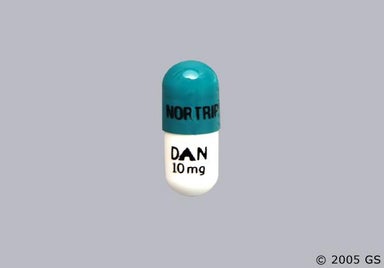
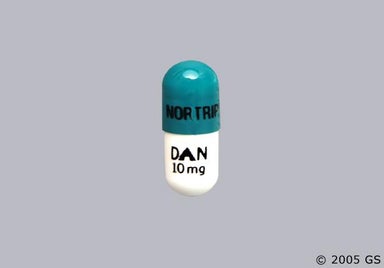
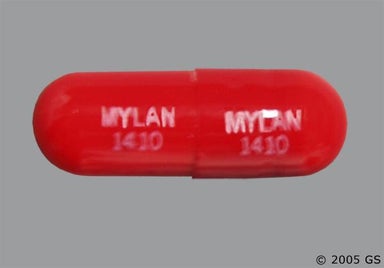
Nortriptyline (Pamelor) images

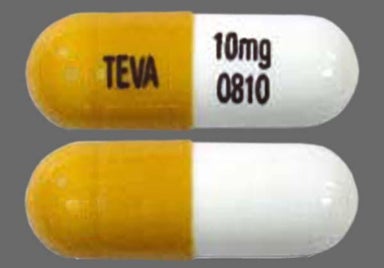
Orange And White 10Mg 93 810, 93 810 93 810, And Teva 10Mg 0810 - Nortriptyline Hydrochloride 10mg Capsule
This medicine is Orange And White Capsule Imprinted With "Teva 10Mg 0810", "10Mg 93 810", And "93 810 93 810".Orange And White 10Mg 93 810, 93 810 93 810, And Teva 10Mg 0810 - Nortriptyline Hydrochloride 10mg Capsule
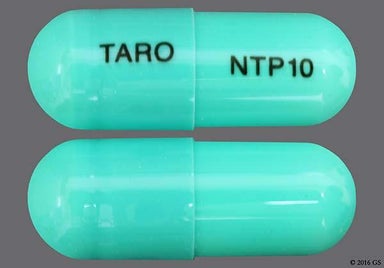
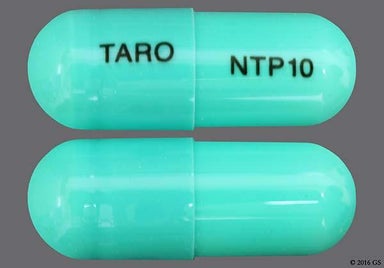
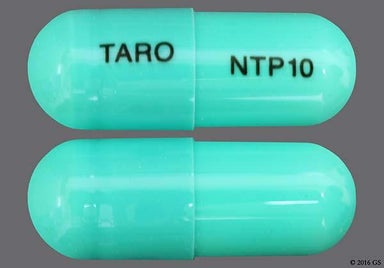
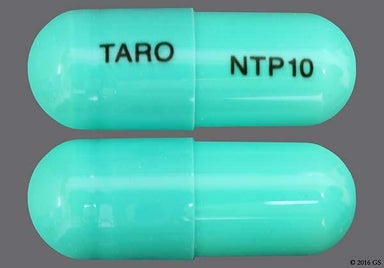
Green Taro Ntp10 - Nortriptyline Hydrochloride 10mg Capsule
This medicine is Green Capsule Imprinted With "Taro Ntp10".Green Taro Ntp10 - Nortriptyline Hydrochloride 10mg Capsule
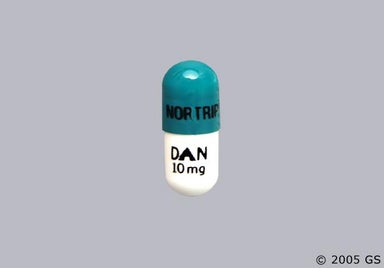
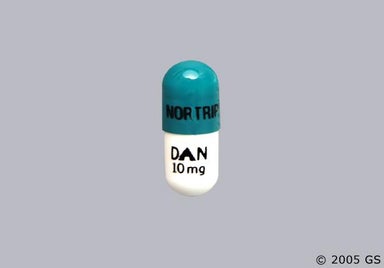
Green And White Nortriptyline M 10 Mg - Nortriptyline Hydrochloride 10mg Capsule
This medicine is Green And White Capsule Imprinted With "Nortriptyline M 10 Mg".Green And White Nortriptyline M 10 Mg - Nortriptyline Hydrochloride 10mg Capsule
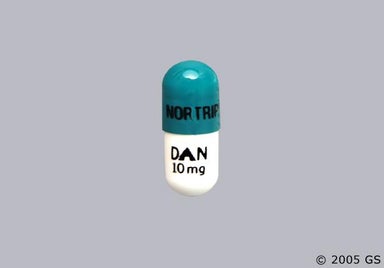
Green And White Nortriptyline M 10 Mg - Nortriptyline Hydrochloride 10mg Capsule
This medicine is Green And White Capsule Imprinted With "Nortriptyline M 10 Mg".Green And White Nortriptyline M 10 Mg - Nortriptyline Hydrochloride 10mg Capsule

Get savings updates for Nortriptyline (Pamelor)

Receive price alerts, news, and other messages from GoodRx about Nortriptyline (Pamelor) and other healthcare topics and relevant savings offers.

By providing your email, you consent to receive marketing communications from GoodRx, which may include content and/or data related to men's health, women's health, reproductive care, or sexual health. You agree to the GoodRx Terms of Use and acknowledge the Privacy Policy. You can unsubscribe at any time.

References

Best studies we found

American Academy of Sleep Medicine. (n.d.). A patient’s guide to understanding treatment of chronic insomnia in adults using medications.

American College of Obstetricians and Gynecologists. (2023). Depression during pregnancy.

American Psychological Association. (2019). APA clinical practice guideline for the treatment of depression across three age cohorts.

GoodRx Health has strict sourcing policies and relies on primary sources such as medical organizations, governmental agencies, academic institutions, and peer-reviewed scientific journals. Learn more about how we ensure our content is accurate, thorough, and unbiased by reading our editorial guidelines.

Was this page helpful?