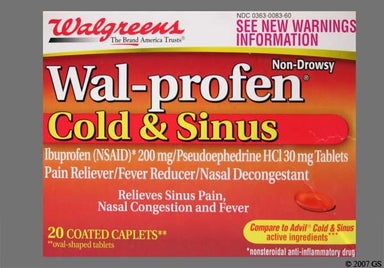
ibuprofen / pseudoephedrine
Advil Cold and Sinus contains ibuprofen, a nonsteroidal anti-inflammatory drug (NSAID), and pseudoephedrine, a decongestant. It's for adults and children ages 12 years and older to treat common cold or flu symptoms, like headaches, body aches, and nasal congestion. Advil Cold and Sinus (ibuprofen / pseudoephedrine) is taken by mouth every 4-6 hours. This medication is available without a prescription in most states, but you'll have to purchase it from behind the pharmacy counter because it contains pseudoephedrine. It's non-drowsy, but can cause side effects like difficulty sleeping and nausea.


What is Advil Cold and Sinus (ibuprofen / pseudoephedrine)?
What is Advil Cold and Sinus (ibuprofen / pseudoephedrine) used for?
Short-term relief of symptoms from the common cold or flu:
- Headache
- Fever
- Sinus pressure
- Stuffy nose
- Minor body aches and pains
How Advil Cold and Sinus (ibuprofen / pseudoephedrine) works
Advil Cold and Sinus (ibuprofen / pseudoephedrine) is a combination of two medications that work together to relieve symptoms caused by the common cold or flu.
- Ibuprofen (an NSAID) blocks proteins in your body to help treat pain, swelling, and fever.
- Pseudoephedrine (a decongestant) relieves sinus pressure by tightening the blood vessels around the nose.
Drug facts

Side effects of Advil Cold and Sinus (ibuprofen / pseudoephedrine)
The following side effects may get better over time as your body gets used to the medication. Let your healthcare provider know immediately if you continue to experience these symptoms or if they worsen over time.
Common Side Effects
- Nervousness
- Difficulty sleeping
- Stomach upset
- Heartburn
- Nausea
- Skin rashes
Less Common Side Effects
- Weakness
- Ringing in the ear (tinnitus)
- Vomiting
Note: Side effects listed are reported by people who took ibuprofen or pseudoephedrine separately.
Advil Cold and Sinus (ibuprofen / pseudoephedrine) serious side effects
Contact your healthcare provider immediately if you experience any of the following.
- Heart attack: chest pain or tightness, pain that radiates up to your shoulder, arm, neck, or jaw
- Stroke: weakness in one part of your body or face, slurred speech, sudden headache, confusion
- Stomach bleeding: feeling faint, vomiting blood, bloody or dark stools, severe stomach pain or discomfort
- Allergic reactions: hives, rash, blisters, swelling of the lips or tongue, difficulty breathing, skin reddening
The following Advil Cold and Sinus (ibuprofen / pseudoephedrine) side effects have also been reported
Side effects that you should report to your care team as soon as possible:
- Allergic reactions—skin rash, itching, hives, swelling of the face, lips, tongue, or throat
- Bleeding—bloody or black, tar-like stools, vomiting blood or brown material that looks like coffee grounds, red or dark brown urine, small red or purple spots on skin, unusual bruising or bleeding
- Heart attack—pain or tightness in the chest, shoulders, arms, or jaw, nausea, shortness of breath, cold or clammy skin, feeling faint or lightheaded
- Heart failure—shortness of breath, swelling of the ankles, feet, or hands, sudden weight gain, unusual weakness or fatigue
- Heart palpitations—rapid, pounding, or irregular heartbeat
- Increase in blood pressure
- Kidney injury—decrease in the amount of urine, swelling of the ankles, hands, or feet
- Liver injury—right upper belly pain, loss of appetite, nausea, light-colored stool, dark yellow or brown urine, yellowing skin or eyes, unusual weakness or fatigue
- Rash, fever, and swollen lymph nodes
- Redness, blistering, peeling, or loosening of the skin, including inside the mouth
- Stroke—sudden numbness or weakness of the face, arm, or leg, trouble speaking, confusion, trouble walking, loss of balance or coordination, dizziness, severe headache, change in vision
Side effects that usually do not require medical attention (report these to your care team if they continue or are bothersome):
- Anxiety, nervousness
- Headache
- Loss of appetite
- Nausea
- Trouble sleeping
- Upset stomach

Get your GoodRx coupon

Pros and cons of Advil Cold and Sinus (ibuprofen / pseudoephedrine)
Pros
- Treats pain and congestion with one pill
- No prescription needed (in most states)
- Available as lower-cost generics
Cons
- Needs to be taken every 4 to 6 hours
- Raises risk of stomach ulcers
- Not for children younger than 12 years old

Pharmacist tips for Advil Cold and Sinus (ibuprofen / pseudoephedrine)

- You can take Advil Cold and Sinus (ibuprofen / pseudoephedrine) with or without food. However, it's best to take it with food or milk to prevent getting an upset stomach.
- Some people have a hard time sleeping after taking Advil Cold and Sinus (ibuprofen / pseudoephedrine) because pseudoephedrine can cause insomnia. If you have a hard time falling asleep after taking this medication, take it earlier in the day and not too close to bedtime.
- Stop using Advil Cold and Sinus (ibuprofen / pseudoephedrine) and contact your provider if you have a fever that lasts more than 3 days, nasal congestion that lasts for more than 7 days, or if there's redness or swelling in a painful area. These might be signs of a serious condition that needs more medical attention.
- Don't start any new medications while taking Advil Cold and Sinus (ibuprofen / pseudoephedrine), especially other NSAIDs or decongestants, without talking to your provider or pharmacist first. Doing so can raise your risk of severe side effects, including stomach bleeding, heart attack, stroke, or even death.
- Don't take Advil Cold and Sinus (ibuprofen / pseudoephedrine) if you're taking or have taken a monoamine oxidase inhibitors (MAOI), such as selegiline (Eldepryl) or phenelzine (Nardil), within the past 2 weeks. This combination can cause dangerous changes to your blood pressure. If you've taken an MAOI in the past 2 weeks, ask your provider about other options to treat your symptoms.
- If you're taking aspirin for your heart and your provider said it was safe to also take Advil Cold and Sinus (ibuprofen / pseudoephedrine), take Advil Cold and Sinus at least 8 hours before, or 30 minutes after taking aspirin. Taking both medications at the same time will lower the amount of aspirin your body will absorb.
- If you're allergic to aspirin, talk to your provider or pharmacist before starting Advil Cold and Sinus (ibuprofen / pseudoephedrine) because you might be allergic to this medication as well.

Common questions about Advil Cold And Sinus
You can take Advil Cold And Sinus every 4-6 hours as needed. But you shouldn't use more than 6 caplets within a 24-hour period. Ask your provider for other treatment options if your congestion and pain aren't well-controlled from Advil Cold And Sinus alone; they can recommend other options to help with your symptoms.
Each Advil Cold & Sinus caplet contains 200 mg of ibuprofen and 30 mg of pseudoephedrine. Adults and children ages 12 years and older can take a maximum of 2 caplets every 4 hours, as needed. But don't take more than 6 caplets within a 24-hour period. Doing so raises your risk of serious side effects, like bleeding, heart problems, or kidney problems. If your cold and flu symptoms aren't well-controlled with the maximum dose of Advil Cold And Sinus, let your provider know. They can recommend other treatment options, or see if you need more medical attention.
It can. Difficulty falling asleep (or insomnia) is a common side effect of pseudoephedrine. To lower your risk, it's best to avoid taking Advil Cold And Sinus too close to bedtime. If you have congestion at night time, talk with your provider. There are nasal sprays or home remedies, such as using a humidifier or elevating your head with pillows, to help you sleep better at night.
Maybe; it depends on which Mucinex product or NyQuil product you choose. Both Mucinex and NyQuil are brands that make several products. Many of their products already contain ibuprofen and pseudoephedrine, the active ingredients in Advil Cold and Sinus. Some also contain phenylephrine, a medication that works very similarly to pseudoephedrine. Taking Advil Cold And Sinus with other medications that contain the same or very similar ingredients can raise your risk of side effects, such as high blood pressure and nervousness. Check the label of all the cold and flu medications you're taking to make sure you're not taking more than the recommended dose of any particular active ingredient.
If you're pregnant, talk to your provider about safer options to treat your pain or congestion. Advil Cold and Sinus contains ibuprofen, which should be avoided during the second half of pregnancy because it might cause kidney problems and other other birth defects in a developing baby. This medication also contains pseudoephedrine, which might be linked to birth defects if taken during the first trimester of pregnancy.
Advil Cold And Sinus can potentially dry up your breast milk production and might cause your baby to be irritable. If you're breastfeeding, don't take Advil Cold And Sinus until you've talked to your provider first about the risks and benefits of using the medication.
Yes, pseudoephedrine is a decongestant that's used to relieve sinus pressure and stuffy nose.
You can typically find Advil Cold And Sinus at the pharmacy counter (or behind the counter) at most pharmacies. You'll be asked to present photo identification and sign when you buy it. This is required because pseudoephedrine has the potential to be misused. There's a limit to the milligrams of pseudoephedrine a person can purchase monthly. Different states might have different requirements around the sale of medications containing pseudoephedrine so it's best to talk with your pharmacist if you've any questions.

How to save using GoodRx




Risks and warnings for Advil Cold and Sinus (ibuprofen / pseudoephedrine)
Advil Cold and Sinus (ibuprofen / pseudoephedrine) can cause some serious health issues. This risk may be even higher for certain groups. If this worries you, talk to your doctor or pharmacist about other options.
Stomach bleeding
- Risk factors: Older adult | History of stomach bleeding or bleeding problems | Taking aspirin, other oral NSAIDs, oral corticosteroids, or blood thinners (anticoagulants) | Having 3 or more alcoholic drinks every day | Taking Advil Cold and Sinus (ibuprofen / pseudoephedrine) for a long time
 Since Advil Cold and Sinus (ibuprofen / pseudoephedrine) contains ibuprofen (Advil), it can put you at risk for stomach ulcers (sores) and bleeds. Stomach bleeding is a dangerous condition that requires treatment right away. Make sure to tell your provider or pharmacist about all of your conditions and medications before starting Advil Cold and Sinus (ibuprofen / pseudoephedrine) so they can see what your risk for stomach bleeding is. If you're feeling faint, have bloody or dark stools, or have severe stomach pain or discomfort that doesn't go away while taking Advil Cold and Sinus (ibuprofen / pseudoephedrine), get medical help right away.
Heart attack and stroke
- Risk factors: History of heart problems | Taking high doses of Advil Cold and Sinus (ibuprofen / pseudoephedrine) | Taking Advil Cold and Sinus (ibuprofen / pseudoephedrine) for a long time | History of or planned heart surgery
Since Advil Cold and Sinus (ibuprofen / pseudoephedrine) contains ibuprofen (Advil), it can raise your risk of blood clots, which can cause a heart attack or stroke. Try to take the lowest dose for the shortest time. If you have heart problems, talk to your healthcare provider before starting this medication. Don't take Advil Cold and Sinus (ibuprofen / pseudoephedrine) if you had, or will have, heart surgery. Call 911 or seek immediate help if you experience chest pain, shortness of breath, weakness on one side of your body, or trouble speaking or walking.
Worsening of medical conditions
- Risk factors: History of serious side effects from other pain relievers | Stomach problems | Liver problems | Kidney problems | Heart problems or high blood pressure | Breathing problems | Thyroid disease | Diabetes | Glaucoma | Urinary conditions
Don't take Advil Cold and Sinus (ibuprofen / pseudoephedrine) if you have any of the risk factors listed above unless your provider said it is safe to do so. Taking Advil Cold and Sinus (ibuprofen / pseudoephedrine) can worsen your condition(s) and cause serious side effects. Make sure your provider knows about all medical conditions you have or have had in the past before starting Advil Cold and Sinus (ibuprofen / pseudoephedrine).
Severe allergic reactions
- Risk factors: Aspirin allergy | NSAID allergy
Severe allergic reactions to Advil Cold and Sinus (ibuprofen / pseudoephedrine) are possible, including life-threatening reactions like facial swelling, shock, and anaphylaxis (closing of the throat). Let your provider know if you have an allergy to aspirin or other NSAIDs before starting Advil Cold and Sinus (ibuprofen / pseudoephedrine). If you notice hives, rash, red skin, swelling of the lips or tongue, or difficulty breathing after using Advil Cold and Sinus (ibuprofen / pseudoephedrine), seek medical attention right away.
Potential harm to unborn baby
- Risk factors: Currently pregnant
If you're pregnant, talk to your provider first about the risk and benefits of Advil Cold and Sinus (ibuprofen / pseudoephedrine) before using this medication. Pseudoephedrine might be linked to birth defects if taken during the first trimester of pregnancy. Ibuprofen (Advil) can cause problems to your unborn baby or complications during delivery if taken during the second half of pregnancy.

Advil Cold and Sinus (ibuprofen / pseudoephedrine) dosage


Typical dosage for Advil Cold and Sinus (ibuprofen / pseudoephedrine)
Each caplet contains 200 mg of ibuprofen and 30 mg pseudoephedrine.
- Adults and children age 12 years and older: The typical dose is 1 caplet by mouth every 4 to 6 hours while you're having symptoms. If your symptoms don't get better with 1 caplet, you can take 2 caplets. Don't use more than 6 caplets in 24 hours unless your provider specifically told you to do so.
- Children younger than 12 years old: Don't use.
More on Advil Cold and Sinus (ibuprofen / pseudoephedrine) dosage


How much does Advil Cold and Sinus (ibuprofen / pseudoephedrine) cost?

Advil Cold and Sinus (ibuprofen / pseudoephedrine) contraindications
Contraindications are specific health conditions or situations in which a person should not take a medication due to safety concerns. If you have any of the following conditions or if any of the following apply to you, let your healthcare provider know because Advil Cold and Sinus (ibuprofen / pseudoephedrine) will not be safe for you to take.
- Allergic to NSAIDS
- Taking right before or after heart surgery
- Taking a monoamine oxidase inhibitor (MAOI) within 2 weeks of Advil Cold and Sinus (ibuprofen / pseudoephedrine)

What are alternatives to Advil Cold and Sinus (ibuprofen / pseudoephedrine)?
Short-term relief of symptoms from the common cold or flu:

News about Advil Cold and Sinus (ibuprofen / pseudoephedrine)





Advil Cold and Sinus (ibuprofen / pseudoephedrine) images