Xpovio
Xpovio (selinexor) is prescription medication used along with other anticancer medications to treat multiple myeloma that has come back or hasn't responded to previous treatment. It comes as a tablet that's taken by mouth once or twice a week, depending on the treatment plan. Common side effects include such as tiredness, nausea, and reduced appetite.


What is Xpovio (selinexor)?
What is Xpovio (selinexor) used for?
- Multiple myeloma after at least one previous treatment, taken with Velcade (bortezomib) and dexamethasone
- Multiple myeloma after at least four previous treatments, taken with dexamethasone
How Xpovio (selinexor) works
Xpovio (selinexor) is a nuclear export inhibitor, more specifically an XPO-1 antagonist. It blocks a protein called exportin 1 (XPO1), which normally moves certain proteins out of the nucleus, or control center, of a cell.
By blocking XPO1, Xpovio (selinexor) keeps cancer-fighting proteins inside the nucleus and lowers levels of certain proteins that help cancer cells grow. This can stop cancer cells from growing and cause them to die.
Drug facts
| Common Brands | Xpovio |
|---|---|
| Drug Class | XPO1 inhibitor |
| Controlled Substance Classification | Not a controlled medication |
| Generic Status | No lower-cost generic available |
| Availability | Prescription only |

Side effects of Xpovio (selinexor)
The following side effects may get better over time as your body gets used to the medication. Let your healthcare provider know immediately if you continue to experience these symptoms or if they worsen over time.
Common Side Effects
Taken with Velcade (bortezomib) and dexamethasone:
- Low platelet levels (92%)
- Low white blood cell levels (up to 77%)
- Electrolyte changes (up to 61%)
- Tiredness (59%)
- Nausea (50%)
- Reduced appetite (35%)
- Diarrhea (32%)
- Numbness or tingling in the hands or feet (32%)
- Upper respiratory tract infection (29%)
- Weight loss (26%)
- Cataract (22%)
- Vomiting (21%)
Taken with dexamethasone:
- Low platelet levels (74%)
- Tiredness (73%)
- Nausea (72%)
- Low red blood cell levels (59%)
- Reduced appetite (53%)
- Weight loss (47%)
- Diarrhea (44%)
- Vomiting (41%)
- Electrolyte changes (up to 39%)
- Low white blood cell levels (up to 34%)
- Constipation (25%)
- Shortness of breath (24%)
- Upper respiratory tract infection (21%)
Less Common Side Effects
Taken with Velcade (bortezomib) and dexamethasone:
- Fever
- Dizziness
- Blurred vision
Taken with dexamethasone:
- Cough
- Changes in thinking or behavior
- Fever
- High blood sugar
- Dizziness
- Trouble sleeping
- Dehydration
- Pneumonia
- Nosebleed
- Low potassium levels
- Changes in taste
- Blurred vision
- Headache
Xpovio (selinexor) serious side effects
Contact your healthcare provider immediately if you experience any of the following.
- Severe bleeding: bruising that doesn't go away, bleeding that's hard to stop, nosebleeds, blood in urine, black and tarry stool
- Serious infections: fever, weakness, tiredness, sore throat, cough, body aches, muscle aches, chills
- Low sodium level in blood: nausea, vomiting, diarrhea, headache, confusion, muscle weakness or cramps, feeling tired, seizures
- Serious nervous system problems: dizziness, fainting, confusion, hallucinations, difficulty staying awake, passing out, delirium
- Cataracts: double vision, blurred vision, sensitivity to light or glare
The following Xpovio (selinexor) side effects have also been reported
Side effects that you should report to your care team as soon as possible:
- Allergic reactions—skin rash, itching, hives, swelling of the face, lips, tongue, or throat
- Change in vision such as blurry vision, seeing halos around lights, vision loss
- Infection—fever, chills, cough, sore throat, wounds that don't heal, pain or trouble when passing urine, general feeling of discomfort or being unwell
- Low red blood cell level—unusual weakness or fatigue, dizziness, headache, trouble breathing
- Low sodium level—muscle weakness, fatigue, dizziness, headache, confusion
- Pain, tingling, or numbness in the hands or feet, muscle weakness, change in vision, confusion or trouble speaking, loss of balance or coordination, trouble walking, seizures
- Unusual bruising or bleeding
Side effects that usually do not require medical attention (report these to your care team if they continue or are bothersome):
- Change in taste
- Constipation
- Diarrhea
- Fatigue
- Loss of appetite with weight loss
- Nausea
- Vomiting

Get your GoodRx coupon

Pros and cons of Xpovio (selinexor)
Pros
- Recommended treatment option for certain people with multiple myeloma
- Tablet taken by mouth
- Taken only once or twice per week
Cons
- Commonly causes nausea, tiredness, and appetite loss
- Can cause nervous system problems
- Requires frequent blood tests

Pharmacist tips for Xpovio (selinexor)

- Take Xpovio (selinexor) around the same time on each scheduled treatment day. Swallow the tablets whole, and don't crush, chew, or split them. If you miss a dose, skip it and take your next dose at the scheduled time.
- If you have diarrhea while taking Xpovio (selinexor), drink plenty of fluids to prevent dehydration. Your care team might recommend an over-the-counter diarrhea medication, like loperamide.
- Nausea and vomiting are common with Xpovio (selinexor). Your oncologist will prescribe an antiemetic, such as ondansetron, before your dose and might recommend other medications as needed.
- Xpovio (selinexor) can lower your white blood cell levels, which can raise your risk of infection. Contact your oncology care team right away if your temperature is 100.4°F or higher. A fever might be the only sign that you have an infection.
- Xpovio (selinexor) can lower your platelet levels, which can make you bruise or bleed more easily. Tell your care team right away if you have unusual bruising or bleeding.
- Xpovio (selinexor) can cause low sodium levels (hyponatremia). Keep all lab appointments, and get medical help right away if you develop severe tiredness, muscle cramps, confusion, or seizures.
- Xpovio (selinexor) can cause dizziness, confusion, or other nervous system problems. Don't drive or use dangerous machinery if you have these symptoms, and contact your oncology care team right away.
- Pregnancy: Xpovio (selinexor) can harm an unborn baby. If you or your partner can become pregnant, use effective birth control during treatment and for 1 week after the last dose.
- Breastfeeding: Don't breastfeed while taking Xpovio (selinexor) or for 1 week after your last dose. It's not known whether the medication passes into breast milk, but it could harm a breastfed baby.

Risks and warnings for Xpovio (selinexor)
Xpovio (selinexor) can cause some serious health issues. This risk may be even higher for certain groups. If this worries you, talk to your doctor or pharmacist about other options.
Low platelet levels and bleeding
Xpovio (selinexor) commonly causes low platelet levels, especially during the first few months of treatment. Platelets help your blood clot and stop bleeding, so low levels can raise your risk of serious bleeding.
Your oncology care team will check your blood cell counts regularly. If your platelet levels become too low, your oncologist might pause, lower, or stop your treatment. Contact your care team right away if you have unusual bruising, nosebleeds, or blood in your urine or stool.
Low white blood cell levels and infections
People taking Xpovio (selinexor) often develop low levels of white blood cells, especially neutrophils (neutropenia). White blood cells help your body fight infections, so low levels can raise your risk of serious or life-threatening infections. This often happens within the first few months of treatment.
Your oncology care team will check your blood cell counts regularly and might prescribe medications, such as antibiotics or antivirals, to help prevent infections. You can lower your risk of getting sick by washing your hands often and avoiding crowds or people who are sick. Check your temperature regularly, and contact your care team right away if it reaches 100.4°F (38°C) or higher.
Stomach and digestive problems
Xpovio (selinexor) can cause serious digestive side effects, including nausea, vomiting, diarrhea, reduced appetite, and weight loss. These problems can sometimes lead to dehydration, poor nutrition, or abnormal electrolyte levels.
Your oncology care team will monitor your weight, nutrition, and hydration, especially during the first 3 months. You'll typically receive medications to prevent nausea and vomiting, and your care team might recommend medications for diarrhea if needed. Drink plenty of fluids and tell your care team if you're having trouble eating or drinking, losing weight, or having ongoing vomiting or diarrhea.
Low sodium levels
Some people taking Xpovio (selinexor) develop low sodium levels in their blood (hyponatremia). This can become serious and lead to seizures or coma if not treated.
Your oncology care team will check your sodium levels with blood tests. If they become too low, your care team might pause or lower your dose of Xpovio (selinexor) or stop treatment altogether. Get medical help right away if you develop symptoms such as muscle cramps, severe tiredness, confusion, or seizures.
Serious infection
Xpovio (selinexor) can raise your risk of serious and sometimes life-threatening infections, even if your white blood cell levels aren't very low. These can include pneumonia, sepsis, respiratory infections, and certain fungal or viral infections.
Your oncology care team will monitor you for signs of infection during treatment. Contact them right away if you develop a fever, chills, cough, trouble breathing, or other signs of infection so you can get treatment quickly.
Nervous system problems
- Risk factors: Taking other medications that cause dizziness or confusion
Xpovio (selinexor) can cause nervous system problems, such as dizziness, fainting, confusion, memory problems, or feeling less alert. Rarely, these problems can become serious or life-threatening. Taking other medications that cause dizziness or confusion can raise your risk.
Tell your oncology care team right away if you notice these symptoms. Don't drive or use dangerous machinery until the symptoms are completely gone.
Harm to unborn baby
Based on animal studies, Xpovio (selinexor)] might harm an unborn baby. If you can become pregnant, use effective birth control while taking Xpovio (selinexor)] and for 1 week after the last dose. during treatment and for 1 week after your last dose. Men with partners who can become pregnant should also use birth control, such as condoms, during treatment and for 1 week afterward. Tell your care team right away if you or your partner becomes pregnant during treatment.
Cataracts
Some people taking Xpovio (selinexor) developed cataracts, which cause cloudy vision and make it harder to see. Xpovio (selinexor) can cause new cataracts or make existing ones worse, usually after several months of treatment. Contact your care team if you notice cloudy vision or other changes in your eyesight.

Xpovio (selinexor) dosage
 Carton
| Dosage | Quantity | Price as low as | Price per unit |
|---|---|---|---|
| 4 blister packs of 6 tablets each of 20mg | 1 carton | $33,339.37 | $33,339.37 |
| 4 blister packs of 2 tablets each of 50mg | 1 carton | $33,339.37 | $33,339.37 |
| 4 blister packs of 1 tablet each of 40mg | 1 carton | $31,481.77 | $31,481.77 |
| 4 blister packs of 2 tablets each of 40mg | 1 carton | $33,339.37 | $33,339.37 |
| 4 blister packs of 4 tablets each of 10mg | 1 carton | $33,339.37 | $33,339.37 |
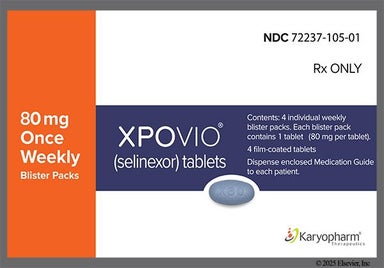
| 4 blister packs of 1 tablet each of 80mg | 1 carton | $33,339.37 | $33,339.37 |


How much does Xpovio (selinexor) cost?
$6,305.76

What are alternatives to Xpovio (selinexor)?

Xpovio (selinexor) images