Key takeaways:
Your diet provides nutrients that support muscle growth and recovery after exercise.
High-protein foods –– such as chicken, fish, and tofu –– provide amino acids that help your body repair muscle damage and build muscle.
Other nutrients — like omega-3 fatty acids and certain minerals — may also help support muscle growth.
Building muscle requires more than lifting weights. You’ll also need to eat a balanced diet high in nutrients that help your muscles repair and grow. Eating protein is essential for muscle building. Other nutrients –– including carbohydrates, healthy fats, vitamins, and minerals –– also play important roles.
Not sure where to start? We’ve got you covered. From breakfast to dinner to snacks in between, we’ll share 17 muscle-building foods that can help you get lean and strong.
Best animal-based muscle-building foods
Below are nine animal proteins that may support muscle building.
1. Eggs
Eggs — and other animal-based proteins — are considered a complete protein. This means that they contain all nine amino acids your body needs but can’t make on its own. These amino acids help your body build and repair muscle. In particular, eggs are high in leucine, an amino acid that helps stimulate muscle protein synthesis — the process your body uses to build and repair muscle. Eggs are also a highly digestible source of protein, so your body can easily break down and absorb their nutrients.
2. Salmon
Salmon isn’t just high in protein. It also provides omega-3 fatty acids, healthy fats that may help reduce inflammation and support heart health. Omega-3s may also contribute to muscle building, although the evidence is still mixed.
3. Tuna
In addition to its protein, tuna provides several vitamins and minerals that are important for strength and endurance, like iron and B vitamins. Canned tuna is an easy-to-find, convenient option. Just note that some types of tuna are high in mercury, so it’s important to pay attention to the type of tuna you’re eating. Choose lower-mercury tuna most often — like skipjack.
4. Chicken breast
Chicken breast is a go-to food for many bodybuilders since it provides a whopping 26 g of protein per 3 oz serving. It’s also high in leucine and iron, a mineral that helps deliver oxygen to your muscles and supports normal muscle function. Like many lean proteins on this list, chicken breast is also low in calories. But know that dark meat chicken has more fat and calories.
5. Lean beef
Beef is a good source of protein and also contains creatine, a compound your muscles use for quick bursts of energy. Creatine supplements have been shown to help increase muscle size and support post-workout recovery.
Beef provides some creatine naturally. But since some cuts can be high in saturated fat, choose leaner options such as sirloin, top loin, or ground beef that’s 90% to 93% lean.
6. Turkey
Like chicken, turkey packs plenty of protein into relatively few calories. Turkey is also an excellent source of the mineral selenium, a powerful antioxidant that can help protect your body’s cells from damage. Some research suggests that selenium may help support muscle health and improve physical endurance.
7. Greek yogurt
Greek yogurt is a high-quality protein source. Like meat and eggs, dairy foods made from cow’s milk (or other animal milks) are complete proteins. When it comes to building muscle, Greek yogurt may be a better choice than regular yogurt since it has nearly twice the amount of protein. Try to choose plain, unflavored yogurt to get the benefits without the added sugar.
8. Cottage cheese
Cottage cheese has made a comeback recently, and for good reason. It’s packed with protein, and its calcium and phosphorus support strong bones. There’s not a lot of specific research on cottage cheese’s role in muscle building, but a few small studies suggest it might. More research is needed. In the meantime, though, it deserves a spot on your list of high-protein foods. Plus, its mild flavor makes it very versatile.

Read more like this
Explore these related articles, suggested for readers like you.




9. Milk
Milk is a great source of protein and many other essential nutrients that support muscle building and overall health. Its calcium and potassium help your muscles contract and function normally. Milk also contains carbohydrates from natural sugars, which provide energy for exercise and help replenish glycogen after exercise.
Best plant-based, muscle-building foods
There’s some debate about whether plant and animal proteins are equally effective for building muscle.
Some research suggests that animal protein may have an advantage. Animal proteins tend to contain higher amounts of amino acids and are often easier to digest. But plant proteins can still support muscle growth and exercise performance. And they can be an excellent option for those who can’t or prefer not to consume animal proteins.
Below are eight plant-based proteins that may support muscle building.
1. Tofu (and other soy foods)
Tofu is made from soybeans and is a great source of protein, iron, and calcium. Soy has plenty of health benefits. Research suggests it may even help active people build lean muscle mass as effectively as animal-based protein sources. Soy is also one of the few plant-based foods that’s a complete protein.
Firm tofu can replace meat and poultry in many dishes, and it absorbs the flavors of sauces and seasonings well. You can also try edamame (young soybeans) or tempeh (fermented soy).
2. Oatmeal
Building muscle isn’t all about protein. Carbohydrates are your body’s main source of energy, and your muscles store them as glycogen for fuel during exercise. Eating carbs after a workout also helps replenish glycogen and support recovery.
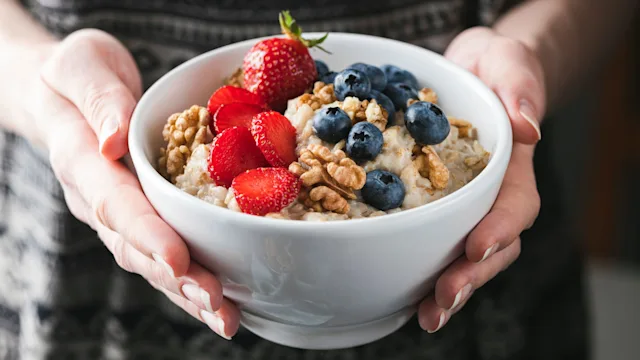
Whole-grain oats are a nutritious source of complex carbs. They’re easy to prepare as oatmeal and customize to your liking. You can easily increase the protein in oatmeal with nuts or nut butter, seeds, or Greek yogurt. Oats themselves provide some protein too.
3. Almonds
Almonds are one of the highest-protein nuts. They also contain polyphenols, plant compounds with antioxidant and anti-inflammatory properties. Some research suggests that the polyphenols in almonds may help your body recover from strenuous exercise.
4. Peanuts
Technically, peanuts are legumes. But we eat them like nuts. Along with their protein, they
provide folate and niacin — B vitamins that are important for energy. Just watch out for high-sugar peanuts, like honey roasted. You can also add peanut butter to so many different foods, from sandwiches and waffles to oatmeal or protein smoothies.
5. Pumpkin seeds
Roasted pumpkin seeds aren’t just for Halloween. They make a convenient, high-protein snack or topping for soups, salads, or grain bowls. Their magnesium supports normal muscle function and may help you maintain muscle mass as you age.
6. Quinoa
Technically, quinoa is a seed, but we use it as a grain. And it’s one of the highest-protein grains. Its complex carbohydrates provide energy and refill your muscles’ glycogen stores after exercise.
7. Lentils
Lentils are part of the legume family, and they’re packed with protein, fiber, and the amino acid leucine. They’re also rich in iron, magnesium, and B vitamins. Plus, they provide carbohydrates that can help your muscles recover glycogen.
You can add lentils to all kinds of foods, from soups to pastas to salads. They’re relatively cheap and easy to prepare, so they’re an especially good choice for those who like to meal prep.
8. Chia seeds
Chia seeds’ omega-3 fatty acids have antioxidant and anti-inflammatory properties that may help your muscles recover. And chia seeds’ magnesium, calcium, and phosphorus all help support normal muscle function.
Protein comparison table of muscle-building foods
The table below compares the protein in the muscle-supporting foods listed above.
Food | Serving size | Protein |
|---|---|---|
1 large egg | 6 g | |
Salmon (Atlantic) | 3 oz | 22 g |
Tuna (ahi) | 3 oz | 20 g |
3 oz | 27 g | |
3 oz | 23 g | |
3 oz | 26 g | |
6 oz | 17 g | |
Cottage cheese (2%) | ½ cup | 12 g |
1 cup | 8 g | |
Tofu (firm) | 3 oz | 15 g |
⅔ cup | 6 g | |
1 oz | 6 g | |
1 oz | 7 g | |
1 oz | 8 g | |
½ cup (cooked) | 4 g | |
½ cup | 9 g | |
2 tbsp | 4 g |
Why do we need protein for muscle building?
Protein provides the amino acids your body needs to repair and build muscle. Exercise — especially resistance training — puts stress on your muscle fibers. Afterward, your body uses amino acids from protein to repair that tissue and help your muscles grow stronger.
That’s why getting enough protein throughout the day is important for building and maintaining muscle. Eating protein before or after your workouts can also help support muscle repair and growth.
Building muscle isn’t just about what you eat either. It requires a multifaceted approach, including lifestyle habits, such as:
Strength training regularly
Gradually increasing exercise intensity to avoid plateaus
Getting high-quality sleep
Taking steps to manage stress levels
Staying hydrated
What foods should you limit when trying to gain muscle?
You don’t need to completely avoid specific foods to build muscle. But it can help to limit foods and drinks that are high in added sugars and saturated fat but low in protein and other important nutrients. Relying on these foods too often can make it harder to get the nutrients you need to fuel your workouts and recover afterward.
Examples of foods to limit include:
Fried foods
Pastries
Soda and other sweetened beverages
Processed meats (hot dogs, sausage, bacon, and deli meat)
Sugary breakfast cereals
Alcohol
Alcohol deserves extra caution, since higher amounts can interfere with muscle protein synthesis and recovery after exercise.
Frequently asked questions
Yes, whey protein can be a nutritious and convenient way to add more protein to your diet. It’s one of the most studied protein sources for supporting muscle growth and recovery. That’s why it’s a popular choice in protein powders. Still, protein powders aren’t necessary for most people. When possible, it’s usually best to get most of your protein from whole foods. That’s because they provide protein along with many other vitamins, minerals, and antioxidants.
Protein supplements aren’t the only ones marketed for muscle growth. Other common options include creatine and amino acid supplements such as leucine, arginine, and glutamine. Of these, creatine has the strongest evidence for supporting muscle building when combined with resistance training. Omega-3 fatty acids may have a role to play, but more research is needed. If you do choose to use a supplement, look for one that’s been third-party tested.
Yes, whey protein can be a nutritious and convenient way to add more protein to your diet. It’s one of the most studied protein sources for supporting muscle growth and recovery. That’s why it’s a popular choice in protein powders. Still, protein powders aren’t necessary for most people. When possible, it’s usually best to get most of your protein from whole foods. That’s because they provide protein along with many other vitamins, minerals, and antioxidants.
Protein supplements aren’t the only ones marketed for muscle growth. Other common options include creatine and amino acid supplements such as leucine, arginine, and glutamine. Of these, creatine has the strongest evidence for supporting muscle building when combined with resistance training. Omega-3 fatty acids may have a role to play, but more research is needed. If you do choose to use a supplement, look for one that’s been third-party tested.
The bottom line
Building muscle requires a combination of resistance training and good nutrition. Protein is especially important. But carbohydrates, healthy fats, vitamins, and minerals also help support muscle growth and recovery.

Why trust our experts?




References
American Heart Association. (2024). Fish and omega-3 fatty acids.
Berrazaga, I., et al. (2019). The role of the anabolic properties of plant- versus animal-based protein sources in supporting muscle mass maintenance: A critical review. Nutrients.
Burke, R., et al. (2023). The effects of creatine supplementation combined with resistance training on regional measures of muscle hypertrophy: A systematic review with meta-analysis. Nutrients.
Farsi, D. N., et al. (2025). Cottage cheese, a relatively underexplored cultured dairy product with potential health benefits? Critical Reviews in Food Science and Nutrition.
Huang, Y., et al. (2020). Effects of omega-3 fatty acids on muscle mass, muscle strength, and muscle performance among the elderly: A meta-analysis. Nutrients.
Jäger, R., et al. (2017). International Society of Sports Nutrition position stand: Protein and exercise. Journal of the International Society of Sports Nutrition.
Lopez, M. J., et al. (2024). Biochemistry, essential amino acids. StatPearls.
MyFoodData. (n.d.). Beef, ground (minced), 97% lean meat / 3% fat, loaf, cooked, baked.
MyFoodData. (n.d.). Cooked oatmeal (porridge).
MyFoodData. (n.d.). Cooked wild Atlantic salmon.
MyFoodData. (n.d.). Firm tofu.
MyFoodData. (n.d.). Heinen’s - ahi tuna.
MyFoodData. (n.d.). Low-fat milk 2%.
MyFoodData. (n.d.). Roasted chicken breast.
MyFoodData. (n.d.). Roasted turkey breast.
MyFoodData. (n.d.). Walmart - chia seeds.
Mu, H., et al. (2023). Research progress of quinoa seeds (Chenopodium quinoa wild): Nutritional components, technological treatment, and application. Foods.
Nieman, D. C., et al. (2023). Almond intake alters the acute plasma dihydroxy-octadecenoic acid (DiHOME) response to eccentric exercise. Frontiers in Nutrition.
Office of Dietary Supplements. (2023). Iron. National Institutes of Health.
Office of Dietary Supplements. (2026). Calcium. National Institutes of Health.
Office of Dietary Supplements. (2026). Magnesium. National Institutes of Health.
Paoli, A., Cerullo, et al. (2024). Not only protein: Dietary supplements to optimize the skeletal muscle growth response to resistance training: The current state of knowledge. Journal of Human Kinetics.
Piedmont. (2024). What is a complete protein?
Puglisi, M. J., et al. (2022). The health benefits of egg protein. Nutrients.
Rana, A., et al. (2022). Health benefits of polyphenols: A concise review. Journal of Food Biochemistry.
Souza, A. C. R., et al. (2023). The integral role of magnesium in muscle integrity and aging: A comprehensive review. Nutrients.
U.S. Department of Agriculture. (2019). Cheese, cottage, lowfat, 2% milkfat.
U.S. Department of Agriculture. (2019). Eggs, grade A, large, egg whole.
U.S. Department of Agriculture. (2019). Lentils, mature seeds, cooked, boiled, without salt.
U.S. Department of Agriculture. (2019). Peanuts, virginia, raw.
U.S. Department of Agriculture. (2019). Quinoa, cooked.
U.S. Department of Agriculture. (2019). Seeds, pumpkin and squash seed kernels, roasted, without salt.
U.S. Department of Agriculture. (2019). Yogurt, Greek, plain, nonfat (Includes foods for USDA’s Food Distribution Program).
U.S. Department of Agriculture. (2022). Oats, whole grain, steel cut.
U.S. Department of Agriculture. (2023). Almonds, unroasted.
U.S. Food and Drug Administration. (2021). Advice about eating fish.
Xu, Z., et al. (2015). The effectiveness of leucine on muscle protein synthesis, lean body mass and leg lean mass accretion in older people: A systematic review and meta-analysis. British Journal of Nutrition.
Wang, Q., et al. (2025). Selenium and skeletal muscle health in sports nutrition. Nutrients.
Wax, B., et al. (2021). Creatine for exercise and sports performance, with recovery considerations for healthy populations. Nutrients.
Zare, R., et al. (2023). Effect of soy protein supplementation on muscle adaptations, metabolic and antioxidant status, hormonal response, and exercise performance of active individuals and athletes: A systematic review of randomised controlled trials. Sports Medicine.
Zhao, S., et al. (2024). The effect of plant-based protein ingestion on athletic ability in healthy people-A bayesian meta-analysis with systematic review of randomized controlled trials. Nutrients.