Key takeaways:
Jackfruit is a tropical fruit that can be used in both sweet and savory dishes. Unripe jackfruit has a neutral flavor and is popular as a meat substitute because of its texture.
Jackfruit provides nutrients that can help with blood pressure, immune function, and inflammation.
Even though jackfruit is used as a swap for shredded chicken or pulled pork, it doesn’t contain much protein.
You may have noticed jackfruit popping up on menus and in various recipes, from tacos to smoothies. People are discovering how versatile it can be as an ingredient, especially in a plant-based diet. But is jackfruit good for you? Let’s dig in.
What is jackfruit?
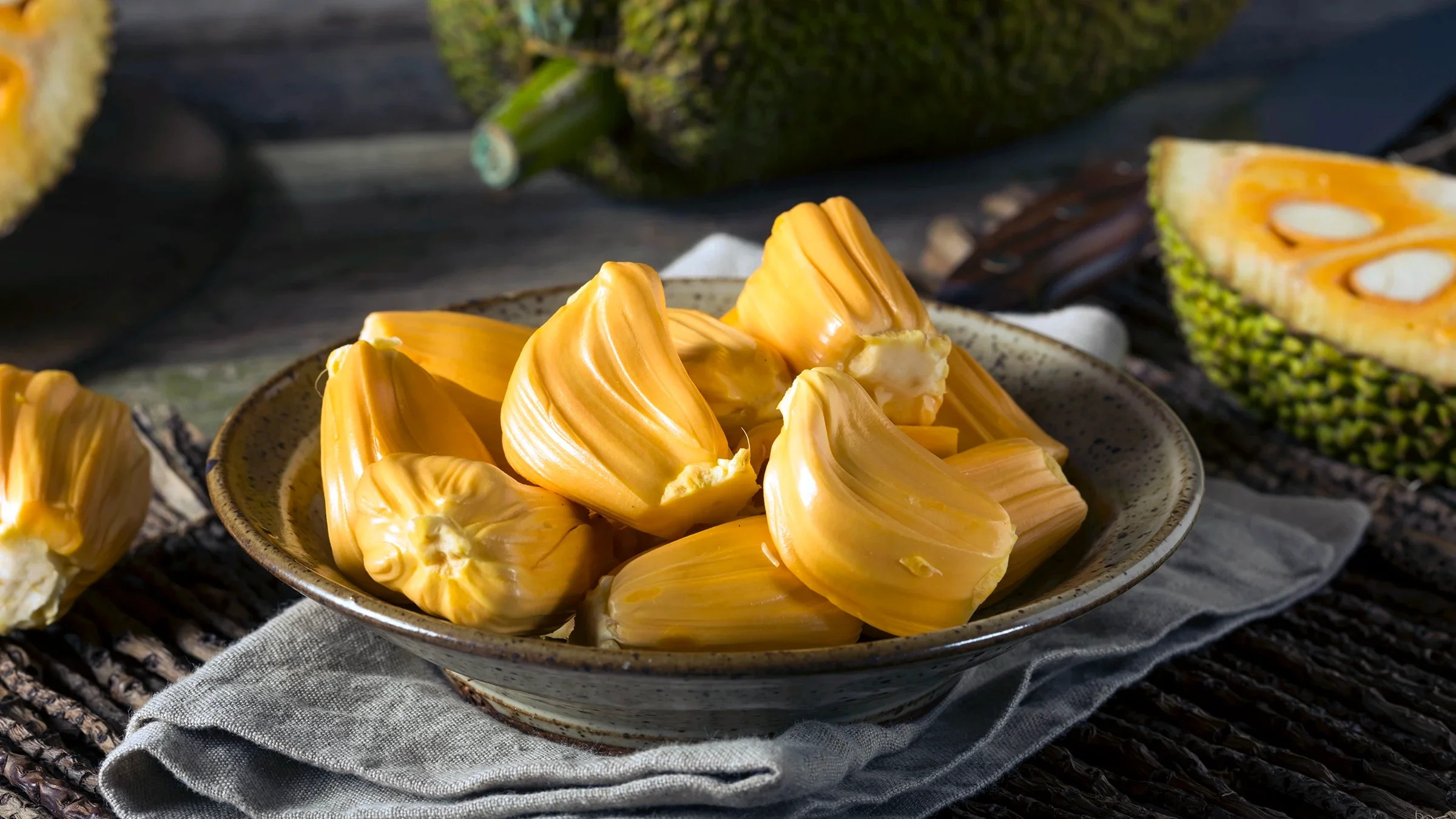
Jackfruit is a tropical fruit native to India. It has an oblong shape and a bumpy outer rind. It’s also the largest edible fruit in the world. A single jackfruit can weigh over 50 lbs and grow up to 35 inches long.
Both the flesh (the soft, juicy part) and the seeds are edible and can be used in sweet and savory dishes. But it’s the fruit’s flesh that’s most popular to eat. When jackfruit is ripe, its flesh is sweet and fruity, making it perfect for snacks or desserts. When it’s unripe, the flesh has a neutral flavor with texture similar to shredded chicken or pulled pork. Because of this, unripe jackfruit is popular as a meat substitute. But like most fruits, jackfruit doesn’t contain much protein.
Is jackfruit good for you?
Yes, jackfruit is nutritious. Here are some of the standout nutrients in jackfruit (in 1 cup, sliced):
Calories: 157
Carbohydrates: 38.4 g
Fat: 1.1 g
Fiber: 2.5 g
Protein: 2.8 g
Jackfruit is also a good source of several vitamins and minerals, including:
B vitamins (B1, B2, B3, B6, and folate)
Vitamin C
Potassium
Magnesium
Copper
In addition, jackfruit contains phytochemicals. These natural compounds have anti-inflammatory, antiviral, and antioxidant properties.
Jackfruit benefits for your health
The nutrients in jackfruit are beneficial in a few different ways.
Lower blood pressure
Jackfruit is a good source of potassium, an important electrolyte that helps keep blood pressure in a healthy range. Potassium balances sodium in your body and helps blood vessels to relax. This can take some strain off your heart. The American Heart Association recommends potassium-rich foods to support blood pressure. They even list jackfruit as a potassium-rich fruit. Just 1 cup of jackfruit delivers about 16% of your daily value (DV) of potassium.
Immune support
Jackfruit contains vitamin C, a key nutrient for keeping your immune system strong. Vitamin C acts as a powerful antioxidant that protects cells from damage. It also plays an important role in immune function and wound healing. These benefits help your body fight off bacteria and viruses. A serving of jackfruit provides about 25% of your DV of vitamin C, which is roughly the same amount you’d get in 1 cup of sliced tomatoes.
Fights inflammation
Jackfruit contains nutrients that help calm inflammation, most notably antioxidants and fiber.
Antioxidants are nutrients that help fight free radicals. Free radicals are unstable molecules that can cause oxidative stress and trigger inflammation in your body.
Fiber plays a different role in fighting inflammation. It supports a healthy gut microbiome. A well-balanced gut is linked to lower inflammation. As fiber is digested, it helps produce short-chain fatty acids (SCFAs). These compounds help reduce inflammatory signals throughout your body.
All of this matters because chronic inflammation can lead to conditions like heart disease and certain cancers.
Anti-cancer properties
The antioxidants in jackfruit, including carotenoids, flavonoids, and tannins, may help protect against cancer. These natural compounds may help your body get rid of damaged cells or block harmful substances before they lead to cancer. Carotenoids, in particular, have been linked to a lower risk of breast cancer. Sweet, ripe jackfruit contains more of these beneficial nutrients than unripe jackfruit. That’s because the carotenoid content increases as jackfruit ripens.
What are the disadvantages of jackfruit?
Jackfruit can be a nutritious addition to a balanced diet for most people. But there are a few downsides to know about.
If you have a latex allergy, you should avoid jackfruit. That’s because jackfruit is one of many fruits associated with latex-fruit syndrome. This is when your immune system confuses proteins in certain fruits for proteins found in natural rubber latex. This can trigger an allergic reaction in people with a latex allergy.
Jackfruit is also:
High in natural sugars and carbohydrates: Eating large portions can cause blood sugar spikes, especially with ripe jackfruit. This is a concern for people with diabetes, prediabetes, or insulin resistance.
High in potassium: Potassium is an important nutrient. But people with kidney disease who follow a low-potassium diet may need to limit or avoid jackfruit. Check with your dietitian to see what’s appropriate for you.
How to eat jackfruit
It may be easiest to buy canned jackfruit. You can find it packed in brine for savory dishes, or packed in syrup for sweet dishes. But you can also buy jackfruit:
Fresh, whole or sliced
As crunchy chips
Blended with barbeque sauce in ready-to-eat pouches
To enjoy ripe (sweet) jackfruit, try eating it:
Sliced on its own
Added to ice cream
Blended with other fruits like mango or banana to make popsicles, jam, or sauces
Pureed and added to batter for muffins, cakes, and other baked goods
Unripe jackfruit has a neutral flavor and can be used as a plant-based meat substitute. Canned jackfruit works especially well for this, in dishes like:
Stew
Tacos
Curry
Barbeque-style “chicken”
Keep in mind that even though jackfruit is often used as a swap for meat, it’s not high in protein. A cup of jackfruit has less than 3 g of protein, while the same amount of shredded chicken has about 30 g. If you use jackfruit instead of meat in a plant-based recipe, it’s best to still think of it as a fruit, not a protein. You can always add protein to complete your meal with foods like tofu, lentils, or chickpeas.
Jackfruit seeds are edible, but you have to cook them first. Try boiling or roasting them with your favorite herbs and spices.
Frequently asked questions
Canned jackfruit is good for you, and you can often find it at large grocery stores. It comes in both sweet and savory versions. Sweet canned jackfruit sometimes contains added sugar or syrup, so check the nutrition label to avoid these options. Savory canned jackfruit is packed in water with sodium, also called brine. Rinsing it before use can help reduce the sodium content.
The flavor of jackfruit depends on how ripe it is. Mature, ripe jackfruit has sweet flesh that many people say tastes like a mix of banana, apple, and mango. Unripe, young jackfruit is starchy and neutral in flavor. It has a meaty texture and takes on the flavor of any marinade or spices it’s mixed with.
Like all fruit, jackfruit contains natural sugars. With 31 g of natural sugars per cup, jackfruit is higher in sugar than some other fruits. But natural sugars from fruit are better for you than added sugars found in foods like candy, cookies, and soda. This is because fruit also contains important vitamins, minerals, and fiber. Fresh jackfruit has no added sugar. But canned jackfruit may have sugar added, so check the label.
Any fruit can be part of a diet for weight loss. That’s because fruit is relatively low in calories and contains filling fiber and water (jackfruit is 74% water by weight). There’s no magical fruit that leads to weight loss on its own. What matters is your overall eating pattern, physical activity level, and personal health, including hormones, medical conditions, and medications.
Canned jackfruit is good for you, and you can often find it at large grocery stores. It comes in both sweet and savory versions. Sweet canned jackfruit sometimes contains added sugar or syrup, so check the nutrition label to avoid these options. Savory canned jackfruit is packed in water with sodium, also called brine. Rinsing it before use can help reduce the sodium content.
The flavor of jackfruit depends on how ripe it is. Mature, ripe jackfruit has sweet flesh that many people say tastes like a mix of banana, apple, and mango. Unripe, young jackfruit is starchy and neutral in flavor. It has a meaty texture and takes on the flavor of any marinade or spices it’s mixed with.
Like all fruit, jackfruit contains natural sugars. With 31 g of natural sugars per cup, jackfruit is higher in sugar than some other fruits. But natural sugars from fruit are better for you than added sugars found in foods like candy, cookies, and soda. This is because fruit also contains important vitamins, minerals, and fiber. Fresh jackfruit has no added sugar. But canned jackfruit may have sugar added, so check the label.
Any fruit can be part of a diet for weight loss. That’s because fruit is relatively low in calories and contains filling fiber and water (jackfruit is 74% water by weight). There’s no magical fruit that leads to weight loss on its own. What matters is your overall eating pattern, physical activity level, and personal health, including hormones, medical conditions, and medications.
The bottom line
Jackfruit is a nutrient-rich fruit that can fit well into a balanced eating pattern. It’s high in fiber, vitamin C, potassium, and antioxidants. And because you can eat it fresh or canned, ripe or unripe, it’s extremely versatile. Because of its texture, unripe jackfruit is popular as a plant-based swap for meat. But even when used this way, it’s still low in protein.

Why trust our experts?




References
Allergy & Asthma Network. (n.d.). Latex allergy and foods.
Al Bander, Z., et al. (2020). The gut microbiota and inflammation: An overview. International Journal of Environmental Research and Public Health.
American Heart Association. (2025). How potassium can help prevent or treat high blood pressure.
Liu, X., et al. (2025). Recent developments in Artocarpus heterophyllus Lam. (jackfruit) polysaccharides: Nutritional values, structural characteristics and health benefits. International Journal of Biological Macromolecules.
Gupta, A., et al. (2023). Jackfruit (Artocarpus heterophyllus Lam.) in health and disease: A critical review. Critical Reviews in Food Science and Nutrition.
MyFoodData. (n.d.). Delrel - shredded chicken.
MyFoodData. (n.d.). Jackfruit.
MyFoodData. (n.d.). Tomatoes.
Peng, C., et al. (2021). Circulating carotenoids and breast cancer among high-risk individuals. The American Journal of Clinical Nutrition.
Ranasinghe, R. A. S. N., et al. (2019). Nutritional and health benefits of jackfruit (Artocarpus heterophyllus Lam.): A review. International Journal of Food Sciences.
Reddy V. P. (2023). Oxidative stress in health and disease. Biomedicines.
ScienceDirect. (n.d.). Jackfruits.