Key takeaways:
Eating avocados can help with weight loss because they contain fiber and healthy fats that help slow digestion, keep blood sugar steady, and keep you full longer.
Because avocados are high in calories, it's important to pay attention to portion sizes. A standard serving size is one-third of a medium-sized avocado.
Pairing avocado with protein- and fiber-rich foods can make meals even more filling and add to the weight-loss benefit.
If you’re trying to lose weight, avocados might seem like a food to avoid. After all, they’re rich, creamy, and calorie-dense. So, it’s fair to ask, “Is avocado good for weight loss?”
The answer may surprise you. Eating avocados in moderation — and paired with the right foods — can actually make weight loss feel easier, not harder.
To be clear, avocado isn’t a magical weight-loss food. Nothing is. But there are a handful of ways that eating avocados may help when it comes to weight management. Let’s dive in and look at how consuming avocado may help with weight loss.
1. Helps you feel full longer
Avocado is very filling because:
It’s high in fats and fiber. Avocados are rich in beneficial unsaturated fats and fiber — a combination that slows down digestion. This means food stays in your stomach longer, keeping you satisfied between meals.
It affects hunger hormones. The fat in avocados can also trigger the release of hunger-suppressing hormones peptide YY (PYY) and glucagon-like peptide-1 (GLP-1), which tell your brain that you're full.
It contains some protein. Avocados are among the few fruits that contain protein. It's a small amount of protein, but it can contribute to feelings of fullness.
Because avocados are so filling, they may help you consume fewer calories overall.
2. Stabilizes blood sugar
The fiber and fat in avocados work together to support stable blood sugar. Fiber slows the rate at which your body digests and absorbs carbohydrates. Fat delays stomach emptying. Both of these factors help to prevent the sharp rises in blood sugar that can lead to food cravings.
3. Supports insulin sensitivity
Monounsaturated fats — like those in avocado — have been linked to better insulin sensitivity. This means your body is better able to use carbohydrates for energy, instead of storing them as fat. Over time, this can support fat loss and make weight management feel a little easier.
4. Makes meals more satisfying
Eating avocado — with its creamy texture and rich flavor — can make meals more enjoyable. And, when your food actually tastes good, it’s easier to stay consistent and make nutritious, balanced eating a sustainable habit. Remember, your overall eating pattern over time matters more for weight loss than any single food choice.
Avocado nutrition
In addition to their healthy fats and fiber, avocados provide plenty of other nutrients. Here’s what you’ll get from a standard serving (about one-third of a medium avocado).
Nutrient | Amount |
Calories | 79 |
Protein | 1 g |
Total fat | 7.3 g (includes 1.1 g of saturated fat) |
Carbohydrates | 4.2 g |
Fiber | 3.3 g |
Vitamin C | 5 mg (6% daily value, or DV) |
Potassium | 240.1 mg (5% DV) |
Folate (B9) | 40.1 mcg (10% DV) |
Vitamin K | 10.4 mcg (9% DV) |
Downsides of avocado for weight loss
Eating avocados can be a nutritious part of a weight-loss strategy. But there are some downsides to consider, including:
Calories: Avocados are calorie-dense, which means there are a lot of calories in a relatively small portion. And it can be easy to eat more avocado than you intend to, especially in forms like guacamole. Eating large amounts of avocado regularly can make it harder to maintain a calorie deficit and lose weight.
Digestive discomfort: For some people, the fiber and fat in avocado can contribute to mild stomach upset or gas.
What’s the best way to eat avocado for weight loss?
There are lots of easy ways to include avocado in your meals. If your goal is weight loss, try to:
Pair it with protein. To increase satiety (fullness) and boost your meal’s weight-loss benefit, pair avocado with protein-rich foods. Examples include eggs, cottage cheese, legumes, salmon, chicken, and tofu.
Add fiber-rich sides. Avocado itself is high in fiber, but you can bump up your intake even more by pairing it with fiber-rich foods, like vegetables, whole grains, beans, and legumes. This can further slow digestion and keep blood sugar steady.
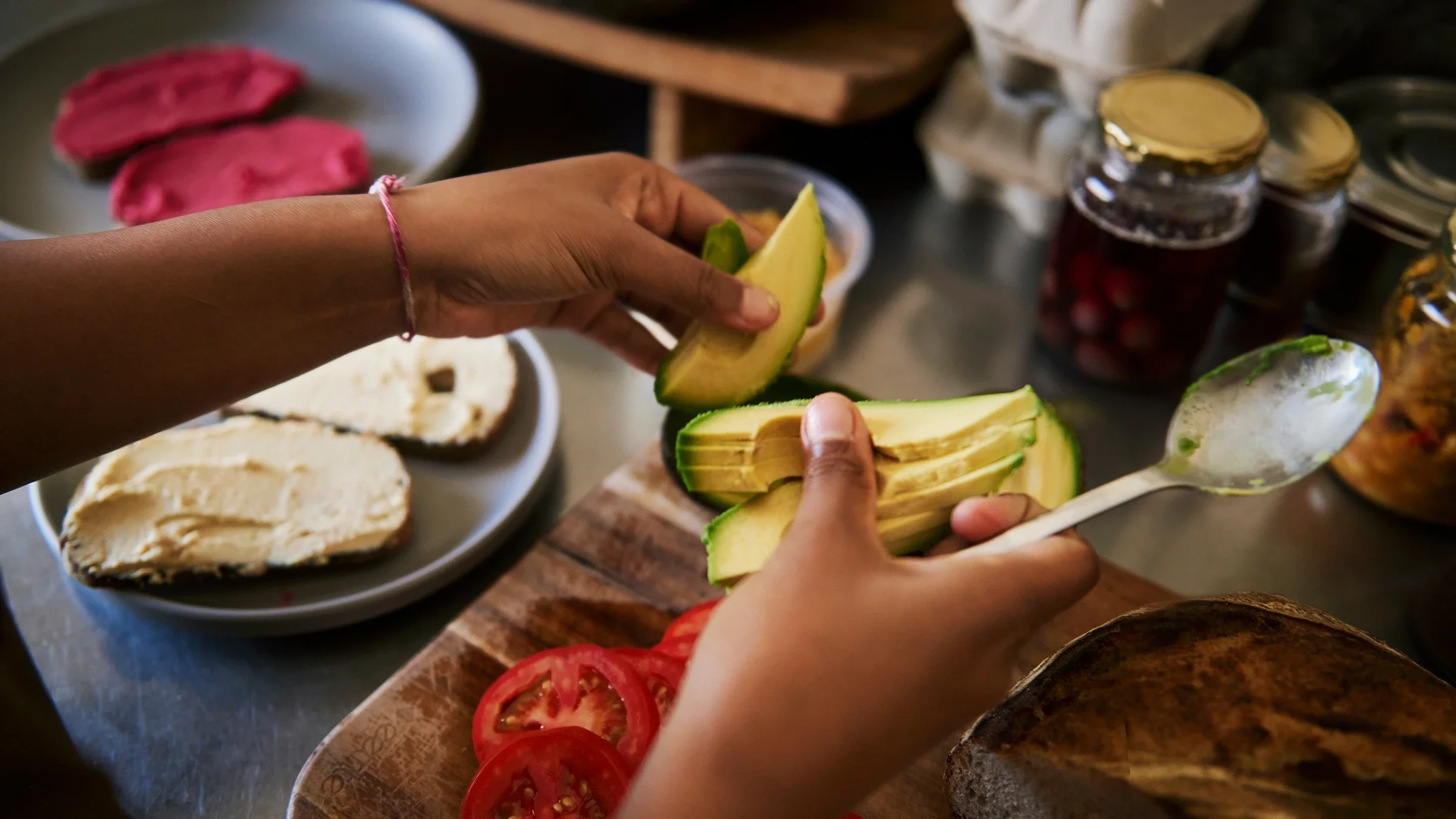
Swap it in for less-nutritious fats. Mashed avocado works well as a substitute for butter on sourdough toast, cream cheese on a bagel, or mayonnaise in tuna salad. The fiber and water in avocado can help fill you up more than pure fats alone can.
Watch portions. The standard serving size is about one-third of a medium avocado. Thanks to the fats and fiber, this amount can fill you up without adding excess calories.
Frequently asked questions
Eating avocado toast can support weight loss, but how you prepare it — and how much you eat — matters. Protein and fiber both play an important role in weight management, and avocado toast can provide both. Choose whole-grain bread to make it a high-fiber meal. And try topping your avocado toast with protein-rich foods, like eggs, cottage cheese, or hummus. This creates a filling, energy-boosting meal that supports your metabolism.
No single food can specifically target belly fat. Reducing belly fat requires an overall balanced diet and an active lifestyle. That said, avocados may indirectly support fat loss by helping you feel full and reducing your overall calorie intake. Avocados also indirectly support fat loss by stabilizing blood sugar and improving insulin sensitivity.
There’s no single best fruit for weight loss. Many fruits can support weight goals, since they’re high in filling fiber and water, and relatively low in calories. Some of the best fruits for weight loss are apples, berries, grapefruit, and watermelon.
Eating avocado toast can support weight loss, but how you prepare it — and how much you eat — matters. Protein and fiber both play an important role in weight management, and avocado toast can provide both. Choose whole-grain bread to make it a high-fiber meal. And try topping your avocado toast with protein-rich foods, like eggs, cottage cheese, or hummus. This creates a filling, energy-boosting meal that supports your metabolism.
No single food can specifically target belly fat. Reducing belly fat requires an overall balanced diet and an active lifestyle. That said, avocados may indirectly support fat loss by helping you feel full and reducing your overall calorie intake. Avocados also indirectly support fat loss by stabilizing blood sugar and improving insulin sensitivity.
There’s no single best fruit for weight loss. Many fruits can support weight goals, since they’re high in filling fiber and water, and relatively low in calories. Some of the best fruits for weight loss are apples, berries, grapefruit, and watermelon.
The bottom line
Although avocados are higher in fat and calories than many fruits, they’re also rich in nutrients that can support weight loss. Pairing avocado with protein- and fiber-rich foods can help you feel fuller for longer, and its healthy fats may help stabilize blood sugar and reduce energy crashes and cravings. Together, these benefits can make it easier to maintain steady eating habits — and stick with a weight-loss or weight-maintenance plan over time.

Why trust our experts?




References
American Diabetes Association. (2022). High blood sugar and hunger. Diabetes Food Hub.
Erlanson-Albertsson C. (2010). Chapter 14: Fat-rich food palatability and appetite regulation. Fat Detection: Taste, Texture, and Post Ingestive Effects. CRC Press/Taylor & Francis.
MyFoodData. (n.d.). Avocado, raw.
Riccardi, G., et al. (2004). Dietary fat, insulin sensitivity, and the metabolic syndrome. Clinical Nutrition.
Zhu, L., et al. (2019). Using the avocado to test the satiety effects of a fat-fiber combination in place of carbohydrate energy in a breakfast meal in overweight and obese men and women: A randomized clinical trial. Nutrients.