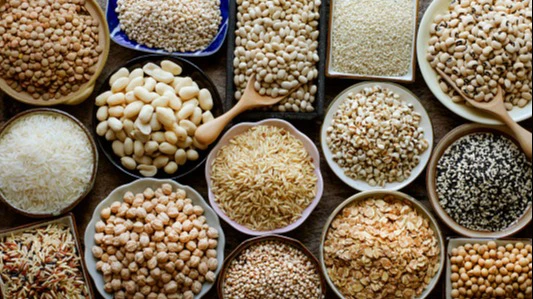
Key takeaways:
Fiber supports healthy digestion. Eating a fiber-rich diet is also linked to better cholesterol and blood sugar levels and a lower risk of heart disease.
Whole grains, fruits, vegetables, beans, and nuts are all good sources of fiber.
Simple changes can help you get more fiber. Try choosing whole grains, adding beans to meals, or pairing fruit with nuts and seeds for a tasty dessert.
Most people in the U.S. don’t get enough fiber. In fact, only 5% meet the daily recommended amount. On average, adults get around 16 g of fiber per day. Most adults need about 14 g per 1,000 calories, or roughly 25 g to 38 g per day, depending on age and sex. Many children also don’t get enough daily fiber.
Here’s the good news: Fiber is found naturally in a wide range of foods, including fruits, vegetables, and whole grains. It’s also found in legumes, nuts, and seeds. Some packaged foods also contain fiber naturally or have added fiber.
If you’re wondering how to get more fiber, check out these high-fiber foods and tips for adding them into your diet.
List of foods high in fiber
If you’re looking to eat more fiber-rich foods, here are five food groups to choose from. How much fiber each food has can vary based on serving size and how the food is prepared.
Vegetables
Most vegetables are high in fiber, though some pack more fiber than others. Below are some examples of vegetables and how much fiber you can expect in a 1-cup serving, rounded to a whole number.
High-fiber vegetables | Fiber | Serving size |
|---|---|---|
Artichoke | 10 g | 1 cup, cooked |
Pumpkin | 7 g | 1 cup, cooked |
Taro root | 7 g | 1 cup, cooked |
Brussels sprouts | 6 g | 1 cup, cooked |
Sweet potato | 6 g | 1 cup, cooked |
Parsnips | 6 g | 1 cup, cooked |
Jicama | 6 g | 1 cup |
Winter squash | 6 g | 1 cup, cooked |
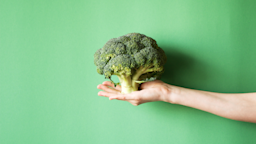
Broccoli | 5 g | 1 cup, cooked |
Cauliflower | 5 g | 1 cup, cooked |
Kohlrabi | 5 g | 1 cup |
Carrots | 5 g | 1 cup, cooked |
Kale | 5 g | 1 cup, cooked |
Fruits
Like vegetables, most fruits are a great source of fiber. Here are some high-fiber fruits and their fiber content, rounded to the nearest whole number.
Fruit | Fiber content | Serving size |
|---|---|---|
Passion fruit | 1 cup | |
Avocado | 1 fruit | |
Guava | 1 cup | |
Raspberries | 1 cup | |
Blackberries | 1 cup | |
Pomegranate | 1 cup of seeds | |
Persimmon | 1 fruit | |
Kiwi | 1 cup | |
Pear | 1 cup | |
Blueberries | 1 cup | |
Orange | 1 medium fruit | |
Strawberries | 1 cup, sliced | |
Apple | 1 cup, cut into pieces | |
Banana | 1 medium fruit (7-8 inches long) |
Legumes
Legumes, which include beans, lentils, and peas, are some of the richest sources of dietary fiber. Here’s how much fiber you can get from a ½-cup serving of cooked legumes, rounded to the nearest number.
Whole grains
Whole grains are another type of plant-based food that packs in fiber. Here are a few different types of whole grains and the amount of fiber you’ll get in each serving, rounded to the nearest whole number.
Nuts and seeds
Many nuts and seeds are high in fiber as well as protein. Here are some common options and the amount of fiber in each serving, rounded to the nearest whole number.
Nut or seed | Fiber content | Serving size |
|---|---|---|
5 g | 1 oz | |
4 g | 1 tbsp | |
Almonds | 4 g | 1 oz |
3 g | 1 oz | |
3 g | 1 oz | |
Flaxseeds | 3 g | 1 tbsp |
How to get more fiber in your diet
Here are nine simple ways to add more fiber to your meals and snacks. The amounts listed below are estimates and can vary by product and serving size. Remember to check the nutrition label for more information.
1. Choose chickpeas
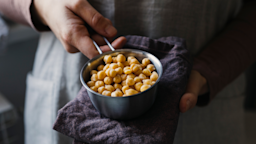
A ½-cup serving of cooked chickpeas provides about 6 g of fiber. Canned chickpeas are a convenient option. Here are a few ways to add chickpeas to your meals:
Use hummus as a sandwich spread.
Switch white pasta for chickpea pasta.
Make an easy chickpea salad sandwich by mashing chickpeas with a little mayonnaise, celery, onions, and your favorite spices. Serve it on whole-grain toast.

Read more like this
Explore these related articles, suggested for readers like you.


2. Start your day with oats
A ½-cup serving of dried oats has about 4 g of fiber, making oatmeal a convenient, fiber-rich breakfast. Add even more fiber by topping it with walnuts and berries. If you choose instant oats, be sure to look out for added sugar.
3. Add a salad
A side salad is an easy way to add vegetables to your meal. The more produce, beans, nuts, or seeds you top your greens with, the more fiber you’ll get. For example, topping your leafy greens with ½ cup of white kidney beans (cannellini beans) packs in nearly 5 g of fiber.
4. Try a fruit-forward dessert
The next time you’re craving something sweet, try making a fruit parfait. Start with your favorite berries and unsweetened yogurt. Then top it with pumpkin or chia seeds for extra fiber and crunch. You can also drizzle your favorite natural sweetener on top.
A parfait with 1 cup of raspberries and 1 tbsp of chia seeds provides about 12 g of fiber.
5. Pair fruit with nuts or nut butter
Pairing fruits with nuts or nut butter makes for an easy, filling snack that keeps you energized. Try a medium banana with 2 tbsp of peanut butter. This provides about 5 g of fiber. You can also make trail mix with dried fruit, nuts, and seeds.
6. Swap refined grains for whole grains
Choosing whole-grain products over refined versions can help you get more fiber. Whole grains keep the fiber- and nutrient-rich parts of the plant that are lost during processing.
Consider these grain swaps:
Replace white rice with brown rice. You’ll get five times the fiber with brown rice versus white rice.
Replace white pasta with a whole-grain pasta. Whole-grain pasta can provide about twice as much fiber as white pasta.
Replace regular cereal for a whole-grain cereal. Switching 1 cup of regular cereal for 1 cup of a whole-grain cereal can more than double your fiber intake.
7. Vary your vegetables
Eating a variety of vegetables can help you get more fiber and a wide range of nutrients.
Try these veggie-forward meal ideas:
Stir-fry broccoli, mushrooms, onions, and peppers for a quick meal.
Cook tomatoes, carrots, and a potato, then blend them into a soup. Add spinach or fresh herbs for even more veggies and flavor.
Add a mix of veggies to your omelet.
8. Sip a smoothie
A smoothie is a simple way to combine several fiber-rich foods. Unlike juice, a smoothie typically keeps the fiber from the whole fruits and vegetables you use. For about 13 g of fiber, combine and blend these ingredients:
2 cups frozen blueberries
1 cup spinach
1 cup unsweetened almond milk
1 tbsp almond butter
1 tbsp ground flaxseed
9. Pick plant-based milk
Some plant-based milks, like oat milk, have fiber. And they’re a good option if you need to avoid dairy. Try adding plant-based milk to your morning coffee or use it in place of water in your oatmeal. But not all plant-based milks have the same amount of fiber, and some have added sugar. So be sure to read the nutrition label first.
What are the benefits of fiber?
Fiber has many benefits. It’s an important part of a balanced diet and may also lower your risk of chronic diseases.
A diet high in fiber is associated with:
A lower risk of heart disease and stroke
Lower levels of low-density lipoprotein (LDL) or “bad” cholesterol
Decreased risk of Type 2 diabetes
Fewer flare-ups of inflammatory bowel disease
A lower risk of colon cancer
Better digestive regularity in people with constipation
Less severe depression symptoms
How much fiber do you need?
Most people in the U.S. don’t get enough fiber. According to the National Academy of Medicine, most adults need about 14 g of fiber per 1,000 calories, or around 25 g to 38 g per day. Here’s how much fiber people need each day based on their age and sex.
Age | Females | Males |
|---|---|---|
1-3 years | 19 g | 19 g |
4-8 years | 25 g | 25 g |
9-13 years | 26 g | 31 g |
14-18 years | 26 g | 38 g |
19-50 years | 25 g | 38 g |
51 years and older | 21 g | 30 g |
Good to know: You can overdo it with fiber, especially if you quickly change how much you consume. Eating too much fiber can lead to bloating, gas, and constipation. If you’re trying to add fiber to your diet, build up slowly and make sure to drink enough fluid.
Frequently asked questions
Many plant foods have a mix of soluble and insoluble fiber. Both types support gut health, but they work differently in your body.
Soluble fiber dissolves in water. Some types form a gel-like substance in your digestive tract. This type of fiber can help soften stool and slow down digestion.
Insoluble fiber doesn’t dissolve in water. It bulks up your stool and helps waste move through your digestive tract.
Viscous fiber is a type of soluble fiber that forms a gel when mixed with water. This gel can slow digestion and help you feel full longer. Foods that have viscous fiber include oats, barley, beans, and lentils.
Yes, fiber can support weight management. It can slow digestion, help you feel full longer, and lower your appetite. Fiber-rich foods may also replace higher-calorie foods in your diet. Many high-fiber foods are lower in calories.
Yes, corn contains fiber. Whole corn typically has more fiber than highly processed corn products. One small ear of cooked sweet corn provides about 2 g of fiber.
Most drinks don’t contain much fiber. But smoothies made with whole fruits, vegetables, seeds, or nut butters provide fiber. And some plant-based milks provide a small amount of fiber as well.
Plain water doesn’t contain fiber, but drinking enough water helps fiber work properly in your body.
The bottom line
Some of the best fiber-rich foods include fruits, vegetables, and whole grains. Legumes, nuts, and seeds are also high in fiber. Eating a variety of these foods can help you meet your daily fiber needs and support healthy digestion.
Small changes in your diet can add up. Try swapping refined grains for whole grains, adding beans or vegetables to your meals, or pairing fruit with nuts or seeds for a sweet treat. Increase fiber intake gradually to help prevent digestive discomfort.

Why trust our experts?



References
Anderson, J. W., et al. (2009). Health benefits of dietary fiber. Nutrition Reviews.
Bailey, R. L. (2018). Total usual nutrient intakes of U.S. children (under 48 months): Findings from the Feeding Infants and Toddlers Study (FITS) 2016. The Journal of Nutrition.
Dietary Guidelines for Americans. (2024). Food sources of dietary fiber.
Dikeman, C. L., et al. (2007). Viscosity as related to dietary fiber: A review. Critical Reviews in Food Science and Nutrition.
Ellis, E. (2025). Dietary fiber. Academy of Nutrition and Dietetics.
FoodData Central. (2019). Apples, raw, with skin (Includes foods for USDA’s Food Distribution Program). U.S. Department of Agriculture.
FoodData Central. (2019). Avocados, raw, California. U.S. Department of Agriculture.
FoodData Central. (2019). Bananas, raw. U.S. Department of Agriculture.
FoodData Central. (2019). Beans, black, mature seeds, cooked, boiled, without salt. U.S. Department of Agriculture.
FoodData Central. (2019). Beans, kidney, all types, mature seeds, cooked, boiled, without salt. U.S. Department of Agriculture.
FoodData Central. (2019). Beans, navy, mature seeds, cooked, boiled, without salt. U.S. Department of Agriculture.
FoodData Central. (2019). Beans, white, mature seeds, cooked, boiled, without salt. U.S. Department of Agriculture.
FoodData Central. (2019). Blackberries, raw. U.S. Department of Agriculture.
FoodData Central. (2019). Blueberries, frozen, unsweetened (includes foods for USDA’s food distribution program). U.S. Department of Agriculture.
FoodData Central. (2019). Blueberries, raw. U.S. Department of Agriculture.
FoodData Central. (2019). Cannellini beans. U.S. Department of Agriculture.
FoodData Central. (2019). Chickpeas (garbanzo beans, bengal gram), mature seeds, cooked, boiled, without salt. U.S. Department of Agriculture.
FoodData Central. (2019). Chickpeas (garbanzo beans, bengal gram), mature seeds, raw. U.S. Department of Agriculture.
FoodData Central. (2019). Edamame, frozen, prepared. U.S. Department of Agriculture.
FoodData Central. (2019). Guavas, common, raw. U.S. Department of Agriculture.
FoodData Central. (2019). Kiwifruit, green, raw. U.S. Department of Agriculture.
FoodData Central. (2019). Lentils, mature seeds, cooked, boiled, without salt. U.S. Department of Agriculture.
FoodData Central. (2019). Lima beans, immature seeds, cooked, boiled, drained, without salt. U.S. Department of Agriculture.
FoodData Central. (2019). Mung beans, mature seeds, cooked, boiled, without salt. U.S. Department of Agriculture.
FoodData Central. (2019). Natural peanut butter. U.S. Department of Agriculture.
FoodData Central. (2019). Nuts, almond butter, plain, without salt added. U.S. Department of Agriculture.
FoodData Central. (2019). Old-fashioned rolled oats. U.S. Department of Agriculture.
FoodData Central. (2019). Oranges, raw, Florida. U.S. Department of Agriculture.
FoodData Central. (2019). Passion-fruit, (granadilla), purple, raw. U.S. Department of Agriculture.
FoodData Central. (2019). Pears, raw, bartlett. U.S. Department of Agriculture.
FoodData Central. (2019). Peas, green, cooked, boiled, drained, without salt. U.S. Department of Agriculture.
FoodData Central. (2019). Peas, split, mature seeds, cooked, boiled, without salt. Department of Agriculture.
FoodData Central. (2019). Persimmons, japanese, raw. U.S. Department of Agriculture.
FoodData Central. (2019). Pomegranates, raw. U.S. Department of Agriculture.
FoodData Central. (2019). Quinoa, cooked. U.S. Department of Agriculture.
FoodData Central. (2019). Raspberries, raw. U.S. Department of Agriculture.
FoodData Central. (2019). Seeds, flaxseed. U.S. Department of Agriculture.
FoodData Central. (2020). Strawberries, raw. U.S. Department of Agriculture.
FoodData Central. (2019). Spinach, raw. U.S. Department of Agriculture.
FoodData Central. (2019). Whole grain cereal. U.S. Department of Agriculture.
FoodData Central. (2020). Almond milk, unsweetened. U.S. Department of Agriculture.
FoodData Central. (2020). Pasta, whole grain, cooked. U.S. Department of Agriculture.
FoodData Central. (2023). Toasted rice cereal. U.S. Department of Agriculture.
Kunzmann, A. T., et al. (2015). Dietary fiber intake and risk of colorectal cancer and incident and recurrent adenoma in the prostate, lung, colorectal, and ovarian cancer screening trial. The American Journal of Clinical Nutrition.
Manitus, N. (2021). Inflammatory bowel disease (IBD): Role of fiber. AGA GI Patient Center.
MyFoodData. (n.d.). Cooked yellow sweet corn (boiled, drained).
Quagliani, D., et al. (2016). Closing America’s fiber intake gap. American Journal of Lifestyle Medicine.
Swann, O. G., et al. (2020). Dietary fiber and its associations with depression and inflammation. Nutrition Reviews.
Yang, J. (2012). Effect of dietary fiber on constipation: A meta analysis. World Journal of Gastroenterology.