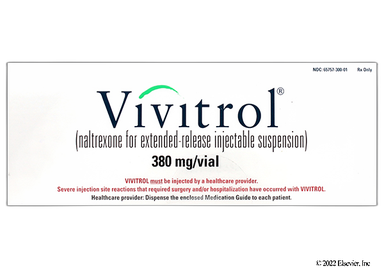
naltrexone for extended-release injectable suspension
Used for Alcohol Dependence, Opioid Dependence
Used for Alcohol Dependence, Opioid Dependence
Vivitrol is an extended-release naltrexone injection. It's an opioid antagonist that's used to treat opioid use disorder and alcohol use disorder in adults. Vivitrol is prescribed as part of a holistic treatment plan that also includes therapy and support groups. This medication is given as a deep gluteal injection into the muscle on the buttock, typically once a month by a healthcare professional. Some common side effects of Vivitrol include pain or tenderness at the injection site, nausea, and headache. Vivitrol is brand name only and not available as a generic medication.
Drinking alcohol or taking opioids triggers opioid receptors in the brain. When this happens, the body releases dopamine, a chemical that makes you feel good. Taking these substances repeatedly to feel relaxation or pleasure can cause the body to become dependent on them.
The following side effects may get better over time as your body gets used to the medication. Let your healthcare provider know immediately if you continue to experience these symptoms or if they worsen over time.
Common Side Effects
Alcohol use disorder
Tenderness, pain, swelling at injection site (up to 45%)
Liver injury: dark urine, feeling very tired, sudden nausea and vomiting, stomach pain on the upper right side, clay-colored stool, yellowing of the skin or whites of the eyes
The following Vivitrol side effects have also been reported
Along with its needed effects, a medicine may cause some unwanted effects. Although not all of these side effects may occur, if they do occur they may need medical attention.
Check with your doctor or nurse immediately if any of the following side effects occur:
More common
Bleeding, blistering, burning, coldness, discoloration of the skin, feeling of pressure, hives, infection, inflammation, itching, lumps, numbness, pain, rash, redness, scarring, soreness, stinging, swelling, tenderness, tingling, ulceration, or warmth at the injection site
Get emergency help immediately if any of the following symptoms of overdose occur:
Symptoms of overdose
Sleepiness or unusual drowsiness
Some side effects may occur that usually do not need medical attention. These side effects may go away during treatment as your body adjusts to the medicine. Also, your health care professional may be able to tell you about ways to prevent or reduce some of these side effects. Check with your health care professional if any of the following side effects continue or are bothersome or if you have any questions about them:
Other side effects not listed may also occur in some patients. If you notice any other effects, check with your healthcare professional.
Call your doctor for medical advice about side effects. You may report side effects to the FDA at 1-800-FDA-1088.
Pros and cons of Vivitrol
Pros
Lowers opioid and alcohol cravings
Given once per month
Better option for people who don't want to take naltrexone tablets everyday
Cons
Need to go to clinic or HCP's office to receive the injections
Must be given by injection into the buttock muscle
Can cause bothersome injection site reactions, such as pain and swelling
Pharmacist tips for Vivitrol
It's important to set reminders for Vivitrol appointments so you can receive your injections on time. If you miss an appointment, call your HCP right away to reschedule.
Vivitrol commonly causes injection site reactions like redness, itching, swelling, and mild pain. Your healthcare team might recommend that you use ice packs to help ease some of these symptoms. But let them know right away if you notice more serious injection site reactions, like blisters or more intense pain. These might be signs that you need more medical attention.
You might feel nauseous after receiving Vivitrol. This side effect tends to be mild and should go away after a few days. To lessen nausea during this time, avoid spicy or greasy foods that can trigger nausea. You can also try to eat smaller meals more often throughout the day.
Vivitrol might make you feel sleepy or dizzy. Don't drive or do any activities that need a lot of attention until you know how this medication affects you.
Before starting Vivitrol, your healthcare team will work with you to safely stop all opioid medications, including certain cough medications and antidiarrheal medications. You're recommended to be free of all opioid medications for at least 7 to 10 days before treatment begins. Otherwise, you can experience serious opioid withdrawal symptoms, such as agitation and vomiting.
Ask your healthcare team about getting naloxone, a medication that can reverse the effects of an opioid overdose. Receiving Vivitrol makes you more sensitive to opioid medications, which puts you at higher risk for serious side effects, such as slowed breathing. Naloxone can be life-saving in case of an accidental overdose.
Let your healthcare team know if you're pregnant or would like to become pregnant. There isn't much research about the safety of taking Vivitrol during pregnancy. Your care team can talk with you about options to treat opioid use disorder or alcohol use disorder during pregnancy.
Vivitrol can cause some serious health issues. This risk may be even higher for certain groups. If this worries you, talk to your doctor or pharmacist about other options.
More sensitive to opioids (risk of opioid overdose)
Risk factors: Taking opioid medications after completing Vivitrol therapy | Missing a dose of Vivitrol
When you stop taking opioid medications as part of treatment for opioid use disorder, your body can become more sensitive to opioids. For example, this can happen after you finish Vivitrol treatment or when the effects of Vivitrol wear off. If you take opioids again, you can experience life-threatening side effects, even at doses that your body tolerated before. Because of this risk, your healthcare team will likely prescribe naloxone to help reverse an opioid overdose in an emergency.
If you have or develop a condition where your healthcare team is considering treating you with opioid medications, let them know that you've received Vivitrol treatment in the past. They might need to prescribe non-opioid alternatives. But if your care team determines an opioid medication is needed (e.g., in a surgery), there needs to be trained staff on hand to monitor your vitals and give appropriate treatment in case you experience life-threatening side effects.
Tell your caregivers and loved ones about this risk of opioid overdose. Use naloxone and call 911 right away if you experience symptoms of an opioid overdose, such as extremely slowed breathing, extreme sleepiness, slow heartbeat, and cold or clammy skin.
Opioid withdrawal
Risk factors: Having taken opioid medications before or while taking Vivitrol
If you've been taking opioid medications, taking Vivitrol can cause serious withdrawal symptoms, including nausea and vomiting, sweating, and agitation.
To lower the risk of opioid withdrawal, your healthcare team will work with you to safely stop all opioid medications for at least 7-10 days before starting Vivitrol. If needed, they might ask you to start Vivitrol in a hospital setting so that a care team can monitor and treat you for any severe withdrawal symptoms. If you experience withdrawal symptoms at home, go to the hospital right away to get appropriate treatment.
If you're taking Vivitrol for alcohol use disorder, it's important that you let your healthcare team know if you've taken any opioid medications before starting Vivitrol.
Liver injury
Some people have reported liver problems after starting Vivitrol. It's likely that these liver problems were related to other health conditions, rather than to the use of Vivitrol. But there's a chance that sudden withdrawal from opioids can worsen existing liver problems.
Make sure to discuss your entire medical history with your healthcare team before starting this medication. They might want to monitor your liver labs more closely through blood draws if you have a history of liver problems. Call a healthcare professional right away if you notice any symptoms of liver damage. These symptoms can include tiredness, dark urine, upset stomach, stomach pain, or yellowing of the skin or whites of the eyes.
Risk of depression and suicidal thoughts
Some people have reported feeling depressed or having thoughts of suicide or self-harm while being treated for alcohol or opioid use disorder. Let your healthcare team know right away if you or a loved one notices a change in your mood while you're receiving Vivitrol treatment. Get medical attention right away if you experience severe depression or have any thoughts of hurting yourself.
Injection site reactions
Vivitrol should only be given by a trained healthcare professional (HCP) in an office or clinic setting. This medication commonly causes injection site reactions such as pain, tenderness, swelling, bruising, or itching. In rare cases, it can cause more severe reactions that might lead to serious tissue damage. Let your prescriber know if you experience blisters, an open wound, a large area of swelling, or intense pain, as these might be signs of a severe injection site reaction.
Severe allergic reactions
Some people have reported severe allergic reactions after using Vivitrol. These included symptoms such as hives, facial swelling, and anaphylaxis. Very rarely, people have also reported allergic pneumonia while receiving Vivitrol treatment. This condition led to symptoms such as wheezing or shortness of breath. Get medical help right away if you notice hives, rash, swelling of the lips or tongue, or trouble breathing after you use Vivitrol.
Vivitrol dosage
The average cost for 1 carton of 1 vial of 380mg/vial of Vivitrol is $0.00 with a free GoodRx coupon.
Adults: The typical dose is 380 mg injected into the buttock muscle once a month. Vivitrol is usually given by a healthcare professional (HCP) in a clinic or office setting. Your HCP will switch between the two sides of the buttocks for each monthly injection.
Vivitrol may interact with certain medications or supplements. Always let your doctor and pharmacist know about any other medications or supplements (including prescribed and over-the-counter medications, vitamins, and dietary or herbal supplements) that you are currently taking. The list below does not include all possible drug interactions with Vivitrol. Please note that only the generic name of each medication is listed below.
Although certain medicines should not be used together at all, in other cases two different medicines may be used together even if an interaction might occur. In these cases, your doctor may want to change the dose, or other precautions may be necessary. When you are receiving this medicine, it is especially important that your healthcare professional know if you are taking any of the medicines listed below. The following interactions have been selected on the basis of their potential significance and are not necessarily all-inclusive.
Using this medicine with any of the following medicines is not recommended. Your doctor may decide not to treat you with this medication or change some of the other medicines you take.
Using this medicine with any of the following medicines is usually not recommended, but may be required in some cases. If both medicines are prescribed together, your doctor may change the dose or how often you use one or both of the medicines.
Naldemedine
Naloxegol
Using this medicine with any of the following medicines may cause an increased risk of certain side effects, but using both drugs may be the best treatment for you. If both medicines are prescribed together, your doctor may change the dose or how often you use one or both of the medicines.
Yohimbine
How much does Vivitrol cost?
To access savings, use a GoodRx coupon and pay just a fraction of the retail price.
Contraindications are specific health conditions or situations in which a person should not take a medication due to safety concerns. If you have any of the following conditions or if any of the following apply to you, let your healthcare provider know because Vivitrol will not be safe for you to take.
Substance Abuse and Mental Health Services Administration. (2018). Chapter 3C: Naltrexone. Medication for Opioid Use Disorder: For Healthcare and Addiction Professionals, Policymakers, Patients, and Families: Updated 2021.
GoodRx Health has strict sourcing policies and relies on primary sources such as medical organizations, governmental agencies, academic institutions, and peer-reviewed scientific journals. Learn more about how we ensure our content is accurate, thorough, and unbiased by reading our editorial guidelines.
Prescription savings
Stop paying too much for your prescriptions. Compare prices, get pharmacy coupons, and save up to 80%.
The effects of Vivitrol last about a month. Vivitrol is an extended-release injection that's typically given once a month by a healthcare professional.
According to the American Psychiatric Association, Vivitrol is one of the first-choice medications for treating moderate-to-severe alcohol use disorder. A 6-month study showed that people who received Vivitrol along with therapy had 25% fewer heavy drinking days compared with people who received placebo and therapy. If you want to know more about Vivitrol and alcohol use disorder, talk with your healthcare team.
Vivitrol is one of the options for opioid use disorder in people who've already safely completed the detox process. A 6-month study found that 36% of people who received Vivitrol along with therapy were able to stay opioid-free during this time, compared to 23% of people who received placebo and therapy. While Vivitrol is an option for opioid use disorder, a guideline from the American Society of Addiction Medicine suggests that it should be reserved for people who have the help and support to make it to their monthly injection appointments. Talk with you healthcare team if you've more questions about Vivitrol and opioid use disorder.
There isn't a recommended length of treatment for Vivitrol in either opioid use disorder or alcohol use disorder. Your healthcare team will discuss how long you should use Vivitrol based on a few different factors, such as whether it's helping to lower your cravings and whether you experience any serious side effects. Talk with your care team if you have more questions about how long you should be receiving Vivitrol.
No, you should avoid drinking alcohol while taking Vivitrol. This medication can help lower your cravings for alcohol, but it won't protect you from the harms of alcohol. Drinking alcohol while receiving Vivitrol can still lead to slurred speech and risk of injuries from poor balance. And doing so long-term can raise the risk for serious health conditions, such as depression and liver problems. If you have a relapse with alcohol after starting Vivitrol treatment, let your healthcare team know so they can talk with you about next-steps and help you find the support you need to avoid alcohol.
No, Vivitrol isn't a controlled substance because it doesn't have a risk of addiction or dependence. Vivitrol is an opioid antagonist that blocks the feel-good effects of opioids and alcohol.
Though rare, few people have reported weight gain and weight loss after taking Vivitrol in clinical studies. But it's unclear whether the changes in body weight are caused by Vivitrol or other factors. If you've noticed weight gain after starting this medication, talk with your healthcare team.
Vivitrol is an extended-release naltrexone injection that's given once a month. Vivitrol is different from naltrexone (ReVia) tablet, which is taken by mouth once daily. Vivitrol injection might be a better option for people who have trouble remembering to take tablets by mouth everyday.