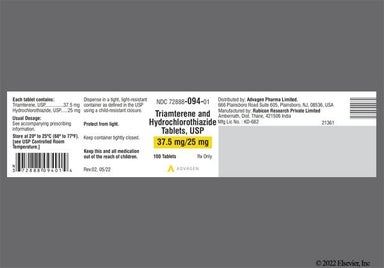
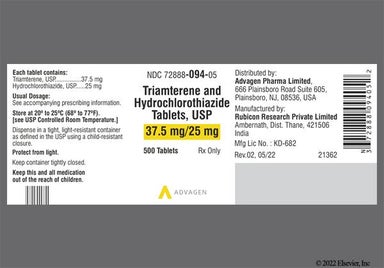
Maxzide (triamterene / hydrochlorothiazide) is made up of 2 different diuretics (water pills) used to treat high blood pressure and swelling (edema). This medication might be a good choice for someone whose potassium level is too low while taking hydrochlorothiazide on its own. The triamterene component can hep balance out the potassium loss. Maxzide (triamterene / hydrochlorothiazide) is taken by mouth, typically once daily. Some common side effects of this medication include headache, tiredness, and dizziness.
What is Maxzide (triamterene / hydrochlorothiazide)?
What is Maxzide (triamterene / hydrochlorothiazide) used for?
High blood pressure
Swelling
How Maxzide (triamterene / hydrochlorothiazide) works
Maxzide (triamterene / hydrochlorothiazide) is a combination medication:
Hydrochlorothiazide is a thiazide diuretic (water pill) that makes you urinate more. It works in your kidneys to remove extra water and certain electrolytes (like sodium and potassium), which helps lower your blood pressure and lessen swelling throughout your body.
Triamterene is a potassium-sparing diuretic (water pill). It also works in your kidneys to remove extra water and electrolytes, but it doesn't remove potassium from your body. This helps lower your blood pressure and swelling while preventing your blood potassium levels from dropping low.
Side effects of Maxzide (triamterene / hydrochlorothiazide)
The following side effects may get better over time as your body gets used to the medication. Let your healthcare provider know immediately if you continue to experience these symptoms or if they worsen over time.
Might cause an allergic reaction if you're allergic to sulfa medications
Interacts with many other medications, some of which are available over-the-counter
Pharmacist tips for Maxzide (triamterene / hydrochlorothiazide)
Maxzide (triamterene / hydrochlorothiazide) can make you urinate more often, so try to take the medication in the morning or afternoon. This effect can last for up to 12 hours, so take care to stay near a bathroom after your dose.
Like many blood pressure medications, Maxzide (triamterene / hydrochlorothiazide) can cause dizziness the first few days you are taking it because your body isn't used to having lower blood pressure. Be careful when getting up from a lying down or seated position so you don't get too dizzy or fall.
Avoid any task (e.g., driving or operating other machinery) that requires you to be alert until you know how you will respond to Maxzide (triamterene / hydrochlorothiazide). Side effects like dizziness and fainting are more common when you first start this medication or right after your provider raises your dose. Most people find these side effects get better or go away within a few weeks after starting Maxzide (triamterene / hydrochlorothiazide).
Avoid using potassium supplements or salt substitutes that contain potassium while taking Maxzide (triamterene / hydrochlorothiazide) unless your healthcare provider or dietitian tells you to do so. This can cause high levels of potassium in your blood which can cause heart problems.
Maxzide (triamterene / hydrochlorothiazide) makes your skin more sensitive to the sun and can cause you to sunburn more easily. This is also possible on overcast days and during the winter, so be sure to wear a hat and use a sunscreen with an SPF of at least 30 when you go outside.
If any side effects (such as muscle cramps, diarrhea, changes in sexual performance) become too bothersome or makes it difficult to go about your day, please let your healthcare provider know. Together, you and your provider can decide if staying on Maxzide (triamterene / hydrochlorothiazide) is the best option to treat your condition.
Make sure to tell your provider about your full medication history. If you have lupus, the hydrochlorothiazide in this medication can worsen your lupus or cause flares.
It's very important to keep up with any regular blood tests your healthcare provider asks you to have done. This helps to makes sure Maxzide (triamterene / hydrochlorothiazide) isn't causing problems with your electrolytes or kidneys.
Risks and warnings for Maxzide (triamterene / hydrochlorothiazide)
Maxzide (triamterene / hydrochlorothiazide) can cause some serious health issues. This risk may be even higher for certain groups. If this worries you, talk to your doctor or pharmacist about other options.
High blood potassium levels
Risk factors: Current kidney problems | Taking other medications that raise potassium levels| Taking potassium-based salt substitutes | Diabetes | Older adults
Maxzide (triamterene / hydrochlorothiazide) can raise the level of potassium in your body. This can lead to serious, sometimes life-threatening, heart problems. You're at greater risk of having high potassium levels if you also have kidney problems, diabetes, or are taking other medications that raise potassium levels. Your healthcare provider will most likely order blood tests to check your potassium levels before you start Maxzide (triamterene / hydrochlorothiazide) and regularly throughout treatment to make sure your levels are within a safe range. If your levels are too high, your provider will likely switch you to a different medication. Let your provider know if you experience symptoms of high potassium levels, such as nausea, muscle weakness or tingling, and tiredness.
Maxzide (triamterene / hydrochlorothiazide) can affect the fluid and electrolyte levels in your body. Fluids and electrolytes are important in helping your body work properly. But when their levels are outside of their typical range, it can be dangerous. Let your provider know right away if you experience symptoms such as dizziness, weakness, muscle cramps, and fast heart rate.
Too much acid in the body (acidosis)
Risk factors: Having a serious illness | Having higher potassium levels in the body
In rare cases, Maxzide (triamterene / hydrochlorothiazide) can cause too much acid to build up in your body. This can lead to problems with many organs in your body and can be life-threatening. Acid buildup is more likely to happen if you have a serious illness, such as sepsis. If you need to go to a hospital, always tell your healthcare providers you are taking Maxzide (triamterene / hydrochlorothiazide) so they can order blood tests to check for this rare but very serious side effect. Let your provider know if you experience symptoms of acid build up, such as tiredness or confusion.
Risk of coma (in people with serious liver problems)
Risk factors: Liver problems
Let your provider know if you've any liver problems. In some very rare cases, Maxzide (triamterene / hydrochlorothiazide) can cause people with liver problems to go into a coma. If you notice a sudden bout of confusion, drowsiness, and tremors, talk to your healthcare provider right away, as these are the warning signs of a hepatic coma (a coma caused by liver damage). You will have to have a blood test done to check the health of your liver.
Severe allergic reactions
Risk factors: History of sulfa allergies
There is a possibility that people with allergies to other sulfa-containing medications can experience similar allergic reactions (severe rash, trouble breathing) with the hydrochlorothiazide in Maxzide (triamterene / hydrochlorothiazide). Make sure you tell your healthcare provider if you have any medication allergies before you start taking Maxzide (triamterene / hydrochlorothiazide).
Gout
Risk factors: History of gout | Family history of gout | Existing kidney problems
Maxzide (triamterene / hydrochlorothiazide) can raise uric acid levels in your body, which can cause or worsen gout. If you've had gout attacks before or you have problems with your kidneys, your risk is higher. Talk to your healthcare provider right away if you notice any of your joints become swollen, red, and painful.
Higher blood sugar levels
Risk factors: Diabetes
Maxzide (triamterene / hydrochlorothiazide) might raise your blood sugars. If you have diabetes, be sure to check your blood sugar regularly. If you notice higher blood sugar readings than what's typical for you, please talk to your healthcare provider. Your provider might need to adjust your diabetes medications.
Vision problems (glaucoma)
Risk factors: History of sulfa or penicillin allergies
Vision changes and/or eye pain can occur within hours to weeks of starting Maxzide (triamterene / hydrochlorothiazide) because of the hydrochlorothiazide. Tell your healthcare provider if you experience any vision changes or eye pain and stop the medication immediately. This can lead to permanent blindness if not treated right away.
The average cost for 30 tablets of 37.5mg/25mg of Maxzide (triamterene / hydrochlorothiazide) is $4.00 with a free GoodRx coupon. This is 0.00% off the average retail price of $4.00.
Contraindications are specific health conditions or situations in which a person should not take a medication due to safety concerns. If you have any of the following conditions or if any of the following apply to you, let your healthcare provider know because Maxzide (triamterene / hydrochlorothiazide) will not be safe for you to take.
Not able to urinate
Kidney problems
High potassium levels
Taking with other medications that raise potassium (e.g., spironolactone, amiloride, or potassium supplements)
What are alternatives to Maxzide (triamterene / hydrochlorothiazide)?
There are a number of medications that your doctor can prescribe in place of Maxzide (triamterene / hydrochlorothiazide). Compare a few possible alternatives below.
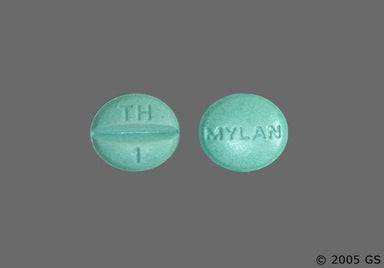
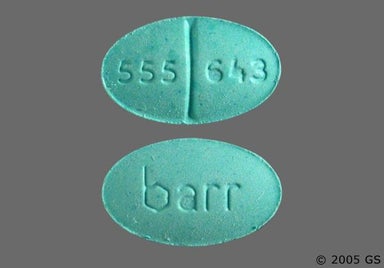
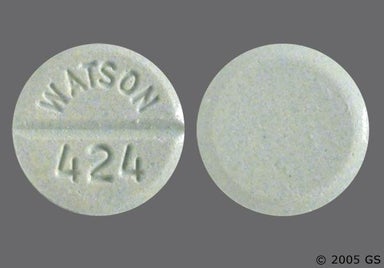
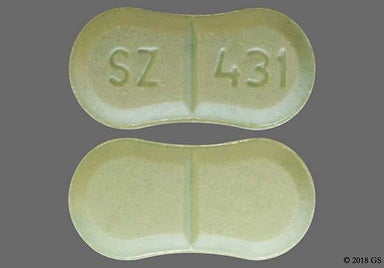
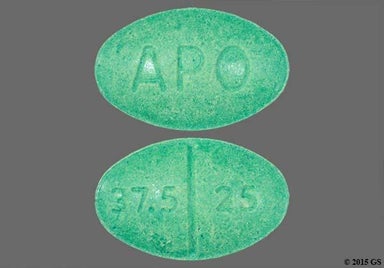
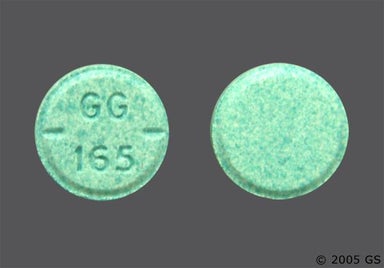
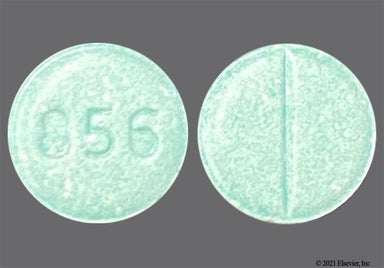
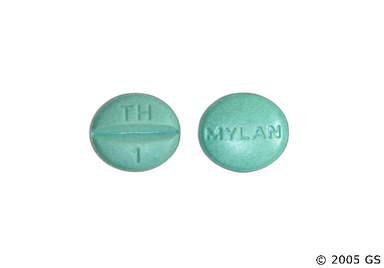
This medicine is Green, Round, Scored Tablet Imprinted With "Mylan" And "Th 1".Green Round Th 1 And Mylan - Triamterene/Hydrochlorothiazide 37.5mg-25mg TabletThis medicine is Green, Oval, Scored Tablet Imprinted With "Barr" And "555 643".Green Oval 555 643 And Barr - Triamterene/Hydrochlorothiazide 37.5mg-25mg TabletThis medicine is Green, Round, Scored Tablet Imprinted With "Watson 424".Green Round Watson 424 - Triamterene/Hydrochlorothiazide 37.5mg-25mg TabletThis medicine is Green, Bow-Tie, Scored Tablet Imprinted With "Sz 431".Green Bow-Tie Sz 431 - Triamterene/Hydrochlorothiazide 37.5mg-25mg TabletThis medicine is Green, Oval, Scored Tablet Imprinted With "Apo" And "37.5 25".Green Oval Apo And 37.5 25 - Triamterene/Hydrochlorothiazide 37.5mg-25mg TabletThis medicine is Green, Round, Notched Tablet Imprinted With "Gg 165".Green Round Gg 165 - Triamterene/Hydrochlorothiazide 37.5mg-25mg TabletThis medicine is Green, Oval, Scored Tablet Imprinted With "Apo" And "37.5 25".Green Oval Apo And 37.5 25 - Triamterene/Hydrochlorothiazide 37.5mg-25mg TabletThis medicine is Green, Oval, Scored Tablet Imprinted With "Apo" And "37.5 25".Green Oval Apo And 37.5 25 - Triamterene/Hydrochlorothiazide 37.5mg-25mg TabletThis medicine is Green-Yellow, Round, Scored Tablet Imprinted With "856".Green-Yellow Round 856 - Triamterene/Hydrochlorothiazide 37.5mg-25mg TabletThis medicine is Yellow, Oval, Scored Tablet Imprinted With "Logo 134".Yellow Oval Logo 134 - Triamterene/Hydrochlorothiazide 37.5mg-25mg TabletThis medicine is Yellow, Oval, Scored Tablet Imprinted With "Logo 134".Yellow Oval Logo 134 - Triamterene/Hydrochlorothiazide 37.5mg-25mg Tablet
Shrimanker, I., et al. (2023). Electrolytes. StatPearls.
GoodRx Health has strict sourcing policies and relies on primary sources such as medical organizations, governmental agencies, academic institutions, and peer-reviewed scientific journals. Learn more about how we ensure our content is accurate, thorough, and unbiased by reading our editorial guidelines.
Prescription savings
Stop paying too much for your prescriptions. Compare prices, get pharmacy coupons, and save up to 80%.
Triamterene/HCTZ isn't a first-choice medication to treat high blood pressure. But your provider might consider Triamterene/HCTZ for you if you're already taking hydrochlorothiazide (which is a first-choice blood pressure medication), but developed low potassium levels as a side effect. This is because triamterene can help prevent the loss of potassium. Ask your provider if you're not sure whether Triamterene/HCTZ is right for you.
You should never stop any medication suddenly without first discussing it with your healthcare provider. This is also true for Triamterene/HCTZ. Stopping the medication suddenly can raise your blood pressure and fluid levels throughout your body, which can cause your condition to get worse.
You'll notice a need to urinate more often starting a couple of hours after taking Triamterene/HCTZ. This effect can last anywhere from 6 to 12 hours, so make sure you have reliable access to a bathroom after your dose. But based on data on hydrochlorothiazide, you might need to take this medication for days to weeks before seeing the full effects it has on lowering blood pressure. Continue taking Triamterene/HCTZ as prescribed; your provider might have you check your blood pressure and weigh yourself daily to make sure this medication is working well enough for you.
Because Triamterene/HCTZ contains 2 diuretics (water pills), it's usually better to take your dose early during the day to avoid waking up in the middle of the night to use the bathroom. Whatever time you choose, make sure to be consistent and take it at the same time each day.
Yes, having high potassium levels is a possible side effect of Triamterene/HCTZ. But this side effect isn't too common. It's because while triamterene raises blood potassium levels, hydrochlorothiazide lowers potassium levels. Keep in mind the risk of high potassium levels is greater for people who have kidney problems, diabetes, or are an older adult. If you're at risk for this side effect, your provider might order blood tests to check your potassium levels regularly.




 Maxzide (triamterene / hydrochlorothiazide) can