


How Much Is Tagrisso Without Insurance?
Tagrisso (osimertinib) is a medication that treats certain types of lung cancer. See what factors affect the price of Tagrisso and how you can save.
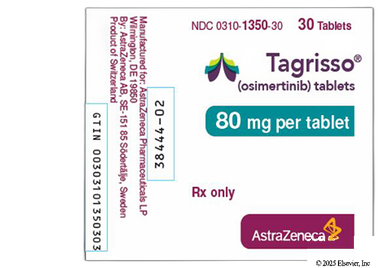
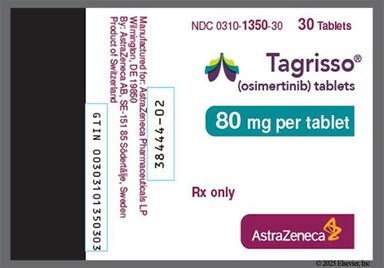
Tagrisso (osimertinib) is a prescription tablet used to treat adults with certain types of non-small-cell lung cancer (NSCLC) with a specific mutation in the EGFR gene. It’s FDA approved for use in early-stage cases after surgery, as well as in advanced and metastatic stages. This medication is an EGFR inhibitor that helps slow the growth and spread of cancer cells. It’s typically taken once a day by mouth, with or without food. Common side effects include low blood cell counts, diarrhea, and rash.

Non-small-cell lung cancer (NSCLC) in adults with specific EGFR mutations, including:
Tagrisso (osimertinib) is an epidermal growth factor receptor (EGFR) inhibitor. It works by blocking a protein called EGFR, which when mutated or changed can cause the cancer to grow and spread. By targeting this protein, the medication can help slow down or stop the cancer from getting worse.
| Common Brands | Tagrisso |
|---|---|
| Drug Class | EGFR inhibitor |
| Controlled Substance Classification | Not a controlled medication |
| Generic Status | No lower-cost generic available |
| Availability | Prescription only |

The following side effects may get better over time as your body gets used to the medication. Let your healthcare provider know immediately if you continue to experience these symptoms or if they worsen over time.
Contact your healthcare provider immediately if you experience any of the following.
Side effects that you should report to your care team as soon as possible:
Side effects that usually do not require medical attention (report to your care team if they continue or are bothersome):




Tagrisso (osimertinib) can cause some serious health issues. This risk may be even higher for certain groups. If this worries you, talk to your doctor or pharmacist about other options.
Rarely, Tagrisso (osimertinib) can cause serious lung problems, like lung inflammation or a condition called interstitial lung disease (ILD). Tell your cancer care team right away if you have shortness of breath, a cough, fever, or any new or worsening breathing symptoms. Your oncologist might have you stop taking the medication while they check what’s causing the problem. If it turns out to be serious, you might need to stop treatment for good.
Tagrisso (osimertinib) can affect how your heart beats by causing something called QT prolongation. This means your heartbeat could become abnormal, which might lead to serious problems if not checked closely.
If you have certain heart conditions, like heart failure or abnormal heart rhythm, your oncologist will likely check your heart more often with electrocardiogram (ECG or EKG) tests and blood work. Some medications can also raise your risk, so make sure your care team knows everything you take. If you start feeling dizzy, faint, or notice a fast or uneven heartbeat, tell your oncologist right away. You might need to stop Tagrisso (osimertinib) if these symptoms are serious.
Tagrisso (osimertinib) can cause a serious heart problem called cardiomyopathy, which means your heart doesn’t pump blood as well as it should. This can lead to heart failure, fluid in your lungs, or other heart problems. Your oncologist will likely check your heart before and during treatment to make sure it’s safe. Let your care team know right away if you have symptoms like shortness of breath, swelling in your legs or feet, or feeling extremely tired.
Rarely, Tagrisso (osimertinib) can cause keratitis, or inflammation of the eye. Tell your oncologist right away if you notice eye symptoms like redness, pain, tearing, light sensitivity, blurry vision, or swelling. If needed, your care team might refer you to an eye specialist for further care.
Mild rashes are common and usually not serious when taking Tagrisso (osimertinib). But in rare cases, this medication can cause life-threatening skin problems, including severe skin reactions or infections that can be life-threatening, like Stevens-Johnson syndrome (SJS) or toxic epidermal necrolysis (TEN). Tell your oncologist right away if you get a painful rash, blisters, or peeling skin as these are signs of a serious skin reaction that need immediate medical attention.
In rare cases, Tagrisso (osimertinib) has been linked to inflammation of the small blood vessels in the skin, also known as cutaneous vasculitis. Let your care team know right away if you notice unusual skin changes, like red or purple spots, hives that look bruised, or a rash that doesn’t go away.
A rare but serious blood problem called aplastic anemia has been reported in people taking Tagrisso (osimertinib). This condition happens when your body doesn’t make enough healthy blood cells. Before and during treatment, your oncologist will check your blood counts regularly to watch for changes. Tell your care team right away if you have symptoms like fever that won’t go away, easy bruising, bleeding, or very pale skin, as these could be signs of aplastic anemia.
Tagrisso (osimertinib) might harm an unborn baby if taken during pregnancy. In animal studies, it caused pregnancy loss and other serious problems.
If you can get pregnant, use effective birth control while taking Tagrisso (osimertinib) and for 6 weeks after your last dose. If you’re a man with a partner who could get pregnant, use birth control during treatment and for 4 months after your last dose. Let your oncologist know right away if you or your partner becomes pregnant during treatment.

The typical dose is 80 mg by mouth once a day.
Your dose might differ if you have certain side effects or take other medications that interact with Tagrisso (osimertinib).

Non-small-cell lung cancer (NSCLC) in adults with specific EGFR mutations, including:




Prescription savings
Stop paying too much for your prescriptions. Compare prices, get pharmacy coupons, and save up to 80%. Find expert answers to your health questions so you can make the best decisions for yourself and your family.
Health conditions
Medications & treatment
Access & affordability
 Our monthly healthcare membership can help you save thousands on your prescription costs.
Resources

No, Tagrisso isn’t chemotherapy. It’s a type of targeted therapy that works on a specific part of cancer cells. Chemotherapy attacks fast-growing cells all over your body, which can affect both cancer and healthy cells. Tagrisso, on the other hand, focuses on a specific protein called EGFR. This targeted approach helps lower the chance of damage to healthy cells.
Yes, Tagrisso kills cancer cells by going after a specific protein called EGFR. When protein is mutated, it tells some lung cancer cells to grow and spread. By blocking EGFR, the medication can slow down or stop these cancer cells from growing.
Tagrisso stays in your system for more than a week. On average, it can take about 8 to 10 days for most of the medication to leave your body. This is based on its half-life, which is the time it takes for the amount of medication in your body to drop by half.
Hair loss can happen with Tagrisso, but it’s not common. If you do notice hair loss or changes to your hair, let your oncology care team know. They can help you understand what to expect, suggest ways to care for your hair and scalp, and check for other possible causes.
You can take Tagrisso as long as it continues to work and you don’t have serious side effects. But if you're taking it to treat early-stage lung cancer after surgery, treatment usually lasts up to 3 years. Your oncologist will check your progress regularly to make sure the medication is still helping. If the cancer starts to grow again or you have strong side effects, your treatment plan might change.
There's no best time of day to take Tagrisso, but you should take it at the same time every day. You can take it with or without food, so pick a time that works for your daily routine. Taking it consistently each day helps keep the right amount of medication in your body. If you're not sure what time works best for you, ask your care team for guidance.
No, you shouldn’t cut Tagrisso tablets in half. But if you have trouble swallowing it whole, you can mix it with water instead. Place the whole tablet in about 2 ounces (60 mL) of non-carbonated water and stir until it breaks apart — it won’t completely dissolve. Drink the mixture right away, then rinse the glass with a little more water and drink that too to make sure you get the full dose. If you have a nasogastric (NG) tube, the mixture can be prepared the same way and given through the tube using 0.5 ounces (15 mL) of water. Always follow your care team’s instructions when using this method.
Yes, Tagrisso can sometimes cause heart problems, but it’s not common. It might affect how your heart beats or how well it pumps blood. Some people have developed heart failure or changes in heart rhythm. Your oncologist might check your heart with tests like an electrocardiogram (ECG or EKG) or blood tests before and during treatment to make sure it’s safe for you. Always tell your care team if you feel dizzy, short of breath, have chest pain, or notice an unusual heartbeat.
