Rhofade
Rhofade (oxymetazoline) is an alpha-1 receptor agonist. It contains oxymetazoline 1% topical cream and is used to treat facial redness in adults with rosacea. Rhofade (oxymetazoline) is applied to the face once per day. Most people don't experience any side effects from Rhofade (oxymetazoline). But those who do report have reported irritation or rash at the application site. Rhofade (oxymetazoline) is prescription-only and not available as a generic.


What is Rhofade (oxymetazoline)?
What is Rhofade (oxymetazoline) used for?
- Facial redness caused by rosacea in adults
How Rhofade (oxymetazoline) works
Rhofade (oxymetazoline) is an alpha-1 agonist. It squeezes the blood vessels near the surface of your skin, which helps lessen facial redness.
Drug facts
| Common Brands | Rhofade |
|---|---|
| Drug Class | Alpha adrenergic receptor agonist |
| Controlled Substance Classification | Not a controlled medication |
| Generic Status | No lower-cost generic available |
| Availability | Prescription only |

Side effects of Rhofade (oxymetazoline)
The following side effects may get better over time as your body gets used to the medication. Let your healthcare provider know immediately if you continue to experience these symptoms or if they worsen over time.
Common Side Effects
- Irritation or rash at the application site (2%)
Less Common Side Effects
- Worsened rosacea bumps or pimples
- Itching
- Skin redness
- Pain at the application site
Rhofade (oxymetazoline) serious side effects
Contact your healthcare provider immediately if you experience any of the following.
- Worsening heart problems: severe headaches, nosebleeds, difficulty breathing, irregular heartbeat, dizziness, feeling faint, chest pain
- Sudden glaucoma: severe eye or head pain, red eye, sudden loss of vision, blurry vision
The following Rhofade (oxymetazoline) side effects have also been reported
Side effects that you should report to your care team as soon as possible:
- Allergic reactions—skin rash, itching, hives, swelling of the face, lips, tongue, or throat
Side effects that usually do not require medical attention (report these to your care team if they continue or are bothersome):
- Irritation at application site

Get your GoodRx coupon

Pros and cons of Rhofade (oxymetazoline)
Pros
- Only need to use once daily
- Available in an easy-to-use pump or tube
- Skin might improve after a single application
Cons
- Can take a few weeks to months to see more noticeable results
- Not an option for children
- Only available as a brand-name medication

Pharmacist tips for Rhofade (oxymetazoline)

- Make sure you know how to use the Rhofade (oxymetazoline) cream tube or pump to avoid accidentally wasting the medication. Let your care team know if you have any questions.
- If you're using the Rhofade (oxymetazoline) pump, you'll need to prime it before using it for the first time. To prime it, press down on the pump a few times into a tissue and throw away any medication you get from the first three pumps. If you're using the Rhofade (oxymetazoline) tube, you don't need to prime it.
- Apply a pea-sized amount of Rhofade (oxymetazoline) to your face once daily. You only need to apply a thin layer. Using too much medication can lead to more side effects, such as irritation, inflammation, or itching. Ask your pharmacist or healthcare professional (HCP) if you have questions about how much medication to use.
- Rhofade (oxymetazoline) should only be used on your skin. You can use it on your forehead, nose, cheeks, and chin. Avoid using it in or around your mouth, eyes, or vagina, as this can lead to skin irritation.
- Don't use Rhofade (oxymetazoline) on any open wounds or irritated skin, as this can lead to further side effects or swelling (inflammation).
- Wash your hands well with soap and water before and after you apply Rhofade (oxymetazoline) to the affected areas. Also clean the affected area(s) of your skin with a mild cleanser before you apply the medication.
- Store Rhofade (oxymetazoline) at room temperature in a place out of reach from children at all times. For your child's safety, close the tube tightly or place the cap on the pump to prevent your child from opening it. If your child accidentally swallows the medication, get emergency medical help or call your local poison control center at 1-800-222-1222 right away.
- Let your care team know if you're taking blood pressure medication or a monoamine oxidase inhibitor (MAOI), such as selegiline. There's a risk that Rhofade (oxymetazoline) might interact with these medications. Make sure to tell your care team about all of your medications before and during treatment with Rhofade (oxymetazoline).
- If you're pregnant, don't use Rhofade (oxymetazoline) without talking with your obstetrician-gynecologist (OB-GYN) first. There aren't any studies looking at the safety of using Rhofade (oxymetazoline) during pregnancy, so they might recommend other options for you.

Risks and warnings for Rhofade (oxymetazoline)
Rhofade (oxymetazoline) can cause some serious health issues. This risk may be even higher for certain groups. If this worries you, talk to your doctor or pharmacist about other options.
Changes in blood pressure
- Risk factors: History of heart disease | History of high or low blood pressure | Taking medications for blood pressure
Though the risk is low with Rhofade topical cream, oxymetazoline can cause changes in your blood pressure. If you have a history of heart or blood pressure problems or take certain medications that affect the heart, such as beta blockers or digoxin (Lanoxin), ask your dermatologist if Rhofade (oxymetazoline) is safe for you. If you get severe headaches, nosebleeds, difficulty breathing, irregular heartbeat, dizziness, feeling faint, or chest pain while taking Rhofade (oxymetazoline), get medical attention right away. These can be signs that your heart or blood pressure conditions have worsened.
Worsening blood flow problems
- Risk factors: Conditions that cause poor blood flow to brain or heart | Sjogren's syndrome
Let your healthcare team know if you have any medical condition that affects blood flow, such as poor blood flow to the brain (e.g., stroke, "mini strokes") or heart (e.g., coronary artery disease or CAD), or Sjögren's syndrome. Rhofade (oxymetazoline) can affect blood flow and worsen these conditions. Make sure the prescribing specialist knows about all medical conditions you have or have had in the past before starting Rhofade (oxymetazoline). If your symptoms of any of these conditions worsen, stop using Rhofade (oxymetazoline) and contact your care team right away.
Glaucoma
- Risk factors: Untreated glaucoma
Rhofade (oxymetazoline) can raise your risk of angle closure glaucoma because of the way it works in your eye. Stop using Rhofade (oxymetazoline) and contact your care team right away if you notice symptoms of glaucoma, such as severe eye and head pain, red eye, and blurry vision.

Rhofade (oxymetazoline) dosage
 Tube of cream
| Dosage | Quantity | Price as low as | Price per unit |
|---|---|---|---|
| 30g of 1% | 1 tube | $150.00 | $150.00 |
Typical dosage for Rhofade (oxymetazoline)
- Adults: Apply a pea-sized amount of cream once per day on your entire face, including your forehead, nose, cheeks, and chin. Don't apply it on your eyes or lips.

How much does Rhofade (oxymetazoline) cost?
$150.00

What are alternatives to Rhofade (oxymetazoline)?

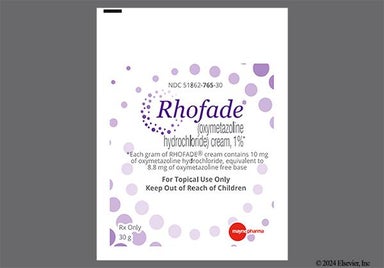
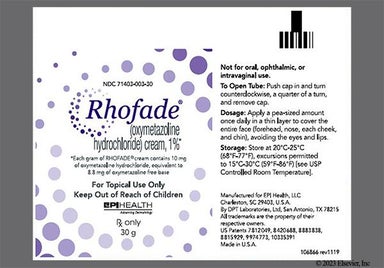
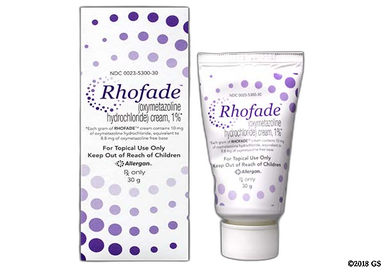
Rhofade (oxymetazoline) images