Key takeaways:
Trazodone is a type of antidepressant medication that is often used in cats to treat anxiety-related behavioral issues.
Trazodone is most effective for cats with situational-related anxiety, such as fear of going to the veterinarian, and for sedation after surgery.
Your cat may experience side effects while taking trazodone, such as sleepiness, nausea, or slightly watery eyes.
Stress and anxiety in cats can significantly impact their health, behavior, and well-being. If you have a cat that is easily stressed by veterinary visits, then you know the pain. Whether your cat is anxious about riding in a car, going to the vet, being around visitors, or having their routine changed — you don’t like to see them suffer.
If your cat has short-term, situational anxiety, trazodone may be a safe and relatively inexpensive medication that can help.
Trazodone for cats at a glance
Common names | Trazodone (Desyrel, Oleptro) |
What it treats | Situational anxiety |
How it comes (forms) | Pill, treat, liquid, transdermal lotion |
Dosage | Depends on a cat’s weight |
Common side effects | Sleepiness, squinty and slightly watery eyes, nausea |
Average cost |
What is trazodone for cats, and how does it work?
Trazodone is an antidepressant medication that is used to treat anxiety in cats. It is a serotonin antagonist and reuptake inhibitor (SARI), which works by raising levels of serotonin, a chemical that can improve mood, in the bloodstream.
Search and compare options
When trazodone is prescribed for cats, it is considered “off-label,” which means that it is not FDA-approved for use in cats. But trazodone is commonly prescribed for cats and is considered safe.
What is trazodone used for in cats?
Trazodone is a medication for anxiety that helps cats stay calm in situations where they would otherwise feel anxious. This can be helpful for cats that are anxious during veterinary or groomer visits, while traveling, or during thunderstorms or fireworks.
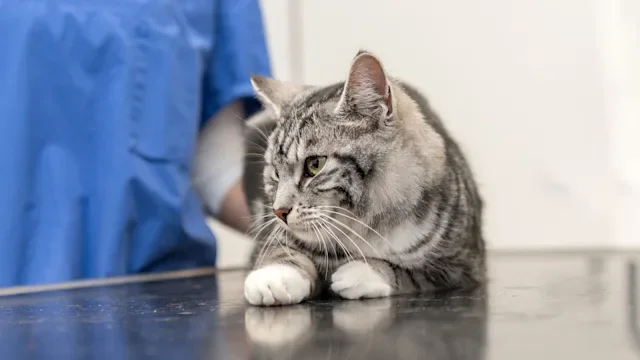
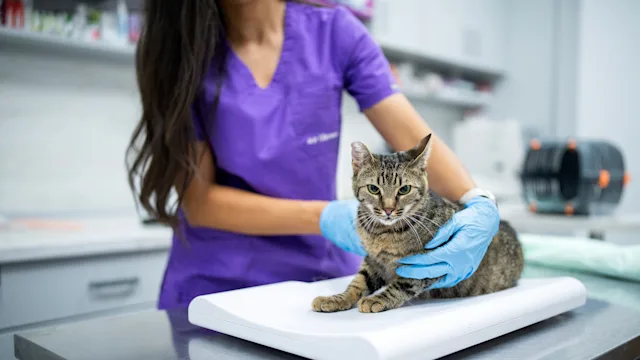
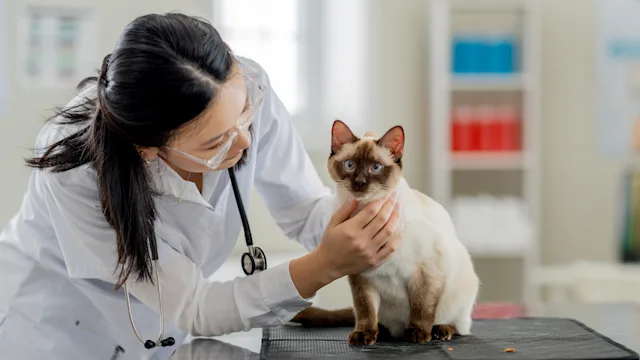
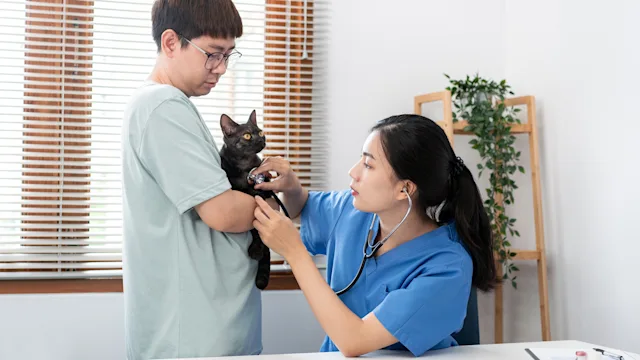
Anxiety related to veterinary visits is a big problem in cats. So big, in fact, that cats are much more likely than dogs not to get veterinarian care. One study showed that a single dose of trazodone before veterinary visits can lower anxiety and improve the welfare of cats.
Trazodone can be prescribed to help cats stay quiet after surgery and remain calm and relaxed when hospitalized. Trazodone can also help in other situations that cause short-term anxiety in cats, including:
Home renovations
Moves
Visitors in their home
What is the dosage of trazodone for cats, and how is it given?
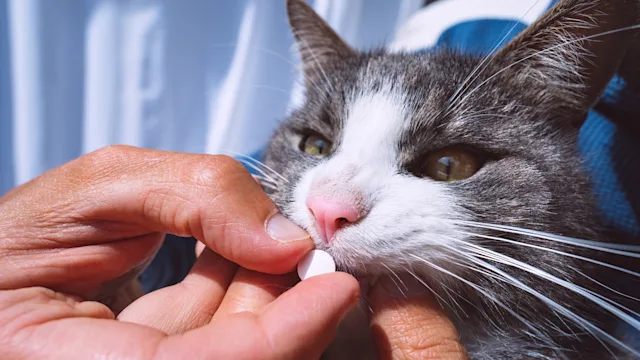
Trazodone for cats is given orally and comes in tablets. In general, trazodone dosages range from 25 mg to 100 mg and are given at least 90 minutes before the stressful event. Your veterinarian will determine the appropriate dosage for your cat.
After trazodone is given, it usually takes 1 hour for it to relieve anxiety. But in some cases, trazodone can take up to 3 hours to work for cats.
If trazodone is being used for sedation, it is given every 8 to 24 hours. In healthy cats, trazodone will stay in their system for 6 to 12 hours when dosed appropriately. It may take longer for the medication to leave a cat’s system if they have liver or kidney disease.
How to give cats trazodone
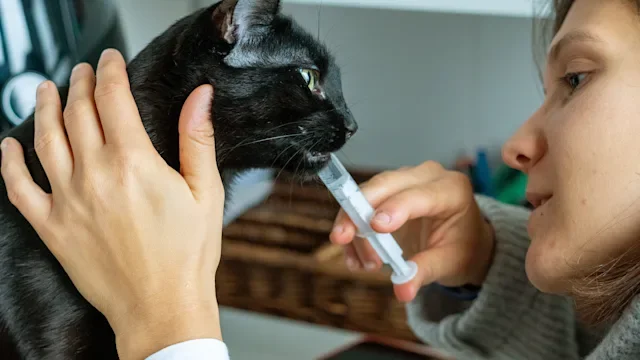
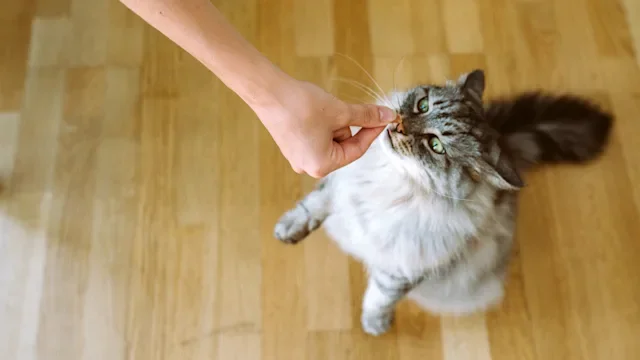
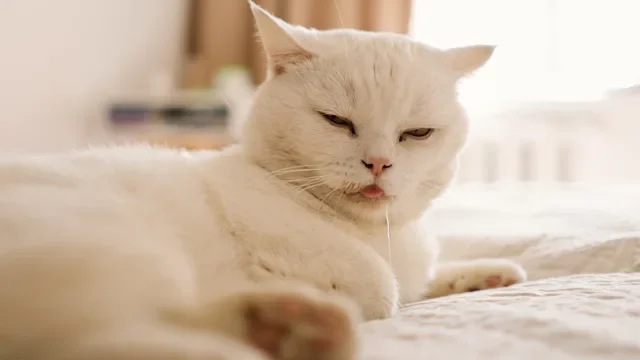
Trazodone tastes bitter, so cats will sometimes gag or drool after you give them the medication. This can be managed by giving trazodone as a tasty treat, liquid, or transdermal lotion or hiding it in a pill pocket.

Read more like this
Explore these related articles, suggested for readers like you.


Some cats get an upset stomach when taking trazodone. If this happens to your cat, give them trazodone with a small meal or treat. If that doesn’t help, call your vet for advice.
Trazodone can be prescribed with gabapentin on occasion to increase sedation and calmness in some cats.
Always follow all label instructions and give the medication as prescribed. If you don’t notice any improvement in your cat’s anxiety, talk to your veterinarian about increasing the dose.
What should you do if your cat misses a dose of trazodone?
If you forget to give your cat a dose of trazodone, give them the next dose as soon as possible. If it is close to the time when your cat’s next dose is due, skip the missed dose. Instead, give the next dose at the regularly scheduled time.
Never give your cat two doses of trazodone less than 6 hours apart.
What are the common side effects of trazodone in cats?
Trazodone will make your cat relaxed and sleepy when it’s given at the appropriate dose. This side effect can be exactly the benefit you’re looking for. Other side effects of trazodone in cats include:
Squinty, slightly watery eyes
Sedation (at high doses)
Gagging or drooling after taking the medication, due to its bitter taste
Nausea
Vomiting
Loss of appetite
Not all cats will have the same response to trazodone. Some cats may develop hyperactive behavior instead of relaxed and calm behavior. Your veterinarian may prescribe a lower trazodone dosage initially to evaluate how your cat responds before increasing the dosage.
What are the most serious risks of trazodone for cats?
In general, trazodone is well tolerated by most cats. Some serious reactions have been reported, however, and include:
Incoordination and wobbly movement when walking
Vomiting
Diarrhea
Changes in appetite
Dilated pupils
Paradoxical behavior (aggression, irritability, excitement)
Racing heart
Panting
If you notice any adverse side effects after giving your cat trazodone, stop giving it to them. Call your veterinarian or a pet poison hotline for advice on what to do next. In most cases, negative reactions are temporary and should go away within a couple of hours.
Does trazodone interact with any other cat medications?
Trazodone can interact with other cat medications. It should be used with caution in cats that are taking any of the following medications:
Monoamine oxidase inhibitors (MAO inhibitors)
Selective serotonin reuptake inhibitors (SSRIs), such as fluoxetine
Azole antifungals, such as ketoconazole or itraconazole
Heart medications
Phenothiazines, such as chlorpromazine
Cisapride
Metoclopramide
Mirtazapine
Blood pressure medications, such as amlodipine or telmisartan
Macrolide antibiotics, such as erythromycin
Ondansetron
Fluoroquinolone antibiotics, such as enrofloxacin or marbofloxacin
Nonsteroidal anti-inflammatory drugs (NSAIDs), such as meloxicam
Other sedatives
If your cat takes any of these medications, let your veterinarian know.
Frequently asked questions
Trazodone will typically stay in a cat’s system for about 6 to 12 hours. It can take anywhere from 1 to 3 hours to take effect after you’ve given your cat the medication.
Yes. You can give your cat trazodone that is made for humans. However, the dosage for your cat will be very different than for a human. Giving your cat too much trazodone can be toxic and lead to an overdose. Don’t ever give your cat a medication like trazodone without first talking to a veterinarian.
Trazodone will typically stay in a cat’s system for about 6 to 12 hours. It can take anywhere from 1 to 3 hours to take effect after you’ve given your cat the medication.
Yes. You can give your cat trazodone that is made for humans. However, the dosage for your cat will be very different than for a human. Giving your cat too much trazodone can be toxic and lead to an overdose. Don’t ever give your cat a medication like trazodone without first talking to a veterinarian.
The bottom line
Trazodone can be used in cats to treat short-term anxiety and stress-related behaviors. Trazodone is considered safe for cats, though it can lead to side effects such as sleepiness or watery eyes. If veterinary visits or other anxiety-inducing situations are stressing your cat out, talk to your veterinarian about using trazodone to help your cat calm down.

Why trust our experts?




References
ASPCApro. (n.d.). Understanding trazodone toxicosis.
Brooks, W. (2023). Trazodone HCL. Veterinary Partner.
Herron, M. (2019). Reducing patient stress through chemistry. World Small Animal Veterinary Association Congress Proceedings.
Nolen, R. S. (2011). Feline-friendly handling guidelines aim for perfect veterinary visits. American Veterinary Medical Association.
Stevens, B. J., et al. (2016). Efficacy of a single dose of trazodone hydrochloride given to cats prior to veterinary visits to reduce signs of transport- and examination-related anxiety. Journal of the American Veterinary Medical Association.
Sueda, K. L. C., et al. (2016). Trazodone. Plumb’s Therapeutics Brief.
Veterinary Information Network. (2019). Trazodone.