Key takeaways:
Levetiracetam is an effective second-line treatment for seizures in cats. But it can also be used as a sole medication in cats who do not tolerate phenobarbital.
Levetiracetam is given to cats 3 times daily, which can be challenging for some pet owners. If this is the case, pet owners should speak with their veterinarian about extended-release formulations and other anti-seizure medications.
Side effects like reduced appetite and lethargy are usually mild in cats taking levetiracetam. Serious adverse effects are rare.
Epilepsy is not as common in cats as it is in dogs, but it’s still among the most common neurological disorders in cats. Seizures are also a common symptom in cats with other neurological conditions.
Cat owners have multiple medication options for managing their cat’s seizures. One of them is levetiracetam (Keppra). Read on to learn more about this medication, including dosage, side effects, and medication interactions.
Levetiracetam for cats at a glance
Common names | Levetiracetam (Keppra, levetiracetam ER) |
What it treats | Seizures, epilepsy |
How it comes (forms) | Tablets, oral solution, injection |
Dosage | Depends on your cat’s weight |
Common side effects | Decreased appetite, ataxia (incoordination), hypersalivation (drooling), lethargy |
Average cost |
What is levetiracetam for cats, and how does it work?
Levetiracetam is an anticonvulsant medication used to treat and prevent seizures in cats. The medication can be used alongside other anticonvulsants, such as phenobarbital. Or it can be used as a sole treatment for cats who are not good candidates for phenobarbital.
Search and compare options
Levetiracetam is commonly prescribed for seizures in cats. But the medication isn’t FDA approved for pets; it’s prescribed off-label.
How does levetiracetam work for cats?
Levetiracetam works by acting on a specific protein (synaptic vesicle protein SV2A) in the central nervous system. This affects the release of chemical signals called neurotransmitters within the brain. Without affecting normal neurons, levetiracetam blocks burst firing. This refers to nerve cells firing signals in rapid succession. By preventing this activity, levetiracetam prevents seizures.
What is levetiracetam used for in cats?
Levetiracetam is used to prevent seizures in cats with epilepsy or other conditions that cause seizures. Levetiracetam is usually a second-line treatment for cats whose seizures aren’t managed well with phenobarbital alone.
Levetiracetam may also be used as a sole therapy in cats who can’t take phenobarbital. This includes cats with liver disease or cats who develop unacceptable side effects with phenobarbital.
Injections of levetiracetam can be used to halt active seizures. But benzodiazepines like midazolam or diazepam are usually used first for this purpose.
What is the dosage of levetiracetam for cats, and how is it given?
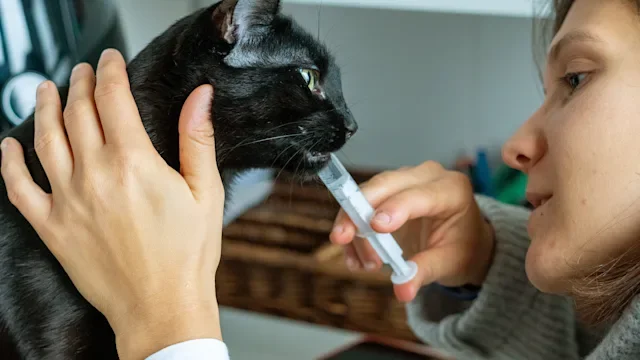
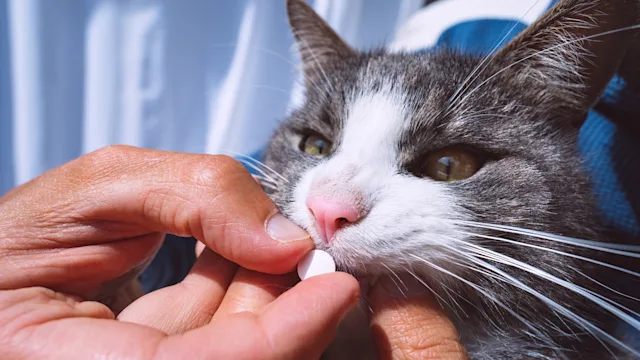
When given at home, levetiracetam is usually given by mouth as a pill. The medication comes in immediate-release (IR) and extended-release (ER) formulations.
Immediate-release levetiracetam for cats
The dosage for IR levetiracetam for cats is 20 mg per kilogram of their body weight by mouth every 8 hours. The dose can be increased in 20 mg per kilogram increments until the medication is effective or your cat has adverse effects. Do not alter your cat’s dosage without asking your veterinarian.
Some pet owners find it difficult to give an anti-seizure medication 3 times daily. And a missed dose can result in breakthrough seizures. Ask your veterinarian about options if you’re concerned you can’t give your cat levetiracetam 3 times a day.
Extended-release levetiracetam for cats
Because levetiracetam ER tablets cannot be split or chewed, this form is not commonly prescribed to cats. But once-daily ER tablets at a dose of 500 mg given by mouth may be effective in preventing seizures in cats.
What are the common side effects of levetiracetam in cats?
Common side effects of levetiracetam in cats include:
Incoordination (ataxia)
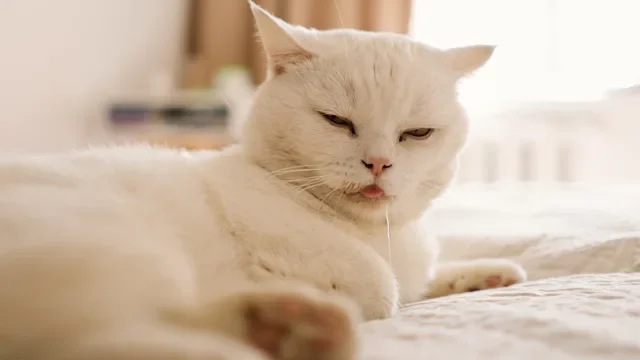
Drooling (hypersalivation)
Lethargy
Contact your veterinarian if your pet develops side effects while taking levetiracetam.
What are the most serious risks of levetiracetam for cats?
Levetiracetam has a high margin of safety, and serious side effects are rare.
But keep in mind that there’s no antidote to a levetiracetam overdose. This means it can be managed only with supportive care, such as IV fluids and anti-nausea medications.
It’s important that pet owners clearly understand whether they are giving an IR or ER formulation. This will help prevent overdoses, as will following your cat’s dosing schedule exactly.
Does levetiracetam interact with other cat medications?
Levetiracetam does not have many known interactions with other cat medications. But it can interact with some medications, including:
Antihistamines, like diphenhydramine
Benzodiazepines, like alprazolam
Opioids, like buprenorphine
These medications depress the central nervous system (CNS). Cats experiencing CNS depression may act dull or lethargic. Contact your veterinarian if you’re concerned that your pet may be experiencing CNS depression.
Giving levetiracetam with phenobarbital appears to increase the needed dose of levetiracetam in dogs. But this may not be the case with cats.
Levetiracetam can also increase the concentration of methotrexate. This increases the risk of methotrexate toxicity.
What should you do if your cat misses a dose of levetiracetam?
If you miss giving your cat a dose of levetiracetam, give the missed dose as soon as you remember. Then adjust your schedule for the recommended dosing intervals, usually 8 hours. Do not double up on the dose of levetiracetam if a dose is missed.
Missing a dose of anti-seizure medication like levetiracetam can cause your cat to have breakthrough seizures. If your cat experiences a seizure because of a missed dose, tell your veterinarian.
The bottom line
Levetiracetam (Keppra) is a safe and effective medication for the prevention of seizures in cats. It’s a good option for cats who cannot take phenobarbital. The medication is usually given 3 times daily, but extended-release formulations are available. Side effects are usually mild, and the medication is well-tolerated by most cats. Pet owners should speak with their veterinarian if they are interested in levetiracetam for their cats.

Why trust our experts?




References
Bailey, K. S., et al. (2008). Levetiracetam as an adjunct to phenobarbital treatment in cats with suspected idiopathic epilepsy. Journal of the American Veterinary Medical Association.
Brooks, W. (2025). Levetiracetam (Keppra, Keppra XR, Kepcet, Kerron, Kevtan, Levitaccord, Levitam). Veterinary Partner.
Charalambous, M., et al. (2024). ACVIM consensus statement on the management of status epilepticus and cluster seizures in dogs and cats. Journal of Veterinary Internal Medicine.
Hazenfratz, M., et al. (2018). Recurrent seizures in cats: 2. Treatment — which antiepileptic drugs are recommended?. Journal of Feline Medicine and Surgery.
Heller, H. B., et al. (2018). Serum levetiracetam concentrations and adverse events after multiple dose extended release levetiracetam administration to healthy cats. Journal of Veterinary Internal Medicine.
Lowrie, M., at al. (2017). Levetiracetam in the management of feline audiogenic reflex seizures: a randomised, controlled, open-label study. Journal of Feline Medicine and Surgery.
Moore, S. A. (2014). Seizures and epilepsy in cats. Veterinary Medicine: Research and Reports.