Key takeaways:
Amantadine has many different uses in cats, but it’s used most often to treat chronic pain.
Cats rarely experience side effects while taking amantadine. But they can occur and may include an upset stomach, vomiting, diarrhea, and gas.
Tell your veterinarian about any medications or supplements you give your cat to reduce the risk of interactions between amantadine and their other medications.
Chronic pain, especially due to causes like arthritis, is common in cats. There aren’t as many medication options to treat pain in cats as there are for dogs. But one option for chronic pain in cats is the medication amantadine.
In this article, we’ll focus on amantadine for cats and its dosage, side effects, and interactions.
Amantadine for cats at a glance
Common names | Amantadine |
What it treats | Chronic pain |
How it comes (forms) | Tablets, capsules, oral liquid |
Dosage | Depends on a cat’s weight |
Common side effects | Nausea, vomiting, soft stools or diarrhea, excessive gas |
Average cost |
What is amantadine for cats, and how does it work?
Amantadine is typically used to treat chronic pain in cats. Chronic pain refers to pain that is long term or ongoing in nature. Causes of chronic pain in cats include:
Arthritis (chronic joint inflammation)
Neuropathic pain (pain associated with the nervous system)
Cancer
Search and compare options
How does amantadine work for cats?
Amantadine works for chronic pain in cats by blocking certain nerve cell receptors.
The feeling of pain comes from your cat’s nervous system. The nervous system is made up of countless nerve cells, located in the brain, spinal cord, and throughout the body. These nerve cells communicate with each other via neurotransmitters (chemical messengers). This communication allows pain signals to travel from a painful area in the body to the brain.
Amantadine blocks nerve cell receptors known as NMDA receptors. By blocking NMDA receptors, amantadine decreases the communication of pain signals in the body. So pain signals don’t reach the brain, preventing or reducing the feeling of pain in cats.
What is the dosage of amantadine for cats, and how is it given?
Your veterinarian will determine the best dosage of amantadine for your cat. The amantadine dosage for your cat will be based on:
The severity of your cat’s pain
Your cat’s overall health
Your cat’s body weight
Veterinarians often start a cat’s amantadine dosage lower and increase it gradually. This will help you find the lowest dosage that provides enough pain relief for your cat.
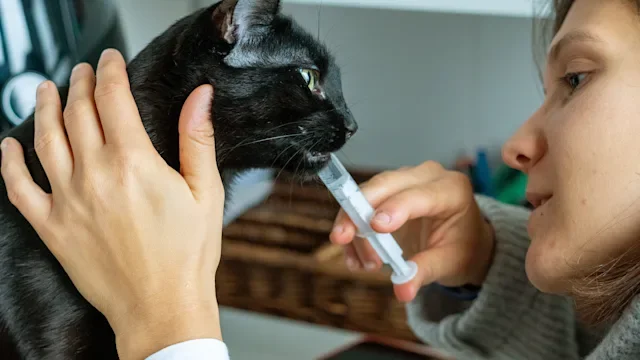
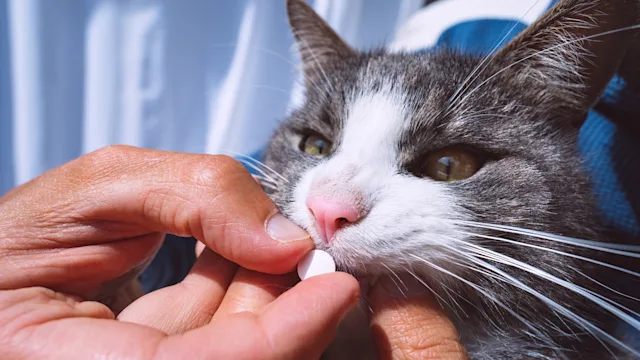
Amantadine is typically given once or twice daily. It can be given with food or on an empty stomach. It’s available as tablets, capsules, or an oral liquid.
Amantadine may be given to cats on its own. But it is often combined with other pain medications, such as gabapentin.
It can take 3 to 4 weeks for amantadine to take full effect in cats. Research does suggest that amantadine improves quality of life in cats with chronic pain.
What should you do if your cat misses a dose of amantadine?
If you forget your cat’s dose of amantadine, give it to them when you remember. After giving amantadine, wait the recommended amount of time before giving the next dose. Never give your pet two doses at once or give extra doses.
If it is almost time for your cat’s next dose, skip the missed dose and resume your cat’s normal medication schedule.
What are the common side effects of amantadine in cats?
The most common side effects of amantadine are digestive effects. These side effects may include:
Nausea
Soft stools
Diarrhea
Excessive gas
If your cat has digestive side effects, try giving the medication with food. Giving amantadine with a full meal may reduce these effects.
If your cat has serious digestive problems, or has side effects even when taking amantadine with food, contact your veterinarian.
What are the most serious risks of amantadine for cats?
Amantadine can have serious risks for cats. At high doses, amantadine can cause neurological issues in some animal species. While this has not been reported in cats, it’s still a possible risk. This is more likely if your cat receives too much amantadine.
Neurological side effects in cats taking amantadine may include:
Trembling
Muscle tremors
Ataxia (drunken, uncoordinated gait)
If your cat has serious side effects from amantadine, contact your veterinarian or your local emergency veterinary hospital immediately.
Does amantadine interact with other cat medications?
Amantadine may interact with a number of different cat medications, including:
Antihistamines
Central nervous system (CNS) stimulants
Quinidine
Selegiline
Thiazide diuretics
Trimethoprim / sulfamethoxazole (Bactrim)
Urine acidifiers
Talk to your veterinarian about your cat’s other medications before starting them on amantadine. This will help reduce the risk of interactions.
The bottom line
Amantadine is a medication that can treat chronic pain in cats. Cats with chronic pain caused by arthritis, a neurological condition, or cancer may see benefits from amantadine. Your cat’s amantadine dosage will be based on their weight and the severity of their pain. Amantadine is available as tablets, capsules, or an oral liquid for cats.
Fortunately, most cats experience few side effects from amantadine. The most common side effect is digestive upset. If your cat shows signs of side effects while taking amantadine, contact your veterinarian for guidance.

Why trust our experts?




References
Brooks, W. (2024). Amantadine. Veterinary Partner.
Grubb, T. (2018). Gabapentin and amantadine for chronic pain: Is your dose right? Today’s Veterinary Practice.
Gruen, M. E., et al. (2022). 2022 AAHA pain management guidelines for dogs and cats. Journal of the American Animal Hospital Association.
Jordan, D. G., et al. (2012). Management of chronic pain in cats. Today’s Veterinary Practice.
Katherman, A. E. (2013). Neuropathic pain in dogs and cats. Veterinary Partner.
Monteiro-Steagall, B. (2016). Adjuvant analgesics II – Gabapentin & amantadine. World Small Animal Veterinary Association Congress Proceedings.
University of Minnesota College of Veterinary Medicine. (2020). Research roundup: Can amantadine act as a pain-reliever in osteoarthritic cats?
Veterinary Information Network. (2020). Amantadine - Full version.