Key takeaways:
Budesonide is a steroid used to treat inflammatory bowel disease and asthma in cats. It has a lower risk of side effects than traditional steroids.
Your veterinarian will determine the best dosage of budesonide for your cat based on their weight. Budesonide is available as tablets, capsules, an oral liquid, or an inhaled spray.
Steroid-related side effects are less common with budesonide, but they can still occur. Common side effects in cats include increased thirst, urination, and appetite.
Budesonide is a steroid that is used in cats to treat chronic inflammatory conditions involving the gastrointestinal and respiratory tracts.
Budesonide provides the anti-inflammatory effects of traditional steroids without the typical side effects.
Here, learn more about what budesonide is, how it works, and what it’s used for in cats.
Search and compare options
Budesonide for cats at a glance
Common name | Budesonide |
What it treats | Inflammatory bowel disease, colitis, asthma |
How it comes (forms) | Capsules, tablets, oral liquid, transdermal gel, inhaled spray, flavored chews |
Dosage | Based on your cat’s weight |
Common side effects | Increased thirst, urination, and appetite |
Average cost |
What is budesonide for cats, and how does it work?
Budesonide is an anti-inflammatory medication used most often to treat inflammatory bowel disease and asthma in cats. It works similarly to traditional steroids. But it usually causes fewer side effects.
Budesonide works by entering a cat’s cells and blocking the production of inflammatory genes, cells, and chemical messengers. It stays in a cat’s gut and respiratory tract rather than spreading around the entire body like traditional steroids.
As a result, this helps reduce the symptoms of inflammatory conditions in cats. But it also reduces the risk of steroid-related side effects in cats who need to take the medication for a long time.
Keep in mind, budesonide doesn’t cure inflammatory conditions. But it can help your cat feel better as long as they keep taking the medication.
Budesonide is prescribed off-label since it isn’t FDA approved for cats. Prescribing medications off-label is common in veterinary medicine.
What is the dosage of budesonide for cats, and how is it given?
The dosage of budesonide for your cat will depend on their weight. A typical starting dosage of budesonide for cats is 0.125 mg per kilogram of body weight once a day. But your veterinarian will tell you how much you need to give your cat.
Over time, your veterinarian will likely try to lower your cat’s dosage. The goal is to improve your cat’s symptoms on the lowest budesonide dosage possible. This helps reduce the risk of steroid-related side effects, especially when your cat takes the medication for a long time.
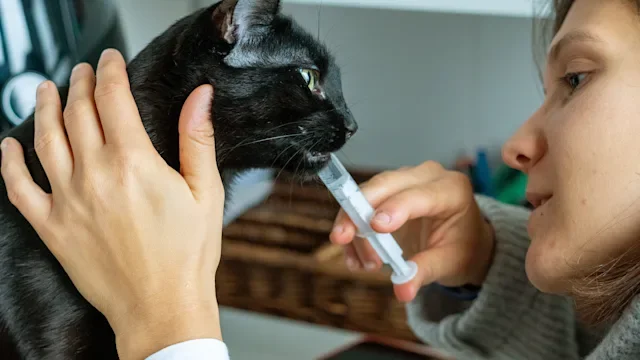
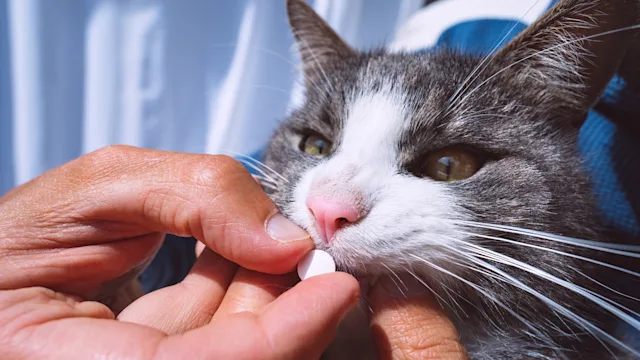
Budesonide is available in several forms for cats, including:
Tablets
Flavored chews
Capsules
Oral liquid
Transdermal gel
Budesonide is also available as an inhalant that’s used with a nebulizer to treat feline asthma.
What should you do if your cat misses a dose of budesonide?
If you miss giving your cat a dose of budesonide, give the next dose as soon as you remember. Then return to your cat’s regular medication schedule.
If it is close to the time that your cat’s next dose is due, skip the missed dose. Then give the next dose at your cat’s regular time. If you’ve missed more than one dose, consult with your veterinarian.
Never double up on budesonide doses to catch up. This can result in serious side effects in your cat, including:
Bloody vomit
Loss of appetite
Black, tarry stools
Low energy
If you suspect that your cat has overdosed on budesonide, take them to an animal hospital or call a pet poison hotline immediately for support.
What are the common side effects of budesonide in cats?
Budesonide is generally well tolerated by most cats with a low risk of negative side effects. But some cats may have side effects similar to the side effects of traditional steroids. These side effects can include:
Increased thirst
Increased urination
Increased appetite
Weight gain
Coat changes
Increased risk of getting bacterial or fungal infections
If you notice these side effects in your cat after they take budesonide, call your veterinarian for advice. Do not stop giving the medication without talking to your vet.
What are the most serious risks of budesonide for cats?
Serious risks can occur if you suddenly stop giving your cat budesonide. This can result in side effects related to adrenal insufficiency. These can include:
Weakness
Fatigue
Fever
Abdominal pain
Collapse
Which cats should not take budesonide?
Cats with the following conditions may not be able to take budesonide:
Digestive ulcers
Active infections
Cataracts
Cats who have recently undergone or are about to undergo surgery may need to wait before starting budesonide.
If your cat is going to be tested for allergies, they should be weaned off budesonide 2 weeks before testing.
Does budesonide interact with other cat medications?
Budesonide does interact with many other medications for cats. In general, budesonide should be avoided if your cat takes any of the following medications:
Antacids, such as cimetidine
Azole antifungal medications, such as fluconazole and ketoconazole
Diltiazem
Erythromycin
Nonsteroidal anti-inflammatory drugs (NSAIDs), including meloxicam
Other steroids, including prednisolone
Tell your veterinarian about all medications and supplements your cat takes. This will help reduce the risk of interactions between budesonide and their other medications. In addition, talk to your veterinarian about the risks of vaccinating a cat who takes budesonide.
The bottom line
Budesonide is most often prescribed to treat inflammatory bowel disease in cats. It’s similar to other steroids, but it works in a way that causes fewer side effects for most cats. The dosage of budesonide for your cat will depend on your cat’s weight. Your veterinarian will tell you how much to give your cat.
Budesonide comes as tablets, capsules, oral liquid, transdermal gel, and flavored chews. Budesonide can also be used to treat feline asthma. Cats who take budesonide for asthma will take the medication as an inhaled spray. Common side effects of budesonide in cats include increased thirst, urination, and appetite. It can also cause weight gain.

Why trust our experts?




References
Barchilon, M., et al. (2023). Breathe easy: Inhalational therapy for feline inflammatory airway disease. Journal of Feline Medicine and Surgery.
Brooks, W. (2025). Budesonide (Entocord, Uceris). Veterinary Partner.
Herrtage, M. E. (2011). Diagnosis and treatment of hypoadrenocorticism. World Small Animal Veterinary Association World Congress Proceedings.
Mansfield, C. (2011). Management of feline inflammatory bowel disease and intestinal neoplasia. World Small Animal Veterinary Association World Congress Proceedings.
Merck Veterinary Manual. (n.d.). Drugs used for inflammatory bowel disease.