



Zoloft for Depression: Important Things to Know Before Taking This Antidepressant
Zoloft is a popular antidepressant, but it’s important to know its potential side effects. Here's what side effects to expect during your first week and beyond.
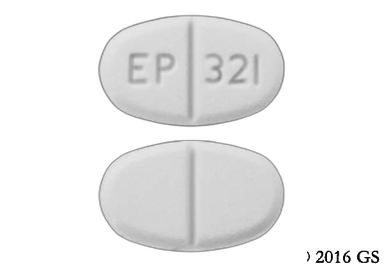
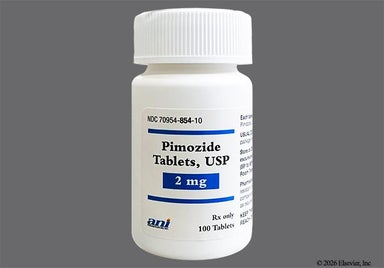
Pimozide is an oral antipsychotic medication used for Tourette syndrome after other standard treatments haven't worked. It's thought to work by lowering dopamine levels in the brain, which helps to reduce tics. Generally, adults take more than one dose per day, while children 12 years and older usually take one dose at bedtime. Side effects include sleepiness, drowsiness, and difficulty moving muscles. Although the brand medication Orap is no longer available, the generic version still is.

Pimozide is an antipsychotic. The exact way the medication works for Tourette syndrome isn't known, but it lowers dopamine levels in the brain. This is believed to help reduce tics, which are sudden, involuntary movements or sounds.
| Common Brands | Orap |
|---|---|
| Drug Class | Antipsychotic |
| Controlled Substance Classification | Not a controlled medication |
| Generic Status | Lower-cost generic available |
| Availability | Prescription only |

The following side effects may get better over time as your body gets used to the medication. Let your healthcare provider know immediately if you continue to experience these symptoms or if they worsen over time.
Adults:
Children:
Contact your healthcare provider immediately if you experience any of the following.
Along with its needed effects, a medicine may cause some unwanted effects. Although not all of these side effects may occur, if they do occur they may need medical attention.
Check with your doctor immediately if any of the following side effects occur:
More common
Difficulty with speaking
dizziness or fainting
fast or irregular heartbeat
lack of facial expression
loss of balance control
mood or behavior changes
restlessness or need to keep moving
shuffling walk
slowed movements
stiffness of the arms and legs
swelling or soreness of the breasts (less common in males)
trembling and shaking of the fingers and hands
unusual secretion of milk (rare in males)
Less common or rare
Difficulty with swallowing
inability to move the eyes
increased blinking or spasms of the eyelid
lip smacking or puckering
menstrual changes
muscle spasms, especially of the face, neck, or back
puffing of the cheeks
rapid or worm-like movements of the tongue
skin rash and itching
sore throat and fever
swelling of the face
uncontrolled chewing movements
uncontrolled movements of the neck, trunk, arms, or legs, including twisting movements
unusual bleeding or bruising
unusual facial expressions or body positions
yellow eyes or skin
Rare
Convulsions (seizures)
difficult or unusually fast breathing
fast heartbeat or irregular pulse
fever (high)
high or low (irregular) blood pressure
increased sweating
loss of bladder control
muscle stiffness (severe)
Get emergency help immediately if any of the following symptoms of overdose occur:
Symptoms of overdose
Coma
dizziness (severe)
muscle trembling, jerking, or stiffness (severe)
troubled breathing (severe)
uncontrolled movements (severe)
Some side effects may occur that usually do not need medical attention. These side effects may go away during treatment as your body adjusts to the medicine. Also, your health care professional may be able to tell you about ways to prevent or reduce some of these side effects. Check with your health care professional if any of the following side effects continue or are bothersome or if you have any questions about them:
More common
Blurred vision or other vision problems
dizziness, lightheadedness, or fainting when getting up from a lying or sitting position
drowsiness
dryness of the mouth
Less common
Decreased sexual ability
headache
loss of appetite and weight
mental depression
tiredness or weakness
Other side effects not listed may also occur in some patients. If you notice any other effects, check with your healthcare professional.
Call your doctor for medical advice about side effects. You may report side effects to the FDA at 1-800-FDA-1088.




Pimozide can cause some serious health issues. This risk may be even higher for certain groups. If this worries you, talk to your doctor or pharmacist about other options.
Antipsychotic medications, such as pimozide, can cause a movement condition called tardive dyskinesia. With tardive dyskinesia, you can have a hard time controlling your movements. Common symptoms include lip smacking, eye blinking, sticking out your tongue, and grimacing. The risk of developing tardive dyskinesia, which could become permanent, is higher if you take antipsychotic medications for a long time or at high doses. Let your prescriber know if you notice any of these signs and symptoms. Sometimes, these movements will go away on their own once you stop the medication.
Neuroleptic malignant syndrome is a rare, but life-threatening condition linked to antipsychotic medications. Symptoms include high fever, fast heart rate, full body stiffness, and confusion. Seek medical attention right away if you notice any of these symptoms. Your prescriber will likely find you another medication that will work better for you.
Pimozide can lower your white blood cell counts. White blood cells help your body fight infections. Your prescriber will monitor your blood cell levels with routine blood tests and might have you stop the medication if your levels are too low. Tell your prescriber if you have symptoms of an infection, such as fever or sore throat, that don't go away.
In clinical studies, changes in heart rhythm were seen on electrocardiogram (ECG or EKG) scans in people taking pimozide for Tourette syndrome. Because of this risk, you'll need to get a scan done before you start pimozide and regularly while taking the medication so your HCP can make sure your heart rhythm is normal.


Although certain medicines should not be used together at all, in other cases two different medicines may be used together even if an interaction might occur. In these cases, your doctor may want to change the dose, or other precautions may be necessary. When you are taking this medicine, it is especially important that your healthcare professional know if you are taking any of the medicines listed below. The following interactions have been selected on the basis of their potential significance and are not necessarily all-inclusive.
Using this medicine with any of the following medicines is not recommended. Your doctor may decide not to treat you with this medication or change some of the other medicines you take.
Using this medicine with any of the following medicines is usually not recommended, but may be required in some cases. If both medicines are prescribed together, your doctor may change the dose or how often you use one or both of the medicines.
Using this medicine with any of the following medicines may cause an increased risk of certain side effects, but using both drugs may be the best treatment for you. If both medicines are prescribed together, your doctor may change the dose or how often you use one or both of the medicines.


Contraindications are specific health conditions or situations in which a person should not take a medication due to safety concerns. If you have any of the following conditions or if any of the following apply to you, let your healthcare provider know because Pimozide will not be safe for you to take.



Prescription savings
Stop paying too much for your prescriptions. Compare prices, get pharmacy coupons, and save up to 80%.Resources
About GoodRx
 Find expert answers to your health questions so you can make the best decisions for yourself and your family.
Health conditions
Medications & treatment
Access & affordability
Well-being
Medication discounts

The brand name, Orap, is discontinued and no longer available. But, the generic version Pimozide is still available with a prescription from your healthcare professional (HCP).
It's possible for Pimozide to cause blood pressure changes. Make sure to tell your prescriber if you're taking blood-pressure lowering medications or have a history of low blood pressure, they might recommend that you check your blood pressure more regularly as you're taking Pimozide.
While weight gain isn't a common side effect of Pimozide, some people in clinical trials did experience weight changes. Some gained weight, while others lost weight. If this concerns you, have a discussion with your prescriber about ways to maintain a healthy weight while taking this medication.
No. Pimozide is an antipsychotic and Adderall is a stimulant medication and they are used for different things. In fact, stimulant medications like Adderall aren't typically used for Tourette syndrome because they can worsen tics. Speak with your prescriber if you have questions about how both medications compare.
Pimozide is considered a typical antipsychotic, which means it has a stronger effect on dopamine levels compared to atypical antipsychotics. As a result, it may cause more movement-related side effects.
It's probably going to take a few weeks before you notice the effects of Pimozide, but it might take several months for you to feel the full effect. Most studies looked at the effects of the medication after at least a month.
It's best to avoid alcohol while you're taking Pimozide. Pimozide can worsen the effects of alcohol and make you feel very drowsy. Speak with your prescriber if you have more questions about this medication and alcohol.
Taking Pimozide and other antipsychotic medications in the third trimester of pregnancy can be harmful to your unborn baby. Babies might be born with movement problems or withdrawal symptoms. If you're pregnant or planning to become pregnant, discuss with your care teams about your treatment options for Tourette syndrome.
