


What Are Opdivo and Yervoy — and Why Are They Taken Together?
Opdivo and Yervoy treat certain kinds of lung cancer, skin cancer, and more. Learn more about how they’re used, their side effects, and more.
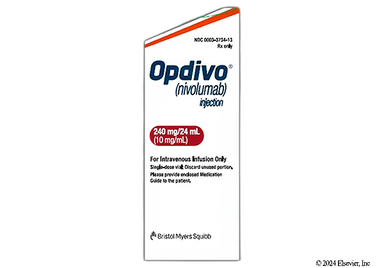
Opdivo (nivolumab) is a type of immunotherapy medication used to treat many types of cancer. They can include melanoma, lung cancer, kidney cancer, colon cancer, and others. Opdivo (nivolumab) is given as infusion through the vein (IV) every few weeks at an infusion center. This medication can cause side effects, like rash, diarrhea, and breathing problems. Depending on the cancer treated, Opdivo (nivolumab) can be used by itself or with other therapies.

Certain types of:
Opdivo (nivolumab) is an immunotherapy medication. In particular, it's called a programmed death-1 inhibitor, or PD-1 inhibitor. It's also called a checkpoint inhibitor.
Opdivo (nivolumab) works by blocking the programmed death-1 (PD-1) pathway. Some cancer cells use the PD-1 pathway to hide from the immune system. When this happens, the immune system can't find and destroy the cancer cells as well. And so, the cancer can grow.
By blocking the PD-1 pathway, Opdivo (nivolumab) helps the immune system find cancer cells and kill them better. This helps stop the cancer from growing.
| Common Brands | Opdivo |
|---|---|
| Drug Class | PD-1 inhibitor |
| Controlled Substance Classification | Not a controlled medication |
| Generic Status | No lower-cost generic available |
| Availability | Prescription only |

The following side effects may get better over time as your body gets used to the medication. Let your healthcare provider know immediately if you continue to experience these symptoms or if they worsen over time.
Note: Side effects came from people with melanoma who took Opdivo (nivolumab) alone. Side effects might be different for people with other cancers, those taking it with other treatments, and children.
Contact your healthcare provider immediately if you experience any of the following.
Side effects that you should report to your care team as soon as possible:
Side effects that usually do not require medical attention (report these to your care team if they continue or are bothersome):




Opdivo (nivolumab) can cause some serious health issues. This risk may be even higher for certain groups. If this worries you, talk to your doctor or pharmacist about other options.
Immunotherapy medications such as Opdivo (nivolumab) can cause immune-related adverse events (irAEs). These side effects happen when your immune system becomes too active. It causes your immune system to start attacking healthy cells, not just cancer cells.
These side effects can happen anywhere in your body and at any time while you're taking Opdivo (nivolumab). They can be mild or very serious.
Some side effects show up on your blood test results. These include liver or kidney problems. That's why it's important to get your blood work done on time, even if you feel fine. This helps your care team look for side effects that you might not notice on your own.
Other side effects can cause symptoms you can feel. Examples include diarrhea, rash, and trouble breathing. Tell your care team right away if you notice these symptoms or anything unusual. Depending on how severe your symptoms are, you might need to stop Opdivo (nivolumab) for a while and take a steroid to help you feel better.
Some people taking Opdivo (nivolumab) can have a reaction during the infusion. Most reactions are mild or moderate. But in rare cases, they can be severe or life-threatening.
The nurse will watch for these reactions while you're getting your infusion. Tell them right away if you start feeling itchy, warm, or nauseous during your infusion. Also let them know if you feel your heart racing or have trouble breathing.
Usually, slowing or pausing the infusion can help manage these infusion reactions so you can keep taking Opdivo (nivolumab). But if the reaction is severe, you might need to stop the medication altogether.
Some people who’ve taken immunotherapy medications like Opdivo (nivolumab) and had a stem cell transplant can have serious problems. This can include liver damage called veno-occlusive disease (VOD). It can also lead to graft-versus-host disease (GVHD).
Before starting Opdivo (nivolumab), tell your oncology care team if you’ve had a stem cell transplant before. Also let them know if you have one planned at any time after you're done with Opdivo (nivolumab). Your care team will check on you regularly for any signs of these problems.
Based on animal studies and the way Opdivo (nivolumab) works, this medication might harm an unborn baby when it’s given during pregnancy.
If you can get pregnant, your oncologist might ask you to take a pregnancy test before you start treatment. This double checks you're not pregnant before starting Opdivo (nivolumab).
Then once you start Opdivo (nivolumab), use effective birth control if you're having sex. Keep using birth control for 5 more months after your last dose. Tell your care team right away if you become pregnant at any time during treatment.

Opdivo (nivolumab) is given as an intravenous (IV) infusion. This means it's given as an infusion through a vein.
Your dose depends on the type of cancer you have and sometimes your weight. Your oncologist will determine the dose for you.
When Opdivo (nivolumab) is given by itself
When Opdivo (nivolumab) is given with other cancer therapies










Prescription savings
Stop paying too much for your prescriptions. Compare prices, get pharmacy coupons, and save up to 80%. Find expert answers to your health questions so you can make the best decisions for yourself and your family.
Health conditions
Medications & treatment
Access & affordability
 Our monthly healthcare membership can help you save thousands on your prescription costs.
Resources

Opdivo is a type of immunotherapy. It works in a different way than traditional chemotherapy. Traditional chemotherapy kills any fast-growing cells in the body, including cancer cells. Immunotherapy helps your own immune system fight cancer. Opdivo helps your immune system find and destroy cancer cells better.
Each dose of Opdivo can stay in your system for about 4 months. This is based on its half-life, or how long it takes for half the medication to clear from your body. If you're worried about how long the medication stays in your system, ask your oncologist.
How long Opdivo side effects last can be different for everyone. It depends on how severe the side effect is and how well you respond to supportive treatment. For example, your oncologist might give you a steroid like prednisone to help. For rashes and itching, moisturizing creams or topical steroids might help. Tell your oncology care team if you have any side effects that bother you. They can find ways to help with side effects.
Yes, Opdivo can sometimes cause thyroid problems. It can make your thyroid too active or not work as well. This is one of the medication's immune-related side effects. Thyroid problems can cause mood changes like feeling nervous, irritable, or tired. They can also make you more sensitive to heat or cold. Sometimes, people don't have these symptoms or they're hard to notice. That's why you'll need regular blood tests to check your thyroid function during treatment. Be sure to get these blood tests when asked. Talk to your oncologist if you have questions about your lab results.
No, Opdivo can't cure cancer. It can't remove all of the cancer. But studies show that it can help slow cancer growth and keep the cancer from getting worse as quickly. Talk to your oncologist about how Opdivo might help with the type of cancer you have.
It's best to limit alcohol while taking Opdivo. Avoiding alcohol completely is even better. Alcohol can raise your risk of cancer. It might weaken your immune system, which could potentially affect how well the medication works. Talk to your oncologist about your drinking habits. If stopping is hard for you, they can offer support and resources to help.
How long you take Opdivo depends on your type of cancer and your treatment plan. It also depends on how well the medication is working, whether you have any side effects, and how severe they are. Some people take Opdivo for a specific amount of time or a set number of doses or cycles. Other people take it with no planned end date and continue as long as it helps and side effects are manageable. Your oncologist will check your symptoms, lab tests, and scans to see how well the medication is working. Talk to your care team about any side effects. Ask your oncologist about how long you'll take Opdivo.
Keytruda (pembrolizumab) and Opdivo are both types of immunotherapy that work in similar ways. They're given as infusions through the vein every few weeks at a medical center. They can also cause similar side effects like rash, diarrhea, and trouble breathing. But Keytruda is generally approved to treat more types of cancers than Opdivo. Both medications can be used alone or with other cancer treatments. But unlike Keytruda, Opdivo is sometimes used with another immunotherapy medication called Yervoy (ipilimumab) for certain cancers. Talk to your oncologist to learn more about how the two compare.
