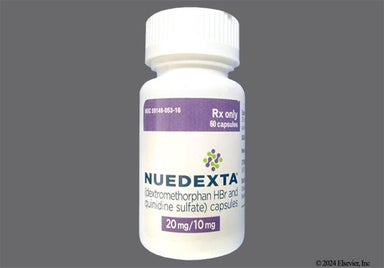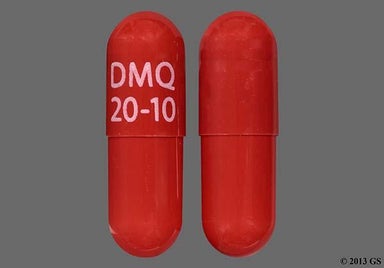
Nuedexta
Nuedexta (dextromethorphan / quinidine) is taken by adults to treat pseudobulbar affect (PBA), a condition where there's uncontrollable laughing or crying. It's a combination medication containing a sigma-1 receptor agonist and N-methyl-D-aspartate (NMDA) antagonist (dextromethorphan) and an antiarrhythmic (quinidine). Nuedexta (dextromethorphan / quinidine) is typically taken by mouth twice a day. Some common side effects of this medication include diarrhea, dizziness, and cough.


What is Nuedexta (dextromethorphan / quinidine)?
What is Nuedexta (dextromethorphan / quinidine) used for?
- Pseudobulbar affect (PBA) in adults
How Nuedexta (dextromethorphan / quinidine) works
Nuedexta (dextromethorphan / quinidine) is a combination of two medications that work together:
- Dextromethorphan is a sigma-1 receptor agonist and NMDA antagonist. It's not completely clear how exactly it works to treat PBA. But it's thought to balance out certain chemicals in the brain that affect mood and behavior.
- Quinidine is an antiarrhythmic. But it's role in Nuedexta is to prevent dextromethorphan from being broken down too quickly in the body.
Drug facts

Side effects of Nuedexta (dextromethorphan / quinidine)
The following side effects may get better over time as your body gets used to the medication. Let your healthcare provider know immediately if you continue to experience these symptoms or if they worsen over time.
Common Side Effects
- Diarrhea (13%)
- Dizziness (10%)
- Cough (5%)
- Vomiting (5%)
- Weakness, lack of energy (5%)
- Swelling in your hands and feet (5%)
Less Common Side Effects
- Bladder infection (UTI)
- Flu
- Passing gas
Nuedexta (dextromethorphan / quinidine) serious side effects
Contact your healthcare provider immediately if you experience any of the following.
- Low platelets: lightheaded, fever, chills, nausea, vomiting, skin that bruises easily, purple or red pinpoint spots on skin, bleeding that's difficult to stop, bleeding in your gums or nose, blood in the urine
- Serotonin syndrome: fast heart rate, dizziness, sweating, flushing, tremor (shakiness), muscle stiffness, muscle twitching or spasms, uncoordinated movement, distress, seizures, distress, hallucinations, coma
- Liver damage: severe stomach pain, yellowing of skin or whites of the eyes, nausea, vomiting, loss of appetite
- Abnormal heart rhythm (QT prolongation): chest pounding, short of breath, chest pain, feeling faint or lightheaded
The following Nuedexta (dextromethorphan / quinidine) side effects have also been reported
Along with its needed effects, a medicine may cause some unwanted effects. Although not all of these side effects may occur, if they do occur they may need medical attention.
Check with your doctor immediately if any of the following side effects occur:
Less common
Bladder pain
bloating or swelling of the face, arms, hands, lower legs, or feet
bloody or cloudy urine
chills
difficult, burning, or painful urination
frequent urge to urinate
general feeling of discomfort or illness
headache
joint pain
loss of appetite
lower back or side pain
muscle aches and pains
rapid weight gain
shivering
sweating
tingling of the hands or feet
trouble sleeping
unusual tiredness or weakness
unusual weight gain or loss
vomiting
Get emergency help immediately if any of the following symptoms of overdose occur:
Symptoms of overdose
Aggressive and violent behavior
agitation
blurred vision
change in color vision
change in consciousness
chest pain or discomfort
confusion
confusion as to time, place, or person
continuing ringing or buzzing or other unexplained noise in the ears
decreased awareness or responsiveness
difficulty seeing at night
dizziness or lightheadedness
dizziness, faintness, or lightheadedness when getting up suddenly from a lying or sitting position
double vision
excitement
fainting
fast, pounding, or irregular heartbeat or pulse
feeling of constant movement of self or surroundings
hallucinations
hearing loss
holding false beliefs that cannot be changed by fact
inability to move the eyes
increased blinking or spasms of the eyelid
increased sensitivity of the eyes to sunlight
irregular or slow heart rate
loss of consciousness
overactive reflexes
poor coordination
restlessness
seeing double
seizures
sensation of spinning
severe sleepiness
shakiness and unsteady walk
shivering
shortness of breath
sticking out of tongue
sweating
talking or acting with excitement you cannot control
trembling or shaking
trouble with breathing, speaking, or swallowing
twitching
uncontrolled eye movements
uncontrolled twisting movements of the neck, trunk, arms, or legs
unsteadiness, trembling, or other problems with muscle control or coordination
unusual excitement, nervousness, or restlessness
unusual facial expressions
Some side effects may occur that usually do not need medical attention. These side effects may go away during treatment as your body adjusts to the medicine. Also, your health care professional may be able to tell you about ways to prevent or reduce some of these side effects. Check with your health care professional if any of the following side effects continue or are bothersome or if you have any questions about them:
Other side effects not listed may also occur in some patients. If you notice any other effects, check with your healthcare professional.
Call your doctor for medical advice about side effects. You may report side effects to the FDA at 1-800-FDA-1088.

Get your GoodRx coupon

Pros and cons of Nuedexta (dextromethorphan / quinidine)
Pros
- Can lower the number of PBA episodes per day by about half
- Taken by mouth
- Can be taken with or without food
Cons
- Taken twice per day
- Hasn't been well-studied in pregnancy or during nursing
- Not a good option for people with certain heart conditions

Pharmacist tips for Nuedexta (dextromethorphan / quinidine)

- Take Nuedexta (dextromethorphan / quinidine) about the same times every day. You can take Nuedexta (dextromethorphan / quinidine) with or without food.
- Some of the more common side effects of Nuedexta (dextromethorphan / quinidine) include diarrhea and vomiting. If you're experiencing these side effects, make sure to drink enough fluids so you don't become dehydrated. In addition, eat smaller meals (that are easy to digest) more often throughout the day, instead of 3 larger meals, to try to ease these symptoms.
- Dizziness is a common side effect Nuedexta (dextromethorphan / quinidine). Don't drive or do anything requires a lot of focus until you know how Nuedexta (dextromethorphan / quinidine) affects you. Also, avoid drinking alcohol while taking this medication because doing so can worsen dizziness.
- Let your provider know you're taking Nuedexta (dextromethorphan / quinidine) before you start any new medications, including over-the-counter (OTC) medications and herbal supplements. This medication can interact with many medications and can't be taken with some, such as quinine (Qualaquin), certain antidepressants (e.g., MAOIs, SSRIs, etc.), and digoxin (Lanoxin).
- Dextromethorphan, is found in many over-the-counter medication for the treatment of cough. Don't take Nuedexta (dextromethorphan / quinidine) with other dextromethorphan-containing medications because this can raise your risk for severe side effects (e.g., serotonin syndrome, dizziness).
- Nuedexta (dextromethorphan / quinidine) hasn't been well-studied in pregnancy or during breastfeeding. But animal studies suggest it can harm babies if taken by mothers during pregnancy. If you're pregnant, thinking of becoming pregnant, or are breastfeeding, talk to your provider about your options for PBA.

Common questions about Nuedexta (dextromethorphan / quinidine)
No, Nuedexta (dextromethorphan / quinidine) isn't an antipsychotic medication; it's a combination medication that has dextromethorphan (sigma-1 receptor agonist and NMDA receptor antagonist) and quinidine (an antiarrhythmic).
No, Nuedexta (dextromethorphan / quinidine) isn't a controlled substance.
No, don't crush or open the Nuedexta (dextromethorphan / quinidine) capsules. The manufacturer of Nuedexta (dextromethorphan / quinidine) doesn't give instructions for opening or crushing the capsules. Doing so can damage the medication, cause side effects, or make it not work as well for you. If you're having trouble swallowing the Nuedexta (dextromethorphan / quinidine) capsules, talk to your provider.
Don't stop taking Nuedexta (dextromethorphan / quinidine) without talking to your provider first because doing so can cause your PBA symptoms to come back. But if you need to stop taking Nuedexta (dextromethorphan / quinidine), it's unlikely that your provider will need to lower your dose slowly over time as this medication isn't known to cause withdrawal symptoms.
No, Nuedexta (dextromethorphan / quinidine) doesn't typically cause weight gain or weight loss. Contact your provider if you notice significant changes in weight while taking Nuedexta (dextromethorphan / quinidine).
You might notice less crying or laughing episodes after about 2 weeks of treatment with Nuedexta (dextromethorphan / quinidine). But some people will need to take it longer to see a more noticeable improvement. Nuedexta (dextromethorphan / quinidine) takes time to work and different people respond to this medication differently. Talk with your provider if you're concerned with how well Nuedexta (dextromethorphan / quinidine) is working for you.

How to save using GoodRx



Risks and warnings for Nuedexta (dextromethorphan / quinidine)
Nuedexta (dextromethorphan / quinidine) can cause some serious health issues. This risk may be even higher for certain groups. If this worries you, talk to your doctor or pharmacist about other options.
Low platelets and allergic reactions
- Risk factors: Previous reaction to quinine or mefloquine
Some people can have life-threatening allergic reactions with quinidine, one of the medications in Nuedexta (dextromethorphan / quinidine). It's more common in anyone who's had a reaction to quinine (Qualaquin) or mefloquine in the past because these medications are similar to quinidine. In some cases, your immune system will start to attack your platelets and cause a dangerously low platelet levels (called thrombocytopenia). Symptoms include feeling lightheaded, fever, chills, nausea, and vomiting. Rarely, having low platelet levels can cause bleeding that's difficult to stop.
In other cases, Nuedexta (dextromethorphan / quinidine) can cause lupus-like symptoms, such as arthritis in multiple joints, rash, and muscle aches. Contact your provider if you experience any of these symptoms because you might need to stop this medication. Make sure you're making regular appointments with your healthcare provider and getting any blood tests done.
Liver damage
Rarely, people taking Nuedexta (dextromethorphan / quinidine) can experience hepatitis (inflammation of the liver) and liver damage. In clinical studies, this side effect was seen typically in the first few weeks and went away on its own when the medication was stopped. Contact your provider if you have symptoms such as fever, tiredness, nausea, stomach pain, or yellowing of your eyes and skin.
Life-threatening abnormal heart rhythm
- Risk factors: Low blood potassium or magnesium levels | Older age | Heart rhythm or other heart problems | Family history of long QT syndrome | Taking other medications that cause QT prolongation | Taking high doses of Nuedexta (dextromethorphan / quinidine)
Nuedexta (dextromethorphan / quinidine) can affect the time it takes for your heart to pump and then relax. This is known as QT prolongation. Your risk for QT prolongation is higher if you have certain factors, including abnormal electrolyte levels and heart rhythm problems. Your risk is also higher if you're taking other medications that cause heart rhythm problems, such as amiodarone (Pacerone) and quetiapine (Seroquel), among others. If you're at higher risk for heart rhythm problems, your provider will likely check your heart rhythm at the beginning of treatment. If you feel your chest pounding, have shortness of breath, have chest pain, or feel faint or lightheaded while taking Nuedexta (dextromethorphan / quinidine), call 911 right away.
Dizziness
- Risk factors: Difficulty walking or history of falls
Nuedexta (dextromethorphan / quinidine) can make you feel dizzy. Take care to lower your risk of falling, especially if you have a history of falls. Some examples include avoiding alcohol while you're taking Nuedexta (dextromethorphan / quinidine) and standing up slowly from a seated position.
Serotonin syndrome
- Risk factors: Taking monoamine oxidase inhibitors (MAOI) 14 days before starting Nuedexta (dextromethorphan / quinidine) | Taking other medications that raise serotonin levels in your brain
Serotonin syndrome is a rare, but potentially life-threatening condition where there's too much serotonin in the brain. Serotonin is one of the chemicals in your brain responsible for your mood. Your risk for this condition goes up if you use Nuedexta (dextromethorphan / quinidine) with other medications that affect serotonin levels, such as antidepressants (e.g., sertraline (Zoloft), duloxetine (Cymbalta)), MAOIs (e.g., phenelzine (Nardil)), lithium, and certain migraine medications (e.g., sumatriptan (Imitrex)). Make sure your provider knows about all the medications you take (including over-the-counter medications and supplements) before starting Nuedexta (dextromethorphan / quinidine) so they can check that your medications are safe for you. Symptoms of serotonin syndrome include fast heart rate, sweating, muscle stiffness or spasms, high fever, and confusion. Get medical help right away if you have any of these symptoms.

Nuedexta (dextromethorphan / quinidine) dosage
 Capsule
| Dosage | Quantity | Price as low as | Price per unit |
|---|---|---|---|
| 20mg/10mg | 60 capsules | $0.00 | $0.00 |
Typical dosage for Nuedexta (dextromethorphan / quinidine)
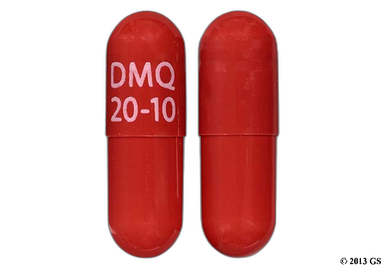
Each Nuedexta (dextromethorphan / quinidine) capsule contains 20 mg of dextromethorphan and 10 mg of quinidine.
- Adults: The typical starting dose is 1 capsule by mouth once a day for 7 days. Then on day 8, the dose is 1 capsule by mouth every 12 hours.

Interactions between Nuedexta (dextromethorphan / quinidine) and other drugs
Although certain medicines should not be used together at all, in other cases two different medicines may be used together even if an interaction might occur. In these cases, your doctor may want to change the dose, or other precautions may be necessary. When you are taking this medicine, it is especially important that your healthcare professional know if you are taking any of the medicines listed below. The following interactions have been selected on the basis of their potential significance and are not necessarily all-inclusive.
Using this medicine with any of the following medicines is not recommended. Your doctor may decide not to treat you with this medication or change some of the other medicines you take.
- Aurothioglucose
- Bepridil
- Cisapride
- Clorgyline
- Colchicine
- Dronedarone
- Eliglustat
- Fingolimod
- Fluconazole
- Grepafloxacin
- Iproniazid
- Isocarboxazid
- Itraconazole
- Ketoconazole
- Lefamulin
- Levomethadyl
- Mesoridazine
- Mifepristone
- Moclobemide
- Nelfinavir
- Nialamide
- Pargyline
- Phenelzine
- Pimozide
- Piperaquine
- Posaconazole
- Procarbazine
- Rasagiline
- Ritonavir
- Safinamide
- Saquinavir
- Selegiline
- Sparfloxacin
- Terfenadine
- Thioridazine
- Tipranavir
- Toloxatone
- Tranylcypromine
- Vernakalant
- Voriconazole
- Ziprasidone
Using this medicine with any of the following medicines is usually not recommended, but may be required in some cases. If both medicines are prescribed together, your doctor may change the dose or how often you use one or both of the medicines.
- Abametapir
- Acetazolamide
- Afatinib
- Ajmaline
- Alefacept
- Alfentanil
- Alfuzosin
- Almotriptan
- Amiodarone
- Amisulpride
- Amitriptyline
- Amoxapine
- Amphetamine
- Amprenavir
- Anagrelide
- Apomorphine
- Aprindine
- Arbutamine
- Aripiprazole
- Aripiprazole Lauroxil
- Arsenic Trioxide
- Artemether
- Asenapine
- Astemizole
- Atazanavir
- Atracurium
- Azithromycin
- Bedaquiline
- Benzhydrocodone
- Benzphetamine
- Berotralstat
- Betrixaban
- Boceprevir
- Brexpiprazole
- Buprenorphine
- Bupropion
- Buserelin
- Butorphanol
- Ceritinib
- Chloral Hydrate
- Chloroquine
- Ciprofloxacin
- Citalopram
- Clarithromycin
- Clofazimine
- Clomipramine
- Clozapine
- Cobicistat
- Codeine
- Conivaptan
- Crizotinib
- Cyclobenzaprine
- Dabigatran Etexilate
- Dabrafenib
- Darunavir
- Dasabuvir
- Dasatinib
- Decamethonium
- Degarelix
- Delamanid
- Delavirdine
- Desipramine
- Deslorelin
- Desvenlafaxine
- Deutetrabenazine
- Dextroamphetamine
- Digitoxin
- Digoxin
- Dihydrocodeine
- Disopyramide
- Dofetilide
- Dolasetron
- Domperidone
- Donepezil
- Doxepin
- Doxorubicin
- Doxorubicin Hydrochloride Liposome
- Droperidol
- Duloxetine
- Edoxaban
- Efavirenz
- Eluxadoline
- Encorafenib
- Enflurane
- Entrectinib
- Enzalutamide
- Erdafitinib
- Erythromycin
- Escitalopram
- Etravirine
- Fenfluramine
- Fentanyl
- Flecainide
- Fluoxetine
- Fluvoxamine
- Formoterol
- Fosamprenavir
- Foscarnet
- Fosnetupitant
- Fostemsavir
- Gatifloxacin
- Gemifloxacin
- Givosiran
- Glasdegib
- Gonadorelin
- Goserelin
- Granisetron
- Halofantrine
- Haloperidol
- Halothane
- Histrelin
- Hydrocodone
- Hydromorphone
- Hydroquinidine
- Hydroxychloroquine
- Hydroxytryptophan
- Hydroxyzine
- Ibutilide
- Imipramine
- Infliximab
- Inotuzumab Ozogamicin
- Isavuconazonium Sulfate
- Isoflurane
- Isradipine
- Ivabradine
- Ivosidenib
- Lacosamide
- Lanreotide
- Lapatinib
- Lasmiditan
- Lenvatinib
- Levofloxacin
- Levomilnacipran
- Levorphanol
- Lidocaine
- Lidoflazine
- Linezolid
- Lisdexamfetamine
- Lithium
- Lofexidine
- Lopinavir
- Lorcainide
- Lorcaserin
- Lorlatinib
- Lumacaftor
- Lumefantrine
- Macimorelin
- Mefloquine
- Memantine
- Meperidine
- Metaxalone
- Methadone
- Methamphetamine
- Methylene Blue
- Metoclopramide
- Metronidazole
- Mexiletine
- Milnacipran
- Mirtazapine
- Morphine
- Morphine Sulfate Liposome
- Moxifloxacin
- Nafarelin
- Nalbuphine
- Nalidixic Acid
- Nebivolol
- Netupitant
- Nilotinib
- Norfloxacin
- Nortriptyline
- Octreotide
- Ofloxacin
- Ombitasvir
- Ondansetron
- Osilodrostat
- Osimertinib
- Oxaliplatin
- Oxycodone
- Oxymorphone
- Ozanimod
- Paliperidone
- Palonosetron
- Pancuronium
- Panobinostat
- Paritaprevir
- Paroxetine
- Pasireotide
- Pazopanib
- Pentamidine
- Pentazocine
- Pimavanserin
- Pirmenol
- Pitolisant
- Pixantrone
- Ponesimod
- Prilocaine
- Probucol
- Procainamide
- Prochlorperazine
- Propafenone
- Protriptyline
- Quetiapine
- Quinine
- Ranolazine
- Relugolix
- Remifentanil
- Ribociclib
- Rimegepant
- Risperidone
- Rolapitant
- Selpercatinib
- Sertraline
- Sevoflurane
- Sibutramine
- Simeprevir
- Siponimod
- Sodium Phosphate
- Sodium Phosphate, Dibasic
- Sodium Phosphate, Monobasic
- Solifenacin
- Sorafenib
- Sotalol
- Spiramycin
- Succinylcholine
- Sufentanil
- Sulfamethoxazole
- Sulpiride
- Sunitinib
- Tacrolimus
- Tapentadol
- Telaprevir
- Telavancin
- Telithromycin
- Tetrabenazine
- Topotecan
- Toremifene
- Tramadol
- Trazodone
- Triclabendazole
- Trifluoperazine
- Trimethoprim
- Trimipramine
- Triptorelin
- Tubocurarine
- Tucatinib
- Ubrogepant
- Ulipristal
- Valbenazine
- Vandetanib
- Vardenafil
- Vecuronium
- Vemurafenib
- Venetoclax
- Venlafaxine
- Vilazodone
- Vincristine
- Vincristine Sulfate Liposome
- Vinflunine
- Voclosporin
- Vortioxetine
- Voxelotor
- Ziprasidone
- Zolmitriptan
- Zuclopenthixol
Using this medicine with any of the following medicines may cause an increased risk of certain side effects, but using both drugs may be the best treatment for you. If both medicines are prescribed together, your doctor may change the dose or how often you use one or both of the medicines.
- Abarelix
- Abiraterone Acetate
- Amiloride
- Atenolol
- Cimetidine
- Dalfopristin
- Dextromethorphan
- Dicumarol
- Fosphenytoin
- Galantamine
- Haloperidol
- Magaldrate
- Magnesium Carbonate
- Magnesium Hydroxide
- Magnesium Oxide
- Magnesium Trisilicate
- Nifedipine
- Nisoldipine
- Paroxetine
- Phenobarbital
- Phenytoin
- Propranolol
- Quinidine
- Quinupristin
- Rifapentine
- Tolterodine
- Verapamil

How much does Nuedexta (dextromethorphan / quinidine) cost?
$0.00
0
Nuedexta (dextromethorphan / quinidine) contraindications
Contraindications are specific health conditions or situations in which a person should not take a medication due to safety concerns. If you have any of the following conditions or if any of the following apply to you, let your healthcare provider know because Nuedexta (dextromethorphan / quinidine) will not be safe for you to take.
- Taking quinine, quinidine, mefloquine, and any medications that cause QT prolongation
- Currently take or have taken a MAOI within the last 2 weeks
- History of allergic reaction, hepatitis, or low platelets caused by quinidine, quinine, or mefloquine
- Certain heart conditions, including heart failure, QT prolongation, AV block without pacemaker

What are alternatives to Nuedexta (dextromethorphan / quinidine)?

News about Nuedexta (dextromethorphan / quinidine)


Nuedexta (dextromethorphan / quinidine) images