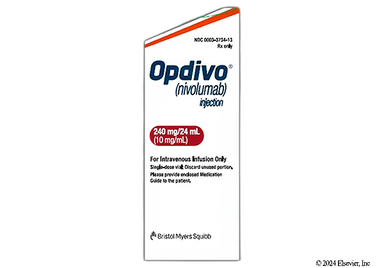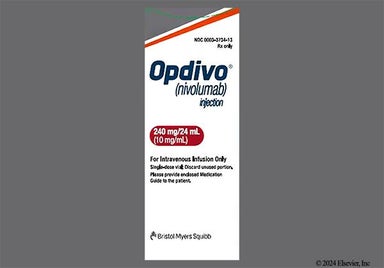
Opdivo Coupon - Opdivo 24ml of 240mg/24ml vial

Opdivo

nivolumab
Used for Bladder Cancer, Esophageal Cancer, Hodgkin Lymphoma, Liver Cancer, Lung Cancer, Melanoma, Renal Cancer, Squamous Cell Carcinoma, Stomach Cancer

Opdivo (nivolumab) is a type of immunotherapy medication used to treat many types of cancer. They can include melanoma, lung cancer, kidney cancer, colon cancer, and others. Opdivo (nivolumab) is given as infusion through the vein (IV) every few weeks at an infusion center. This medication can cause side effects, like rash, diarrhea, and breathing problems. Depending on the cancer treated, Opdivo (nivolumab) can be used by itself or with other therapies.

Reviewed by:Last reviewed on December 3, 2025
basics-icon

What is Opdivo (nivolumab)?

What is Opdivo (nivolumab) used for?

How Opdivo (nivolumab) works

Opdivo (nivolumab) is an immunotherapy medication. In particular, it's called a programmed death-1 inhibitor, or PD-1 inhibitor. It's also called a checkpoint inhibitor.

Opdivo (nivolumab) works by blocking the programmed death-1 (PD-1) pathway. Some cancer cells use the PD-1 pathway to hide from the immune system. When this happens, the immune system can't find and destroy the cancer cells as well. And so, the cancer can grow.

By blocking the PD-1 pathway, Opdivo (nivolumab) helps the immune system find cancer cells and kill them better. This helps stop the cancer from growing.

Drug facts

Common BrandsOpdivo
Drug ClassPD-1 inhibitor
Controlled Substance ClassificationNot a controlled medication
Generic StatusNo lower-cost generic available
AvailabilityPrescription only
side-effects-icon

Side effects of Opdivo (nivolumab)

The following side effects may get better over time as your body gets used to the medication. Let your healthcare provider know immediately if you continue to experience these symptoms or if they worsen over time.

Common Side Effects

Less Common Side Effects

Note: Side effects came from people with melanoma who took Opdivo (nivolumab) alone. Side effects might be different for people with other cancers, those taking it with other treatments, and children.

Opdivo (nivolumab) serious side effects

Contact your healthcare provider immediately if you experience any of the following.

  • Serious immune-related side effects: rash, blisters, skin peeling, diarrhea, trouble breathing, coughing, chest pain, severe stomach pain, mucus or blood in stool
  • Serious reaction during infusion: chills, fever, itching, fast heartbeat, trouble breathing
When do Opdivo (nivolumab) possible side effects begin and end?
Time passed since treatment started:
H
D
W
M
Rash or itchiness
Diarrhea
Cough
Risk of thyroid problems
Seek immediate medical care if you experience this side effect.
If a line continues to the right, you'll likely keep experiencing this side effect once it starts.

Source: DailyMed

The following Opdivo (nivolumab) side effects have also been reported

Side effects that you should report to your care team as soon as possible:

  • Allergic reactions—skin rash, itching, hives, swelling of the face, lips, tongue, or throat
  • Dry cough, shortness of breath or trouble breathing
  • Eye pain, redness, irritation, or discharge with blurry or decreased vision
  • Heart muscle inflammation—unusual weakness or fatigue, shortness of breath, chest pain, fast or irregular heartbeat, dizziness, swelling of the ankles, feet, or hands
  • Hormone gland problems—headache, sensitivity to light, unusual weakness or fatigue, dizziness, fast or irregular heartbeat, increased sensitivity to cold or heat, excessive sweating, constipation, hair loss, increased thirst or amount of urine, tremors or shaking, irritability
  • Infusion reactions—chest pain, shortness of breath or trouble breathing, feeling faint or lightheaded
  • Kidney injury (glomerulonephritis)—decrease in the amount of urine, red or dark brown urine, foamy or bubbly urine, swelling of the ankles, hands, or feet
  • Liver injury—right upper belly pain, loss of appetite, nausea, light-colored stool, dark yellow or brown urine, yellowing skin or eyes, unusual weakness or fatigue
  • Pain, tingling, or numbness in the hands or feet, muscle weakness, change in vision, confusion or trouble speaking, loss of balance or coordination, trouble walking, seizures
  • Rash, fever, and swollen lymph nodes
  • Redness, blistering, peeling, or loosening of the skin, including inside the mouth
  • Sudden or severe stomach pain, bloody diarrhea, fever, nausea, vomiting

Side effects that usually do not require medical attention (report these to your care team if they continue or are bothersome):

pros-and-cons-icon

Pros and cons of Opdivo (nivolumab)

Pros

  • Less common to have nausea, vomiting, and hair loss than traditional chemotherapy
  • Recommended first-choice treatment for certain people with melanoma and esophageal cancer
  • Given every few weeks

Cons

  • Given as an infusion through the vein that takes at least 30 minutes
  • Might cause immune-related side effects like diarrhea, rash, and lung problems
  • Might need to take breaks from treatment and take a steroid to manage some side effects
pharmacist-tips-icon

Pharmacist tips for Opdivo (nivolumab)

pharmacist
  • Put your Opdivo (nivolumab) infusion appointments into your calendar. Depending on your cancer and treatment plan, your infusions will be once every few weeks. If you miss an appointment, call the clinic as soon as possible to reschedule.
  • Each Opdivo (nivolumab) infusion takes about 30 minutes. But your visit might be longer because you'll need time to get settled. Plan extra time for your appointments, and bring something to do, like a book or an electronic device.
  • Get your lab tests done on time while taking Opdivo (nivolumab). These tests help your oncology care team check for side effects you might not notice very easily. These side effects can include liver, kidney, or thyroid problems.
  • Tell your oncology care team right away if you have any immune-related side effects while taking Opdivo (nivolumab). These can include rash, itching, trouble breathing, coughing, or diarrhea. You might need extra medical care to help manage these symptoms.
  • Don’t take any over-the-counter (OTC) medications for Opdivo (nivolumab) side effects without talking to your oncology care team first. OTC medications, like loperamide (Imodium A-D) for diarrhea, might not be enough to help. You might need a steroid or other supportive treatments to help you feel better.
  • If you need to take a steroid for a few weeks to help with side effects, be sure to follow your prescriber's directions. Don't stop taking it suddenly because it could cause stomach cramps and body aches. Your prescriber will help you slowly lower the dose so you can stop the steroid safely.
  • It's not common, but some people might have a reaction during their Opdivo (nivolumab) infusion. Tell your nurse right away if you have chills, flushing, trouble breathing, or itching. Your care team can treat the reaction quickly and slow the infusion if needed.
  • If you can get pregnant, use reliable birth control while taking Opdivo (nivolumab). Keep using birth control for 5 months after your last infusion of the medication. Opdivo (nivolumab) can harm an unborn baby. Tell your oncology care team right away if you become pregnant during treatment.
  • Don’t breastfeed while taking Opdivo (nivolumab) and for 5 months after your last infusion. It's not known if the medication can pass into breast milk. But if it can, there's a potential risk that it can cause side effects in your baby. Talk to your oncologist or a lactation consultant about safer feeding options.
faq-icon

Common questions about Opdivo (nivolumab)

Opdivo (nivolumab) is a type of immunotherapy. It works in a different way than traditional chemotherapy. Traditional chemotherapy kills any fast-growing cells in the body, including cancer cells. Immunotherapy helps your own immune system fight cancer. Opdivo (nivolumab) helps your immune system find and destroy cancer cells better.

Each dose of Opdivo (nivolumab) can stay in your system for about 4 months. This is based on its half-life, or how long it takes for half the medication to clear from your body. If you're worried about how long the medication stays in your system, ask your oncologist.

How long Opdivo (nivolumab) side effects last can be different for everyone. It depends on how severe the side effect is and how well you respond to supportive treatment. For example, your oncologist might give you a steroid like prednisone to help. For rashes and itching, moisturizing creams or topical steroids might help. Tell your oncology care team if you have any side effects that bother you. They can find ways to help with side effects.

Yes, Opdivo (nivolumab) can sometimes cause thyroid problems. It can make your thyroid too active or not work as well. This is one of the medication's immune-related side effects. Thyroid problems can cause mood changes like feeling nervous, irritable, or tired. They can also make you more sensitive to heat or cold. Sometimes, people don't have these symptoms or they're hard to notice. That's why you'll need regular blood tests to check your thyroid function during treatment. Be sure to get these blood tests when asked. Talk to your oncologist if you have questions about your lab results.

No, Opdivo (nivolumab) can't cure cancer. It can't remove all of the cancer. But studies show that it can help slow cancer growth and keep the cancer from getting worse as quickly. Talk to your oncologist about how Opdivo (nivolumab) might help with the type of cancer you have.

It's best to limit alcohol while taking Opdivo (nivolumab). Avoiding alcohol completely is even better. Alcohol can raise your risk of cancer. It might weaken your immune system, which could potentially affect how well the medication works. Talk to your oncologist about your drinking habits. If stopping is hard for you, they can offer support and resources to help.

How long you take Opdivo (nivolumab) depends on your type of cancer and your treatment plan. It also depends on how well the medication is working, whether you have any side effects, and how severe they are. Some people take Opdivo (nivolumab) for a specific amount of time or a set number of doses or cycles. Other people take it with no planned end date and continue as long as it helps and side effects are manageable. Your oncologist will check your symptoms, lab tests, and scans to see how well the medication is working. Talk to your care team about any side effects. Ask your oncologist about how long you'll take Opdivo (nivolumab).

Keytruda (pembrolizumab) and Opdivo (nivolumab) are both types of immunotherapy that work in similar ways. They're given as infusions through the vein every few weeks at a medical center. They can also cause similar side effects like rash, diarrhea, and trouble breathing. But Keytruda is generally approved to treat more types of cancers than Opdivo. Both medications can be used alone or with other cancer treatments. But unlike Keytruda, Opdivo is sometimes used with another immunotherapy medication called Yervoy (ipilimumab) for certain cancers. Talk to your oncologist to learn more about how the two compare.

educational-icon

How to save using GoodRx

Compare Prices
1. Compare PricesSpecify your dosage and quantity to find out exactly how much you can save.
Select your free coupon
2. Select your free couponYou can use the displayed coupon, or compare prices at other pharmacies near you.
Show coupon to your pharmacist
3. Show coupon to your pharmacistPresent your printed or electronic coupon when you pick up your prescription.
Get free couponLearn more
warnings-icon

Risks and warnings for Opdivo (nivolumab)

Opdivo (nivolumab) can cause some serious health issues. This risk may be even higher for certain groups. If this worries you, talk to your doctor or pharmacist about other options.

Immune-related side effects

Immunotherapy medications such as Opdivo (nivolumab) can cause immune-related adverse events (irAEs). These side effects happen when your immune system becomes too active. It causes your immune system to start attacking healthy cells, not just cancer cells.

These side effects can happen anywhere in your body and at any time while you're taking Opdivo (nivolumab). They can be mild or very serious.

Some side effects show up on your blood test results. These include liver or kidney problems. That's why it's important to get your blood work done on time, even if you feel fine. This helps your care team look for side effects that you might not notice on your own.

Other side effects can cause symptoms you can feel. Examples include diarrhea, rash, and trouble breathing. Tell your care team right away if you notice these symptoms or anything unusual. Depending on how severe your symptoms are, you might need to stop Opdivo (nivolumab) for a while and take a steroid to help you feel better.

Infusion-related reactions

Some people taking Opdivo (nivolumab) can have a reaction during the infusion. Most reactions are mild or moderate. But in rare cases, they can be severe or life-threatening.

The nurse will watch for these reactions while you're getting your infusion. Tell them right away if you start feeling itchy, warm, or nauseous during your infusion. Also let them know if you feel your heart racing or have trouble breathing.

Usually, slowing or pausing the infusion can help manage these infusion reactions so you can keep taking Opdivo (nivolumab). But if the reaction is severe, you might need to stop the medication altogether.

Complications from stem cell transplants

  • Risk factors: People who’ve had a stem cell (bone marrow) transplant

Some people who’ve taken immunotherapy medications like Opdivo (nivolumab) and had a stem cell transplant can have serious problems. This can include liver damage called veno-occlusive disease (VOD). It can also lead to graft-versus-host disease (GVHD).

Before starting Opdivo (nivolumab), tell your oncology care team if you’ve had a stem cell transplant before. Also let them know if you have one planned at any time after you're done with Opdivo (nivolumab). Your care team will check on you regularly for any signs of these problems.

Harm to an unborn baby

  • Risk factors: Pregnancy

Based on animal studies and the way Opdivo (nivolumab) works, this medication might harm an unborn baby when it’s given during pregnancy.

If you can get pregnant, your oncologist might ask you to take a pregnancy test before you start treatment. This double checks you're not pregnant before starting Opdivo (nivolumab).

Then once you start Opdivo (nivolumab), use effective birth control if you're having sex. Keep using birth control for 5 more months after your last dose. Tell your care team right away if you become pregnant at any time during treatment.

dosage-icon

Opdivo (nivolumab) dosage

Typical dosage for Opdivo (nivolumab)

Opdivo (nivolumab) is given as an intravenous (IV) infusion. This means it's given as an infusion through a vein.

Your dose depends on the type of cancer you have and sometimes your weight. Your oncologist will determine the dose for you.

  • When Opdivo (nivolumab) is given by itself

    • Most times: The typical dose is 240 mg IV every 2 weeks, or 480 mg IV every 4 weeks.
    • For children 12 years and older weighing less than 88 lbs (melanoma or colorectal cancer only): The dose is based on weight. The typical dose is 3 mg/kg IV every 2 weeks, or 6 mg/kg IV every 4 weeks.
  • When Opdivo (nivolumab) is given with other cancer therapies

    • Your Opdivo (nivolumab) dose depends on your personal treatment plan and your other cancer medications. For example, your dose might be 360 mg, 1 mg/kg, or 3 mg/kg IV every 3 weeks when given with Yervoy (ipilimumab).
alternatives-icon

What are alternatives to Opdivo (nivolumab)?

There are a number of medications that your doctor can prescribe in place of Opdivo (nivolumab). Compare a few possible alternatives below.
Used for:
latest-news-icon

News about Opdivo (nivolumab)

Opdivo and Yervoy treat certain kinds of lung cancer, skin cancer, and more. Learn more about how they’re used, their side effects, and more.
What Are Opdivo and Yervoy — and Why Are They Taken Together?
Opdivo and Yervoy treat certain kinds of lung cancer, skin cancer, and more. Learn more about how they’re used, their side effects, and more.
Learn how long Opdivo (nivolumab) stays in your system, along with other commonly asked questions around side effects, uses, and more.
How Long Does Opdivo Stay In Your System? Plus, 6 More Opdivo FAQs
Learn how long Opdivo (nivolumab) stays in your system, along with other commonly asked questions around side effects, uses, and more.
GoodRx highlights the major difference between immunotherapy and chemotherapy, including side effects, effectiveness, and more.
Immunotherapy vs. Chemotherapy: Differences, Uses, Side Effects, and More
GoodRx highlights the major difference between immunotherapy and chemotherapy, including side effects, effectiveness, and more.
Opdivo is an immunotherapy medication. Read on to learn about Opdivo side effects — including common, rare, and long-term side effects — and how to manage them.
8 Opdivo (and Opdivo Qvantig) Side Effects, and How to Manage Them
Opdivo is an immunotherapy medication. Read on to learn about Opdivo side effects — including common, rare, and long-term side effects — and how to manage them.
Keytruda and Opdivo are immunotherapy drugs approved for cancer treatment. Differences between Keytruda and Opdivo include dosages, active ingredients, and more.
Keytruda vs. Opdivo: 5 Differences You Should Know About
Keytruda and Opdivo are immunotherapy drugs approved for cancer treatment. Differences between Keytruda and Opdivo include dosages, active ingredients, and more.
Several types of medication may be used to treat non-small cell lung cancer (NSCLC). What’s recommended for you depends on the stage of cancer and other factors.
Which Medications Treat Non-Small Cell Lung Cancer?
Several types of medication may be used to treat non-small cell lung cancer (NSCLC). What’s recommended for you depends on the stage of cancer and other factors.
Is it safe to drink alcohol while I’m on immunotherapy like Opdivo and Keytruda to treat cancer? We look at immunotherapies and their risks, side effects, and interactions when alcohol is also consumed.
Can I Drink Alcohol While Receiving Cancer Immunotherapy Like Keytruda?
Is it safe to drink alcohol while I’m on immunotherapy like Opdivo and Keytruda to treat cancer? We look at immunotherapies and their risks, side effects, and interactions when alcohol is also consumed.
Every three months, the FDA reviews and publishes reports of adverse reactions from medications they’ve received through the FDA Adverse Event Reporting
The FDA Is Watching These 14 Drugs for Serious Side Effects
Every three months, the FDA reviews and publishes reports of adverse reactions from medications they’ve received through the FDA Adverse Event Reporting
images-icon

Opdivo (nivolumab) images

yellow - Opdivo 240mg/24mL Solution for Injection
This medicine is Yellow Vial.yellow - Opdivo 240mg/24mL Solution for Injection

Get savings updates for Opdivo (nivolumab)

Receive price alerts, news, and other messages from GoodRx about Opdivo (nivolumab) and other healthcare topics and relevant savings offers.

By providing your email, you consent to receive marketing communications from GoodRx, which may include content and/or data related to men's health, women's health, reproductive care, or sexual health. You agree to the GoodRx Terms of Use and acknowledge the Privacy Policy. You can unsubscribe at any time.

References

Best studies we found

American Cancer Society. (2024). Infusion or immune reactions.

American Cancer Society. (2025). Stem cell or bone marrow transplant.

Centers for Disease Control and Prevention. (2025). Mesothelioma basics.

GoodRx Health has strict sourcing policies and relies on primary sources such as medical organizations, governmental agencies, academic institutions, and peer-reviewed scientific journals. Learn more about how we ensure our content is accurate, thorough, and unbiased by reading our editorial guidelines.

Was this page helpful?

Compare other Esophageal Cancer, Lung Cancer, Squamous Cell Carcinoma, Renal Cancer, Liver Cancer, Stomach Cancer, Bladder Cancer, Melanoma, Hodgkin Lymphoma drugs