



How Much Do Abortion Pills Cost?
Learn more about the average cost of abortion pills, what to expect when it comes to cost, and where to find these medications.
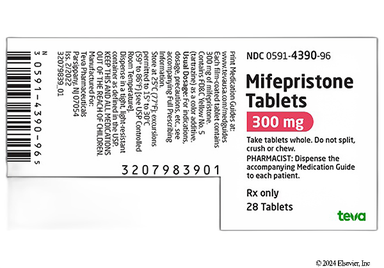
Mifepristone (Mifeprex) is used together with misoprostol (Cytotec) for medical abortion (using prescribed medications to end a pregnancy). These medications are typically used in people no more than 10 weeks pregnant. In some cases, it can be prescribed to people up to 11 weeks pregnant. Mifepristone (Mifeprex) is only available by prescription in certain U.S. states from certain healthcare providers (including some pharmacies). Taking mifepristone (Mifeprex) with misoprostol (Cytotec) can cause side effects like nausea and cramps. Vaginal bleeding is also an expected symptom after you've taken these abortion pills, but a lot of heavy bleeding can be a sign of serious complications. You'll need to follow up with your provider to make sure your pregnancy has ended completely.

Mifepristone (Mifeprex) is an antiprogestin medication. It blocks the effects of progesterone, a natural sex hormone that's important in starting and continuing a pregnancy. By blocking progesterone, mifepristone (Mifeprex) prevents a pregnancy from continuing.
Mifepristone (Mifeprex) is taken along with misoprostol (Cytotec). This additional medication causes your uterus to contract and push the pregnancy tissue out of your body. These two medications work together to end a pregnancy.
| Common Brands | Mifeprex |
|---|---|
| Drug Class | Antiprogestin |
| Controlled Substance Classification | Not a controlled medication |
| Generic Status | Lower-cost generic available |
| Availability | Prescription only |

The following side effects may get better over time as your body gets used to the medication. Let your healthcare provider know immediately if you continue to experience these symptoms or if they worsen over time.
Contact your healthcare provider immediately if you experience any of the following.
Along with its needed effects, a medicine may cause some unwanted effects. Although not all of these side effects may occur, if they do occur they may need medical attention.
Check with your doctor immediately if any of the following side effects occur:
Incidence not known
Chest pain or discomfort
confusion
cough or hoarseness
fast, weak pulse
fever or chills
lower back or side pain
pain or discomfort in the arms, jaw, back, or neck
painful or difficult urination
pale, cold, or clammy skin
shortness of breath
sudden increase in stomach or shoulder pain
sweating
unusual or large amount of vaginal bleeding
Some side effects may occur that usually do not need medical attention. These side effects may go away during treatment as your body adjusts to the medicine. Also, your health care professional may be able to tell you about ways to prevent or reduce some of these side effects. Check with your health care professional if any of the following side effects continue or are bothersome or if you have any questions about them:
More common
Abdominal or stomach pain or uterine cramping
back pain
dizziness
headache
nausea or vomiting
Less common
Acid or sour stomach
belching
fainting or lightheadedness when getting up from a lying or sitting position
flu-like symptoms
headache
increased clear or white vaginal discharge
indigestion
itching of the vagina or genital area
lack or loss of strength
pain during sexual intercourse
pain or tenderness around the eyes and cheekbones
pale skin
shaking chills
stomach discomfort, upset, or pain
stuffy or runny nose
tightness of the chest
trouble sleeping
troubled breathing
troubled breathing, exertional
unusual bleeding or bruising
Other side effects not listed may also occur in some patients. If you notice any other effects, check with your healthcare professional.
Call your doctor for medical advice about side effects. You may report side effects to the FDA at 1-800-FDA-1088.




Mifepristone (Mifeprex) can cause some serious health issues. This risk may be even higher for certain groups. If this worries you, talk to your doctor or pharmacist about other options.
 Rarely, serious and sometimes life-threatening infections have happened after an abortion happens, including after taking mifepristone (Mifeprex). If you have a fever greater than 100.4ºF for more than 4 hours, severe stomach pain, or tenderness in the pelvic area during the days following your medical abortion, contact your healthcare provider or get emergency help right away. Also get medical attention right away if you experience stomach pain or discomfort, weakness, nausea, vomiting, or diarrhea for more than 24 hours after taking misoprostol (Cytotec). These all might be signs of a serious infection.
Vaginal bleeding is normal and expected during a medical abortion. But if it lasts for a long time and is extremely heavy (soaking through two thick, full-size sanitary pads per hour for two consecutive hours), then go to the emergency room right away. This can be a sign of an incomplete abortion, which needs to be immediately resolved to prevent shock.

 Tablet
| Dosage | Quantity | Price as low as | Price per unit |
|---|---|---|---|
| 300mg | 60 tablets | $10,261.74 | $171.03 |

Although certain medicines should not be used together at all, in other cases two different medicines may be used together even if an interaction might occur. In these cases, your doctor may want to change the dose, or other precautions may be necessary. When you are taking this medicine, it is especially important that your healthcare professional know if you are taking any of the medicines listed below. The following interactions have been selected on the basis of their potential significance and are not necessarily all-inclusive.
Using this medicine with any of the following medicines is not recommended. Your doctor may decide not to treat you with this medication or change some of the other medicines you take.
Using this medicine with any of the following medicines is usually not recommended, but may be required in some cases. If both medicines are prescribed together, your doctor may change the dose or how often you use one or both of the medicines.
Using this medicine with any of the following medicines may cause an increased risk of certain side effects, but using both drugs may be the best treatment for you. If both medicines are prescribed together, your doctor may change the dose or how often you use one or both of the medicines.


Contraindications are specific health conditions or situations in which a person should not take a medication due to safety concerns. If you have any of the following conditions or if any of the following apply to you, let your healthcare provider know because Mifepristone (Mifeprex) will not be safe for you to take.









Prescription savings
Stop paying too much for your prescriptions. Compare prices, get pharmacy coupons, and save up to 80%. Find expert answers to your health questions so you can make the best decisions for yourself and your family.
Health conditions
Medications & treatment
Access & affordability
Medication discounts

Mifepristone can stay in your system for a few days to a few weeks. This is an estimated time frame that's based on the half-life of Mifepristone, which is a measure of how long it takes your body to remove the medication from your system. Keep in mind that how fast the body can get rid of the medication from its system can vary from person to person.
After you take Mifepristone and misoprostol (Cytotec), vaginal bleeding and cramping normally happens. You also might feel nauseous, dizzy, or have chills. These side effects typically start within the first several hours of taking misoprostol (Cytotec). More specifically, heavy bleeding (sometimes with clots and tissue) usually occurs 1 to 4 hours after taking misoprostol (Cytotec). This is why it's a good idea to find a quiet and comfortable place before you take the medication. Some symptoms get better in the days following the medical abortion, but bleeding and cramping might continue for a few weeks. In fact, some people have had heavy bleeding for about 2 days. But it's typical to see spotting (light bleeding) for 1 to 2 weeks and up to 1 month or longer. To prepare for your medical abortion, review the timeline of when to expect side effects, how to manage them, and when you should get medical help.
No, Mifepristone is not a morning-after pill (or emergency contraception). Mifepristone is used for medical abortion, or ending a pregnancy that's already confirmed. Morning-after pills, like levonorgestrel (Plan B One-Step) and Ella (ullipristal), are used after you've had unprotected sex to prevent a pregnancy from happening in the first place.
Mifepristone is FDA approved for medical abortion when it's taken together with misoprostol (Cytotec) for pregnancies up to 10 weeks. But the National Abortion Federation (NAF) guidelines state that this combination of medications can also be used off-label to manage certain miscarriages (or pregnancy loss). Speak with your provider to find out more information about possibly using Mifepristone to help with miscarriages.
Mifepristone is approved for medical abortion when it's taken together with misoprostol (Cytotec) for pregnancies up to 10 weeks. In addition, National Abortion Federation (NAF) guidelines recommend taking this combination regimen for medical abortion and don't mention using Mifepristone alone. But the guidelines say that it's possible to use misoprostol (Cytotec) alone in certain situations, though this might cause more bleeding than taking the two medications together. Talk to your healthcare provider about the medical abortion plan that's right for you.
Mifepristone is taken together with misoprostol (Cytotec) to end a pregnancy. Most people will pass the pregnancy tissue and thus end the pregnancy within 2 to 24 hours of taking misoprostol (Cytotec). Before you start the medical abortion process, make sure you're in an appropriate and comfortable place when you take misoprostol (Cytotec), since it can cause cramps and vaginal bleeding. After taking the medications, you must follow up with your healthcare provider within 1 to 2 weeks to make sure the pregnancy has ended completely.
Mifepristone is used with misoprostol (Cytotec) for medical abortions for pregnancies up to 10 weeks. Mifepristone can be taken at any time of day. But it might be more important to consider when you take your misoprostol (Cytotec). You'll want to make sure to take misoprostol (Cytotec) at a time where you can find a quiet and comfortable place to get situated. This is because you can start having side effects, like cramping, nausea, and bleeding, within a few hours of taking that medication. Review the timeline of when you should take Mifepristone and misoprostol (Cytotec), when to expect side effects, and how to manage them to prepare for your medical abortion.
Mifepristone requires a prescription from a healthcare provider. You can get Mifepristone in certain U.S. states from certain clinics, provider's offices, and hospitals. It can also be delivered to your home through mail order from a certified (trained) provider. In January 2023, the FDA allowed Mifepristone to be picked up at or mail-ordered through certified pharmacies. Mifepristone is used with misoprostol (Cytotec), which can be found at many pharmacies with a prescription from your provider. Discuss with your provider about the best way for you to get these two medical abortion medications.
Because of the risks of serious complications, Mifepristone is only available through a restricted program called the Mifepristone Risk Evaluation and Mitigation Strategies (REMS) program. This program makes sure that you, your healthcare provider, and your pharmacy understand the serious risks of Mifepristone. Only certain healthcare providers who are certified under the Mifepristone REMS program are able to prescribe the medication. As of January 2023, only certain pharmacies that are also certified under this REMS program are able to provide Mifepristone. Visit the Mifepristone website for more information.
