


Are OTC Pain Relief Patches Safe to Use? What to Know About the Latest Recall
Learn the latest regarding the recent OTC pain relief patch recall. Find out which medication patch brands and products are recalled and more.
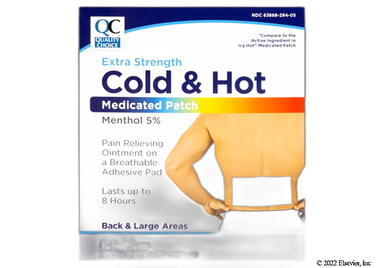
Menthol is a medication that's applied to the skin to help relieve minor aches and pains. It's available over the counter (OTC) as brand-name and lower-cost generic options. Menthol comes in many different forms including patches, gel, cream, spray, and topical liquid. This medication doesn't cause many side effects, but it might not work as well as some other pain relief formulations that contain multiple ingredients.

Minor aches and pains in muscles and joints related to:
Menthol is a topical analgesic. It relieves pain when applied to the skin. Menthol is a naturally-occurring chemical that comes from the peppermint plant. When it's applied to the skin, it acts as a counterirritant. This means that it turns on pain sensors in the skin, which then makes them less sensitive to other pain signals.
| Common Brands | Biofreeze, Bengay Vanishing Scent Gel, IcyHot Medicated Spray, Absorbine Jr. Plus Pain Relieving Liquid |
|---|---|
| Drug Class | Topical analgesic |
| Controlled Substance Classification | Not a controlled medication |
| Generic Status | Lower-cost generic available |
| Availability | Over-the-counter |

The following side effects may get better over time as your body gets used to the medication. Let your healthcare provider know immediately if you continue to experience these symptoms or if they worsen over time.
Contact your healthcare provider immediately if you experience any of the following.



For menthol patches:

Menthol can cause some serious health issues. This risk may be even higher for certain groups. If this worries you, talk to your doctor or pharmacist about other options.
Although rare, menthol can cause serious skin burns. If this happens, it usually occurs within 24 hours of the first use. Sometimes they can be so severe that the event requires hospitalization. Stop using menthol if you experience pain, blistering, or swelling at the site of application and get medical help right away.

 Carton
| Dosage | Quantity | Price as low as | Price per unit |
|---|---|---|---|
| 5 patches of 5% | 6 cartons | $21.62 | $3.60 |
Menthol is available in different strengths and formulations, and it can be used for different conditions. Make sure you follow the instructions on the package for the product you're using. Some examples include:
Menthol 5% patch
Menthol 10.5% spray


Short-term relief of minor aches and pains in the muscles and joints caused by:


Prescription savings
Stop paying too much for your prescriptions. Compare prices, get pharmacy coupons, and save up to 80%. Find expert answers to your health questions so you can make the best decisions for yourself and your family.
Health conditions
Medications & treatment
Access & affordability
 Our monthly healthcare membership can help you save thousands on your prescription costs.
Resources

You should only apply Menthol to healthy skin. Don't apply it to wounds or irritated or damaged skin, and don't bandage the area tightly. This can raise your risk for serious burns. Also avoid getting the medication in or around your eyes, mouth, or genital areas since this can lead to irritation. If you experience severe burning or blistering, stop using Menthol and get medical help right away.
Typically, it's only recommended to use Menthol for pain relief for up to 7 days. If you're still having pain in the same area after 7 days of using Menthol, or if your pain goes away and comes back again a few days later, you should talk to your healthcare provider. There might be something else causing your pain that your provider should check out.
No, you shouldn't use Menthol at the same time as other medicated skin products or topical pain relievers. It's not known if these other products can interfere with how well Menthol works or if it could put you at a higher risk for skin irritation. Speak with your provider if you have questions about using multiple products at the same time.
No, you shouldn't cut Menthol patches to fit a particular area of your body. This can change the way the medication gets released from the patch, which can lead to more side effects. You can find Menthol patches in various sizes, so try to choose one that will best fit the area you're treating.
No, you should take the Menthol patch off at least 1 hour before a shower or bath. Don't apply the patch right after showering or bathing because it won't stick as well.
