


Can You Take Zinc and Magnesium Together?
Yes, you can take zinc and magnesium together. Zinc and magnesium are often combined in supplements, though high doses may need to be taken separately.
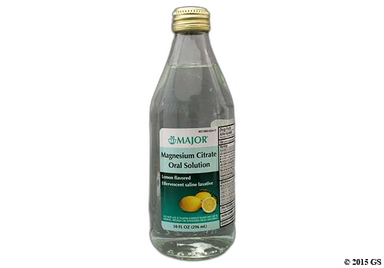
Magnesium citrate is a oral laxative solution that can ease the occasional constipation. It's available over the counter (OTC) and can help produce a bowel movement in 30 minutes to 6 hours. Magnesium citrate might not be a safe option if you have kidney problems or electrolyte levels that are out of balance.

Magnesium citrate is a saline laxative. It helps your intestines hold onto water, making it easier to have a bowel movement.
| Common Brands | Citroma |
|---|---|
| Drug Class | Saline laxative |
| Controlled Substance Classification | Not a controlled medication |
| Generic Status | Lower-cost generic available |
| Availability | Over-the-counter |

The following side effects may get better over time as your body gets used to the medication. Let your healthcare provider know immediately if you continue to experience these symptoms or if they worsen over time.
Along with its needed effects, a medicine may cause some unwanted effects. Although not all of these side effects may occur, if they do occur they may need medical attention.
Check with your doctor immediately if any of the following side effects occur:
Rare
Dizziness or fainting
flushing
irritation and pain at injection site—for intramuscular administration only
muscle paralysis
troubled breathing
Symptoms of overdose (rare in individuals with normal kidney function)
Blurred or double vision
coma
dizziness or fainting
drowsiness (severe)
increased or decreased urination
slow heartbeat
troubled breathing
Some side effects may occur that usually do not need medical attention. These side effects may go away during treatment as your body adjusts to the medicine. Also, your health care professional may be able to tell you about ways to prevent or reduce some of these side effects. Check with your health care professional if any of the following side effects continue or are bothersome or if you have any questions about them:
Less common (with oral magnesium)
Other side effects not listed may also occur in some patients. If you notice any other effects, check with your healthcare professional.
Call your doctor for medical advice about side effects. You may report side effects to the FDA at 1-800-FDA-1088.




Magnesium citrate can cause some serious health issues. This risk may be even higher for certain groups. If this worries you, talk to your doctor or pharmacist about other options.
Stop taking magnesium citrate and call your provider if you have rectal bleeding (blood that comes from your anus) or can't have a bowel movement after taking magnesium citrate. These could be signs of a more serious problem.
Before you start taking magnesium citrate, talk to your provider first if you have stomach pain, nausea, vomiting, or if you've noticed sudden changes in your stool for more than 2 weeks. Magnesium citrate may not be the best medication for you, and your provider should make sure there's not a more serious problem going on.
Also, if you have kidney problems don't take magnesium citrate unless you've first talked with your provider. This medication might not be safe for you if you've kidney problems.

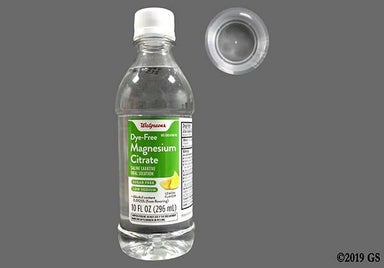
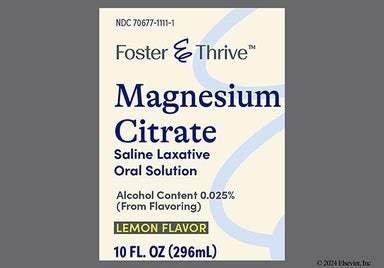
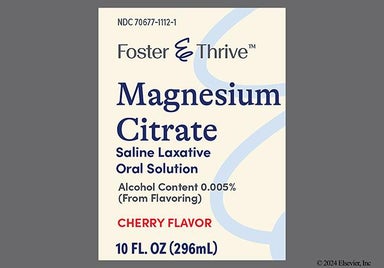
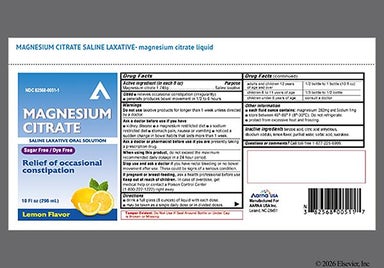
 Bottle of oral solution
| Dosage | Quantity | Price as low as | Price per unit |
|---|---|---|---|
| 296ml | 1 bottle | $10.90 | $10.90 |

Although certain medicines should not be used together at all, in other cases two different medicines may be used together even if an interaction might occur. In these cases, your doctor may want to change the dose, or other precautions may be necessary. When you are taking any of these dietary supplements, it is especially important that your healthcare professional know if you are taking any of the medicines listed below. The following interactions have been selected on the basis of their potential significance and are not necessarily all-inclusive.
Using dietary supplements in this class with any of the following medicines is usually not recommended, but may be required in some cases. If both medicines are prescribed together, your doctor may change the dose or how often you use one or both of the medicines.








Prescription savings
Stop paying too much for your prescriptions. Compare prices, get pharmacy coupons, and save up to 80%.Resources
About GoodRx
 Find expert answers to your health questions so you can make the best decisions for yourself and your family.
Health conditions
Medications & treatment
Access & affordability
Well-being
Medication discounts

Magnesium Citrate is typically available as 10 fluid ounce (fl oz) bottles. The maximum dose for adults and children age 12 years and older is one 10 fl oz bottle of Magnesium Citrate by mouth in 24 hours, either as a single dose or divided into smaller doses and taken throughout the day. Some people might need to drink the whole bottle to produce a bowel movement, but this isn't always the case. If it's your first time taking Magnesium Citrate, start at the lower end of the dosing range (for example, 6.5 fl oz for adults) to see how your body responds. Always ask your provider for guidance if you're not sure how much you should take. If you're giving Magnesium Citrate to your child, follow their provider's instructions on how much to give them.
It can take anywhere between 30 minutes to 6 hours to have a bowel movement after you take Magnesium Citrate. Contact your provider if you still don't have any bowel movement 6 hours after you take this medication. Don't take more than the recommended dose of Magnesium Citrate because doing so can cause side effects, such as stomach pain, nausea, or vomiting. In some cases, your provider might recommend other medications to help you have a bowel movement. Other times, not having a bowel movement can be a sign of a more serious problem, like a gut blockage, and you need more immediate medical attention.
Magnesium Citrate is typically stored at room temperature. Check your product's label to see if it's ok to put it in the fridge. Some people find that it tastes better when it's chilled.
No, you should avoid Magnesium Citrate if you have kidney problems or electrolyte levels that are out of balance. If you have kidney problems, talk with your provider about what medications are safe for you to take to relieve constipation.
Magnesium Citrate isn't FDA-approved as a bowel prep for use before colonoscopy. But sometimes, healthcare providers prescribe Magnesium Citrate off-label (not FDA-approved) in combination with other bowel prep agents in order to make "low-volume solutions" for people who can't tolerate the standard bowel prep solutions. If you're getting a colonoscopy, ask your provider about your options for bowel prep. Make sure to tell them about your medical conditions because Magnesium Citrate should be avoided by people with kidney problems or electrolyte levels that are out of balance. If your provider do prescribe Magnesium Citrate for your colonoscopy, follow the instructions from your provider's office rather than the directions on the medication bottle.
