



Eliquis, Xarelto, and More: What You Should Know About 8 Common Blood Thinner Medications
Anticoagulants help treat and prevent blood clots. Learn about the most common blood thinner medications and how to decide which is right for you.
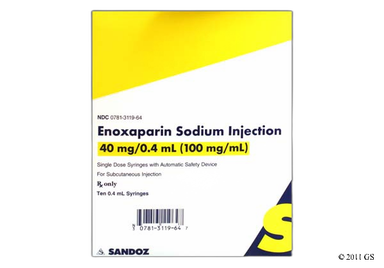
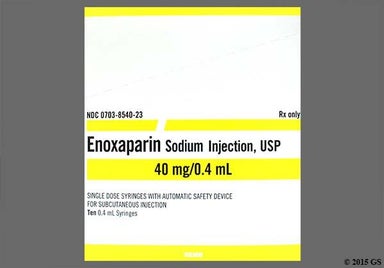
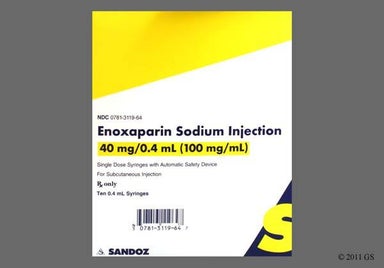
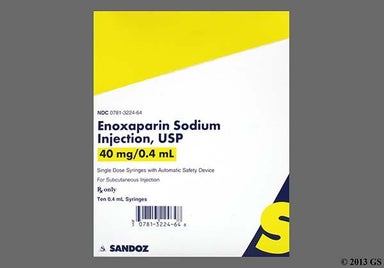
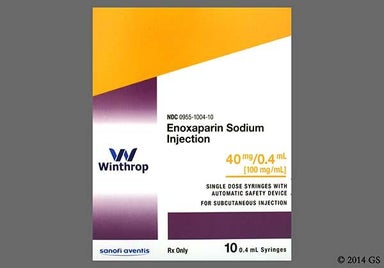
Enoxaparin (Lovenox) is a blood thinner that's used to treat and prevent blood clots and other clotting-related conditions. It's given as an injection under the skin in the stomach. The dosing for enoxaparin (Lovenox) depends mostly on your weight, but also on why you need the medication. Enoxaparin (Lovenox) is a preferred choice for pregnant women, but it might not be the best option if they have prosthetic (artificial) heart valves. Side effects aren't common, but can include bleeding or bruising at the injection site. Enoxaparin (Lovenox) is available as a brand and generic medication.

Enoxaparin (Lovenox) is an anticoagulant (or blood thinner). It blocks certain proteins in your blood that are responsible for forming blood clots. This helps prevent blood clots from getting bigger and new blood clots from forming.
| Common Brands | Lovenox |
|---|---|
| Drug Class | Anticoagulant |
| Controlled Substance Classification | Not a controlled medication |
| Generic Status | Lower-cost generic available |
| Availability | Prescription only |

The following side effects may get better over time as your body gets used to the medication. Let your healthcare provider know immediately if you continue to experience these symptoms or if they worsen over time.
Contact your healthcare provider immediately if you experience any of the following.
Along with its needed effects, a medicine may cause some unwanted effects. Although not all of these side effects may occur, if they do occur they may need medical attention.
Check with your doctor immediately if any of the following side effects occur:
More common
Bleeding gums
coughing up blood
difficulty with breathing or swallowing
dizziness
headache
increased menstrual flow or vaginal bleeding
nosebleeds
paralysis
prolonged bleeding from cuts
red or black, tarry stools
red or dark brown urine
shortness of breath
Less common
Bruising
chest discomfort
collection of blood under the skin
confusion
continuing bleeding or oozing from the nose and/or mouth, or surgical wound
convulsions (seizures)
irritability
lightheadedness
lower back pain
pain or burning while urinating
swelling of the hands or feet
tightness in the chest
uncontrolled bleeding at the site of injection
vomiting of blood or material that looks like coffee grounds
Rare
Back pain
burning, pricking, tickling, or tingling sensation
chills
decreased urine output
dilated neck veins
dizziness or lightheadedness when getting up suddenly from a lying or sitting position
extreme fatigue
fainting
fast or irregular heartbeat
general feeling of discomfort or illness
irregular breathing
leg weakness
problems with bowel or bladder function
skin rash or hives
sudden fainting
swelling of the face, fingers, feet, genitals, mouth, or tongue
thickening of the bronchial secretions
troubled breathing
Incidence not known
Abdominal or stomach pain
deep, dark purple bruise
hives or welts
irregular heartbeat
itching, pain, redness, or swelling
large, flat, blue, or purplish patches in the skin
nausea or vomiting
nervousness
numbness or tingling in the hands, feet, or lips
puffiness or swelling of the eyelids or around the eyes, face, lips, or tongue
redness of the skin
skin rash
unusual tiredness or weakness
weakness or heaviness of the legs
Some side effects may occur that usually do not need medical attention. These side effects may go away during treatment as your body adjusts to the medicine. Also, your health care professional may be able to tell you about ways to prevent or reduce some of these side effects. Check with your health care professional if any of the following side effects continue or are bothersome or if you have any questions about them:
Other side effects not listed may also occur in some patients. If you notice any other effects, check with your healthcare professional.
Call your doctor for medical advice about side effects. You may report side effects to the FDA at 1-800-FDA-1088.



More tips for using enoxaparin (Lovenox) at home:

Enoxaparin (Lovenox) can cause some serious health issues. This risk may be even higher for certain groups. If this worries you, talk to your doctor or pharmacist about other options.
 You're at a greater risk of bleeding around your spinal cord if you're taking enoxaparin (Lovenox) and need to have a lumbar puncture (spinal tap) or an epidural. Sometimes, this spinal bleeding can make you paralyzed. To lower this risk, your provider will tell you when to stop taking enoxaparin (Lovenox) before your planned back surgery or procedure. If it's not possible, make sure to be aware of the signs and symptoms of spinal problems. Call your provider right away if you notice pain along your spine; tingling, a burning sensation, numbness, or weakness in your legs; or are unable to urinate or have bowel movements.
Taking enoxaparin (Lovenox) can raise your risk for bleeds. Your risk is higher if you're also taking other medications that can cause bleeding. If you do have a serious bleed from enoxaparin (Lovenox) use, your provider might be able to give you a medication called protamine to help reverse the effects of enoxaparin (Lovenox). Let your provider know if you have a fall, head injury, or other kinds of physical injury. They might need to check you for bleeding inside your body. Get medical help right away if you have dark or tarry stool, bleeds that are difficult to stop, or any unusual bleeding or bruising.
Enoxaparin (Lovenox) works similarly to heparin. Like heparin, enoxaparin (Lovenox) can cause your platelet counts to go down. In rare cases, a low platelet count can occur along with a life-threatening condition called heparin-induced thrombocytopenia (HIT). HIT happens when the immune system makes antibodies that affect how platelets function. This can cause blood clots to form in various parts of the body and lead to blockages in your veins or arteries, a condition called heparin-induced thrombocytopenia with thrombosis (HITT).
Make sure you keep up with your lab work so your provider can keep track of your platelet counts. If your platelets become very low or if you experience any blood clots during or after treatment, your provider will probably stop enoxaparin (Lovenox) and consider a different blood thinner for you if needed. Get medical help right away if you experience any symptoms of blood clots during or after enoxaparin (Lovenox) treatment.
Pregnant women with prosthetic (artificial) heart valves who are taking enoxaparin (Lovenox) are at higher risk for blood clots that form on the heart valves. This lead sometimes lead to dangerous complications in the mother and baby. If you have a prosthetic heart valve and are pregnant, your provider might require you to get more frequent visits and lab tests to make sure enoxaparin (Lovenox) is working appropriately and safely.
Benzyl alcohol is one of the preservatives found in certain enoxaparin (Lovenox) products. This preservative can cause a rare, but serious and sometimes life-threatening medical condition called gasping syndrome. This condition is more likely to happen in newborns and infants with low birth weight. If you're pregnant or breastfeeding, talk with your provider before receiving enoxaparin (Lovenox), since your baby could potentially be exposed to benzyl alcohol in the womb or through your breast milk. Your provider can make sure you receive a preservative-free formulation of the medication.
Tell your provider if your child experiences any major weight changes while receiving enoxaparin (Lovenox). Get medical attention right away if your child has symptoms, such as gasping, slowed heart rate, clammy skin, dizziness, seizures, slurred speech, or weakness in an arm or leg.

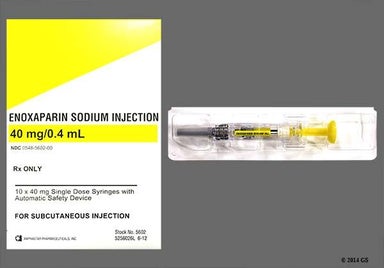
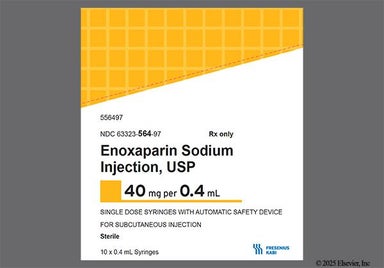
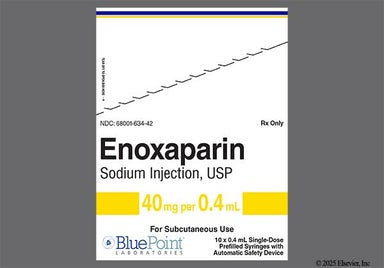
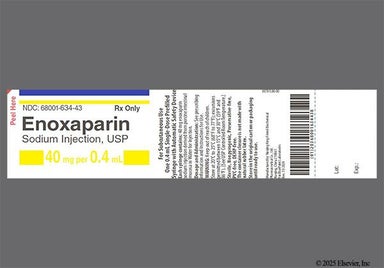
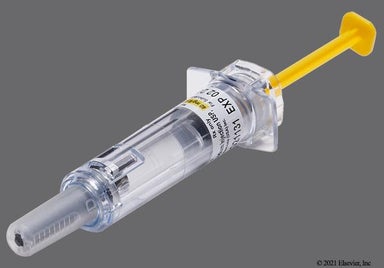
 Syringe
| Dosage | Quantity | Price as low as | Price per unit |
|---|---|---|---|
| 120mg/0.8ml | 8 syringes | $45.56 | $5.70 |
| 150mg/ml | 10 syringes | $103.51 | $10.35 |
| 100mg/ml | 60 syringes | $334.25 | $5.57 |
| 80mg/0.8ml | 8 syringes | $33.30 | $4.16 |
| 60mg/0.6ml | 6 syringes | $45.24 | $7.54 |
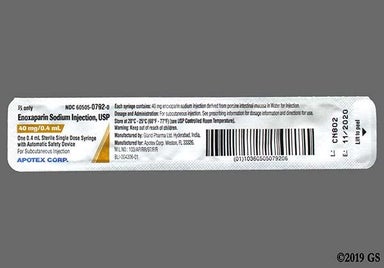
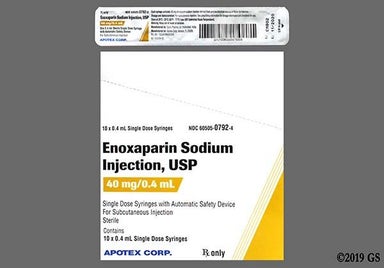
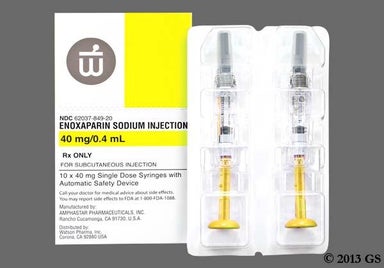
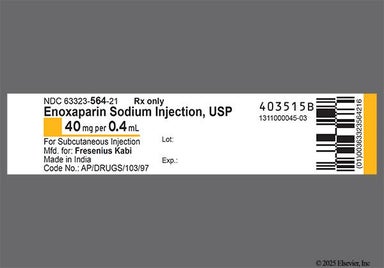
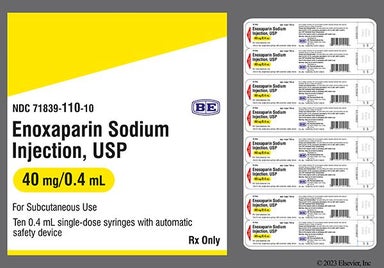
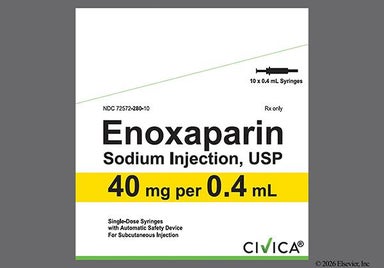
| 40mg/0.4ml | 12 syringes | $45.40 | $3.78 |
| 30mg/0.3ml | 9 syringes | $70.53 | $7.84 |
 Vial
Vial| Dosage | Quantity | Price as low as | Price per unit |
|---|---|---|---|
| 3ml of 300mg | 1 vial | $19.34 | $19.34 |
The dose and length of treatment depends on your age, weight, kidney function, and why you need enoxaparin (Lovenox). The dose might also depend on certain lab test results, including complete blood count (CBC) and those measuring how long it takes for your blood to clot.
In general, enoxaparin (Lovenox) is typically given as an injection under the skin (subcutaneous or SC). Manufacturer dosages for enoxaparin (Lovenox) are listed below.

Although certain medicines should not be used together at all, in other cases two different medicines may be used together even if an interaction might occur. In these cases, your doctor may want to change the dose, or other precautions may be necessary. When you are taking this medicine, it is especially important that your healthcare professional know if you are taking any of the medicines listed below. The following interactions have been selected on the basis of their potential significance and are not necessarily all-inclusive.
Using this medicine with any of the following medicines is not recommended. Your doctor may decide not to treat you with this medication or change some of the other medicines you take.
Using this medicine with any of the following medicines is usually not recommended, but may be required in some cases. If both medicines are prescribed together, your doctor may change the dose or how often you use one or both of the medicines.


Contraindications are specific health conditions or situations in which a person should not take a medication due to safety concerns. If you have any of the following conditions or if any of the following apply to you, let your healthcare provider know because Enoxaparin (Lovenox) will not be safe for you to take.










Prescription savings
Stop paying too much for your prescriptions. Compare prices, get pharmacy coupons, and save up to 80%. Find expert answers to your health questions so you can make the best decisions for yourself and your family.
Health conditions
Medications & treatment
Access & affordability
Medication discounts


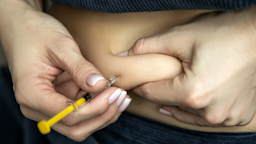
Inject Enoxaparin under the skin of your stomach at least 2 inches from the left or right of your belly button. You should alternate injection sites each time you give yourself a dose to avoid pain or damage to your skin. Never inject Enoxaparin through clothes or into skin that has bruises or scars; your body might not absorb the medication well so it might not work as well to prevent or treat blood clots.
In general, Enoxaparin can stay in your system for up to 35 hours after you stop taking the medication, but it could be longer if you have kidney problems. Keep in mind that this time frame is estimated based on the half-life of Enoxaparin, a measure of how long it takes your body to remove the medication from your system.
Yes, Enoxaparin is a blood thinner (anticoagulant). This means that it prevents your blood from clotting together. As a result, it can raise your risk for bleeding. Stop taking Enoxaparin and get medical help right away if you feel lightheaded, dizzy, you vomit or cough up blood, or you have blood in your stool. These are signs of bleeding that might be happening in your body.
No. "Heparin" typically refers to another medication called unfractionated heparin. Enoxaparin is a type of low-molecular-weight heparin. It has a slightly different chemical structure than unfractionated heparin that allows it to have longer-lasting effects. While both medications are injectable blood thinners that prevent or treat blood clots, they're FDA-approved for slightly different clotting problems. For example, Enoxaparin is approved for heart attacks, but unfractionated heparin is approved for preventing clots in people with atrial fibrillation (AFib). In addition, Enoxaparin is typically given once or twice per day, whereas unfractionated heparin is given more frequently or by continuous infusion. Finally, Enoxaparin doesn't require routine blood tests for monitoring, but unfractionated heparin does. Talk to your provider to learn more about how both medications compare.
Enoxaparin shouldn't be injected into a muscle because doing so can cause a painful bruise. If you've accidentally injected Enoxaparin into a muscle, contact your provider for further instructions.
No, Enoxaparin doesn't typically affect INR. But a recent study showed that it might in people receiving Enoxaparin after certain stomach and intestinal surgeries. The international normalized ratio (INR) is a blood test that tells how well your blood can clot. This test is specific for measuring how well a different blood thinner called warfarin (Coumadin) works, not Enoxaparin. Instead, a blood test that can be used to measure how well Enoxaparin is working is the anti-factor Xa blood test.
No, keep Enoxaparin at room temperature in the original packaging until you're ready to use the medication. Don't place Enoxaparin in the refrigerator or in the freezer.
Yes, Enoxaparin is generally safe to use during pregnancy because it doesn't reach the unborn baby through the placenta. But it shouldn't be used in pregnant women who have a prosthetic heart valve(s) because of the risk for dangerous blood clots on the valve(s). To be safe, make sure to tell your provider if you're pregnant or thinking of becoming pregnant before starting Enoxaparin.
