



The Best Options for Over-the-Counter UTI Treatment
You can relieve symptoms of a urinary tract infection (UTI) without a doctor’s visit by taking OTC medications. See which OTC treatments can help a UTI.
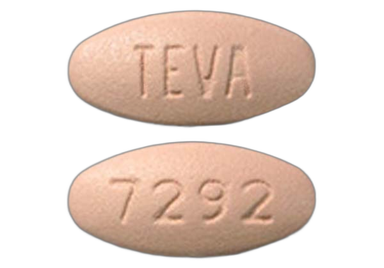
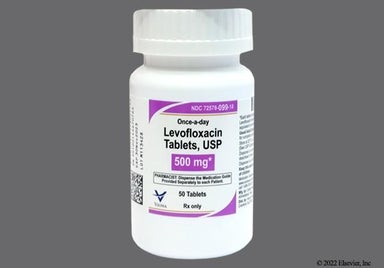
Levofloxacin is a fluoroquinolone antibiotic used to treat certain bacterial infections. They include some skin infections, pneumonia, and urinary tract infections (UTIs). Levofloxacin is often used when other antibiotics aren't a good choice. This is because it can cause serious side effects, like tendon rupture and nerve damage, and has many drug interactions. Levofloxacin comes as a tablet and liquid that are taken by mouth, usually once a day. An injection is also available for hospital use. Common side effects are nausea, diarrhea, and headache.

Adults only
Adults and children
Levofloxacin is a fluoroquinolone (or "quinolone") antibiotic. It works by blocking proteins that bacteria need to grow and repair their genetic material. This kills the bacteria causing the infection.
| Common Brands | Levaquin |
|---|---|
| Drug Class | Fluoroquinolone antibiotic |
| Controlled Substance Classification | Not a controlled medication |
| Generic Status | Lower-cost generic available |
| Availability | Prescription only |

The following side effects may get better over time as your body gets used to the medication. Let your healthcare provider know immediately if you continue to experience these symptoms or if they worsen over time.
Contact your healthcare provider immediately if you experience any of the following.
Along with its needed effects, a medicine may cause some unwanted effects. Although not all of these side effects may occur, if they do occur they may need medical attention.
Check with your doctor immediately if any of the following side effects occur:
More common
Rare
Agitation
blisters
confusion
diarrhea (watery and severe) which may also be bloody
feeling that others can hear your thoughts or control your behavior
pain, inflammation, or swelling in the calves of the legs, shoulders, or hands
redness and swelling of the skin
seeing, hearing, or feeling things that are not there
sensation of burning on the skin
severe mood or mental changes
stomach cramps or pain (severe)
skin rash, itching, or redness
trembling
unusual behavior
Incidence not known
Black, tarry stools
blurred vision
burning, numbness, tingling, or painful sensations
dark urine
difficulty with breathing
difficulty with chewing, talking, or swallowing
drooping eyelids
fainting
fast or irregular heartbeat
general body swelling
hoarseness
joint or muscle pain
muscle cramps, spasms, pain, or stiffness
peeling or loosening of the skin
puffiness or swelling of the eyelids or around the eyes, face, lips, or tongue
seizures
severe dizziness
severe tiredness
tightness in the chest
unsteadiness or awkwardness
unusual bleeding or bruising
unusual tiredness or weakness
vision changes
voice changes
weakness in the arms, hands, legs, or feet
Some side effects may occur that usually do not need medical attention. These side effects may go away during treatment as your body adjusts to the medicine. Also, your health care professional may be able to tell you about ways to prevent or reduce some of these side effects. Check with your health care professional if any of the following side effects continue or are bothersome or if you have any questions about them:
Less common
Change in taste
dizziness
drowsiness
headache
lightheadedness
nervousness
stomach pain or discomfort
trouble sleeping
vaginal itching and discharge
vomiting
Incidence not known
Feeling of warmth or heat
flushing or redness of the skin, especially on the face and neck
sweating
Other side effects not listed may also occur in some patients. If you notice any other effects, check with your healthcare professional.
Call your doctor for medical advice about side effects. You may report side effects to the FDA at 1-800-FDA-1088.



Tips for levofloxacin tablets:
Tips for the levofloxacin liquid:

Levofloxacin can cause some serious health issues. This risk may be even higher for certain groups. If this worries you, talk to your doctor or pharmacist about other options.
 Fluoroquinolone antibiotics like levofloxacin can raise the risk of swelling in your tendons (tendonitis). They can also raise the risk of tears in your tendons. Tendon problems most often happen to the Achilles tendon above your heel, but other tendons can also be affected. Tendon problems can start within hours or days of taking levofloxacin. They can also happen several months after you stop treatment.
Tendon problems can happen at any age, but the risk is higher if you're over 60 years old. It's also higher for people with a kidney, heart, or lung transplant and those taking steroids. Be sure to tell your prescriber if you've had tendon problems in the past so they can check your risk.
Stop taking levofloxacin and rest the affected area if you have tendon pain or swelling. Call your care team right away.
Levofloxacin can raise the risk of peripheral neuropathy. This nerve damage can cause pain, burning, tingling, numbness, or weakness in your arms or legs. It can also change how you feel touch or temperature. These problems can start soon after treatment begins (within hours to weeks). They might not go away in some people.
Before starting levofloxacin, tell your prescriber if you've had nerve problems before. You might need a different type of antibiotic.
If you develop signs of nerve damage during treatment, stop taking levofloxacin and tell your care team right away.
Fluoroquinolone antibiotics like levofloxacin can raise the risk of serious effects on your brain and nervous system. These can include seizures, dizziness, or tremors. It's happened within hours of weeks of starting treatment. Tell your prescriber if you have a brain or nervous system condition, such as epilepsy. They can check if levofloxacin is safe for you. Stop taking levofloxacin and get medical help right away if you have a seizure.
Levofloxacin can also raise the risk of having changes in your mood, thoughts, or behavior. This can sometimes happen within hours to weeks after starting the medication. Examples include anxiety, confusion, hallucinations, trouble sleeping, depression, or thoughts of suicide. Stop taking levofloxacin and get medical help right away if you notice any unusual changes in your mood, thoughts, or behavior.
If you have myasthenia gravis, levofloxacin can make muscle weakness worse. Rarely, this can be serious and affect the muscles you use to breathe, causing trouble breathing. Tell your prescriber if you have myasthenia gravis. They'll likely choose a different type of antibiotic for you.
It's possible for antibiotics like levofloxacin to cause a serious allergic reaction, including anaphylaxis. Signs can include hives, swelling of the face, lips, or tongue, trouble breathing, or passing out. Get medical help right away if you have any of these symptoms.
Levofloxacin can also cause rare but serious skin reactions. One example is Stevens-Johnson syndrome (SJS). Stop taking levofloxacin and get medical help right away if you develop a rash, blisters, peeling skin, or fever.
Rarely, people taking levofloxacin have had serious liver problems, including liver failure. Severe cases have happened within 6 to 14 days after starting treatment.
Get medical help right away if you have stomach pain or swelling, yellow skin or eyes, dark urine, or black, tarry, or bloody stools. These could be signs of liver problems. Your care team might have you stop levofloxacin to prevent more liver damage.
It's rare, but studies have found a higher risk of a bulge or tear in the aorta within 2 months after taking antibiotics like levofloxacin. The aorta is the largest blood vessel in your body. This problem can be life-threatening. And the risk might be higher in older adults, but it's not clear why it could happen.
Tell your prescriber if you've had an aortic aneurysm or other problems with your aorta. Because of this risk, your prescriber might choose a different antibiotic for you.
Call 911 or get medical help right away if you have sudden, severe pain in your chest, back, or stomach that doesn't go away. This can be a sign of a serious problem with your aorta.
Antibiotics like levofloxacin can change the normal bacteria in your gut. This can let harmful bacteria called Clostridioides difficile (C. diff) grow too much and cause a serious infection. This infection can lead to severe diarrhea, even up to 2 months after you stop the antibiotic.
It's important to know the difference between mild diarrhea from levofloxacin and serious diarrhea from C. diff. Signs of a C. diff infection include fever, nausea, severe or watery diarrhea, foul-smelling diarrhea, frequent bowel movements, or bloody stool. Get medical help right away if you have any signs of this infectious diarrhea. This can be a medical emergency and should get treated as soon as possible.
Levofloxacin can cause a serious heart rhythm problem called QT prolongation. This happens when your heart takes longer than usual to reset between beats.
Before starting levofloxacin, tell your prescriber about your health conditions and medications. Your risk can be higher if you have certain heart rhythm problems or abnormal electrolyte levels. It can also be higher if you take other medications that can cause QT prolongation, such as amiodarone (Pacerone). Your prescriber can check if levofloxacin is safe for you.
Call 911 right away if you have a pounding or irregular heartbeat, chest pain, trouble breathing, or severe dizziness. These can be signs of a serious heart rhythm problem.
Rarely, people taking fluoroquinolone antibiotics like levofloxacin have had serious reactions in different parts of the body. These can affect your kidneys, lungs, joints, or blood cells. Reactions can happen after taking several doses of the medication. Some can be severe or life-threatening.
Stop taking levofloxacin and tell your care team right away if you have new or unusual symptoms. These can include yellow skin or eyes, fever, unusual bleeding or bruising, trouble breathing, or new muscle or joint pain.
In studies, some children taking levofloxacin had muscle, bone, or joint problems. This has included joint pain, arthritis, and changes in the pattern they walk. Because of this risk, levofloxacin is usually used in children only when other antibiotics aren't a good choice. Your child's prescriber will decide if levofloxacin is right for them.
Fluoroquinolones, including levofloxacin, can cause changes in your blood sugar. It can make your blood sugar too low or too high. Usually, this can happen if you have diabetes and take diabetes medications. Tell your prescriber if you have diabetes. You might need to check your blood sugar more often while taking levofloxacin.
Watch for symptoms of low blood sugar. These can include feeling shaky, confused, nervous, or very hungry. You also might have a fast heartbeat, sweating, or chills. If this happens, stop taking levofloxacin and get medical help right away. Low blood sugar should be treated right away.
Levofloxacin makes your skin more sensitive to the sun and ultraviolet (UV) light. This means you can get sunburns more easily than usual. It might cause redness, burning, swelling, or blisters on skin exposed to the sun or UV light.
To lower your risk, protect your skin from the sun. Wear sunscreen and clothing that covers your skin when you're outside, even during the winter or on cloudy days. Also, avoid tanning beds and try not to spend too much time in direct sunlight.

 Tablet
| Dosage | Quantity | Price as low as | Price per unit |
|---|---|---|---|
| 250mg | 7 tablets | $13.52 | $1.93 |
| 500mg | 7 tablets | $9.88 | $1.41 |
| 750mg | 7 tablets | $10.45 | $1.49 |
Your levofloxacin dose will depend on different factors, such as the type of infection you have and how serious it is. It will also depend on your kidney function.
Adults only
Adults and children
Levofloxacin is also available as an injection that's given through a vein by a healthcare professional in the hospital or clinic setting.

Although certain medicines should not be used together at all, in other cases two different medicines may be used together even if an interaction might occur. In these cases, your doctor may want to change the dose, or other precautions may be necessary. When you are taking this medicine, it is especially important that your healthcare professional know if you are taking any of the medicines listed below. The following interactions have been selected on the basis of their potential significance and are not necessarily all-inclusive.
Using this medicine with any of the following medicines is not recommended. Your doctor may decide not to treat you with this medication or change some of the other medicines you take.
Using this medicine with any of the following medicines is usually not recommended, but may be required in some cases. If both medicines are prescribed together, your doctor may change the dose or how often you use one or both of the medicines.
Using this medicine with any of the following medicines may cause an increased risk of certain side effects, but using both drugs may be the best treatment for you. If both medicines are prescribed together, your doctor may change the dose or how often you use one or both of the medicines.


Contraindications are specific health conditions or situations in which a person should not take a medication due to safety concerns. If you have any of the following conditions or if any of the following apply to you, let your healthcare provider know because Levofloxacin will not be safe for you to take.










Prescription savings
Stop paying too much for your prescriptions. Compare prices, get pharmacy coupons, and save up to 80%. Find expert answers to your health questions so you can make the best decisions for yourself and your family.
Health conditions
Medications & treatment
Access & affordability
Medication discounts


Levofloxacin can safely treat many bacterial infections. But it also has some rare but serious risks. It has an FDA boxed warning for risks such as tendon problems, nerve damage, and certain effects on the brain and nervous system. Because of these risks, Levofloxacin is sometimes used only when other antibiotics aren't a good choice. Talk to your prescriber if you have questions about the risks of Levofloxacin.
There isn't one way to reverse side effects from Levofloxacin. What to do depends on the side effect and how serious it is. Mild side effects, such as nausea, might get better with simple changes. For example, taking the Levofloxacin tablets with food might help. Keep in mind that the Levofloxacin liquid should be taken on an empty stomach. Serious side effects, such as tendon problems, might require you to stop Levofloxacin and get medical care. Talk to your care team about how to manage any side effects you're having.
Most of Levofloxacin leaves your body within about 2 days after your last dose. It can take longer if you have kidney problems. This estimate is based on the medication's half-life, or how long it takes your body to clear the medication. Ask your prescriber if you have questions about how long Levofloxacin stays in your system.
No, Levofloxacin isn't a penicillin. It's a different type of antibiotic called a fluoroquinolone. These antibiotics work differently. If you have a penicillin allergy, you can usually take Levofloxacin without having the same allergic reaction. Tell your prescriber about allergies to any antibiotics. They can make sure Levofloxacin is safe for you.
Levofloxacin starts fighting your infection soon after you begin treatment. But it can take 1 to 3 days before you start feeling better. Keep taking Levofloxacin for the full amount of time prescribed, even if you feel better. Stopping early can leave some bacteria behind, which can cause your infection to come back and be harder to treat later on. Tell your prescriber if you don't feel better after a few days or if your symptoms get worse.
Ask your prescriber or pharmacist which pain relievers are safe to take with Levofloxacin. Acetaminophen (Tylenol) is generally okay to take with Levofloxacin. There isn't a known interaction between them, but whether it's right for you can depend on your other health conditions. Avoid nonsteroidal anti-inflammatory drugs (NSAIDs), such as ibuprofen (Advil), unless your care team says it's okay. Taking NSAIDs with Levofloxacin can raise the risk of nervous system side effects. This can include severe dizziness, tremors, and in rare cases, seizures.
Yes, you can eat eggs while taking Levofloxacin. Eggs don't have a known interaction with the antibiotic. If you take Levofloxacin tablets, you can take them with or without food. If you take the Levofloxacin liquid, be sure to take it 1 hour before or 2 hours after eating.
For a urinary tract infection (UTI), Levofloxacin is usually taken for 3 to 10 days. Some UTIs only need 3 days of treatment. But if the infection is harder to treat or if there's a high risker of complications, treatment might last 5 to 10 days. Be sure to take Levofloxacin for the full amount of time your prescriber tells you to, even if you feel better before then. This can help make sure your infection is fully treated.
