



How Much Is Kesimpta Without Insurance?
Kesimpta’s cost without insurance can exceed $10,000 a month. Learn about factors that can affect the cost of Kesimpta, along with ways to save.
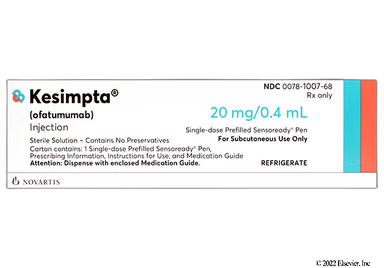
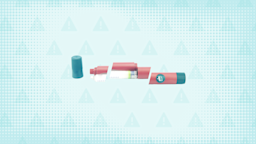
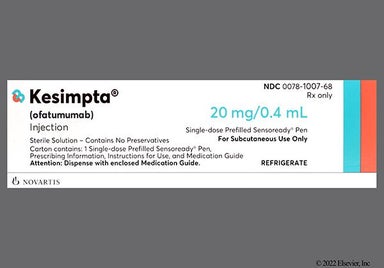
Kesimpta (ofatumumab) is an injectable medication for adults with relapsing forms of multiple sclerosis (MS). It works as a monoclonal antibody to help lessen MS flare-ups that come and go. Kesimpta (ofatumumab) is injected under the skin. You can use the Kesimpta prefilled syringes or Sensoready Pens to inject. After the first 3 weekly injections, you inject the medication once a month. Some common side effects include a higher risk of infections, pain or swelling at the injection site, and headache.

Kesimpta (ofatumumab) is a monoclonal antibody. It's not exactly known how the medication works to help with MS.
But researchers think it attaches to a protein called CD20 found on immune cells in the body. It destroys these immune cells so they can't attack the coverings on your nerve cells by mistake. This might help relieve symptoms of MS.
| Common Brands | Kesimpta |
|---|---|
| Drug Class | Monoclonal antibody |
| Controlled Substance Classification | Not a controlled medication |
| Generic Status | No lower-cost generic available |
| Availability | Prescription only |

The following side effects may get better over time as your body gets used to the medication. Let your healthcare provider know immediately if you continue to experience these symptoms or if they worsen over time.
Contact your healthcare provider immediately if you experience any of the following.
Side effects that you should report to your care team as soon as possible:
Side effects that usually do not require medical attention (report these to your care team if they continue or are bothersome):



How to use Kesimpta (ofatumumab):

Kesimpta (ofatumumab) can cause some serious health issues. This risk may be even higher for certain groups. If this worries you, talk to your doctor or pharmacist about other options.
Kesimpta (ofatumumab) can make it harder for your body to fight germs. This can raise your risk of getting bacterial, viral, or fungal infections. These infections can sometimes be serious or life-threatening.
Before you start Kesimpta (ofatumumab), talk to your prescriber about your medical history. They will check to see if you have hepatitis B. People with this infection have had serious problems while taking Kesimpta (ofatumumab). Your prescriber can check that this medication is safe for you.
Also let your care team know about all the medications you take. It's important to check if you take other medications that can make your immune system weaker. This can raise your risk of infections even higher.
Upper respiratory infections and urinary tract infections are common with Kesimpta (ofatumumab). Call your care team if you think you have an infection. Watch for a fever, chills, a cough, trouble breathing, weakness, and pain when you urinate. If you get sick, your prescriber might tell you to wait until you're better before you continue with your injections.
The Kesimpta (ofatumumab) injection can cause reactions like fever, headache, muscle pain, and chills. Other reactions are itchiness, throat irritation, trouble breathing, dizziness, and fast heart rate. They usually happen within a day of your first injection. But they can also happen after later ones.
Sometimes, these reactions are hard to tell apart from a real allergic reaction. To keep you safe, your care team will help you with your first injection at the medical office or clinic. This is so you can get help fast if the reaction is serious.
If you have any of these symptoms at home, get medical help right away.
Kesimpta (ofatumumab) can lower the levels of certain immunoglobulins (antibodies) in your body. Your prescriber will check your antibody levels with blood tests before and during treatment. They'll keep checking even after you stop until your levels are back to normal. If your antibody levels are too low, immunoglobulin infusions might help bring them up. Your care team can help decide what the next steps are if this happens.
Animal studies show that Kesimpta (ofatumumab) can harm an unborn baby if given during pregnancy. It also has potential to make antibodies not work as well in newborns.
If you can become pregnant, use birth control while using Kesimpta (ofatumumab). Continue birth control for at least 6 months after your last dose of Kesimpta (ofatumumab). If you're pregnant or planning to be, ask your prescriber about safer options for you and your baby. Tell your prescriber right away if you get pregnant.

The typical starting dose is 20 mg injected under the skin once a week for 3 weeks.
Then starting from week 4, the typical maintenance dose is 20 mg injected under the skin once a month.
Inject Kesimpta (ofatumumab) under the skin of your lower stomach or front of your thigh. Someone can also help inject it into your outer upper arm.


Contraindications are specific health conditions or situations in which a person should not take a medication due to safety concerns. If you have any of the following conditions or if any of the following apply to you, let your healthcare provider know because Kesimpta (ofatumumab) will not be safe for you to take.






Prescription savings
Stop paying too much for your prescriptions. Compare prices, get pharmacy coupons, and save up to 80%. Find expert answers to your health questions so you can make the best decisions for yourself and your family.
Health conditions
Medications & treatment
Access & affordability
Medication discounts

Relapsing multiple sclerosis (MS), also called relapsing-remitting MS, is the most common type of MS. People have attacks where they could have new MS symptoms or have MS symptoms that get worse. These can include blurry vision, dizziness, numbness, and weakness. The attacks can last from a day to a few weeks. Over time, attacks can happen more often and be harder to recover from. This can lead to a more serious form of MS called secondary progressive MS. Talk to your prescriber or neurologist if you have questions about MS.
No, Kesimpta isn't chemotherapy. Chemotherapy works by killing fast-growing cells in the body. It's usually used to treat cancer. But Kesimpta is a type of medication called a monoclonal antibody. It treats certain types of multiple sclerosis (MS). It works by stopping your immune cells from attacking the protective covering of your nerves.
In studies, Kesimpta generally slowed MS from getting worse over a few to several months. This was compared to another MS medication called Aubagio (teriflunomide). Remember, everyone can respond to medications in a different way. So, check in with your prescriber often about how Kesimpta is helping with your MS. Talk to them if you have questions about how long it takes for Kesimpta to work.
It takes a little under 3 months for most of Kesimpta to leave your body. This time frame is estimated from the medication's half-life. The half-life measures how much time it takes for half the amount of the medication to leave the body. If you have questions about how long Kesimpta stays in your system, talk to your prescriber.
People who took Kesimpta didn't report gaining weight. Talk to your primary care provider or prescriber if you have any changes in weight that worry you. They can help you figure out what might be the reason and ways to manage your weight.
It's not common to have diarrhea from Kesimpta. If diarrhea happens, be sure to rehydrate with fluids. Talk to your prescriber or primary care provider if you have diarrhea and don't know what might be the reason. Also talk to them if it bothers you a lot. They can help find out why it's happening and recommend over-the-counter medications to help.
If you need to, you can leave Kesimpta out of the refrigerator for up to 7 days. But make sure it doesn't get hotter than 86 degrees Fahrenheit. If it gets hotter than that, or if it's been out for more than 7 days, throw the medication away in a sharps container.
There are certain places you can inject Kesimpta under the skin. You can inject into the lower stomach, 2 inches from the belly button. You can also inject into the front of your thigh (this is preferred for the Kesimpta Sensoready Pen). Or, someone else can give you the injection into your outer upper arm. Never inject the medication into skin that's tender, bruised, red, scaly, or hard. Also, don't inject into moles, scars, or stretch marks. Talk to your care team if you're not sure where you can inject Kesimpta.
