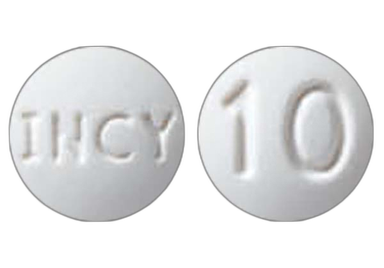
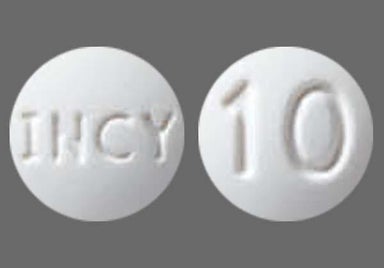
Jakafi (ruxolitinib) is a JAK inhibitor that’s used to treat adults with certain blood conditions called myelofibrosis (MF) and polycythemia vera (PV). This medication is also used to treat graft-versus-host disease (GVHD) in people 12 years and older. Jakafi (ruxolitinib) is a tablet that you take by mouth twice a day. It can cause side effects like low blood cell counts, infection, and tiredness.
Jakafi (ruxolitinib) is a JAK inhibitor. It works by blocking the activity of JAK proteins in the body.
In myelofibrosis and polycythemia vera, JAK proteins send signals that tell your blood cells to grow and divide too quickly. When Jakafi (ruxolitinib) blocks JAK, blood cells can’t grow out of control as well.
And in graft-versus-host disease, JAK proteins play a role in turning on the immune system and damaging tissues. By blocking JAK, Jakafi (ruxolitinib) helps prevent the immune system from becoming too active.
The following side effects may get better over time as your body gets used to the medication. Let your healthcare provider know immediately if you continue to experience these symptoms or if they worsen over time.
The following Jakafi (ruxolitinib) side effects have also been reported
Along with its needed effects, a medicine may cause some unwanted effects. Although not all of these side effects may occur, if they do occur they may need medical attention.
Check with your doctor immediately if any of the following side effects occur:
Some side effects may occur that usually do not need medical attention. These side effects may go away during treatment as your body adjusts to the medicine. Also, your health care professional may be able to tell you about ways to prevent or reduce some of these side effects. Check with your health care professional if any of the following side effects continue or are bothersome or if you have any questions about them:
Taken twice a day and might require dose changes often
Often causes low blood cell counts
Might raise your risk for infection
Pharmacist tips for Jakafi (ruxolitinib)
You can take Jakafi (ruxolitinib) with or without food.
If you miss your Jakafi (ruxolitinib) dose, don’t take an extra dose of medication. Just wait until the next scheduled time to take Jakafi (ruxolitinib) at your usual dose.
Unless your oncologist or hematologist recommends it, you shouldn’t suddenly stop taking Jakafi (ruxolitinib). Otherwise, your symptoms might come back. Your prescriber will typically slowly lower your dose until you can completely stop the medication.
Your treatment plan with Jakafi (ruxolitinib) might need to change depending on your blood counts. Make sure you go to your lab appointments so your care team can check your blood counts and adjust your dose as needed.
Jakafi (ruxolitinib) can sometimes make your cholesterol levels go up. Your oncologist or hematologist will check your cholesterol levels every 2 to 3 months. Your prescriber might recommend medications like statins to help manage your cholesterol levels if they get too high. Your care team might also recommend adding different foods into your diet that can help lower cholesterol.
It might be harder for your body to fight infections while you’re taking Jakafi (ruxolitinib) because your white blood cell count can become low during treatment. You can help lower your risk for infections by avoiding crowds, washing your hands often, and washing raw fruits and vegetables well before eating them.
Give your oncology or hematology care team an up-to-date list of medications that you take. Update your list if you start any new medications or stop taking any. Certain drug interactions with Jakafi (ruxolitinib) can put you at risk for side effects from the cancer medication, while others can make the cancer medication work less well. Your care team can check that your medications are safe to take together.
You shouldn’t breastfeed while you’re taking Jakafi (ruxolitinib) and for 2 weeks after your last dose. We don’t know whether Jakafi (ruxolitinib) passes into human milk, but there’s a possible risk of harm to a nursing infant.
Risks and warnings for Jakafi (ruxolitinib)
Jakafi (ruxolitinib) can cause some serious health issues. This risk may be even higher for certain groups. If this worries you, talk to your doctor or pharmacist about other options.
Low blood cell counts
People who take Jakafi (ruxolitinib) can have a low blood cell count. This means that the number of red and white blood cells and platelets you have in your blood can drop. When your red blood cells are low, you might feel more tired. And because white blood cells help your body fight infection, you’re at risk for infection when you don’t have enough white blood cells to protect you. In addition, when your platelets are low, your body can’t stop bleeding as well.
You’ll need to get blood work every so often during treatment so your care team can check your blood count. If your blood count is too low, your oncologist or hematologist might recommend that you take a break from Jakafi (ruxolitinib) or take a lower dose of the medication until your blood count gets back up. If necessary, you might need a blood transfusion of red blood cells or platelets.
Risk of infection
Risk factors: Travel to countries with high occurrence of tuberculosis | History of tuberculosis | History of herpes simplex infection
People who take Jakafi (ruxolitinib) have a higher risk of infection, including bacterial, fungal, and viral infections. Some infections that can develop during treatment, such as tuberculosis (TB), can be serious.
Before you start treatment, let your care team know about any infections you currently have or have had in the past. You shouldn’t start Jakafi (ruxolitinib) if you currently have a serious infection. Depending on what medical condition you’re taking Jakafi (ruxolitinib) for and your history of infections, you might need to take certain medications, such as an antibiotic or antiviral, to help prevent new infections.
Contact your care team right away if you have signs or symptoms of an infection, such as fever, cough, trouble breathing, muscle aches, chills, or severe tiredness.
Risks when Jakafi (ruxolitinib) is paused or stopped
Risk factors: Taking Jakafi (ruxolitinib) for myelofibrosis (MF) or polycythemia vera (PV)
Sometimes, people who stopped taking Jakafi (ruxolitinib) for myelofibrosis or polycythemia vera developed symptoms similar to those they had before treatment started. Some people also had fever, trouble breathing, low blood pressure, a blood-clotting condition called disseminated intravascular coagulation (DIC), or even organ failure.
Because of these risks, it’s important that you don’t suddenly stop taking Jakafi (ruxolitinib) without first talking with your oncologist or hematologist. Typically, your prescriber will slowly lower the dose (instead of suddenly stopping the medication). This helps prevent symptoms of your condition from coming back or other complications.
Possible risk for serious heart problems and stroke
Risk factors: Having risk factors for heart problems | Current or past smoker
People with rheumatoid arthritis who took a different JAK inhibitor than Jakafi (ruxolitinib) have had serious heart problems, such as heart attack, and stroke. Some of these problems were life-threatening. Jakafi (ruxolitinib) isn’t approved for use in rheumatoid arthritis.
Since JAK inhibitors like Jakafi (ruxolitinib) work similarly to each other, your oncologist or hematologist will discuss the possible risk for serious heart problems and stroke with you. They’ll consider the risks and benefits for you to take Jakafi (ruxolitinib). Call 911 right away if you have sudden chest pain; numbness on one side of the body; trouble breathing, speaking, or walking; or sudden nausea and sweating.
Possible risk for blood clots
People with rheumatoid arthritis who took a different JAK inhibitor than Jakafi (ruxolitinib) have developed blood clots, including deep vein thrombosis (DVT) and pulmonary embolism (PE), during treatment. Jakafi (ruxolitinib) isn’t approved for use in rheumatoid arthritis.
Since JAK inhibitors like Jakafi (ruxolitinib) work similarly to each other, you should watch for symptoms of blood clots during treatment. Seek medical help right away if you have symptoms of a blood clot, such as swelling in one arm or one leg, sudden chest pain, and sudden trouble breathing.
Possible risk for new cancers
Risk factors: New cancer that’s developed | Current or past smoker
People with rheumatoid arthritis who took a different JAK inhibitor than Jakafi (ruxolitinib) have a higher risk of developing new cancers, such as lymphoma. This risk appears to be even higher for people who smoke or have smoked in the past. Talk with your oncology or hematology care team if you’re concerned about the risk of developing a new cancer with Jakafi (ruxolitinib).
Jakafi (ruxolitinib) dosage
Typical dosage for Jakafi (ruxolitinib)
Myelofibrosis: The typical starting dose is either 5 mg, 15 mg, or 20 mg by mouth twice a day. It’ll depend on your platelet levels at the start of treatment. Your prescriber might adjust the dose during treatment based on your blood counts and your condition.
Polycythemia vera: The typical starting dose is 10 mg by mouth twice a day. Your prescriber might adjust the dose during treatment based on your blood counts and your condition.
Acute graft-versus-host disease: The typical starting dose is 5 mg by mouth twice a day for at least 3 days. Your prescriber might raise the dose to 10 mg twice a day depending on your blood counts.
Chronic graft-versus-host disease: The typical starting dose is 10 mg by mouth twice a day.
Your prescriber might recommend a lower starting dose if you have liver or kidney problems. Your starting dose might also be lower if you’re taking certain medications that can interact with Jakafi (ruxolitinib).
During treatment, your dose might be lowered if you have concerning side effects.
Interactions between Jakafi (ruxolitinib) and other drugs
Jakafi (ruxolitinib) may interact with certain medications or supplements. Always let your doctor and pharmacist know about any other medications or supplements (including prescribed and over-the-counter medications, vitamins, and dietary or herbal supplements) that you are currently taking. The list below does not include all possible drug interactions with Jakafi (ruxolitinib). Please note that only the generic name of each medication is listed below.
Although certain medicines should not be used together at all, in other cases two different medicines may be used together even if an interaction might occur. In these cases, your doctor may want to change the dose, or other precautions may be necessary. When you are taking this medicine, it is especially important that your healthcare professional know if you are taking any of the medicines listed below. The following interactions have been selected on the basis of their potential significance and are not necessarily all-inclusive.
Using this medicine with any of the following medicines is usually not recommended, but may be required in some cases. If both medicines are prescribed together, your doctor may change the dose or how often you use one or both of the medicines.
GoodRx Health has strict sourcing policies and relies on primary sources such as medical organizations, governmental agencies, academic institutions, and peer-reviewed scientific journals. Learn more about how we ensure our content is accurate, thorough, and unbiased by reading our editorial guidelines.
Prescription savings
Stop paying too much for your prescriptions. Compare prices, get pharmacy coupons, and save up to 80%.
No, Jakafi isn’t considered chemotherapy. Traditional chemotherapy works by destroying cells that grow quickly, which can include cancer cells, blood cells, and hair cells. Jakafi is a type of targeted therapy that works by blocking a specific protein called JAK. The JAK protein sends signals in the body that tell these cells to grow. So when Jakafi blocks JAK, this growth signal gets interrupted. This helps manage certain conditions where the body makes too many blood and immune cells.
You should take Jakafi as recommended by your oncologist or hematologist. Typically, your care team will check how well the medication is working for you after 6 months of treatment. Then, they’ll decide whether you should keep taking it or not. It’s important that you don’t suddenly stop taking Jakafi unless your care team instructs you to. Some people who stopped taking Jakafi too quickly had serious problems, like fever, trouble breathing, low blood pressure, a serious blood-clotting problem, or organ failure. Your prescriber will typically slowly lower your dose before you can completely stop taking the medication to help prevent these symptoms.
The most common side effect of Jakafi is having low blood cell counts. The red blood cell levels in your body might drop, which can lead to anemia; this can make you feel more tired. In addition, having low white blood cells can put you at risk for getting sick since white blood cells normally help fight infection. And having a low platelet count means that you’re at risk for bleeding because your blood might not be able to clot well. Your care team will check your blood counts often while you’re taking Jakafi. Contact your care team if you have a fever, if you feel very tired, or if you have any unusual bruising or bleeding. These can be signs of having low blood cell counts.
Some people might consider Jakafi as an immunosuppressant because the medication can weaken your immune system and put you at risk for serious infections. Jakafi can make your white blood cell levels drop, which lowers your body’s ability to protect you from infection. Don’t start taking Jakafi if you currently have a serious infection. Your oncologist or hematologist might prescribe certain medications, such as antibiotics or antivirals, to help prevent new infections during treatment. Contact your care team right away if you have any signs or symptoms of an infection, like fever, cough, trouble breathing, muscle aches, chills, or severe tiredness.
It takes about 15 hours for Jakafi to leave your system after you take a single dose. This time frame is estimated from the medication’s half-life, the time it takes for the levels of the medication to drop by half in the body. Your kidneys and liver help get rid of Jakafi from the body. So the medication might stay in your system longer if you have kidney or liver problems. You’ll probably take a lower dose of Jakafi if you have kidney or liver problems to prevent the medication from building up in the body and lower the risk for side effects.
The manufacturer doesn’t say whether the Jakafi tablets can be cut in half or split. To be safe, swallow the tablets whole. Let your oncologist or hematologist know if you have trouble swallowing tablets whole or if you have a feeding tube called a nasogastric (NG) tube. Your prescriber can discuss with you about your options.
It’s best to avoid drinking alcohol while you’re taking Jakafi. Regularly drinking alcohol can make your treatment work less well. In addition, alcohol can raise your risk for liver damage and make it harder for you to recover from infections, both of which are already risks that come with taking Jakafi. What’s more, long-term alcohol use can put you at risk for other cancers. Speak with your prescriber about your drinking habits. They can refer you to resources to help you cope or stop drinking, if needed.
Talk to your oncologist or hematologist before you start taking Jakafi if you have high cholesterol or high triglyceride levels. Jakafi can make your cholesterol and triglyceride levels go up. To keep an eye on your cholesterol levels during treatment, your prescriber will check your blood work every 2 to 3 months while you’re taking Jakafi. Typically, medications like statins can help manage high cholesterol levels.